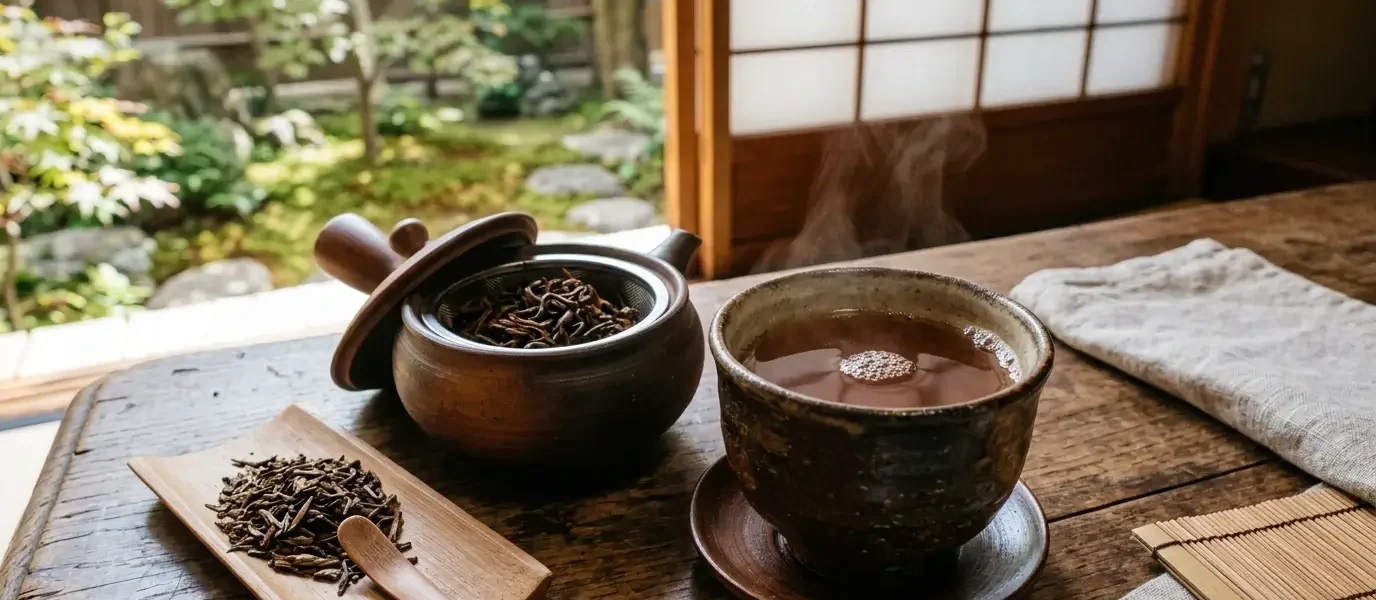
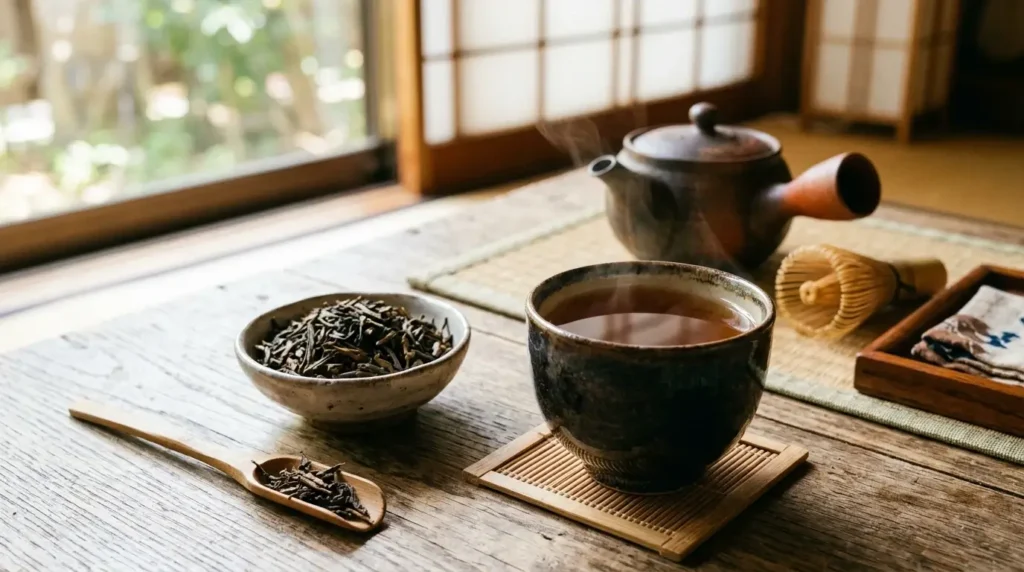
Did you know over 80% of home brewers miss out on the full flavor of Japanese roasted leaves? They use the wrong measurements. I learned this the hard way in my kitchen.
Finding the right hojicha tea to water ratio changed my morning ritual. It went from a bitter letdown to a truly comforting experience. Getting this ratio right is key to a better cup.
Through months of personal experiments, I perfected my technique. Now, this balance is the base for every delicious brew I make. Whether you’re new or experienced, a reliable hojicha brewing guide leads to consistent results every time.
Key Takeaways
Precision in measurement unlocks the natural, toasted flavor profile.
Small adjustments in leaf quantity significantly impact the final body.
Temperature plays a supporting role alongside your chosen measurements.
Consistency creates a more enjoyable and reliable morning routine.
Experimenting with your own palate helps you find a personal favorite strength.
Understanding the Unique Profile of Hojicha
When I first tried hojicha, I was amazed by its deep, smoky taste. It’s a roasted green tea that feels both cozy and elegant. Learning about this tea is key to making great brewing hojicha at home.
The Roasting Process and Its Impact on Flavor
The making of hojicha is quite interesting. Tea leaves are heated to change their chemical makeup. This step gets rid of the grassy taste found in regular green teas.
This process gives hojicha a unique flavor profile. It’s known for:
A deep, toasted aroma that fills the room.
Notes of caramel, cocoa, and roasted nuts.
A naturally low caffeine content due to the high-heat roasting.
Why Hojicha Requires a Different Approach Than Green Tea
Many people treat hojicha like a delicate sencha. But, its roasted leaves make it more forgiving when brewing. I can use hotter water without worrying about bitterness.
When brewing hojicha, I aim for a strong extraction. This brings out the earthy flavors. Unlike other green teas, hojicha loves heat. This lets you enjoy its complex flavor profile fully.
The Science Behind the Perfect Hojicha Tea to Water Ratio
Making the perfect cup of hojicha is a mix of science and feeling. The way water meets roasted leaves is key to a great brew. By adjusting the hojicha tea to water ratio, I get the tea’s toasted flavors right, without bitterness.
Balancing Leaf Surface Area and Extraction
Hojicha leaves are different after roasting. They become more porous and fragile. This makes them release flavors quickly when hot water touches them.
Using less leaf-to-water ratio helps avoid over-extraction. Too many leaves can make the tea weak or bitter. The right balance lets water soak the leaves evenly, for a smooth, nutty taste.
“The beauty of tea lies in the patience of the brewer and the precision of the measurements.”
How Water Volume Affects the Roasted Aroma
Water volume controls the roasted aroma’s strength. Less water makes a strong, bold cup with deep smoky flavors. More water brings out the tea’s sweet notes, for a lighter taste.
To get the perfect cup of hojicha, adjust water volume with the roast level. Lighter roasts need more water to avoid being too strong. Here’s how these changes affect your tea:
Variable
Low Water Volume
High Water Volume
Aroma Intensity
Strong and Smoky
Light and Sweet
Flavor Profile
Bold and Earthy
Clean and Refreshing
Extraction Speed
Rapid
Gradual
Learning the hojicha tea to water ratio is a personal journey. Try different volumes to find your favorite. Once you get it, you’ll control your tea time perfectly.
When I started with roasted green tea, I learned that precision is key. Finding the right hojicha tea to water ratio ensures every cup tastes great. A reliable measurement brings a consistent, nutty flavor to my morning.
The Golden Rule for Loose Leaf Hojicha
For loose leaf hojicha fans, I follow a simple rule. Use about five grams of tea leaves for every 200 milliliters of water. This ratio makes a strong, satisfying brew that showcases the tea’s toasted notes.
If the flavor is too strong, cut the leaves by half a gram. For a bolder taste, add a bit more. Adjusting these small amounts is the fun part of brewing hojicha at home.
Adjusting for Hojicha Tea Bags
Tea bags need a different approach. Their finer grind means faster extraction. Use one standard tea bag for 200 milliliters of water to avoid bitterness.
If your tea bag is smaller, use less water. These small changes keep your brewing hojicha experience enjoyable. See the table below for easy measurement guidance.
Tea Format
Amount
Water Volume
Flavor Intensity
Loose Leaf
5 Grams
200 ml
Robust & Nutty
Tea Bag
1 Bag
200 ml
Balanced & Smooth
Concentrated
8 Grams
150 ml
Bold & Earthy
The Role of Water Temperature in Your Brew
Many think all green teas need low heat. But, my experience with hojicha shows a different truth. Water temperature for tea changes a lot when you switch to roasted leaves.
Why Boiling Water is Essential for Hojicha
I always use boiling water for my hojicha. This brings out its toasted notes. The leaves, already roasted at high heat, can handle boiling water better than steamed green teas.
The intense heat is absolutely necessary for those deep, earthy flavors. Without boiling water, the tea tastes thin or underdeveloped. It misses the complex profile you expect.
“The secret to a perfect cup of tea lies not just in the leaves, but in the precise dance between heat and time.”
Preventing Bitterness Through Temperature Control
You might worry boiling water will make your drink bitter. But, the correct water temperature for tea is just part of it.
Even with boiling water, controlling the steeping time is key. A short infusion time keeps the rich, nutty aroma in the spotlight. This way, the tea stays smooth without bitterness.
Steeping Time and Its Relationship to Your Ratio
Changing your tea steeping time is the best way to adjust the hojicha flavor profile of your drink. I see the clock as my main tool for controlling flavor when I make a fresh pot. By watching how long the leaves soak in hot water, I can change the flavor to fit my mood.
Short Steeps for a Light and Nutty Profile
For a light and refreshing drink, I choose a short steep. Steeping for under 45 seconds brings out the tea’s natural sweetness without too many tannins. This method shows off the tea’s toasted notes, making it special.
This results in a light, nutty cup that feels clean. It’s great for enjoying the subtle flavors of high-quality leaves. It’s perfect for a quiet morning with a gentle, aromatic brew.
Longer Infusions for a Bold and Earthy Cup
When I want a bold, earthy cup, I steep for longer. Steeping for 90 seconds or more makes the flavor much deeper. This bold hojicha flavor profile is amazing with milk or a bit of sweetener.
“Patience in the brewing process is not just about waiting; it is about allowing the leaves to fully express their roasted character through the passage of time.”— Anonymous Tea Master
Learning this timing lets me change my experience every day. Whether I want something light or bold, the right ratio and timing are key.
Equipment Matters: How Your Teaware Influences the Ratio
The vessel I choose changes how I measure my tea for the best results. My selection of hojicha brewing equipment is key for every cup. Different shapes and sizes of teaware mean I need to adjust my ratios.
Using a Traditional Kyusu Teapot
When I use my traditional Japanese Kyusu, I’m working with a tool made for loose leaf tea. Its wide, flat base lets leaves spread out evenly. This means I can use a bit less tea for a rich flavor.
The built-in mesh filter keeps small particles out of my cup.
I make sure the leaves are fully submerged for the best extraction.
This hojicha brewing equipment is perfect for multiple infusions.
Brewing in a French Press or Infuser Mug
French presses or compact infuser mugs need a different approach than traditional teapots. These are more confined, limiting leaf movement. So, I use a bit more leaf-to-water ratio to make up for it.
In a tall, narrow infuser mug, I leave room at the top for water to flow. Consistency is my goal. I always measure my tea based on the container’s total volume. By adjusting to my hojicha brewing equipment, I get a bold and aromatic cup, no matter the tools.
Experimenting with Cold Brew Hojicha
My favorite way to cool down is making cold brew hojicha in my fridge. It’s a refreshing twist to my usual hot tea during hot months. The result is a sweet taste that’s perfect for a lazy afternoon.
The Cold Brew Ratio for Refreshing Results
For tea without heat, I use more leaves than water. This is because cold water extracts flavors slower. More tea means a bolder, more flavorful cup, not a weak one.
Time Requirements for Maximum Flavor Extraction
Patience is key for the best cold brew hojicha. I steep it for at least eight hours. This brings out the earthy flavors, making it a satisfying drink.
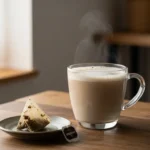
Making the perfect hojicha latte recipe at home means changing how you think about tea strength. Unlike regular tea, lattes need a strong tea base to balance out the creamy parts. I’ve learned to adjust my brewing to let the roasted flavors come through, even with dairy or plant-based milks.
Creating a Concentrated Base
To make sure the roasted flavor is the main attraction, I start with a very strong tea base. I use a much higher tea-to-water ratio than usual. This intense infusion is the heart of the drink, giving it the depth to stand up to the richness of steamed milk.
Using less water helps me get the most flavor from the roasted leaves without a long steep time. This concentrated method is the key to a top-notch hojicha latte recipe that’s never too weak. It’s a simple tweak that changes the whole taste of your drink.
Balancing Tea Strength with Milk and Sweeteners
After making the base, the next step is balancing the tea, milk, and sweeteners. I aim for a mix where the tea concentrate is about one-third of the total. This keeps the earthy, nutty aroma of the hojicha strong while the milk adds a smooth texture.
When adding sweeteners, I use a light hand to keep the natural flavors of the roasted leaves. A bit of maple syrup or brown sugar often enhances the toasted notes nicely. Trying different amounts is the best way to create your own unique hojicha latte recipe and enjoy a high-quality drink at home.
My journey into tea has taught me to avoid common mistakes. One big one is not measuring the leaves right for a single cup. This can make the tea too weak or too strong.
Getting better at brewing tea means paying attention to details. The right hojicha brewing equipment is key. It helps make sure every cup tastes as good as it should. Avoiding these mistakes will help you enjoy your tea more.
Overcrowding the Infuser
Stuffing too much loose leaf hojicha into a small infuser is a common mistake. This stops the leaves from moving in the water. It means the water can’t reach all the leaves, leading to uneven flavor.
When leaves are too packed, the tea steeping time doesn’t work as well. The water can’t get to the center of the leaves. This results in a weak or flavorless cup. Make sure your infuser has enough room for the leaves to move.
Underestimating the Expansion of Roasted Leaves
Many people forget that roasted tea leaves grow a lot when they get wet. If they’re in a small space, they can’t expand properly. This limits the flavor and makes the tea taste dull.
Using a bigger infuser or teapot helps the leaves expand as they should. This lets the tea’s nutty and earthy flavors come out fully. Remember, space is as important as the tea steeping time or the hojicha brewing equipment you choose.
Common Mistake
Resulting Issue
Recommended Fix
Overcrowding infuser
Uneven flavor extraction
Use a larger basket
Ignoring expansion
Weak, muted taste
Allow 2x volume space
Poor water ratio
Bitter or watery cup
Use a digital scale
Personalizing Your Hojicha Experience
My journey to master brewing hojicha has been personal. I’ve learned that tea changes with each brew. Experimenting makes every cup special, showing off the tea’s unique taste.
Developing Your Palate for Different Roasts
Different roasts bring out different flavors, from light to smoky. Paying attention to the aroma helps me pick the right roast for the day. Developing a refined palate lets me find the perfect cup of hojicha for my mood.
Notice the color and aftertaste of each brew. These details help you control the final taste. This skill turns you from a casual drinker to a true tea lover.
Keeping a Brewing Journal for Consistency
I use a notebook to track my progress. I note the tea’s weight and water temperature. This helps me keep the tea brewing consistency perfect every time.
My notes help me find the best flavor ratios. Consistency is key for a great tea experience. A journal is the best tool for achieving it.
Sourcing Quality Hojicha for Better Results
The secret to a perfect brew starts before the water hits the leaves. Mastering the water temperature for tea is key, but the real foundation is the ingredients. Choosing quality hojicha leaves is essential for a delicious cup, no matter the ratio.
Identifying Freshness in Roasted Leaves
When I buy roasted green tea, freshness is my top priority. I look for a vibrant, toasted scent when I open the package. If the leaves smell dull or lack that nutty aroma, they’re past their prime.
The leaves’ appearance also matters. High-quality leaves should be a deep brown color without dust or broken stems. Freshness is the key to unlocking the complex, earthy notes that make this tea special.
Why Leaf Grade Changes Your Ideal Ratio
The grade of the leaf changes my ideal brewing ratio. Finer, higher-quality grades have a more concentrated flavor. This means I need less tea for a bold, satisfying cup.
Lower grades might need more tea to reach the same intensity. Quality hojicha leaves are more efficient, allowing for a richer cup with fewer leaves. By focusing on the grade of your roasted green tea, you can fine-tune your measurements for a perfect cup every time.
Conclusion
Improving your tea-making skills is a rewarding journey. It turns a simple drink into a mindful experience. By following this hojicha brewing guide, you can adjust things to your liking.
You now know how to pick the best hojicha leaves for flavor. Making small changes to your recipe can make every cup special.
Keep a small notebook to track your favorite recipes. This helps you make your best tea again and try new things. Try brands like Ippodo or O-Cha.
Every time you make tea, you learn more about this Japanese treasure. Enjoy the journey of finding the perfect cup of tea today.
What is the ideal hojicha tea to water ratio for a daily brew?
I’ve found that using five grams of loose leaf hojicha for 200 milliliters of water is perfect. This ratio gives me a strong and satisfying tea. It really brings out the unique roasted Japanese green tea taste.
Should I use boiling water for my hojicha, or will it become bitter?
I always use boiling water for my hojicha. This high temperature is key to getting the deep, nutty and caramel-like flavor. The roasting makes the leaves more forgiving, so I can use high heat without worrying about bitterness.
How do I adjust the ratio when I want to make hojicha lattes at home?
For lattes, I make a concentrated base. I use a higher hojicha tea to water ratio to keep the bold, earthy flavor in the forefront. Then, I add steamed milk and sweeteners to complete it.
What is the best ratio and timing for preparing cold brew hojicha?
For cold brew hojicha, I use a lot more tea to water. This is because the slow extraction process needs it. I steep the leaves in the fridge for at least eight hours. This makes a sweet and mellow drink perfect for hot days.
Does the specific teaware I use change how much tea I should measure?
Yes, equipment matters a lot. A Kyusu teapot is great for leaf expansion. But a French press or infuser mug might need a different ratio. This ensures the water flows well around the leaves for the best flavor.
How can I maintain tea brewing consistency in my daily ritual?
Keeping a brewing journal helps me stay consistent. I record my tea measurement tips, the leaf grade, and my favorite steeping times. This way, I can make my favorite cups every morning.
What are the signs of high-quality roasted green tea when I am sourcing leaves?
I look for a strong, toasted scent and consistent color in the leaves. Freshness is key. A strong roasted aroma fills the room when I open the bag. This ensures my hojicha tea to water ratio will be flavorful.
Is it okay to use tea bags, and how does that change the ratio?
I use hojicha tea bags when I’m in a rush. But I adjust the ratio slightly. Tea bags have a finer grind, so the extraction is faster. I use one bag per 150-200ml of water to keep the flavor balanced.
Black Tea Extract that is rich in natural theaflavins and polyphenols that help protect your body from free radicals, promoting overall immune health and well-being
Contains blended amounts of Fruits and Veggies. All natural, with whole foods, fruit and vegetable supplement.Perfect for everyone looking to live a healthier lifestyle.