Brewing mint tea using fresh leaves transforms a simple beverage into something bright and clean, unlike dried mint that can taste bitter and dull. Here’s the exciting part: you can have a perfectly steeped cup ready in just 7 minutes.
Fresh mint tea offers a naturally caffeine-free option that soothes digestive issues and helps decrease bloating. You can customize the flavor using peppermint, spearmint, or any combination of mints, making each cup uniquely yours. The secret? Crushing the leaves while brewing to release those fragrant essential oils.
In this guide, we’ll walk you through everything you need to know about how to make mint tea with fresh leaves, from selecting the best mint varieties to mastering the perfect steeping time.
Key Takeaways
Master the art of brewing fresh mint tea with these essential insights that will transform your tea-making experience and deliver superior flavor in every cup.
• Fresh mint leaves deliver superior taste with crisp, cooling flavors that dried mint cannot match due to retained essential oils and terpenes
• Use 15 fresh mint leaves per 2 cups of filtered water, crush them before steeping to release aromatic oils for maximum flavor
• Steep for 3-5 minutes in boiling water for optimal strength without bitterness – mint tea is forgiving and won’t over-extract
• Choose peppermint for strong cooling sensation or spearmint for milder sweetness; both offer digestive benefits and antioxidant properties
• Create variations by adding lemon, ginger, or green tea for Moroccan-style mint tea to customize your perfect cup
The beauty of fresh mint tea lies in its simplicity and versatility. Whether you’re seeking digestive relief, a caffeine-free alternative, or simply a refreshing beverage, this natural brew delivers both wellness benefits and exceptional taste with minimal effort.
Why Fresh Mint Leaves Make Better Tea
Fresh vs. Dried Mint: Taste Comparison
Fresh mint delivers an unmistakable cooling, crisp bite that dried leaves simply cannot match. The difference lies in what happens during the drying process: fresh mint retains its grassy, vegetal flavors and smooth texture, creating a light and refreshing cup. Dried mint, in contrast, loses most of its moisture content, which concentrates the oils and amplifies the flavor into something sharper and more pungent.
The flavor compounds tell an interesting story. Fresh mint contains terpenes that create complex taste profiles, but these compounds behave differently once dried. While dried mint’s characteristic minty flavors from terpene compounds remain stable and potent, the fresh leaves offer a delicate herbal quality with a sweet aroma that’s noticeable even before tasting.
Spearmint and peppermint feature entirely different flavor compounds, making them non-interchangeable. Spearmint gets its complex flavor from the terpene L-carvone along with various pyridines more commonly found in roasted foods. Peppermint, on the other hand, contains 33-60% menthol, which gives it that recognizable candy-cane mint flavor and cooling sensation.
Best Types of Mint for Tea
Several mint varieties work beautifully for brewing tea. Peppermint (Mentha x piperita) stands out as the most consumed herbal tea globally. This sterile hybrid of watermint and spearmint boasts high menthol content, often exceeding 40%, creating a strong, cooling flavor ideal for tea.
Spearmint (Mentha spicata) provides a sweeter, milder taste because its menthol content sits much lower than peppermint. Field mint or wild mint offers high menthol levels similar to peppermint. Water mint brings antimicrobial and antioxidant properties to your cup. Apple mint (Mentha suaveolens) has a milder, rounded flavor that falls between spearmint and peppermint, making it excellent for tea.
Health Benefits of Fresh Mint Tea
Fresh mint tea provides antioxidant properties that support overall wellness. Peppermint offers digestive benefits and may help freshen breath. Spearmint demonstrates antioxidant, antiviral, antimicrobial, and antitumor activities, plus studies show it may improve memory and relieve pain.
Field mint carries antibacterial, antioxidative, and anti-stress properties. Water mint adds antimicrobial, anti-inflammatory, and antiallergic benefits. The menthol naturally present in mint relaxes the intestinal wall, assisting with proper digestion and stimulating bile production to help digest fats.
Making mint tea from fresh leaves requires just a handful of ingredients and basic kitchen tools. The simplicity makes this recipe accessible whether you’re brewing your first cup or your hundredth.
Fresh Mint Leaves
You’ll need approximately 15 fresh mint leaves for 2 cups of water. This translates to about 2 sprigs of fresh spearmint or roughly 1/4 cup of loosely packed leaves. Peppermint or spearmint work beautifully for this recipe, and you can use any variety of fresh mint or even try a combination of different types. Choosing organic mint when possible ensures you’re getting the cleanest flavor without pesticide residues.
The key to making the best mint tea is crushing the fresh leaves while they brew to release those fragrant and flavorful essential oils. This step makes all the difference in your final cup.
Water and Equipment
Filtered water produces the best flavor for your mint tea. You’ll need 2 cups of filtered water for a standard batch. For heating, you can use a stovetop kettle, electric kettle, or a simple saucepan.
Equally important is your steeping vessel. A teapot with a built-in strainer works perfectly, or you can place a strainer over a heatproof bowl. You’ll also need a muddler or the back of a wooden spoon to lightly crush the mint leaves during steeping. Any means of letting the leaves float freely, then removing them, will produce excellent results. Think tea infusers, French presses (used gently without pressing down), or simple mesh strainers.
Optional Sweeteners and Add-Ins
Sweetening your mint tea remains entirely optional. Honey serves as a popular choice, with 1 to 2 teaspoons working well for most palates. Sugar or simple syrup offer alternatives if you prefer them. For iced mint tea, you’ll want about 1 cup of ice.
Citrus brightens the herbal notes beautifully. Add a splash of fresh lemon juice, 2 lemon slices, or try lime juice instead. Fresh ginger slices create a warming variation, while green tea transforms your brew into Moroccan-style mint tea.
Step-by-Step Instructions for Brewing Mint Tea
Step 1: Prepare Your Fresh Mint Leaves
Look for vibrant, green leaves without brown spots or signs of wilting for the freshest flavor. Gently rinse the leaves under cold water to remove dirt or potential pesticides, then pat them dry.
Roll the mint leaves firmly between your fingers to bruise them, then tear and drop them into your strainer or teapot. Another method involves taking a few leaves in one hand and sharply clapping your other hand on top before dropping them into the vessel. You can also place the sprigs in a plastic bag and smash them with a meat mallet to release their oils.
Step 2: Boil the Water
Bring your filtered water to a boil using a kettle or stovetop. While the water heats, you can warm your teapot by pouring some freshly boiled water into it, swirling the water around, then discarding it. Warming the teapot prevents a big temperature drop when steeping the tea.
Step 3: Bruise and Steep the Mint
Pour the boiling water over the mint leaves. Next, gently bruise the leaves with the back of a wooden spoon or a muddler to release the oils. You can also stir and gently bruise the mint against the side of the cup. Cover the teapot or vessel and allow the mixture to steep.
Step 4: Strain and Serve
Remove the strainer or use a fork to strain out and discard the mint leaves. Press on the leaves to extract as much liquid as possible. Pour the tea into cups or mugs. Sweeten to taste if desired while the tea remains warm.
How Long to Steep Mint Tea
Steep for 3 to 5 minutes, depending on your desired strength. The liquid should take on a slight pale yellow or green hue. Peppermint tea remains forgiving when it comes to steep time; steeping longer than 5 minutes still tastes great and won’t get overly bitter. For stronger iced tea, let the leaves steep for 10 minutes.
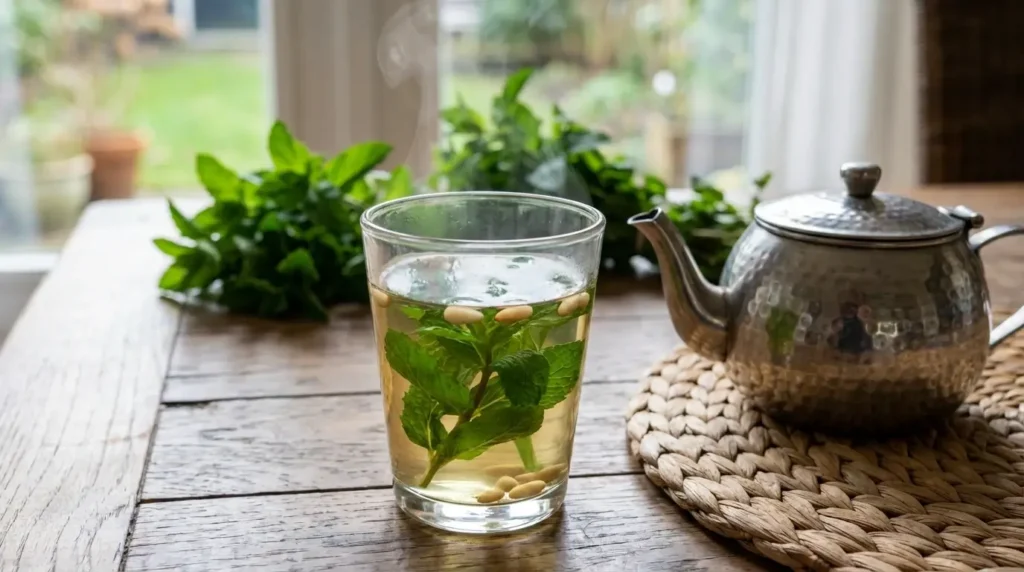
Serving hot mint tea in a clear glass or mug showcases the beautiful green leaves floating in the water. Keep the mint leaves in the glass as you drink for continuous aroma.
Iced Mint Tea Recipe
Creating iced mint tea starts with preparing a mint syrup. Combine sugar, mint leaves, and 1 cup water in a small pot over high heat, bringing the mixture to a boil until sugar dissolves, about 90 seconds. Allow it to steep for 20 minutes, then strain and chill the syrup.
By the same token, steep 2 tea bags in 2 cups boiling water for 10 minutes, remove the bags, and add 6 remaining cups water. Sweeten to taste with the chilled mint syrup. You can turn this into iced tea by creating a double-strength concentrate using 2 tablespoons tea and a mint-infused simple syrup or honey, which distributes better in cold water than sugar crystals.
Mint Tea with Lemon or Ginger
Adding fresh ginger slices with mint creates a cold-fighting powerhouse. For a ginger mint tea, thinly slice ginger into rounds, peel 2 long strips of lemon zest, and squeeze 1/4 cup juice. Bring ginger, lemon zest, mint stems and water to a boil, reduce heat to medium-low, and simmer for 20 minutes. Stir in lemon juice, honey and mint leaves, then steep 10 to 15 minutes. Pairing ginger mint tea with lemon assists with natural detoxification.
Moroccan Mint Tea with Green Tea
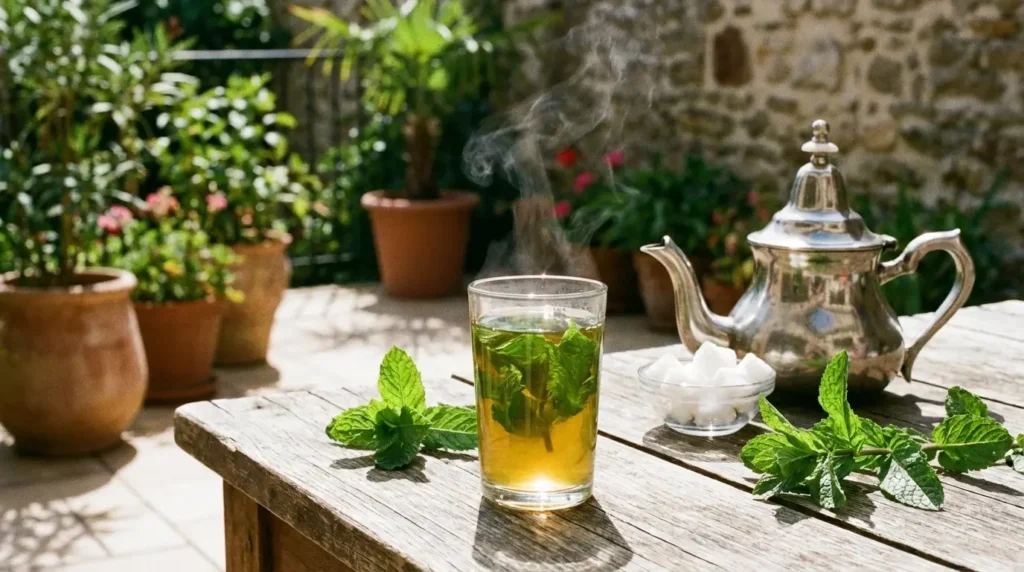
Moroccan mint tea ranks as important as earl gray for the British. This variation uses gunpowder green tea from China, which has more caffeine and a stronger flavor. Moroccans traditionally make their tea exceptionally sweet, though serving two teapots has become common: one traditionally sweet, the other lightly sweetened. You can flavor Moroccan tea with verbena and geranium.
Conclusion
Right now, you have everything you need to brew perfect mint tea using fresh leaves. The process couldn’t be simpler: crush the leaves, steep for 3 to 5 minutes, and enjoy.
Fresh mint truly delivers unmatched flavor compared to dried alternatives. Experiment with different varieties like peppermint or spearmint, and don’t hesitate to try the variations we shared.
Keep brewing, keep experimenting, and your perfect cup of mint tea will become second nature.
FAQs
Q1. How long should I steep fresh mint leaves when making tea? Steep fresh mint leaves for 3 to 5 minutes depending on your desired strength. The tea will develop a slight pale yellow or green hue. Mint tea is forgiving, so steeping longer won’t make it overly bitter—you can steep for up to 10 minutes if you prefer a stronger flavor.
Q2. What’s the best way to prepare fresh mint leaves before brewing? Rinse the fresh mint leaves under cold water to remove any dirt, then pat them dry. Roll the leaves firmly between your fingers to bruise them, or clap your hands sharply over the leaves. This bruising process releases the fragrant essential oils that give mint tea its distinctive flavor and aroma.
Q3. Can I leave the mint leaves in my tea while drinking? Yes, you can leave the mint leaves in your tea as you drink. Unlike some teas that become bitter with extended steeping, mint tea remains pleasant even when the leaves stay in the cup. Keeping the leaves in actually provides continuous aroma throughout your drinking experience.
Q4. How much fresh mint do I need for one cup of tea? Use approximately 1/4 cup of loosely packed fresh mint leaves or about 2 sprigs of spearmint for every 2 cups of water. You can adjust this amount based on your taste preference—use more leaves for a stronger mint flavor or fewer for a milder brew.
Q5. What type of mint works best for making tea? Peppermint and spearmint are the most popular choices for tea. Peppermint has a stronger, cooling flavor due to its high menthol content, while spearmint offers a sweeter, milder taste. You can also use apple mint, field mint, or even combine different mint varieties to create your own unique flavor profile.
Black Tea Extract that is rich in natural theaflavins and polyphenols that help protect your body from free radicals, promoting overall immune health and well-being
Contains blended amounts of Fruits and Veggies. All natural, with whole foods, fruit and vegetable supplement.Perfect for everyone looking to live a healthier lifestyle.