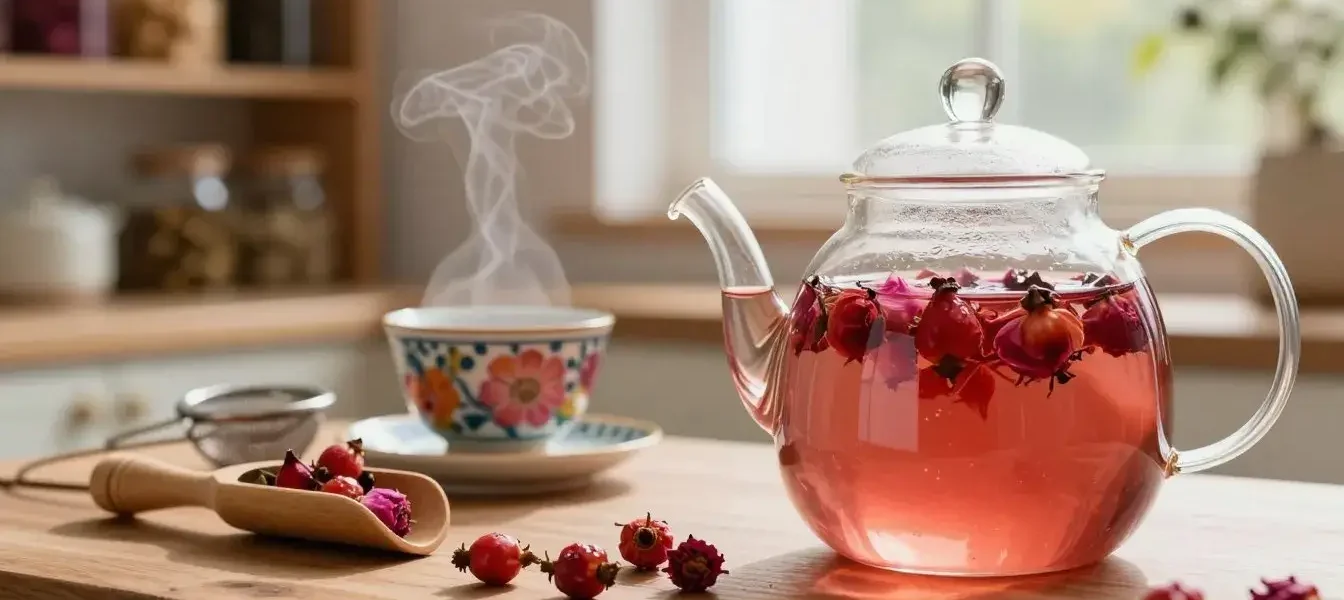
Ever thought about how to make the most of rose hips to brew a tasty and healthy tea?
Making rosehip tea is easy with just a few things: fresh rose hips. It’s packed with vitamins and antioxidants, making it a favorite for those seeking a healthy drink.
With a few simple steps, you can make a calming and tasty tea. It’s great for any time. This article will show you how to brew rosehip tea from fresh rose hips.
Key Takeaways
Learn the simple process of brewing rosehip tea
Discover the benefits of using fresh rose hips
Understand the nutritional value of rosehip tea
Find out how to create a soothing and flavorful tea
Get tips on preparing rosehip tea for any time of day
What Are Rose Hips?
Have you heard of rose hips? They are the fruit of rose plants, growing after the flower drops. They are packed with vitamins, minerals, and antioxidants. This makes them a favorite in health supplements and teas.
Botanical Description of Rose Hips
Rose hips are actually a false fruit, growing from the rose flower’s base. They have seeds and hairs inside, which can be irritating. The color and size of rose hips vary, but they are usually red to orange when ripe.
Nutritional Profile of Rose Hips
Rose hips are known for their high vitamin C content. They also have vitamins A, B, and E, and minerals like calcium and magnesium. The nutrients in rose hips offer health benefits, such as boosting the immune system and reducing inflammation.
High antioxidant content
Rich in vitamins and minerals
Potential anti-inflammatory properties
These nutrients make rosehip tea great for your health. It supports your immune system and can help with inflammation.
Health Benefits of Rosehip Tea
Rosehip tea offers many health benefits, from high vitamin C to anti-inflammatory effects. Drinking it can boost your overall health in simple ways.
Vitamin C and Antioxidant Content
Rosehip tea is packed with vitamin C, a key antioxidant for immune health. Its antioxidants fight off free radicals, reducing oxidative stress and chronic disease risks.
Anti-inflammatory Properties
Rosehip tea also has anti-inflammatory properties. These can help with arthritis symptoms. They may also improve heart health and lower cancer risks.
Other Potencial Health Benefits
Rosehip tea may also improve skin health, digestion, and even fight aging. Below is a table of its main health benefits.
Health Benefit
Description
Immune System Support
High in vitamin C, which is vital for immune function
Anti-inflammatory Effects
May ease arthritis and other inflammatory condition symptoms
Antioxidant Properties
Protects against oxidative stress and free radical damage
Adding rosehip tea to your daily routine can bring these benefits to life. Always talk to a healthcare professional before trying new health remedies.
To enjoy rosehip tea, you need to know when and where to find fresh rose hips. The availability of fresh rose hips depends on several factors, including the season and your location.
Seasonal Availability
Fresh rose hips are usually available in late summer to early fall. This is around August or September in the Northern Hemisphere. The exact timing can vary based on your climate and region.
“The rose hips are usually ripe and ready to harvest when they are brightly colored and slightly soft to the touch,” says a seasoned forager.
Wild Foraging Locations
If you’re interested in foraging for wild rose hips, look for areas with wild rose bushes. These are often found in fields, along roadsides, and in woodland edges. Make sure to identify the rose hips correctly to avoid confusing them with other plants.
Garden Varieties Best for Tea
If foraging isn’t an option, you can grow your own rose hips in your garden. Varieties like Rosa rugosa and Rosa canina are popular for their large, flavorful hips. When growing your own, ensure you have a suitable climate and provide the necessary care for your rose bushes to thrive.
By understanding when and where to find fresh rose hips, you can enjoy a steady supply of this nutritious ingredient for your tea.
Identifying and Harvesting Fresh Rose Hips
Finding the perfect rose hips for tea starts with knowing how to pick them. It’s key to spot ripe rose hips and harvest them right. This way, you get the best quality for your tea.
How to Identify Ripe Rose Hips
Finding ripe rose hips is key for a tasty and healthy tea. They’re usually ready in late summer or early fall.
Color and Texture Indicators
Ripe rose hips turn deep red or orange and feel soft. Don’t pick green or hard ones as they’re not ready yet.
Size Considerations
Rose hips come in different sizes, but bigger ones are better for tea. But, color and texture matter more than size.
Sustainable Harvesting Techniques
Harvesting rose hips the right way keeps the plants and environment healthy. Here’s how:
Only take what you need to avoid waste and protect the plant.
Be gentle with the plant and its roots when picking.
Harvest from several plants to spread out the impact.
Harvesting Technique
Impact on Plant
Sustainability Rating
Hand-picking
Low
High
Using scissors
Moderate
Medium
Pulling or tugging
High
Low
Safety Precautions When Foraging
Foraging for rose hips means safety first. Wear gloves and long sleeves to avoid thorns. Also, be careful of your surroundings and watch for dangers like wildlife or pesticides.
By following these tips, you can enjoy a great harvest of rose hips. This way, you help the plants and stay safe while doing it.
Essential Tools and Ingredients for Brewing Rosehip Tea
To brew the perfect rosehip tea, you need the right tools and ingredients. Start by harvesting fresh rose hips. You’ll need specific tools for this.
Harvesting Equipment
For picking rose hips, sharp pruning shears or scissors are essential. They help cut the fruit from the bush. Don’t forget gloves to protect your hands from thorns.
Processing Tools
After picking, use a clean cutting board and sharp knife to prepare the rose hips. A spice grinder or mortar and pestle can crush dried rose hips. This releases their flavors and oils.
Brewing Supplies
For brewing, you’ll need a tea infuser or strainer, a teapot, and a cup. A coffee grinder can grind dried rose hips finer. This helps in better infusion.
Tool/Ingredient
Purpose
Pruning shears/scissors
Harvesting rose hips
Gloves
Protecting hands from thorns
Cutting board and knife
Preparing rose hips for brewing
Tea infuser/strainer
Brewing rosehip tea
Preparing Fresh Rose Hips for Tea
To make the perfect rosehip tea, start by preparing your fresh rose hips carefully. This step is important to make sure your tea tastes great and is healthy.
Cleaning and Washing Techniques
First, rinse your rose hips under cool water to get rid of dirt. Be gentle to avoid breaking the fruit. Then, use a soft-bristled brush to clean off any dirt left on the rose hips.
Removing Seeds and Hairs
It’s important to remove seeds and hairs from rose hips before making tea. The seeds can cause irritation if eaten.
Why Seed Removal Matters
Removing seeds is key because the hairs around them can irritate your stomach. By taking out the seeds, you make your tea easier to drink.
Techniques for Clean Removal
To get rid of seeds, cut the rose hips in half and scoop out the seeds and hairs. You can use a spoon or a special tool for this. After removing the seeds, rinse the rose hips again to get rid of any leftover hairs or debris.
Method
Description
Effectiveness
Cutting and Scooping
Cut rose hips in half and scoop out seeds
High
Rinsing
Rinse rose hips under cool running water
Medium
Brushing
Use a soft-bristled brush to remove dirt
Medium
Cutting and Processing Methods
After cleaning and removing seeds, you might need to cut or process your rose hips further. Slicing or chopping them can help release their flavors and nutrients better during brewing.
By following these steps, you can make sure your rose hips are ready for a delicious and healthy tea. Proper preparation is essential to enjoy all the benefits of rosehip tea.
Step-by-Step Guide to Brewing Rosehip Tea from Fresh Rose Hips
To make the most of your fresh rose hips, follow this step-by-step guide to brewing rosehip tea. Brewing rosehip tea is a simple process. It requires attention to detail to bring out the best flavor and nutritional benefits.
Basic Fresh Rosehip Tea Recipe
The basic recipe for rosehip tea involves a few simple ingredients and equipment. Here’s what you need to get started:
Ingredients List
1 cup fresh rose hips
2 cups water
Optional: honey or lemon to taste
Equipment Needed
Tea infuser or strainer
Teapot
Cup
Preparation Steps
Rinse the fresh rose hips under cold water.
Chop or crush the rose hips to release their flavors.
Place the rose hips in a teapot or tea infuser.
Pour boiling water over the rose hips.
Steep according to your desired strength.
Steeping Times and Temperatures
The steeping time and temperature can significantly affect the flavor and nutritional content of your rosehip tea. Here’s a guide to help you get it right:
Steeping Time
Temperature
Result
5-7 minutes
Boiling
Strong, robust flavor
3-5 minutes
Boiling
Milder flavor
Straining and Serving
Once your tea has steeped, carefully pour it into a cup using a strainer to catch the rose hips. You can enjoy your rosehip tea hot or iced, sweetened or unsweetened, depending on your preference.
For a refreshing twist, try serving rosehip tea chilled, sweetened with a bit of honey, or infused with other herbs like peppermint or chamomile.
Flavor Enhancements and Variations
Make your rosehip tea even better with creative flavor boosts and changes. Try different ingredients and brewing ways to make a special tea experience.
Complementary Herbs and Spices
Add herbs and spices to your rosehip tea for a better taste. Here are some great choices:
Ginger for an extra kick
Cinnamon for a warm, spicy flavor
Mint leaves for a refreshing twist
Lemon balm for a citrusy note
Also, mix rosehip tea with other herbal teas like chamomile or peppermint for a new taste.
Sweetening Options
Want your tea sweet? There are many ways to do it. You can use:
Honey for a natural, floral sweetness
Stevia for a low-calorie choice
Maple syrup for a rich, velvety sweetness
Try different sweeteners to see what you like best.
Hot vs. Cold Brewing Methods
Rosehip tea can be made hot or cold. Hot brewing uses boiling water, while cold brewing uses cold water for hours.
Cold brewing makes the tea smoother and less bitter. Hot brewing brings out the tea’s tartness. Try both to see which you like more.
Rose hips can be preserved in several ways to keep a steady supply of rosehip tea. This not only extends their shelf life but also keeps their nutritional value and flavor. You can pick from various methods based on your equipment and preferences.
Drying Fresh Rose Hips
Drying is a simple method to preserve rose hips. It removes moisture to prevent spoilage. There are two main drying methods:
Air Drying Method
Air drying is a traditional method that needs little equipment. Spread the rose hips in a single layer on a wire rack or tray. Make sure they have good air circulation and stay away from direct sunlight. This method can take several days to a week, depending on humidity and temperature.
Dehydrator Method
Using a dehydrator is faster and more controlled. Set the dehydrator to a low temperature (around 135°F) and dry the rose hips for 6-8 hours. This method better preserves vitamin C and flavor than air drying.
Freezing Methods
Freezing is another effective way to preserve rose hips. You can freeze them whole or chop them first. Spread the rose hips on a baking sheet and freeze until solid. Then, put them in airtight containers or freezer bags for long-term storage. Frozen rose hips are great for tea, keeping their nutritional properties.
Making Rosehip Syrup
Making rosehip syrup is a good way to preserve rose hips’ flavor and nutrients in a concentrated form. Combine rose hips, water, and sugar in a saucepan. Bring to a boil, then simmer until the rose hips are soft. Strain the mixture to remove solids and simmer the liquid until it thickens into syrup. This syrup can flavor teas, desserts, or act as a health tonic.
By using these preservation methods, you can enjoy rosehip tea all year. You’ll benefit from the nutritional and flavorful qualities of rose hips whenever you want.
Troubleshooting Common Issues When Making Rosehip Tea
When you start making rosehip tea, you might run into some problems. But don’t worry, there are easy fixes for these issues. Rosehip tea is packed with health benefits, but sometimes things don’t go as planned.
Dealing with Bitter Flavors
Bitter flavors in rosehip tea can be a turn-off. To fix this, check if you’re using the right amount of rose hips. Adjust the steeping time too. Steeping for 5-7 minutes usually works best.
Another trick is to try cold-brewing your tea. This method often makes the flavor smoother.
Addressing Weak Tea
If your tea tastes weak, it might be because it’s not steeped long enough. Or maybe you’re using too little rose hip. Try adding more rose hips or steeping it longer.
Make sure your water is hot enough. Boiling water is best for extracting the flavors.
Preventing Mold During Storage
To stop mold, store your dried rose hips in a cool, dry spot. Use containers that seal well to keep moisture out. It’s key to make sure your rose hips are dry before storing.
Conclusion
You now know how to make rosehip tea from fresh rose hips. This unlocks its many health benefits. Just follow the steps in this article to enjoy a tasty and healthy tea.
Making rosehip tea is more than just the drink. It’s about the journey. From finding fresh rose hips to brewing the tea, it’s a chance to connect with nature. Enjoying the taste and health perks of rosehip tea shows why it’s loved worldwide.
Looking to boost your health or try new flavors? Brewing rosehip tea is a great choice. It’s a rewarding process. So, why not try it? With fresh rose hips and a bit of patience, you can enjoy a healthy, caffeine-free drink anytime.
What are the benefits of brewing rosehip tea from fresh rose hips?
Rosehip tea is packed with vitamins, minerals, and antioxidants. It also has anti-inflammatory properties. This makes it a great choice for a healthy diet.
How do I identify ripe rose hips for harvesting?
Ripe rose hips are bright red or orange and slightly soft. They should be picked after the first frost for the best flavor and nutrition.
Can I use dried rose hips instead of fresh ones for brewing tea?
Yes, dried rose hips work too. But fresh ones offer a more vibrant taste and more nutrients. To dry them, air dry or use a dehydrator.
How do I remove seeds and hairs from fresh rose hips?
To remove seeds and hairs, cut the rose hips in half and scoop them out with a spoon. You can also strain the tea with a fine-mesh strainer.
What is the ideal steeping time and temperature for rosehip tea?
The best steeping time is 5-7 minutes. The ideal temperature is 195°F – 205°F. Adjust to your taste for a stronger or weaker tea.
Can I add sweetener or other herbs to my rosehip tea?
Yes, you can add honey, sugar, or herbs like ginger or cinnamon. Try different combinations to find your favorite.
How do I store dried rose hips to preserve their flavor and nutrients?
Keep dried rose hips in an airtight container in a cool, dark place. You can also freeze them for longer storage.
Can I make rosehip tea with rose hips from my garden?
Yes, you can use rose hips from your garden. Just make sure they are free of pesticides and chemicals. Choose varieties known for flavor and nutrition.
Are there any possible side effects or interactions with medications when consuming rosehip tea?
Rosehip tea is usually safe. But high doses might affect certain medications, like blood thinners. Always check with a healthcare professional if you’re concerned.
Black Tea Extract that is rich in natural theaflavins and polyphenols that help protect your body from free radicals, promoting overall immune health and well-being
Contains blended amounts of Fruits and Veggies. All natural, with whole foods, fruit and vegetable supplement.Perfect for everyone looking to live a healthier lifestyle.