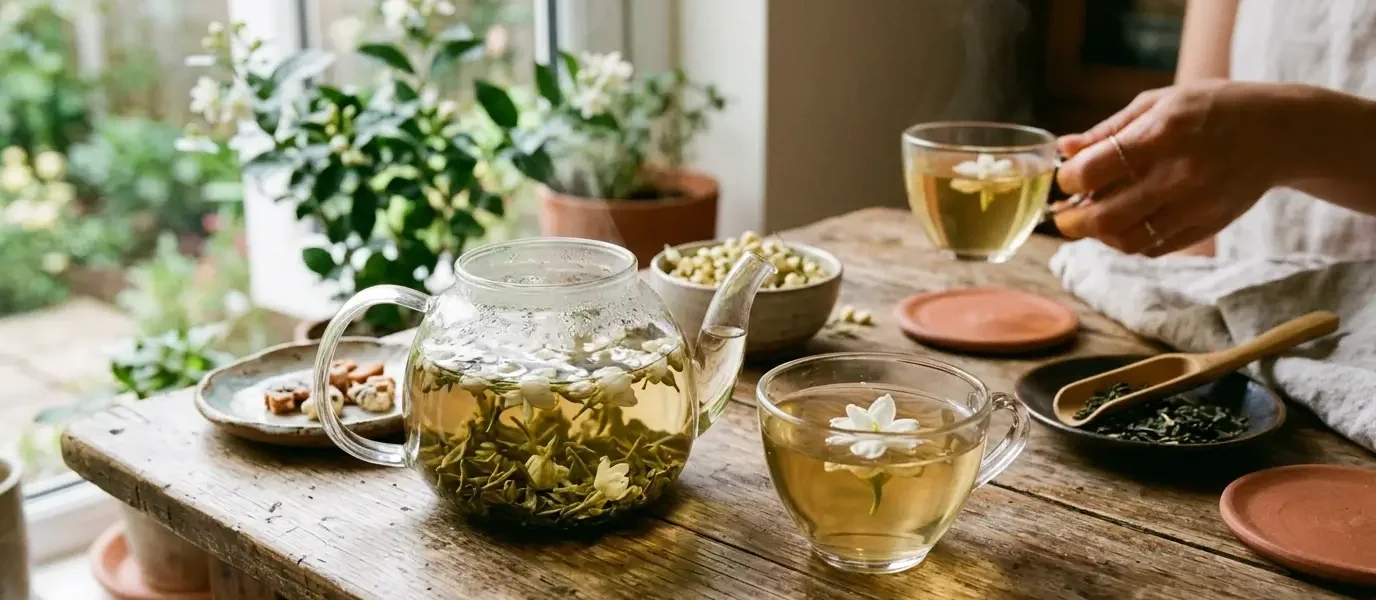
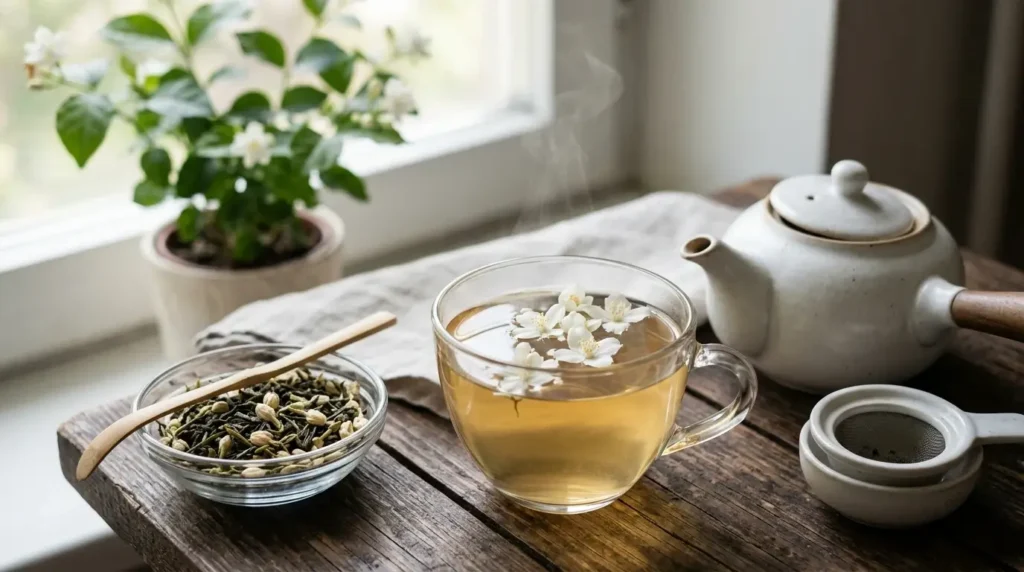
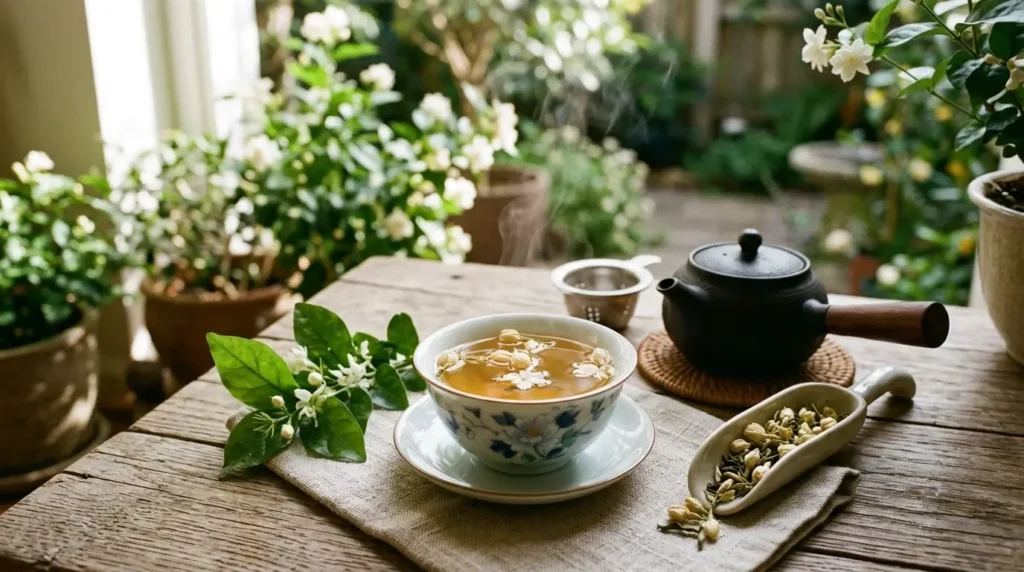
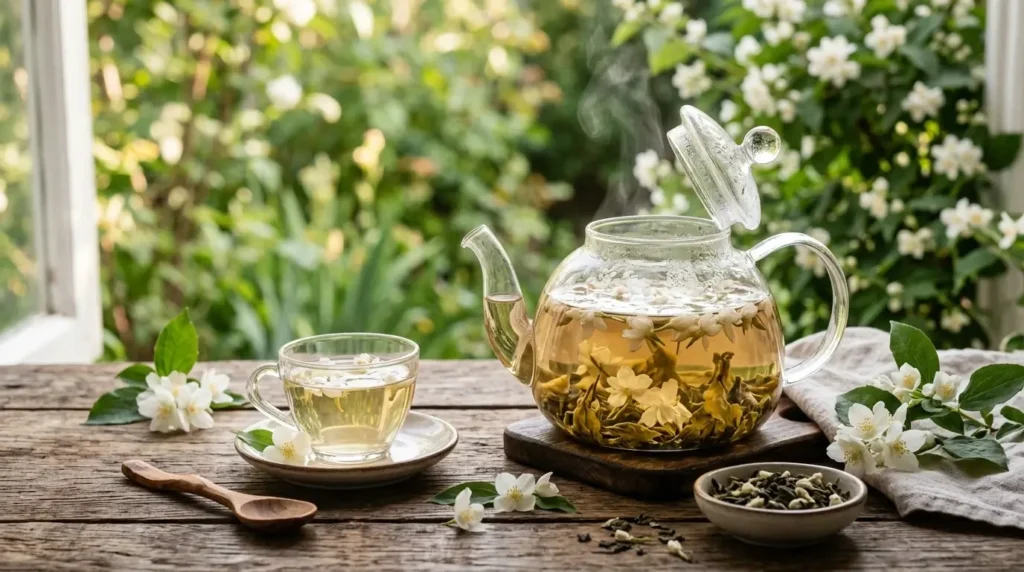
The jasmine tea benefits for skin start with powerful plant-based compounds called polyphenols that act as antioxidants to protect your cells. These polyphenols destroy free radicals, which are a major driver of wrinkles, collagen degradation, and skin damage. In fact, regular consumption of jasmine green tea may help neutralize oxidative stress before it affects your skin. In this guide, I’ll walk you through the science-backed benefits of jasmine tea for skin health, how it compares to green tea, and practical ways to use it both internally and topically for better skin.
Key Takeaways
Jasmine tea delivers powerful skin benefits through EGCG and polyphenols that protect against UV damage, reduce inflammation, and slow aging signs when consumed consistently.
Drink 2-3 cups daily for optimal skin benefits – Regular consumption provides steady antioxidant protection against free radicals and environmental damage
Use cooled jasmine tea as a natural toner – Topical application reduces redness and provides direct antioxidant benefits to skin
Choose jasmine green or white tea for maximum antioxidants – White tea offers highest antioxidant levels, while green tea provides proven EGCG benefits
Brew properly for 5+ minutes at boiling temperature – Proper steeping extracts beneficial polyphenols and aromatic compounds effectively
Patch test before topical use and avoid if pregnant – Safety first – test on small skin area and consult healthcare providers for medical conditions
The combination of internal consumption and topical application creates a dual approach to skin health, working from within while providing direct surface benefits. Consistency matters more than quantity – regular use over weeks delivers better results than sporadic high doses.
What Makes Jasmine Tea Good for Your Skin
Key antioxidants in jasmine tea
Jasmine tea contains a group of bioactive compounds called catechins, which belong to the larger family of polyphenols. These catechins include epigallocatechin gallate (EGCG), epigallocatechin (EGC), epicatechin gallate (ECG), and epicatechin (EC). Each of these compounds functions as an antioxidant, working to neutralize free radicals before they damage your skin cells.
The protective mechanism is straightforward. Free radicals attack fatty acids in your skin and eliminate elasticity through oxidative stress. Antioxidants from jasmine tea intercept these free radicals, protecting your dermal tissues from oxidative damage. Studies show that EGCG extract protected cells from free radicals like DPPH, ABTS, and hydrogen peroxide exposure, with a protective effect ranging from 40-85% against DPPH, 90% from ABTS, and 80% from hydrogen peroxide.
Polyphenols and EGCG explained
EGCG stands out as the most abundant catechin in jasmine tea, contributing about 59% of all catechins. This compound delivers multiple therapeutic properties, including anti-oxidant, anti-inflammatory, and protective effects against various skin stressors.
When you drink jasmine tea, EGCG reduces UVB-induced inflammatory responses in your skin. Research demonstrates that EGCG between 12.5 and 25 µM inhibited ROS production by 50-60% after exposure to skin-damaging substances. Cell viability after UV-B exposure increased by 71-85% following EGCG application.
The compound also stimulates cell proliferation. Cells receiving EGCG supplementation showed increased proliferation of 200-310% during twenty-four hours and 500-600% during seventy-two hours in a dose-dependent fashion, with 25 µM being the optimal dose. Besides protecting against oxidative damage, EGCG supplementation reduced melanin secretion by up to 70% and decreased melanin concentration by up to 50% compared to control cells.
How jasmine flowers add skin benefits
The jasmine flower itself contributes unique compounds beyond what the tea base provides. Specifically, jasmine flowers contain benzaldehyde, benzoic acid, and benzyl benzoate, which possess antibacterial and antiseptic properties that may support sebum regulation.
These compounds work differently from the polyphenols in tea leaves. While polyphenols fight oxidative stress, jasmine flower compounds target bacterial concerns on your skin’s surface. This dual action makes jasmine tea particularly interesting for addressing acne and bacterial skin issues.
The role of the tea base (green, white, or black)
Jasmine tea typically uses green, white, or black tea as its base, and this choice matters for skin benefits. Green tea serves as the most common base and delivers the highest concentration of catechins and EGCG. When jasmine is combined with green tea, you get both the polyphenolic compounds from the tea leaves and the aromatic compounds from jasmine flowers.
The base tea determines the overall antioxidant profile. Green tea contains 42% flavonoid compounds, with EGCG as the most abundant derivative. Studies using green tea extract as a base showed that participants taking 1,500 mg of green tea extract for 4 weeks experienced a significant reduction in acne-related red skin bumps.
One underrated benefit comes from hydration itself. Swapping sugary drinks for unsweetened jasmine tea means you hydrate without added sugar, which has been linked to collagen breakdown. The combination of hydration and active compounds creates a supportive environment for skin health from within.
Science-Backed Jasmine Tea Benefits for Skin
Protects against UV damage and free radicals
Jasmine tea extract shows measurable protection against UVB-induced cell damage. Research on retinal cells exposed to UVB radiation found that jasmine tea treatment increased cell viability to 78% after 30 minutes, compared to just 51% in untreated cells. The protective effect stems from the tea’s ability to reduce intracellular ROS (reactive oxygen species) levels that spike after UV exposure.
Polyphenols in jasmine tea shield your skin from external threats like UV radiation and pollution by fighting oxidative stress. These compounds can even repair DNA damage, which points to potential protection against certain types of skin cancer caused by excessive sun exposure. By neutralizing free radicals before they attack your skin cells, jasmine tea provides a defensive layer against environmental damage.
Reduces inflammation and redness
Clinical studies demonstrate jasmine tea’s anti-inflammatory effects on skin. In one study, green tea extract application reduced redness associated with acne rosacea compared to untreated controls. The polyphenols possess anti-inflammatory and antimicrobial properties that address common skin problems like redness, puffiness, and breakouts.
The tea’s anti-inflammatory action works by soothing skin irritation from within. When your body achieves better internal balance, your skin reflects that externally through reduced inflammation. This makes jasmine tea particularly useful for calming mild redness and irritation.
Slows signs of aging and wrinkles
Free radicals drive collagen degradation and wrinkle formation, but catechins in jasmine tea neutralize those free radicals before damage occurs. Polyphenols protect collagen and elastin, the proteins that give your skin firmness and elasticity.
Research on jasmine residue peptides demonstrated anti-aging effects using human dermal fibroblasts exposed to oxidative stress. The study confirmed these peptides enhance collagen production, improve the extracellular matrix, and effectively reduce skin wrinkles. Observational data has associated regular consumption of 2 to 3 cups daily with maintained skin appearance markers.
Helps with acne and bacterial skin issues
Jasmine flowers contribute benzaldehyde, benzoic acid, and benzyl benzoate, which possess antibacterial and antiseptic properties that may support sebum regulation. A 2016 review found that EGCG in green tea may help improve acne and oily skin.
For jasmine white tea specifically, drinking 2 to 3 cups daily shows effectiveness for acne concerns. The antibacterial properties keep your immune system healthy while reducing oil production and balancing hormones.
Improves skin hydration from within
The simplest benefit might be the most underrated: hydration. Swapping a sugary afternoon drink for unsweetened jasmine tea means you hydrate without added sugar, which has been linked to collagen breakdown. This trade supports your skin’s moisture levels while avoiding compounds that accelerate aging.
Supports even skin tone and reduces pigmentation
Jasmine tea’s antioxidants support your skin’s ability to handle daily stress from sun, pollution, and lifestyle factors. Over time, this gentle support may help your skin appear smoother, clearer, and more even-toned. The protective properties work continuously to maintain skin structure and prevent pigment accumulation that leads to spots.
Jasmine Tea vs Green Tea for Skin: What’s the Difference
In most cases, the jasmine tea you purchase is jasmine green tea, which means green tea leaves scented with fresh jasmine blossoms. This distinction matters because you’re getting the combined benefits of both the tea base and the jasmine flowers, not choosing between two different teas.
Antioxidant levels compared
Green tea ranks second in global tea popularity and contains high levels of catechins, a type of antioxidant and polyphenol. EGCG remains the most abundant polyphenol in green tea, responsible for lowering inflammation and reducing risks of various health conditions. When jasmine flowers are added to green tea, the base antioxidant profile stays largely the same.
However, white tea contains the highest concentration of antioxidants compared to other teas. White tea uses young tea buds and leaves harvested once yearly in early spring, with minimal processing that leaves cell walls intact. This preservation method maintains higher antioxidant levels. Studies suggest white tea extracts boost hyaluronic acid action for more hydrated-looking skin. Additionally, white tea contains less caffeine than green or black tea.
By the same token, black tea offers different properties due to oxidation. Black tea leaves undergo harvesting, drying, rolling, grinding, and fermentation, making it the most oxidized tea type. Black tea extracts perform antibacterial, nourishing, and hydrating functions while protecting skin from environmental damage.
Added benefits from jasmine flowers
Jasmine flowers contribute compounds that plain green tea lacks entirely. The flowers contain benzaldehyde, benzoic acid, and benzyl benzoate, which possess antibacterial and antiseptic properties that support sebum regulation. These compounds work differently from tea polyphenols, targeting bacterial concerns on your skin’s surface rather than fighting oxidative stress internally.
Jasmine also provides vitamins beneficial for skin health. Vitamin C boosts collagen production for firmer skin, while vitamin E protects against damage and promotes hydration. Vitamin A regulates skin cell turnover for even complexion, and vitamin K reduces dark circles by improving blood circulation. The flavonoids in jasmine, including quercetin, kaempferol, and rutin, have antioxidant and anti-inflammatory properties that protect against free radicals, UV radiation, and environmental pollutants.
Which base works best for skin concerns
Green tea bases work well for general antioxidant protection and anti-aging concerns due to high EGCG content. White tea bases suit those seeking maximum antioxidant levels with lower caffeine intake. Black tea bases benefit people dealing with puffiness, as caffeine stimulates microcirculation and helps reduce under-eye swelling.
For acne-prone skin, jasmine white tea shows effectiveness when consumed at 2 to 3 cups daily. The antibacterial properties from jasmine flowers combined with white tea’s anti-inflammatory and anti-bacterial properties create targeted support for breakout-prone skin. Green tea bases equally address acne through EGCG’s ability to improve oily skin conditions.
How to Use Jasmine Tea for Skin Benefits
Best way to drink jasmine tea for skin health
Drinking jasmine tea works from the inside out to support healthier-looking skin. The antioxidants need consistent intake to build up in your system, so regularity matters more than quantity. I recommend choosing loose leaf jasmine green tea rather than tea bags when possible, as real jasmine tea should contain tea leaves infused with jasmine flowers, not actual jasmine petals.
Brewing temperature and steeping time
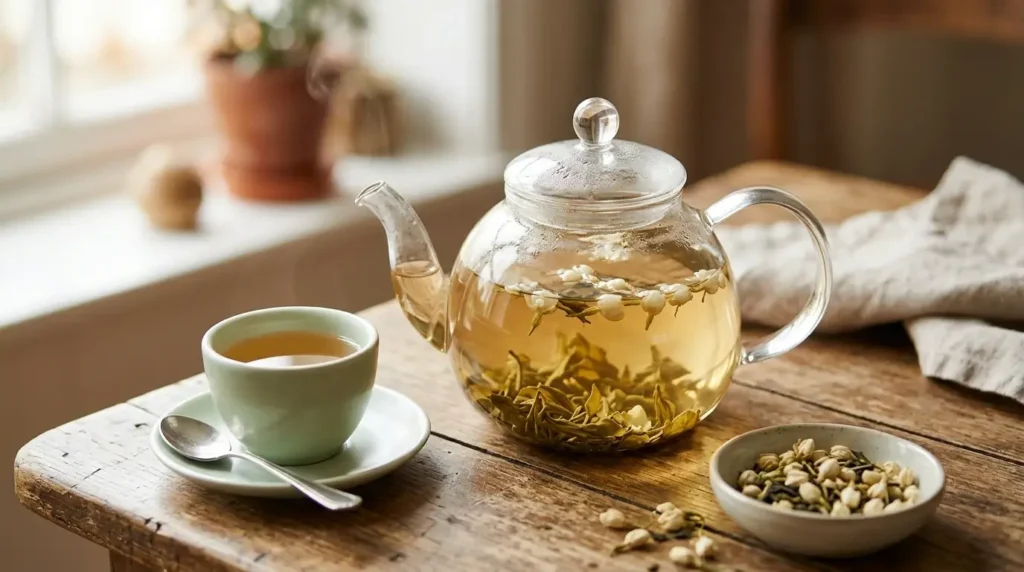
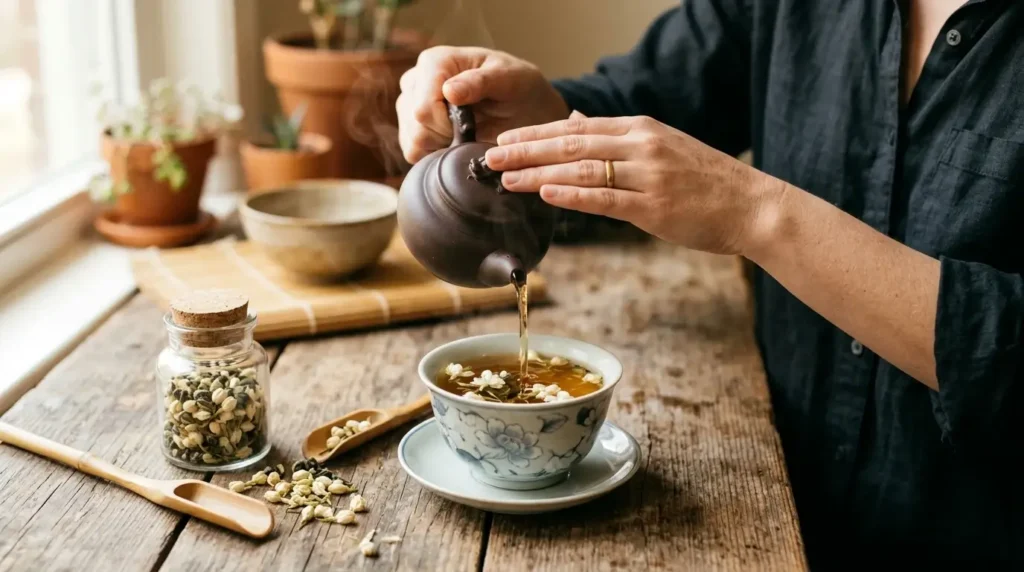
Proper brewing preserves the delicate compounds that benefit your skin. Place one tablespoon of loose leaf jasmine green tea into a cup and pour boiling water over it. Let the tea brew for at least 5 minutes to extract the beneficial polyphenols and aromatic compounds. This steeping time allows the EGCG and other catechins to fully release into the water.
How much to drink daily
For skin benefits, drink 1 to 3 cups daily for steady hydration. Observational data suggests that consuming 2 to 3 cups per day helps maintain skin appearance markers. This amount provides enough antioxidants to fight free radicals without excessive caffeine intake. Note that drinking jasmine tea won’t replace your skincare routine, but the antioxidant and anti-inflammatory properties may offer genuine supportive benefits from within.
Using jasmine tea topically as a toner or compress
A 2021 review found that using green tea extract topically was more effective at treating acne than taking the extract orally. You can use cooled jasmine tea as a gentle face rinse after cleansing. The tea’s compounds help reduce redness and provide antioxidant protection when applied directly to skin. Products like jasmine green tea toners combine jasmine water to reduce redness with green tea extract for antioxidant benefits.
DIY jasmine tea skin rinse recipe
Here’s a simple toner you can make at home using jasmine green tea:
Ingredients: 1 tablespoon loose leaf jasmine green tea, 1 cup filtered water, cotton cloth
Directions: Brew the tea by pouring boiling water over the leaves and steeping for 5 minutes. Before using, cleanse your face and pat dry. Dip the cotton cloth into the cooled tea and gently wipe over your face. You can apply this toner over your entire body after showering. Leave it on your skin to dry without rinsing.
Pregnant and nursing women should consult a healthcare provider before consuming jasmine tea due to its caffeine content and potential effects on uterine contractions. The combination of caffeine and jasmine’s chemical composition creates specific biological triggers that require medical guidance during pregnancy. Children should also avoid jasmine tea, as there are not enough studies available to support the safety of this drink in younger populations.
People with known allergies to jasmine or related plants need to skip jasmine tea altogether. Although rare, allergic reactions can occur, manifesting as skin rashes, itching, or swelling. If you take medications regularly, particularly those metabolized by the liver, consult your doctor before adding jasmine tea to your routine, as it may interfere with certain treatments.
Iron deficiency presents another concern. Catechins in jasmine tea could reduce your body’s ability to absorb iron from foods, potentially increasing your risk of iron deficiency anemia in high quantities. This applies mainly to people already at risk, including pregnant women, young children, and those with dietary restrictions. Under those circumstances, drink jasmine tea between meals rather than with food, or wait at least an hour after eating.
Caffeine concerns for sensitive skin
Jasmine tea contains caffeine, though generally less than coffee or black tea. For caffeine-sensitive individuals, even the modest amount can trigger insomnia, increased heart rate, jitters, anxiety, or upset stomach. If you cannot tolerate caffeine, choose jasmine tea made from decaffeinated green tea.
To avoid disrupting your sleep cycle, stop drinking jasmine tea at least 5 hours before bed. Caffeine can also cause nervousness or irregular heartbeat in some people. If you experience these symptoms, consult your doctor, especially if you have a history of heart problems.
Patch testing for topical use
Before applying jasmine tea topically to your face, perform a patch test. Apply a small amount to the inside of your arm or bend of your elbow and leave it on for the same duration you’d use it on your face. Repeat this test twice daily for 7 to 10 days, as skin reactions can take days to develop. If irritation occurs, wash it off immediately and discontinue use.
Best time to drink for skin benefits
Drink jasmine tea early in the day to maximize skin benefits while avoiding sleep disruption from caffeine. Most people can safely consume up to 8 cups daily, though 2 to 3 cups provides sufficient antioxidants for skin support without excessive caffeine intake.
Conclusion
Jasmine tea offers genuine skin benefits through its powerful antioxidants, particularly EGCG, which protect against UV damage, reduce inflammation, and slow visible aging. While it won’t replace your skincare routine, the combination of drinking 2 to 3 cups daily and using it topically as a toner creates supportive benefits from multiple angles.
The key is consistency. Your skin responds to regular antioxidant intake over time, not overnight transformations. Choose quality loose leaf jasmine green or white tea, brew it properly, and give your body several weeks to show results. Most important, stay mindful of caffeine sensitivity and patch test before any topical application.
FAQs
Q1. Can drinking jasmine tea actually improve my skin’s appearance? Yes, jasmine tea can support healthier-looking skin through its high antioxidant content, particularly EGCG and other polyphenols. These compounds protect against UV damage, reduce inflammation and redness, and help slow visible signs of aging like wrinkles. For best results, drink 2 to 3 cups daily consistently, as skin benefits build up over time rather than appearing overnight.
Q2. How much jasmine tea should I drink daily for skin benefits? Dermatologists recommend drinking 1 to 3 cups of jasmine tea per day for optimal skin support. This amount provides sufficient antioxidants to fight free radicals and support skin health without excessive caffeine intake. Consistency matters more than quantity—regular daily consumption over several weeks yields better results than occasional drinking.
Q3. Can I use jasmine tea directly on my skin, or should I only drink it? You can use jasmine tea both ways. Drinking it provides internal antioxidant support, while applying cooled jasmine tea topically as a toner or compress can directly reduce redness and provide surface-level benefits. Research suggests topical application may be even more effective for certain concerns like acne. Always perform a patch test before applying it to your face.
Q4. Who should avoid drinking jasmine tea? Pregnant and nursing women should consult their healthcare provider before consuming jasmine tea due to caffeine content. People with jasmine allergies, caffeine sensitivity, iron deficiency, or those taking certain medications should also exercise caution. Children should avoid jasmine tea as there isn’t enough safety research for younger populations.
Q5. What’s the proper way to brew jasmine tea for maximum skin benefits? Use one tablespoon of loose leaf jasmine tea per cup and pour boiling water over it. Steep for at least 5 minutes to fully extract the beneficial polyphenols and EGCG. This brewing time ensures you get the maximum antioxidant compounds that support skin health. Drink it early in the day to avoid sleep disruption from caffeine.
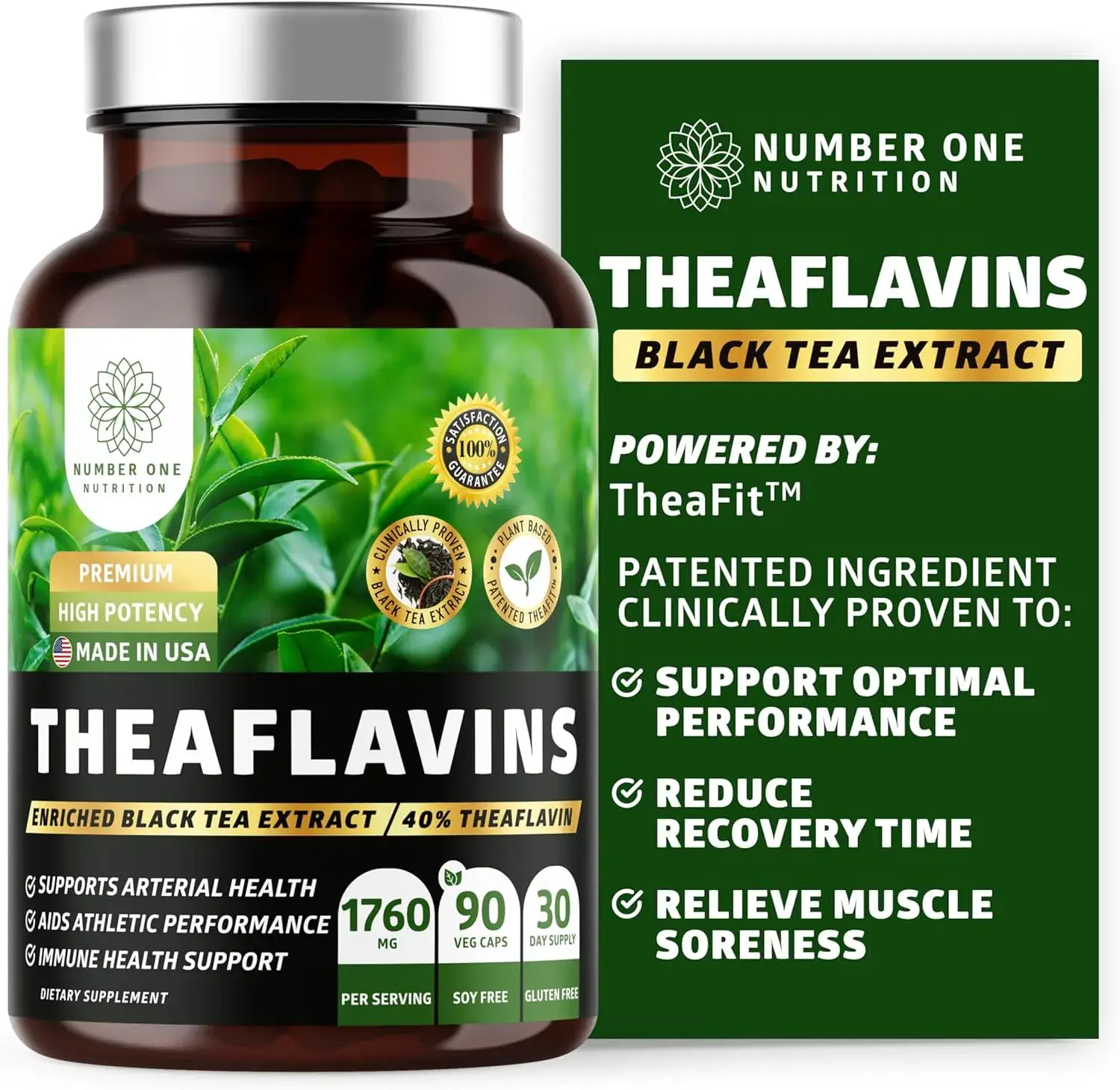
Black Tea Extract that is rich in natural theaflavins and polyphenols that help protect your body from free radicals, promoting overall immune health and well-being
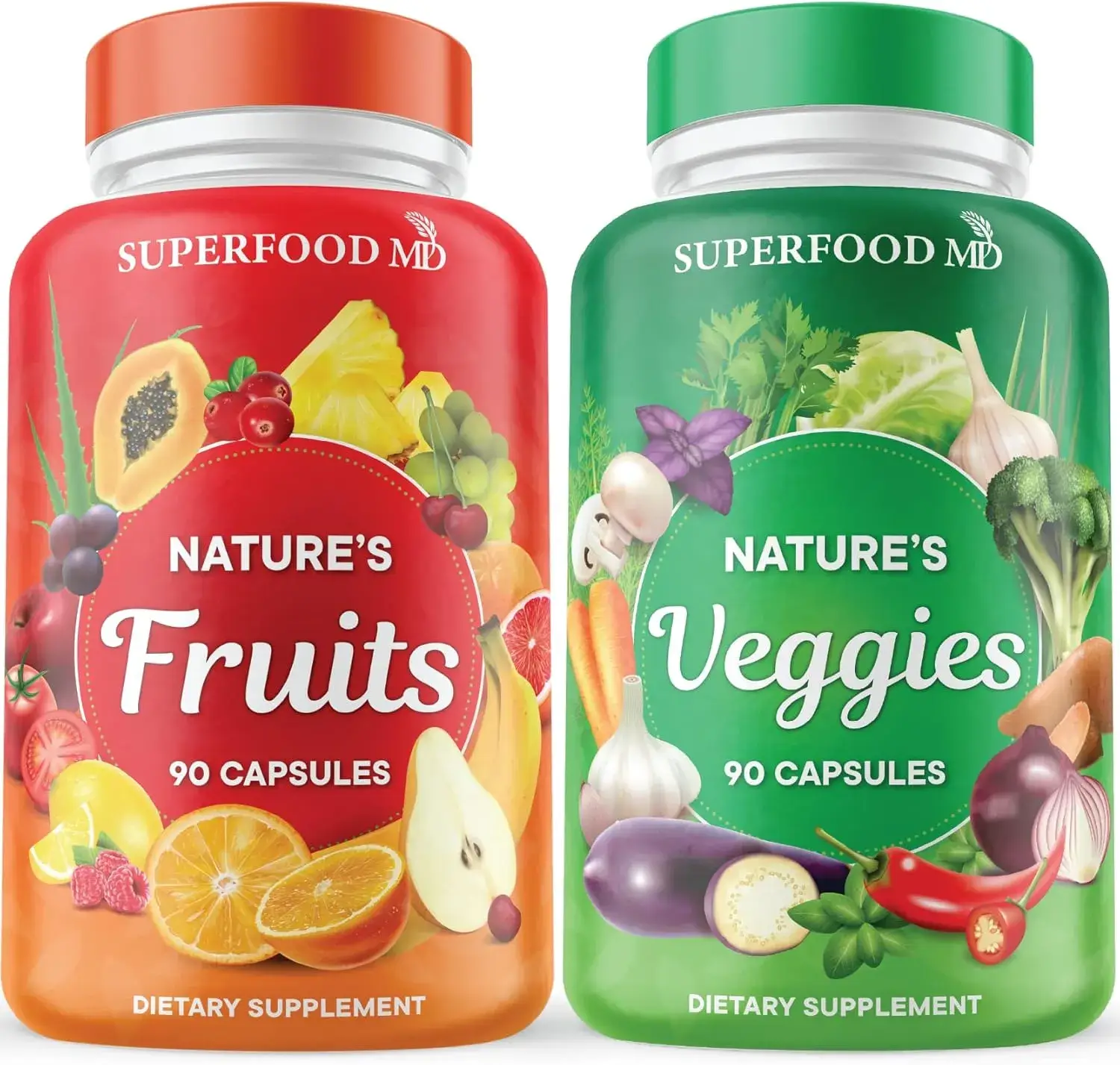
Contains blended amounts of Fruits and Veggies. All natural, with whole foods, fruit and vegetable supplement.Perfect for everyone looking to live a healthier lifestyle.