Did you know that finding the perfect sencha tea to water ratio can completely transform your brewing experience?
While many tea enthusiasts focus solely on water temperature, the three main brewing parameters—leaf-to-water ratio, temperature, and infusion time—all work together to create the ideal cup. Generally, we recommend using 1 teaspoon (approximately 2 grams) of sencha per 200ml of water, although serious tea lovers might prefer a more concentrated 7g for 220ml.
Furthermore, how you make sencha tea depends greatly on the temperature you choose. For a balanced brew with perfect structure, aroma, and umami, aim for 70-80°C water with a 60-second steep. However, if you prefer emphasizing sweetness and umami, try reducing the temperature to 50-60°C while increasing the brewing time to 70-90 seconds. The type of sencha also matters—fukamushi (deep-steamed) sencha typically needs just 45 seconds of brewing time.
Whether you’re new to Japanese green tea or looking to perfect your technique, understanding these precise brewing parameters will help you consistently achieve that perfect cup. In this guide, we’ll show you exactly how to dial in your sencha water ratio, brewing temperature, and steeping time for outstanding results every time.
Understanding Sencha and Its Brewing Needs
Sencha stands as Japan’s most beloved tea variety, accounting for approximately 75% of all Japanese green tea production. Its distinctive character comes from a unique processing method that creates a flavor profile unlike any other tea in the world.
What makes Sencha different from other green teas
Unlike Chinese green teas that undergo pan-firing, sencha leaves are steamed shortly after harvest. This crucial steaming process prevents oxidation and preserves the leaves’ vibrant green color and fresh character. The steaming locks in the natural compounds, creating sencha’s signature taste profile: grassy notes, sweet umami reminiscent of seaweed, and a clean astringency.
Traditionally grown in open fields with full sun exposure, sencha plants produce leaves rich in catechins—compounds that contribute to its characteristic astringent taste. This contrasts with shade-grown teas like matcha and gyokuro, which develop different flavor compounds due to their cultivation methods.
The name “sencha” itself offers insights into its nature—in Japanese, it means either “infused tea” or “steamed tea,” referring to both its preparation method and processing technique. This straightforward name reflects the tea’s honest, direct character that Japanese tea drinkers have appreciated for centuries.
Why brewing precision matters
Sencha is remarkably sensitive to subtle changes in brewing parameters, particularly temperature. This sensitivity isn’t a drawback but rather an opportunity for customization. Water temperature significantly impacts which compounds are extracted from the leaves—too hot, and the delicate balance is lost.
The science behind this sensitivity relates to sencha’s rich biochemical makeup. When brewed at lower temperatures (around 70°C), the extraction favors amino acids that contribute to umami and sweetness. Conversely, higher temperatures above 80°C increase extraction of catechins and aromatic compounds like linalool and geraniol, enhancing floral notes but potentially creating excessive astringency and bitterness.
Therefore, in brewing sencha, precision isn’t merely about preference—it’s essential for accessing the specific flavor profile you desire. With proper temperature control, you can highlight either the tea’s refreshing brightness or its deep umami character, effectively brewing two completely different teas from the same leaves.
How Sencha grades affect brewing
Not all sencha is created equal. Various grades and types require different brewing approaches for optimal results. The primary factors affecting sencha quality include harvest timing and steaming duration.
Harvest timing significantly impacts quality—tea leaves harvested earlier in the year contain more nutrients by far. The first harvest, called shincha or ichibancha, offers the highest quality with rich aroma and elevated umami levels. Second-flush sencha (nibancha) maintains good quality, while later harvests typically produce more ordinary tea.
Asamushi (light steaming for 30-45 seconds): Preserves leaves’ characteristic sweetness with delicate flavor
Chumushi (medium steaming): Delivers well-balanced flavor profile between the other styles
Fukamushi (deep steaming for 60-90 seconds): Creates smaller leaf particles and a rich, cloudy, deep green infusion with intense flavor
Your brewing approach must adjust accordingly—high-grade sencha shines at lower temperatures around 70°C, whereas normal-grade varieties can handle temperatures closer to 90°C. Similarly, brewing times vary from 30-45 seconds for some varieties to 90 seconds for others, depending on their specific characteristics.
Through understanding these distinctions, you’ll be better equipped to adjust your sencha tea to water ratio and brewing parameters for consistently excellent results, regardless of which sencha variety you select.
The Science Behind the Perfect Sencha Brew
Brewing sencha is truly a science experiment in your teacup. The delicate balance of compounds in sencha leaves makes it exceptionally responsive to brewing parameters, especially temperature.
How temperature affects taste compounds
The extraction of flavor compounds in sencha follows distinct patterns based on water temperature. At the molecular level, heat energy determines which compounds dissolve into your brew and at what rate.
Catechins, responsible for sencha’s astringency and bitterness, are particularly temperature-sensitive. Indeed, these compounds extract much more readily at higher temperatures, with a dramatic jump in extraction occurring between 70°C and 90°C. For instance, during short infusions, the difference in catechin extraction between these temperatures is substantial compared to the difference between 50°C and 70°C.
In contrast, caffeine extraction increases more linearly with temperature without the dramatic spike seen with catechins. Meanwhile, amino acids—the source of sencha’s sweetness and umami—extract relatively easily at all temperatures, following a pattern similar to caffeine.
Understanding amino acids, catechins, and caffeine
These three major compounds form the backbone of sencha’s flavor profile:
Amino acids provide the sweet and umami taste that makes sencha so appealing. The primary amino acid in sencha is theanine, constituting more than half of all amino acids present. Notably, theanine has a relaxing effect that counterbalances caffeine’s stimulating properties.
Catechins contribute the bitter and astringent notes. These polyphenols are produced as the plant’s natural protection against UV light. Four types of catechins appear in sencha: epicatechin, epigallocatechin, epicatechin gallate, and epigallocatechin gallate (EGCG). As the tea steeps, catechin levels increase by 12-14% in the first infusion and 14-15% in the second.
Caffeine adds another layer of bitterness, though less intense than catechins. A cup of sencha typically contains 15-30mg of caffeine—still enough for a mild stimulating effect, yet significantly less than coffee’s typical 80mg per cup.
Ideal sencha brew temp for umami and aroma
The perfect brewing temperature depends on which flavor aspects you wish to emphasize. For most sencha varieties, the optimal balance occurs at 70-80°C for about 60 seconds. This temperature range prevents excessive catechin extraction while allowing sufficient release of amino acids and aromatic compounds.
For a cup that emphasizes umami and sweetness, I recommend lowering the temperature to 50-60°C and extending the brewing time to 70-90 seconds. This approach results in a higher ratio of amino acids to catechins, creating a rounder, mellower flavor profile.
Conversely, if you prefer a more structured, refreshing cup with enhanced aromatics, use slightly hotter water (closer to 80°C) with a shorter infusion time. Higher temperatures extract more volatile compounds that contribute to sencha’s complex aroma profile.
For subsequent infusions, the approach changes somewhat. Since the leaves have already unfurled, second infusions require only 10-20 seconds, often with slightly higher water temperatures of 80-85°C to extract the remaining flavor compounds effectively.
Through understanding this interplay of temperature and chemistry, you can fine-tune your sencha brew to consistently achieve your preferred balance of umami, sweetness, bitterness, and aroma.
Precise measurement forms the foundation of consistent sencha brewing. Getting your sencha tea to water ratio right is just as crucial as controlling temperature—yet many enthusiasts overlook this essential parameter.
Standard sencha green tea to water ratio
The ideal sencha to water ratio typically falls between 1-2 grams of tea per 50ml of water. For a standard cup, this translates to approximately 4-5 grams per 180ml (6oz) serving. This ratio creates a balanced extraction that allows sencha’s complex flavor profile to fully develop.
Many traditional approaches recommend using 2-3 grams of tea leaves per cup per person, which corresponds to roughly one teaspoon of leaves. Nevertheless, it’s worth noting that different sources suggest varying measurements—from 4 grams (2 tsp) for 6oz to 5 grams (2 tsp) for 12oz.
Here is a handy guide comparing brewing ratios for various types of Sencha and Japanese teas:
Tea Type
Water Volume
Leaf Amount
Temperature
Steeping Time
Homare Sencha
6 oz (180ml)
4 grams (2 tsp)
140°F (60°C)
90 sec
Sencha Fukamushi
12 oz (350ml)
5 grams (2 tsp)
175°F (80°C) or below
30 – 60 sec
Sencha Chumushi
12 oz (350ml)
5 grams (2 tsp)
175°F (80°C) or below
30 – 90 sec
Sencha Asamushi
12 oz (350ml)
5 grams (2 tsp)
175°F (80°C) or below
1 – 2 min
Gyokuro
6 oz (180ml)
5 grams (2 tsp)
120 – 140°F (50-60°C)
3 – 4 min
Kabusecha
6 oz (180ml)
5 grams (2 tsp)
120 – 140°F (50-60°C)
3 – 4 min
Bancha
12 oz (350ml)
5 grams (1 Tbsp)
175°F (80°C) or above
1 – 2 min
Konacha
12 oz (350ml)
3 grams (1 tsp)
175°F (80°C) or above
30 – 60 sec
Genmaicha / Matcha Genmaicha
12 oz (350ml)
5 grams (1 Tbsp)
175°F (80°C) or above
30 – 60 sec
Kukicha
12 oz (350ml)
5 grams (1 Tbsp)
175°F (80°C) or above
1 – 2 min
Hojicha
12 oz (350ml)
3 grams (1 Tbsp)
200°F (95°C) or above
1 – 2 min
Initially, I suggest starting with the middle range and adjusting according to your preference. A good baseline is 4 grams per 180ml cup, which provides enough tea for proper flavor development without excessive concentration.
How to adjust ratio for different Sencha types
Higher quality senchas benefit from a more concentrated ratio. Consequently, you might use closer to 2g per 50ml for premium varieties, versus 1g per 50ml for everyday sencha. This concentration allows the superior flavor compounds in high-grade sencha to fully express themselves.
Different steaming levels additionally require ratio adjustments:
Fukamushi (deep-steamed): Use the standard ratio but shorten steep time to 30-60 seconds
Chumushi (medium-steamed): Maintain standard ratio with 30-90 second steeping
Asamushi (light-steamed): Standard ratio with slightly longer steep time of 1-2 minutes
Remember that tea leaves absorb water during steeping—approximately four times their mass. As a result, if brewing for multiple people, you’ll need slightly more water than the final serving volume.
Tips for measuring tea leaves accurately
Using a kitchen scale provides substantially more consistency than volume measurements. Essentially, different teas have different densities—a tightly rolled sencha is much denser than a fluffy tea. A scale with 0.1g precision will yield the most reliable results.
For proper measurement:
Place your teapot directly on a zeroed scale
Add leaves until reaching your target weight
Measure water separately using a measuring cup or by weight
Combine for precise brewing
Without a scale, understand that a level teaspoon of sencha typically weighs about 2 grams, not the 4 grams sometimes claimed. Ultimately, regardless of your measuring method, consistency is key—once you find your perfect ratio, maintain it for reliable results.
Remember that using too little tea creates a weak brew, yet too much produces excessive concentration and an unpleasant drinking experience. Through patient experimentation with these guidelines, you’ll discover your ideal sencha water ratio.
Step-by-Step Brewing Instructions
Now that we understand the theory, let’s put our knowledge into practice with a proper brewing method. The ritual of making sencha requires attention to detail to extract its full flavor potential.
Preparing your teaware
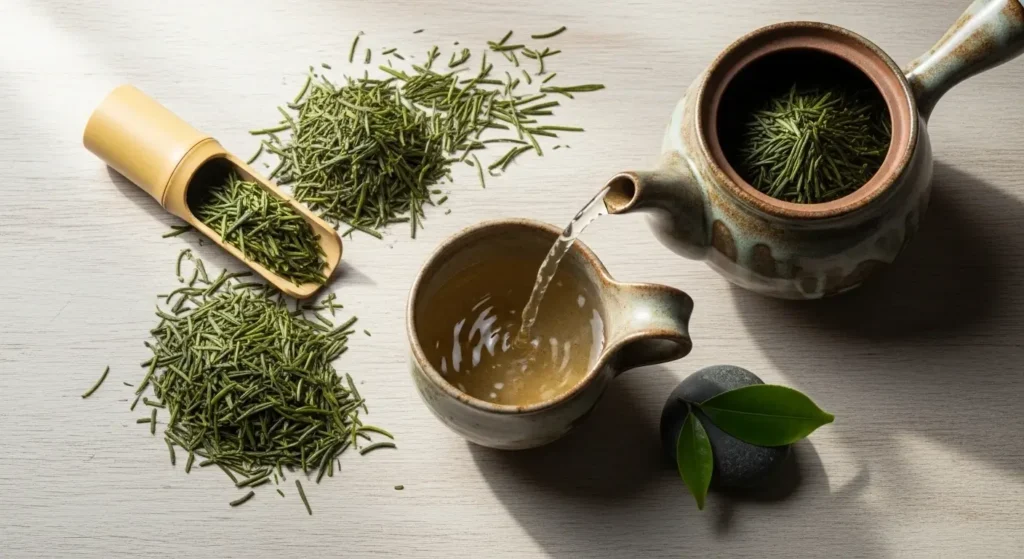
Begin with the right teapot—a kyusu with a 200-300ml capacity works best for brewing sencha. First, boil fresh water and pour it into your empty teapot to preheat it, which simultaneously reduces the water temperature from 90-100°C to about 80-90°C. Next, transfer this water from the teapot to your teacups, further cooling it to the ideal 70-80°C range for sencha. This cooling process is crucial as pouring boiling water directly onto sencha leaves will result in a bitter brew.
How long to steep Sencha for each infusion
For your first infusion, steep the tea for approximately 90 seconds once you’ve added the water to your measured leaves. This timing creates the perfect balance between strength, structure, aroma, and umami. Different sencha varieties may require slight adjustments—fukamushi (deep-steamed) sencha extracts faster due to smaller leaf particles and typically needs only 45-60 seconds.
Pouring techniques for balanced flavor
To ensure each cup has the same richness, pour the tea following the “mawashisogi” technique. For three cups, pour a small amount into each cup in sequence (1-2-3), then reverse the order (3-2-1), repeating until empty. Most importantly, pour until the very last drop—the final drops contain the most concentrated flavor and leaving water in the pot will affect subsequent infusions.
How to make Sencha tea with multiple infusions
After completing your first infusion, open the teapot lid or slide it to allow fresh air in, preventing over-steaming. For the second infusion, use slightly hotter water (about 10°C higher than the first infusion) but with significantly shorter steeping time—approximately 30-45 seconds. Because the leaves are already open and warmed up, they release flavor much faster. For a third infusion, increase the temperature again and adjust steeping time to between 45-60 seconds to extract the remaining flavor compounds.
Through following these methodical steps, you’ll consistently achieve a perfect cup of sencha that showcases its complex flavor profile across multiple infusions.
The right tools make all the difference when brewing exceptional sencha tea at home. First of all, selecting appropriate teaware ensures both flavor accuracy and brewing convenience.
Using a Kyusu teapot vs standard teapots
Traditional kyusu teapots offer significant advantages over regular teapots when brewing sencha. The side-handled design (yokode kyusu) provides better pouring control with minimal wrist strain. Unlike Western-style teapots, kyusu typically holds 200-400ml, perfect for preparing concentrated Japanese green tea. Most importantly, kyusu teapots feature built-in filters at the spout rather than removable baskets, allowing leaves to fully expand while preventing them from escaping.
Temperature control tools and methods
Precise temperature management remains critical for sencha’s delicate flavor profile. A yuzamashi (water cooling bowl) helps adjust boiling water to the ideal 70-80°C for standard sencha. Without one, simply transfer boiling water between vessels—each pour reduces temperature by approximately 5-10°C.
Cold brew and ice brew variations
For refreshing alternatives, try these brewing methods:
Kooridashi (ice brew): Place ice directly on tea leaves, allow to melt completely
How to drink Sencha tea for full experience
To fully appreciate sencha’s complex flavor, pour tea into cups using the mawashisogi method—alternating between cups to ensure balanced concentration. Traditional Japanese drinking custom recommends savoring every last drop, as the final portion contains the most concentrated flavor.
Conclusion
Brewing the perfect cup of sencha tea requires patience, precision, and practice. Throughout this guide, we’ve explored how the delicate balance of leaf-to-water ratio, temperature, and steeping time work together to create an exceptional sencha experience. Undoubtedly, understanding these parameters gives you remarkable control over your tea’s flavor profile.
Remember that quality sencha responds dramatically to small adjustments in brewing technique. The standard ratio of 4 grams per 180ml provides an excellent starting point, though adjustments based on tea grade and personal preference will help you find your ideal balance. Temperature management remains equally critical—70-80°C creates that sweet spot where umami, sweetness, and pleasant astringency harmonize perfectly.
Your brewing journey shouldn’t stop with a single cup. Second and third infusions offer different yet equally rewarding flavor profiles when prepared correctly. The kyusu teapot certainly enhances this experience, allowing leaves to fully expand while giving you better pouring control.
After mastering the basics, feel free to experiment with cold brew and ice brew variations. These techniques unlock completely different flavor dimensions from the same leaves you’ve already come to appreciate.
The time invested in perfecting your sencha brewing technique pays tremendous dividends. Each cup becomes not just a beverage but an experience—a moment of connection with centuries of Japanese tea tradition. Most importantly, the knowledge you’ve gained transforms an ordinary cup of green tea into something extraordinary, allowing you to appreciate sencha’s complex character fully.
Therefore, take what you’ve learned about water ratios, temperatures, and techniques, then make them your own. Sencha rewards those who pay attention to detail while remaining open to discovery. Your perfect cup awaits.
Key Takeaways
Master these essential sencha brewing fundamentals to consistently create exceptional cups that showcase this beloved Japanese green tea’s complex flavor profile.
Use 4 grams of sencha per 180ml of water as your baseline ratio, adjusting based on tea grade and personal preference
Brew at 70-80°C for 60-90 seconds to balance umami sweetness with pleasant astringency—avoid boiling water which creates bitterness
Pour using the mawashisogi technique (alternating between cups) and extract every last drop for maximum flavor concentration
Adjust parameters by tea type: fukamushi needs only 45 seconds, while premium grades benefit from lower temperatures around 70°C
Multiple infusions unlock different flavor profiles—use hotter water and shorter steeping times for second and third brews
Perfect sencha brewing is about precision and patience. Temperature control matters more than most realize, as it determines whether you extract delicate umami compounds or harsh catechins. With proper technique, you can transform the same leaves into completely different flavor experiences across multiple infusions.
Q1. What is the ideal water-to-tea ratio for brewing sencha? A good starting point is 4 grams of sencha per 180ml of water. However, you may need to adjust this ratio based on the grade of tea and personal preference. Higher quality senchas often benefit from a more concentrated ratio.
Q2. What’s the optimal water temperature for brewing sencha? The ideal temperature range for brewing sencha is typically between 70-80°C (158-176°F). This temperature range helps extract the tea’s umami and sweetness while minimizing bitterness. For premium grades, you might want to use water closer to 70°C.
Q3. How long should I steep sencha tea? For the first infusion, steep sencha for about 60-90 seconds. Subsequent infusions require shorter steeping times, usually 30-45 seconds for the second infusion. Adjust the time based on the specific type of sencha – for example, fukamushi (deep-steamed) sencha typically needs only 45-60 seconds.
Q4. Can I brew sencha multiple times? Yes, sencha can be brewed multiple times. For the second and third infusions, use slightly hotter water and shorter steeping times. The flavor profile will change with each infusion, offering a different but equally rewarding experience.
Q5. What’s the best way to pour sencha tea? Use the “mawashisogi” technique when pouring sencha. For three cups, pour a small amount into each cup in sequence, then reverse the order, repeating until the teapot is empty. Be sure to pour out every last drop, as the final portion contains the most concentrated flavor.
Black Tea Extract that is rich in natural theaflavins and polyphenols that help protect your body from free radicals, promoting overall immune health and well-being
Contains blended amounts of Fruits and Veggies. All natural, with whole foods, fruit and vegetable supplement.Perfect for everyone looking to live a healthier lifestyle.