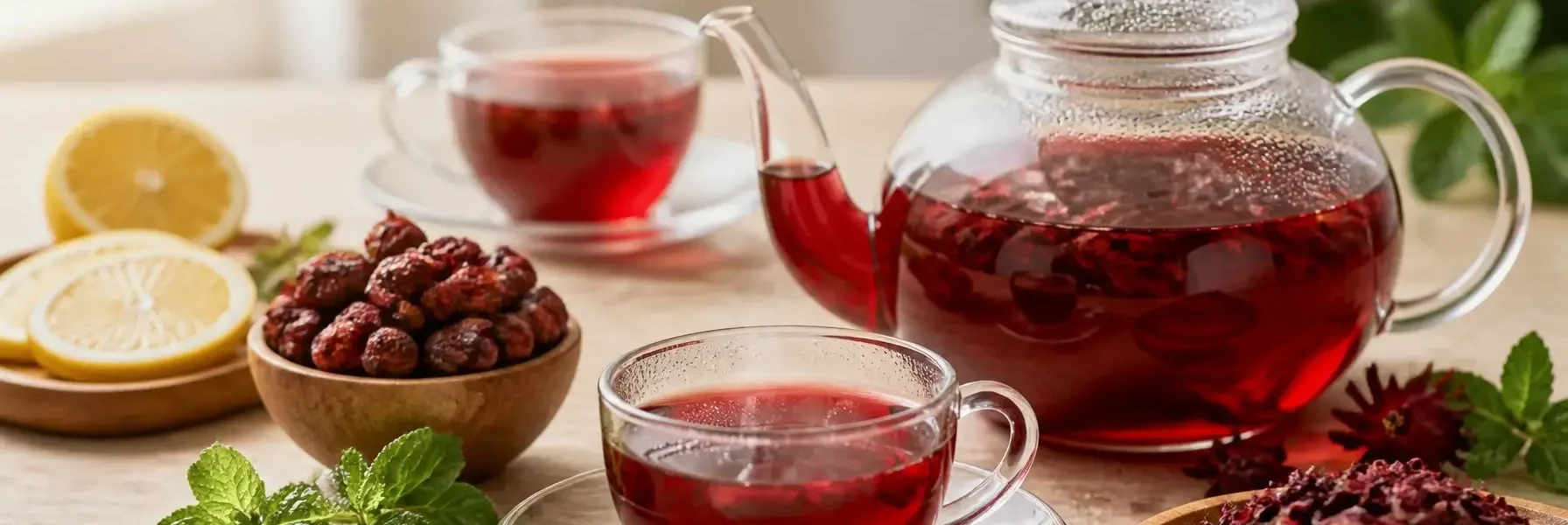
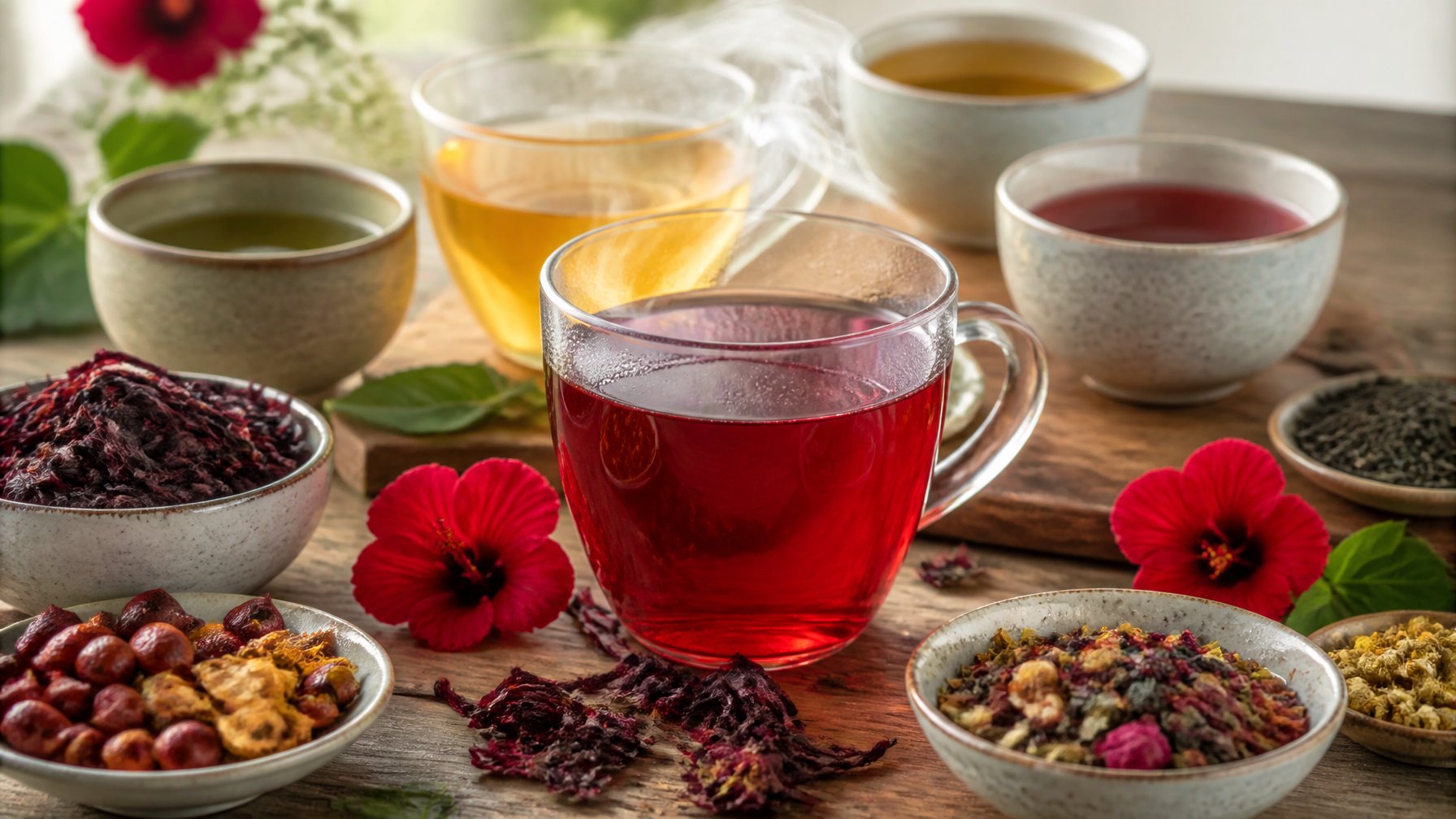
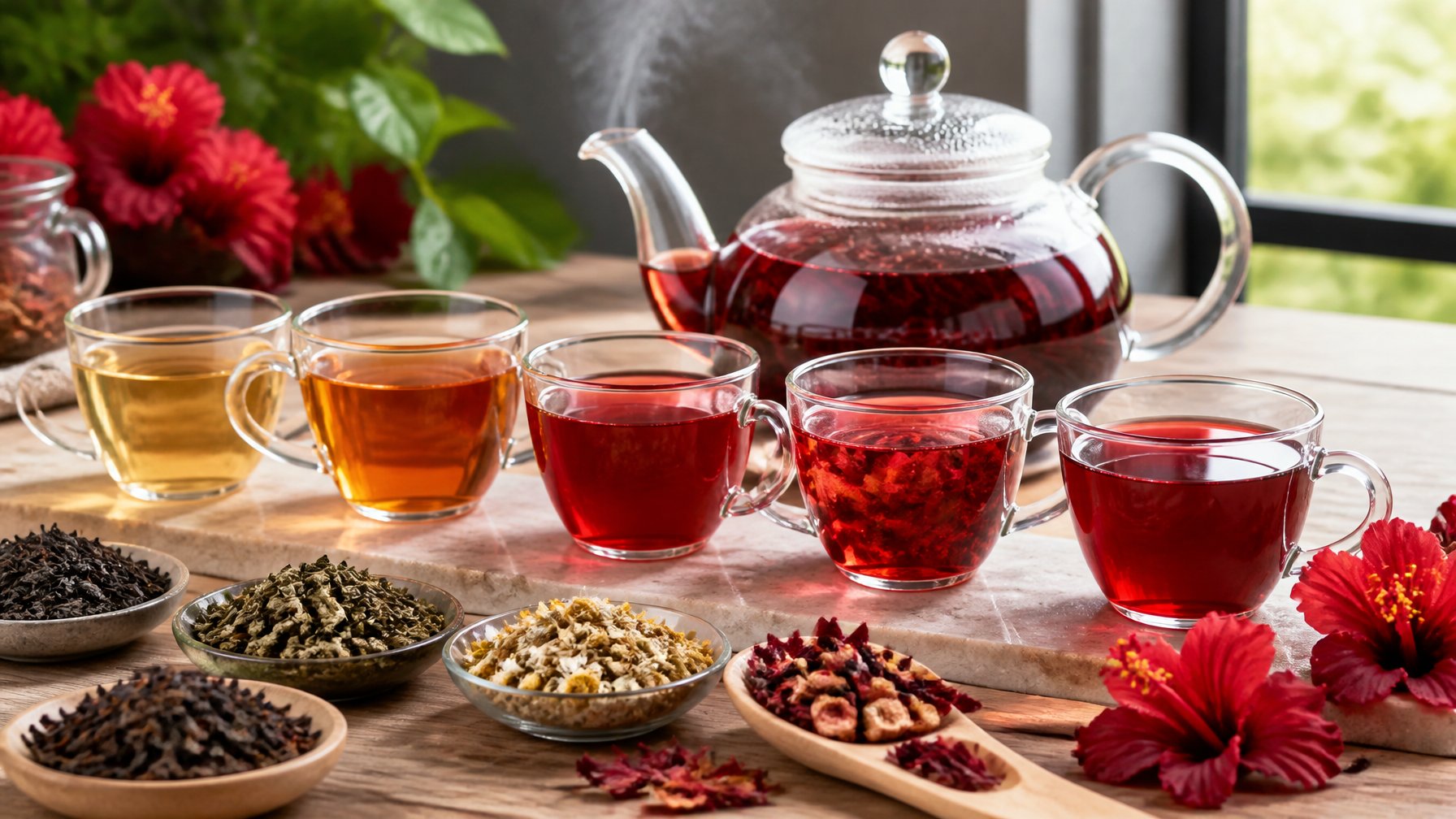
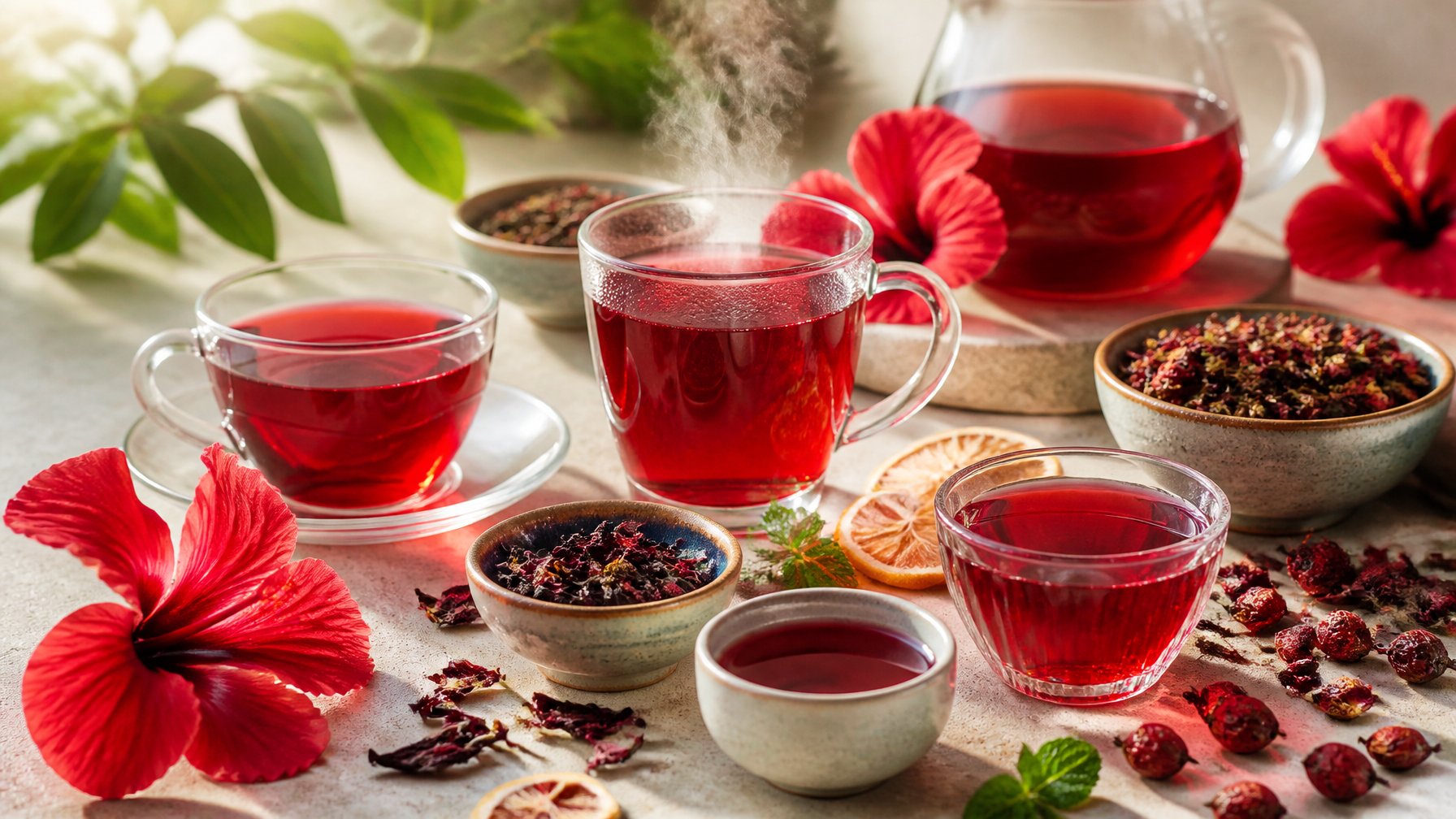
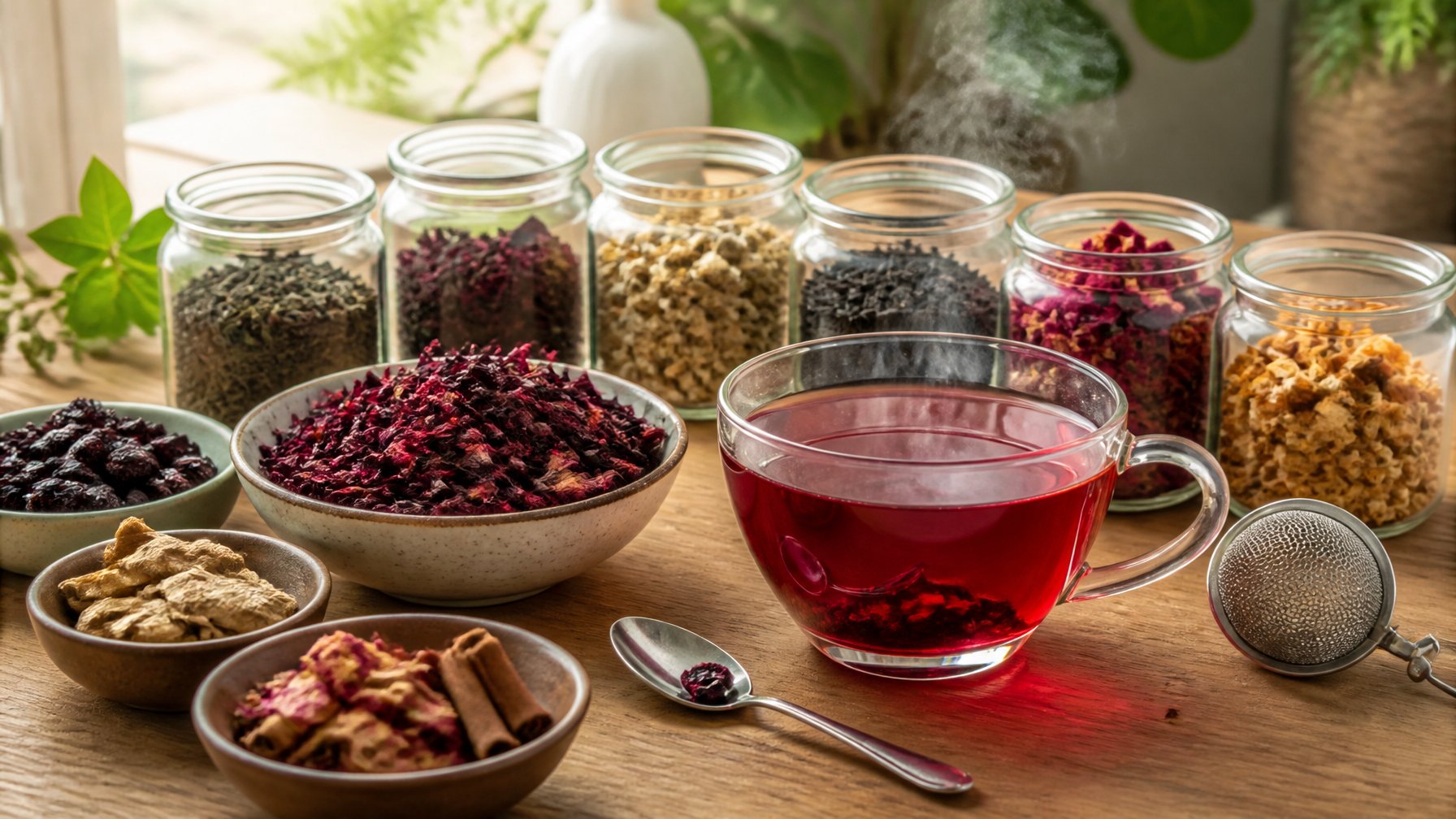
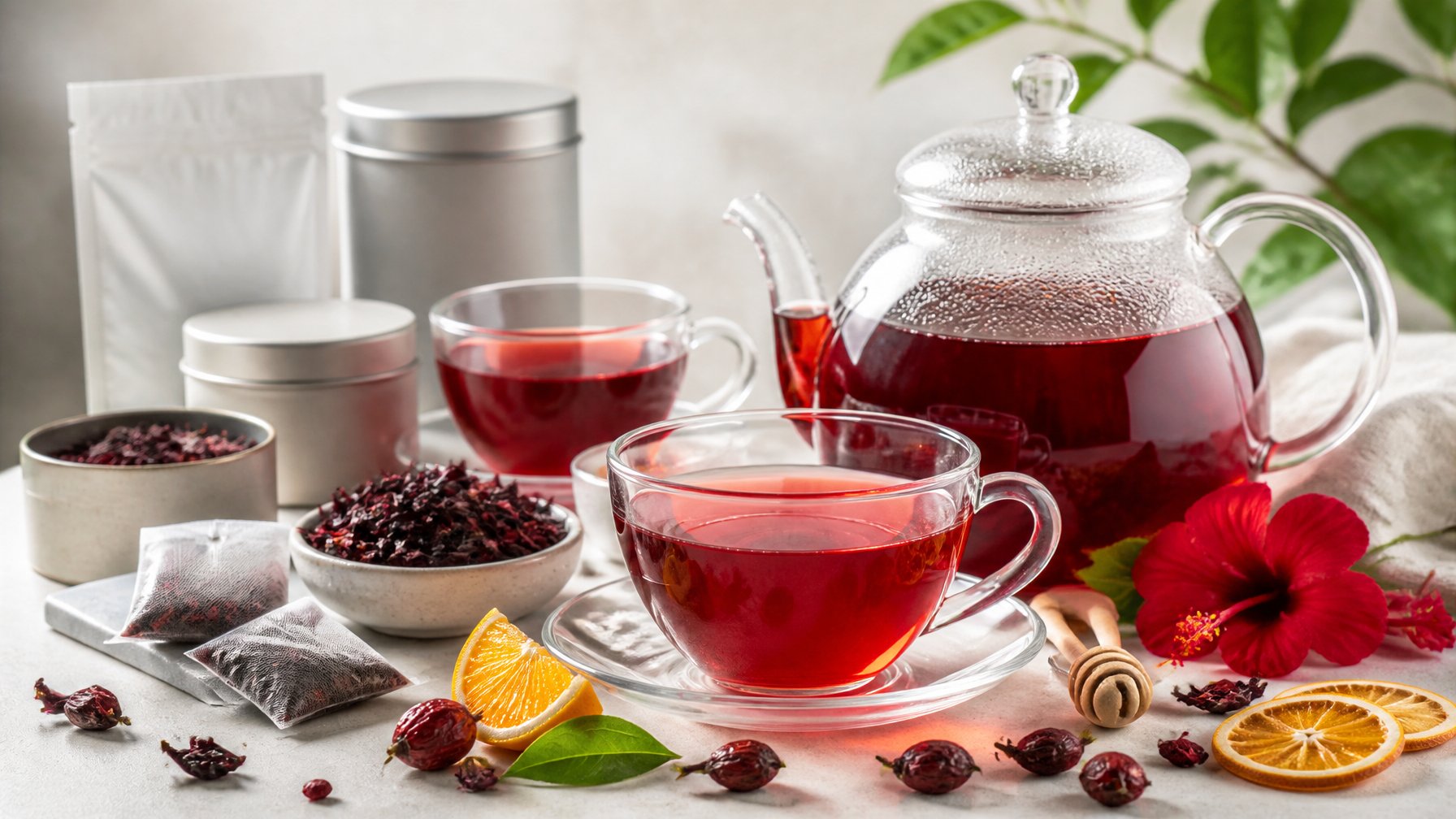
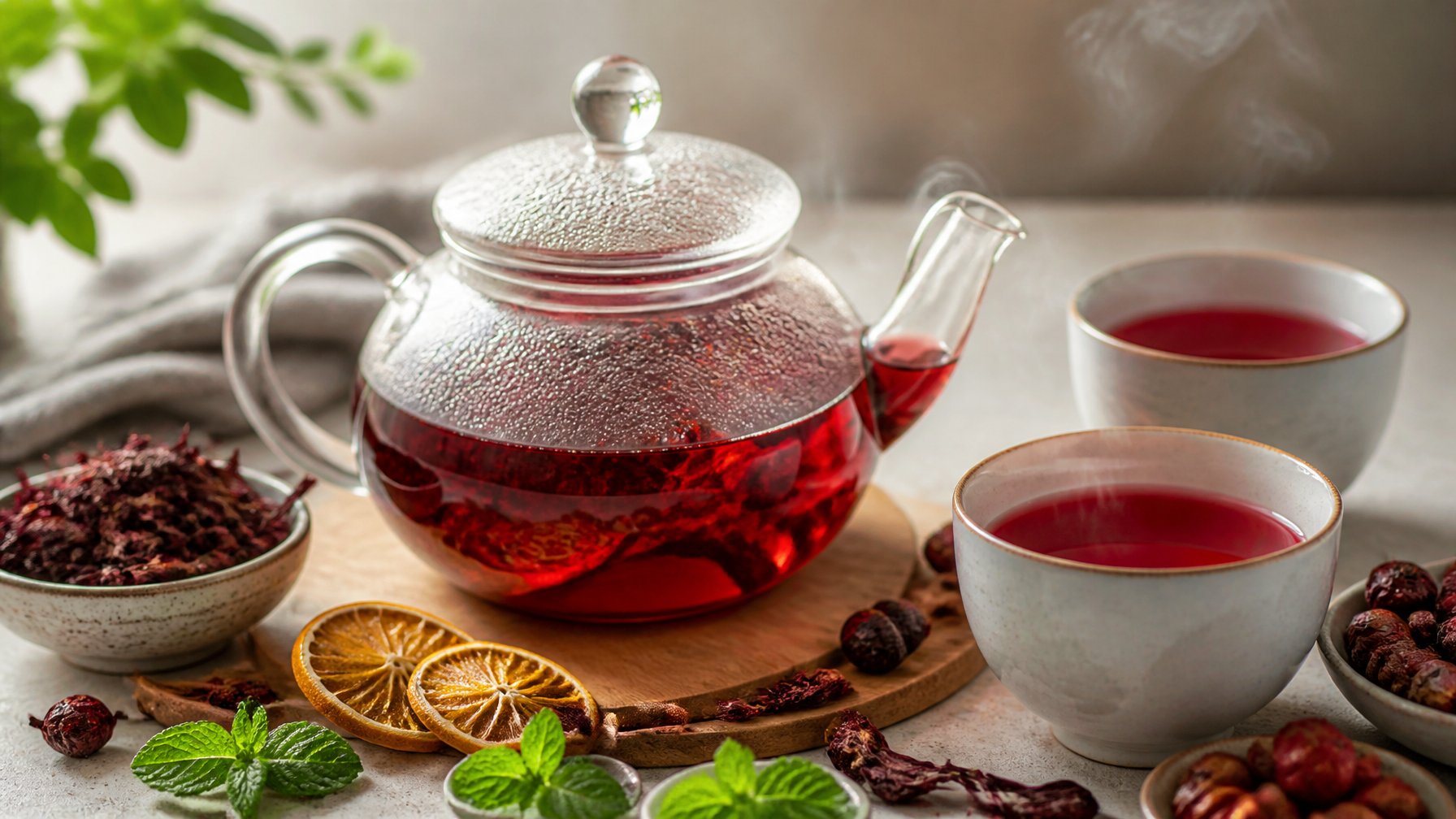
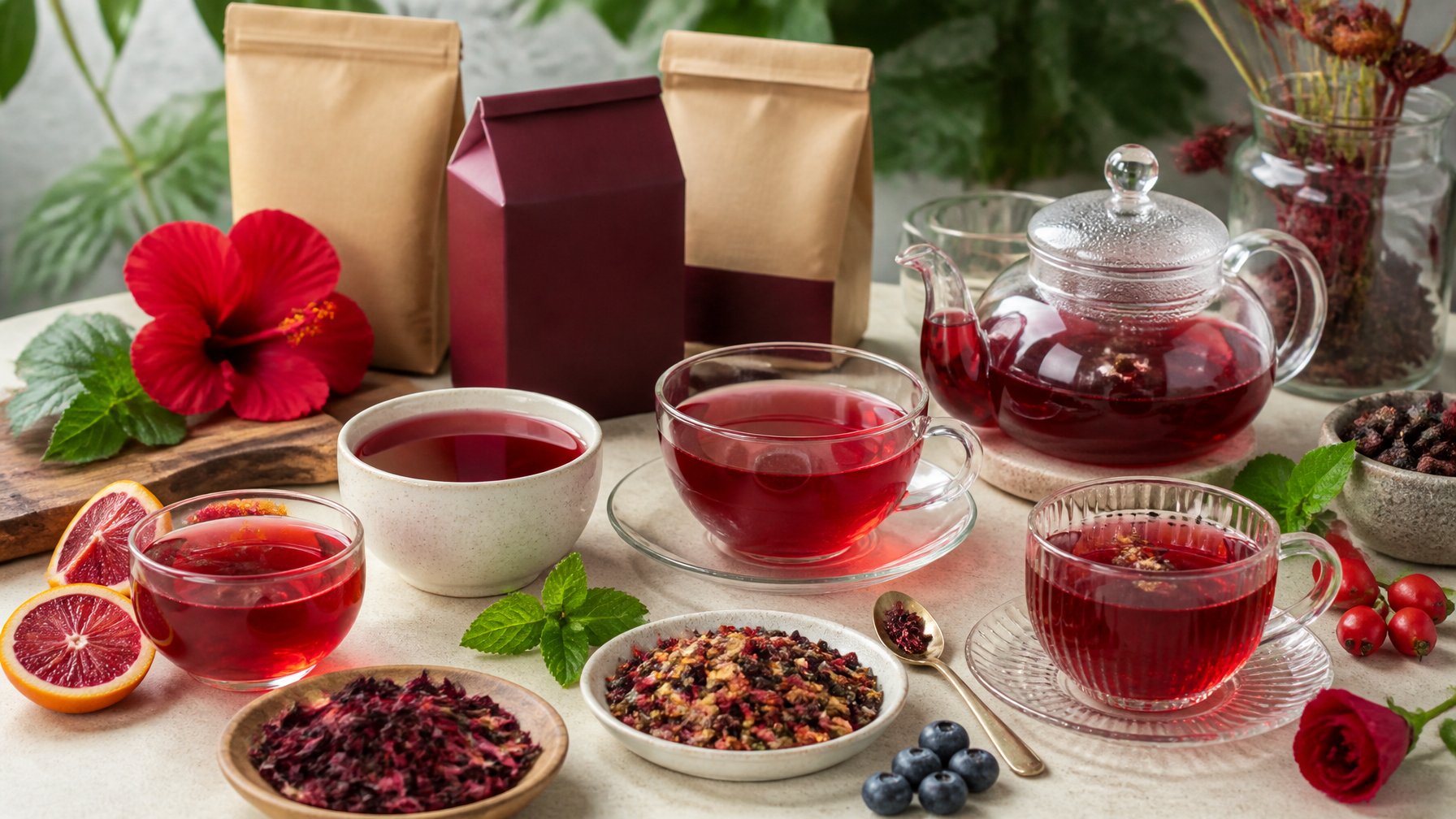
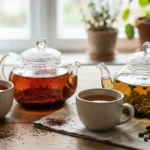
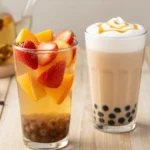
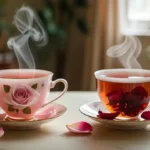
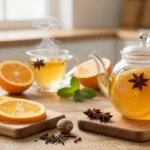
If you have ever picked up a fruity herbal tea and noticed a deep red color in your cup, hibiscus was probably the reason. The dried petals of the Hibiscus sabdariffa flower show up in far more blends than most people realize—and it’s why many readers ask what teas have hibiscus in them.
Hibiscus appears in pure hibiscus herbal tea, fruit and berry blends, spiced chai-style mixes, “detox” and immunity teas, red rooibos combinations, and even some green and black tea blends. You will also find it in traditional drinks like Egyptian karkade, Caribbean sorrel, and Mexican agua de jamaica. Some brands sell it as a single ingredient, while others use it as a base that gives fruit blends their tart flavor and bright color.
Knowing which teas contain hibiscus helps you pick the right one for your taste. A tart, cranberry-like flavor works well in iced drinks but may surprise you in a hot cup. The rest of this guide walks through the common blend types, what to look for on a label, and how to brew each one.
Key Takeaways
Hibiscus shows up in pure herbal infusions, fruit blends, spiced mixes, and some green and black teas.
The flower adds a tart taste and deep red color, and it is used in traditional drinks across Africa, the Caribbean, and Latin America.
Whole petals usually give better flavor than fine dust, and cooler steeping keeps the tartness mild.
Tea Types That Commonly Include Hibiscus
Hibiscus shows up in four main places on the tea shelf: on its own, in fruit blends, mixed with real tea leaves, and combined with herbs and spices. Each style changes how tart, sweet, or spiced the final cup tastes.
Pure Hibiscus Flower Tea
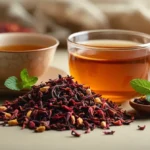
Pure hibiscus tea uses only the dried calyces of Hibiscus sabdariffa. The calyx is the red, fleshy part left after the petals drop, not the flower petal itself.
You will see it sold whole, cut, or ground into powder. Whole and large-cut pieces work best for brewing, while powdered hibiscus is better for cooking and coloring food.
The taste is sharply tart, close to cranberry or sour cherry. Brewed hibiscus flower tea usually lands around pH 2.5 to 3.0, which is similar to lemon juice.
This version is also sold under regional names like karkade in Egypt, flor de jamaica in Mexico, bissap in Senegal, and zobo in Nigeria.
Fruit and Berry Herbal Blends
Most red “berry” or “fruit” herbal teas you find in grocery stores contain hibiscus. It gives the blend both its deep red color and its tart backbone.
The classic pairing is hibiscus and rosehip. Rosehip brings a mild, apple-like sweetness that softens the acid.
Common partners in these blends include:
Dried apple pieces for body and natural sweetness
Orange peel or lemon peel for a brighter citrus note
Pineapple and mango pieces for tropical sweetness
Elderberry, raspberry, or strawberry for jammy fruit flavor
Tropical fruit blends work especially well iced. The sugars in pineapple and mango balance hibiscus without needing much added sweetener.
Hibiscus Black Tea and Other True-Tea Blends
Hibiscus is also blended with Camellia sinensis leaves. Hibiscus black tea is the most common version, since strong black tea can stand up to the tartness.
Keep one thing in mind: these blends contain caffeine. Pure hibiscus has none, but the black, green, or white tea in the mix does.
Popular examples include:
Blend type
What hibiscus adds
Hibiscus + black tea
Fruity tartness, deeper red color
Hibiscus + green tea
Bright acidity against grassy notes
Hibiscus + rooibos
Extra color; still caffeine-free
Iced tea blends with lemon
Sharper, more refreshing finish
Rooibos is technically an herb, not a true tea, so those blends stay caffeine-free.
Botanical Blends With Herbs and Spices
Herb and spice blends use hibiscus as a base and build flavor on top of it. These follow the same logic as traditional recipes from West Africa and Mexico.
Ginger adds a peppery warmth and appears in most zobo-style blends. Use about half as much ginger as hibiscus by weight, since it takes over quickly.
Mint cools the tartness and is the standard addition in Senegalese bissap. Lemongrass brings a grassy, citrus-like brightness that pairs naturally with fruit notes.
Cinnamon shows up in Mexican agua de jamaica. Cloves work in small amounts, roughly two or three per liter.
You will also find hibiscus in detox, sleep, and immunity blends, often mixed with chamomile, lemon balm, or licorice root.
How Hibiscus Changes a Tea’s Flavor and Color
Hibiscus adds a sharp, sour bite and a deep red color to any blend it joins. The amount of dried petals in the bag decides how strong both of those effects will be.
The Tart, Cranberry-Like Hibiscus Tea Taste
The hibiscus tea taste is often compared to cranberry juice or sour cherry. It is fruity, sharp, and slightly astringent, with a dry finish that hits the sides of your tongue.
That sourness is real, not just a perception. Hibiscus is one of the most acidic herbal teas, sitting around a pH of 2.5 to 3.5, closer to lemon juice than to plain water.
The color comes from the same chemistry. Hibiscus flowers contain pigments called anthocyanins, which produce red, pink, and purple shades.
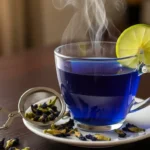
These pigments react to acidity. Add lemon and the cup turns brighter red; add something alkaline like baking soda and it shifts toward purple or blue. Hard water with more minerals can also dull the red slightly.
Balancing Tart Tea With Fruit, Citrus, or Sweeteners
Straight hibiscus can be too sour for some people. Blends fix this by pairing the petals with sweeter ingredients.
Common pairings you will see on ingredient lists:
Add-in
What it does
Pineapple, mango, peach
Adds natural sugar that softens the sour edge
Rosehips
Adds body and a rounder, jammy flavor
Lemon or orange peel
Keeps the tea bright and deepens the red color
Cinnamon, ginger, mint
Shifts the focus away from acidity
Honey or cane sugar
Directly cuts sourness in the cup
Brewing time matters too. A short 3 to 4 minute steep gives you a lighter, less sour cup, while 8 minutes or more pulls out more acid and tannin.
Iced hibiscus tea usually needs more sweetener than hot tea. Cold temperatures make your tongue less sensitive to sweetness, so a syrup that tastes right when warm can taste flat over ice.
Caffeine Content in Pure and Blended Options
Pure hibiscus is naturally caffeine-free. The dried calyces come from the flower, not from the tea plant, so there is no caffeine in a cup made only from hibiscus petals.
That changes when hibiscus is blended with true tea. If the label lists black tea, green tea, white tea, or oolong, the drink will contain caffeine.
Rough numbers to keep in mind:
Pure hibiscus or hibiscus with fruit and herbs: 0 mg
Hibiscus blended with green tea: roughly 25 to 45 mg per cup
Hibiscus blended with black tea: roughly 40 to 70 mg per cup
Check the ingredient list rather than the flavor name. Products called “hibiscus berry” or “tropical hibiscus” are usually caffeine-free, but a “hibiscus chai” almost always has black tea in it.
The same plant, Hibiscus sabdariffa, shows up in kitchens on four continents under different names. Whether you order agua de Jamaica in Guadalajara, karkade in Cairo, or sorrel in Kingston, you are drinking an infusion of dried roselle calyces — just prepared with different sweeteners, spices, and serving temperatures.
Agua de Jamaica in Mexico
Agua de Jamaica is one of Mexico’s standard aguas frescas, sold alongside horchata and tamarind at taquerías and market stalls.
You make it by simmering dried hibiscus flowers in water, straining out the solids, then sweetening with sugar and chilling over ice. The result is tart, deep red, and closer to cranberry juice than to any leaf tea.
The drink reached the Americas through the transatlantic slave trade and was likely first cultivated in Brazil before spreading across Mexico, Central America, and the Caribbean.
Cooks often add lime, mint, or a cinnamon stick. The strained flowers get a second life too — many households chop them into tacos or empanada fillings.
Karkade and Middle Eastern Preparations
In Egypt and Sudan, the drink is called karkade (also spelled karkadeh). Unlike the Mexican version, it is frequently served hot.
Karkade has a formal place at weddings in both countries, where a glass is used for the celebratory toast. In Cairo, street vendors and open-air cafés pour it year-round, hot in winter and iced in summer.
Common additions include:
Sugar — added generously while the infusion is still hot
Mint — for a cooling finish in chilled versions
Cloves or cinnamon — for warmth in winter preparations
Italy adopted the drink as carcadè after it was introduced from Eritrea, where it is usually taken hot with sugar and a slice of lemon or orange.
Zobo and Caribbean Sorrel
Zobo is Nigeria’s version. You boil the dried calyces with ginger and cloves for under an hour, strain, and serve it hot or cold. Pineapple, orange, or watermelon juice often goes in as a natural sweetener.
Neighboring countries use their own names: sobolo in Ghana, bissap in Senegal and Burkina Faso, where mint is a frequent addition.
In the Caribbean, the same infusion is called sorrel and is tied to Christmas. Jamaican cooks steep the flowers with ginger, cloves, and orange peel, then add sugar and sometimes rum, serving it beside fruitcake or sweet potato pudding.
Caribbean immigrants carried sorrel to North America, where hibiscus belongs to the family of “red drinks” in soul food cooking and now appears regularly at Juneteenth gatherings.
How to Choose a Quality Hibiscus Blend
The form you buy, the labels on the box, and the ingredient list all shape how tart, red, and fresh your cup turns out. A few quick checks will tell you whether you’re getting whole Hibiscus sabdariffa calyces or leftover dust.
Loose Leaf Hibiscus Tea Versus Hibiscus Tea Bags
Loose leaf hibiscus tea gives you large, curled pieces of dried hibiscus flowers. You can see the size and color before brewing, which is a strong clue about quality.
Tea bags hold smaller broken bits. These brew fast and taste sharp, but they lose aroma faster and often produce a flatter cup.
Price also differs. Single-ingredient loose calyces from a bulk supplier usually cost less per cup and give a more vivid flavor than boxed blends.
Some reviewers describe the difference as high-quality loose-leaf versus the dusty tea bags on store shelves. If you want convenience, look for pyramid sachets with visible flower pieces instead of flat paper bags.
Organic, USDA Organic, and Fair Trade Labels
Hibiscus grows in warm regions, and labels tell you how it was farmed and handled.
Label
What it means for your tea
USDA Organic
Grown without most synthetic pesticides and fertilizers; verified by a third party
USDA certified organic seal
The full organic certification is on file, not just a marketing claim
Fair Trade Certified
Growers meet set labor and pay standards
Brands handle this differently. Traditional Medicinals works with Fair Trade growers with labor standards, while other companies list their farms directly.
Watch for vague wording. “Natural” and “pure” carry no legal meaning, so check for an actual certifier name on the package.
Ingredients, Freshness, and Sourcing to Check
Read the ingredient list first. The best hibiscus tea for a strong tart cup lists hibiscus alone, or hibiscus plus one or two named additions like rosehip, ginger, or orange peel.
Skip blends that hide hibiscus behind “natural flavors” or added sugar.
Color matters. Fresh dried calyces are deep burgundy; brown or faded pieces have sat too long.
Also check for:
A harvest or packed-on date, not just a distant expiration date
Named origin, such as Egypt, Nigeria, Sudan, or Mexico
Resealable, opaque packaging that blocks light and air
Organic hibiscus tea brands that name their region and growing method, such as rain-fed farms and transparent sourcing, give you more to verify than an unlabeled bulk bin.
Hibiscus shows up in three main formats: pure dried calyces sold loose, single-ingredient tea bags on grocery shelves, and blends where hibiscus is mixed with fruit, mint, or spices. Knowing which style you want makes it much easier to pick a brand.
Best Hibiscus Tea Brands for Pure Flower Tea
Pure hibiscus means one ingredient: dried calyces, sometimes labeled flor de Jamaica or roselle.
Loose flowers usually give you a deeper red cup and a sharper tart flavor than bags, and they tend to cost less per serving. Reviewers who tested several options found that single-ingredient loose calyces deliver more vivid flavor than most packaged blends.
A few names come up often for pure flower tea:
Rishi Tea – organic loose hibiscus, sold in bulk tins
Frontier Co-op – bulk cut-and-sifted hibiscus by the pound
Starwest Botanicals – another bulk herb supplier with organic options
Both Rishi and Traditional Medicinals carry USDA-organic certification for their hibiscus products.
Convenient Bagged and Everyday Grocery Options
Hibiscus tea bags cost more per cup, but they take the guesswork out of measuring and straining.
Traditional Medicinals Organic Hibiscus is one of the most widely stocked single-ingredient bags in U.S. grocery stores. The Republic of Tea sells hibiscus in its round bags, including a plain version and several flavored ones.
You’ll also find hibiscus in store brands and in big-name herbal boxes like Celestial Seasonings Red Zinger, where it’s blended with lemongrass and peppermint.
One thing to check: because hibiscus is so popular as a caffeine-free drink, plenty of companies sell it, from specialty tea shops to bulk herb suppliers.
Read the ingredient list. Some “hibiscus” bags are mostly rosehips or apple pieces with a little hibiscus added for color.
Fruit-Forward and Specialty Hibiscus Tea Blends
Straight hibiscus is tart. Blends soften that edge by pairing it with sweeter or warmer ingredients.
Common pairings include:
Blend Style
Typical Additions
Berry
Elderberry, blueberry, rosehip
Citrus
Orange peel, lemongrass, lemon myrtle
Spiced
Cinnamon, ginger, clove
Cooling
Peppermint, spearmint
Specialty brands build these blends to balance hibiscus acidity with fruit or spice, which makes them easier to drink without sweetener.
Blends work especially well iced. The fruit notes come forward as the tea cools, and you can skip the honey most people add to plain hibiscus.
Brewing and Serving Hibiscus Teas
Hibiscus tea tastes best when you match the water temperature, steeping time, and ratio to the blend you are using. Small changes in method shift the drink from sharp and sour to smooth and fruity.
Brewing a Bright Hot Herbal Infusion
Start with 1 to 2 tablespoons of dried hibiscus flower per 8 to 10 ounces of water. Pure hibiscus needs full boiling water at 212°F, since the dried calyces are tough and release color slowly.
Steep for 5 to 10 minutes. This herbal infusion is forgiving, so a few extra minutes will not ruin it the way over-steeped green tea would.
Blends need a bit more care. If your tea mixes hibiscus with green tea or white tea, drop the water to about 175°F and steep 3 minutes so the leaf does not turn bitter.
Use glass, ceramic, or stainless steel. The pigments in hibiscus stain plastic and countertops quickly, so wipe up spills right away.
Making Smooth Iced Hibiscus Tea
Cold brewing gives you the smoothest iced hibiscus tea. Use 2 to 3 tablespoons of flowers per 25 ounces of cold water, then refrigerate 8 to 12 hours.
The result is more floral and less sharp than a hot brew, because less acid pulls out at cold temperatures. It keeps 3 to 4 days in the fridge.
For a faster version, brew double strength hot, then pour it over a full glass of ice. The melting ice dilutes it to normal strength.
Quick reference:
Method
Ratio
Time
Hot
1–2 tbsp per 8 oz
5–10 min
Cold brew
2–3 tbsp per 25 oz
8–12 hours
Flash chilled
Double strength
6 min, then ice
Pairing Hibiscus With Lemon, Fruit, and Herbs
Hibiscus is tart, so most pairings either balance that acidity or lean into it.
Lemon and lime sharpen the flavor and brighten the red color. A squeeze of lime is standard in agua de jamaica, the Mexican version served over ice with sugar.
Tropical fruit softens the edge. Pineapple and mango add natural sweetness that rounds out the sourness without much added sugar.
Herbs change the finish. Lemongrass adds a light citrus note, mint cools the drink down, and fresh ginger brings warmth that works well in hot cups.
Sweeteners matter too. Honey, cane sugar, or agave all work, though milk and creamers can bind to the plant compounds and dull the flavor.
Hibiscus tea is more than a tart, ruby-colored drink. Studies point to modest heart benefits, but the flower can also interact with certain medications, and quality varies a lot between brands.
Potential Benefits and Evidence-Based Limits
Hibiscus flowers contain anthocyanins, the same plant pigments found in blueberries and red cabbage. These compounds are linked to antioxidant and anti-inflammatory effects in lab and human studies.
You may see claims that hibiscus is loaded with vitamin C. Fresh calyces do contain some, but hot brewing breaks much of it down, so tea is not a reliable source.
The strongest research looks at blood pressure. Several small trials found that drinking two to three cups a day for several weeks produced a modest drop in systolic readings, usually in the single digits.
That is helpful, not curative. Hibiscus does not replace prescribed treatment, weight management, or a lower-sodium diet.
Other claims — weight loss, liver support, cholesterol control — rest on smaller or mixed studies. Treat them as promising, not proven.
Blood Pressure and Medication Precautions
Because hibiscus can lower blood pressure, it may stack with medications that do the same. If you take hydrochlorothiazide, lisinopril, or another antihypertensive, ask your doctor before drinking it daily.
A few other cautions worth knowing:
Situation
Why it matters
Pregnancy or breastfeeding
Limited safety data; many clinicians advise avoiding it
Taking chloroquine
Hibiscus may reduce how much your body absorbs
Diabetes medication
Possible additive effect on blood sugar
Upcoming surgery
Stop about two weeks ahead, as with most herbs
Hibiscus is naturally caffeine-free, so it will not affect sleep. Its acidity can bother sensitive stomachs, though — try it with food if plain cups feel harsh.
Where to Buy Hibiscus Tea Online and Locally
Most grocery stores stock hibiscus blends in the tea aisle, and you can also shop hibiscus tea at Walmart for common bagged options.
For single-ingredient organic hibiscus tea, Traditional Medicinals sells a caffeine-free herbal tea that works hot or iced. Amazon carries a wide range of hibiscus tea in bags and loose form if you want to compare prices quickly.
Loose whole calyces usually cost less per cup than bags. Latin American markets sell them as flor de jamaica, and West African and Caribbean groceries stock them as sorrel or zobo.
Specialty tea shops and online herb retailers offer bulk pounds if you drink it often. Guides on where to buy hibiscus tea cover loose leaf, bagged, and bulk trade-offs in more depth, while brand comparisons can help you narrow choices.
Check the ingredient list before buying. Many “hibiscus” products are mostly apple, rosehip, or lemongrass with hibiscus listed third or fourth.
Frequently Asked Questions
Hibiscus shows up in herbal blends, fruit teas, and traditional drinks like agua de Jamaica and bissap, and most of it comes from one species: Hibiscus sabdariffa. Below are answers about which blends contain it, what research says about blood pressure, and who should be careful with it.
Which teas commonly contain hibiscus?
You will find hibiscus in most red-colored herbal blends. Common examples include:
Traditional drinks: agua de Jamaica (Mexico), bissap (West Africa), karkade (Egypt and Sudan), and zobo (Nigeria)
Fruit and berry blends: berry teas, cranberry-pomegranate blends, and tropical fruit teas
Wellness blends: “detox” teas, sleep teas, and vitamin C blends
Iced tea mixes: many bottled and powdered “herbal punch” drinks
Hibiscus is also blended with other fruits because of its tart flavor. Blueberries and other fruits pair well with it, since the tea is made from the dried petals or the calyx of the flower.
Check the ingredient list on the box. If a tea turns deep red and tastes sour, hibiscus is usually near the top of that list.
What is the best hibiscus tea for health?
Look for teas made with Hibiscus sabdariffa rather than Hibiscus rosa-sinensis. Most of the human research on blood pressure and blood sugar used sabdariffa.
The two species both appear in tea products, but rosa-sinensis is cheaper and has less evidence behind it. Quality brands will list the species or the country of origin.
Pure hibiscus tea, sometimes sold as “hibiscus flowers” or “flor de Jamaica,” gives you the most hibiscus per cup. Blends dilute it with other herbs and fruit pieces.
Can hibiscus tea help lower blood pressure?
Research suggests it can, though the effect is modest. A 2020 review of seven trials found that hibiscus tea lowered both systolic and diastolic blood pressure.
That same research points to about 2–3 cups a day as the amount linked to benefits. Hibiscus tea is not a replacement for blood pressure medication.
Talk with your doctor before adding it if you already take medicine for your heart or blood pressure.
Who should avoid drinking hibiscus tea?
A few groups should skip it or check with a doctor first:
People with low blood pressure, since hibiscus may lower it further
People who are pregnant or breastfeeding, because the effects are not well studied
People taking certain medications, including acetaminophen (Tylenol) and the diuretic hydrochlorothiazide
Hibiscus contains phytoestrogens, which act somewhat like estrogen in the body. There is no research yet on whether this affects birth control pills, so ask your doctor if you take hormonal medication.
Some people also get an upset stomach or gas from it. Allergies are possible but uncommon.
What happens if you drink hibiscus tea every day?
For most healthy adults, a few cups a day appears to be well tolerated. Clinical trials have not reported serious side effects with short-term use.
There are no long-term studies on daily hibiscus tea in the general population, so the full picture is not clear. Some nutrition experts suggest keeping it to about a quart a day as a reasonable ceiling.
Very high doses of concentrated hibiscus extract have raised liver enzymes in animal studies. Brewed tea is much weaker than those extracts, but it is a reason not to go overboard.
Which hibiscus tea is best for kidney health?
There is no hibiscus tea proven to improve kidney health. Most of the research on hibiscus focuses on blood pressure, cholesterol, and blood sugar instead.
Managing blood pressure does matter for your kidneys over time, so that indirect link is worth knowing. Still, no study shows hibiscus tea treats or prevents kidney disease.
If you have kidney problems, talk to your doctor before drinking it regularly. Hibiscus contains potassium and can interact with diuretics, which matters if your kidneys are not filtering well.
What Teas Have Hibiscus in Them: A Final Recap
Hibiscus appears in pure flower tea, fruit and berry blends, spiced botanicals, and even some green and black teas. Traditional drinks like karkade and sorrel also feature it. Check labels for hibiscus or flor de jamaica, brew hot or iced, and ask a doctor if you have blood pressure concerns.
Black Tea Extract that is rich in natural theaflavins and polyphenols that help protect your body from free radicals, promoting overall immune health and well-being
Contains blended amounts of Fruits and Veggies. All natural, with whole foods, fruit and vegetable supplement.Perfect for everyone looking to live a healthier lifestyle.