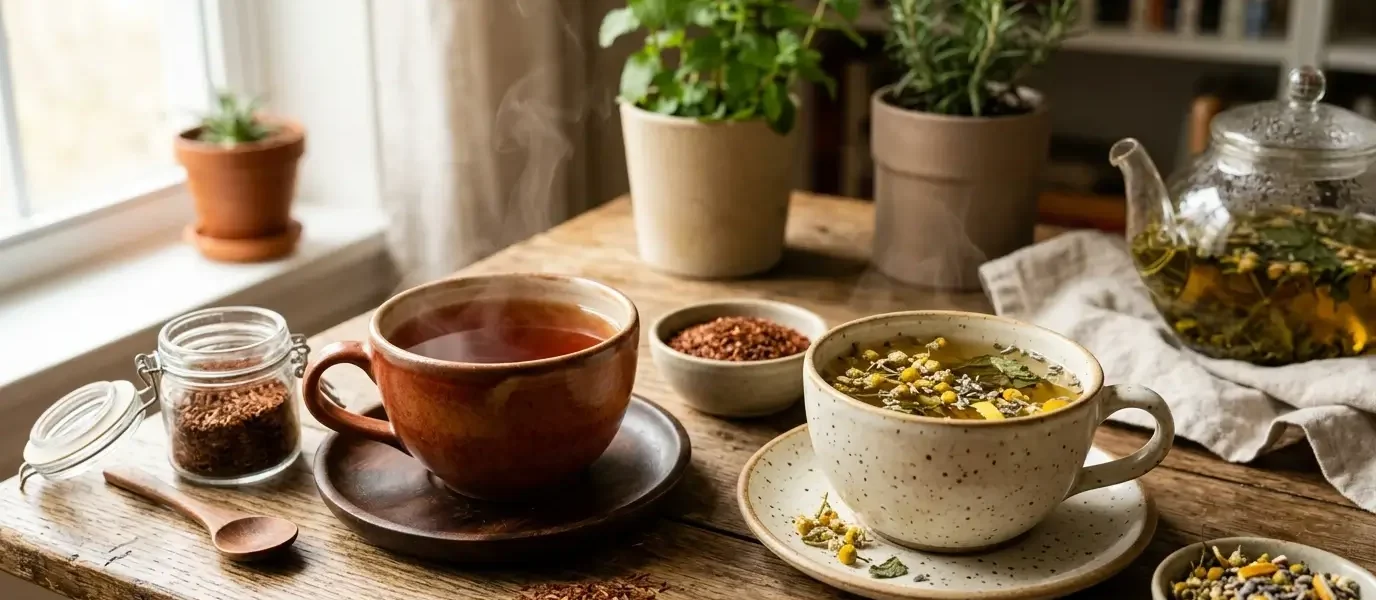
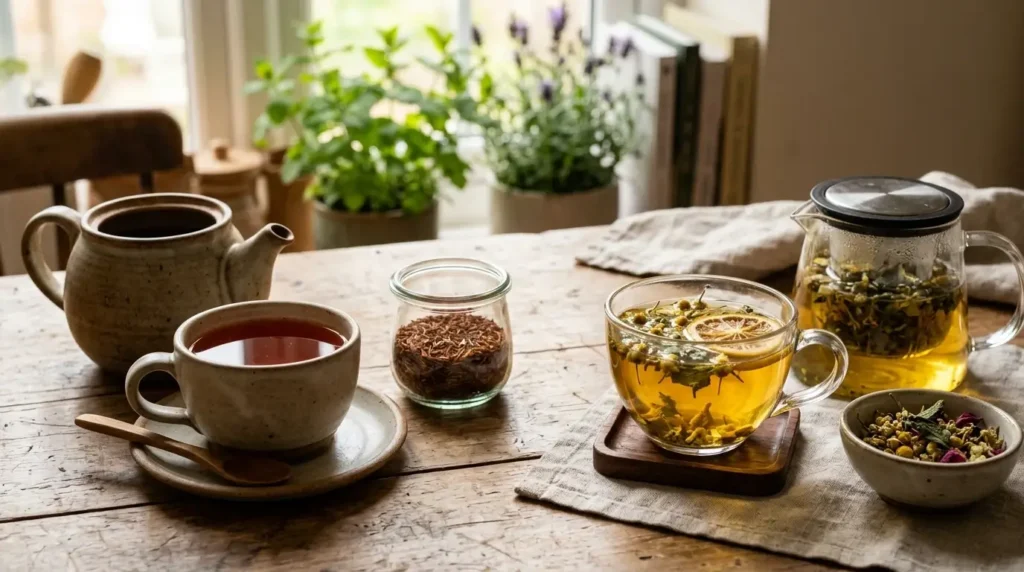
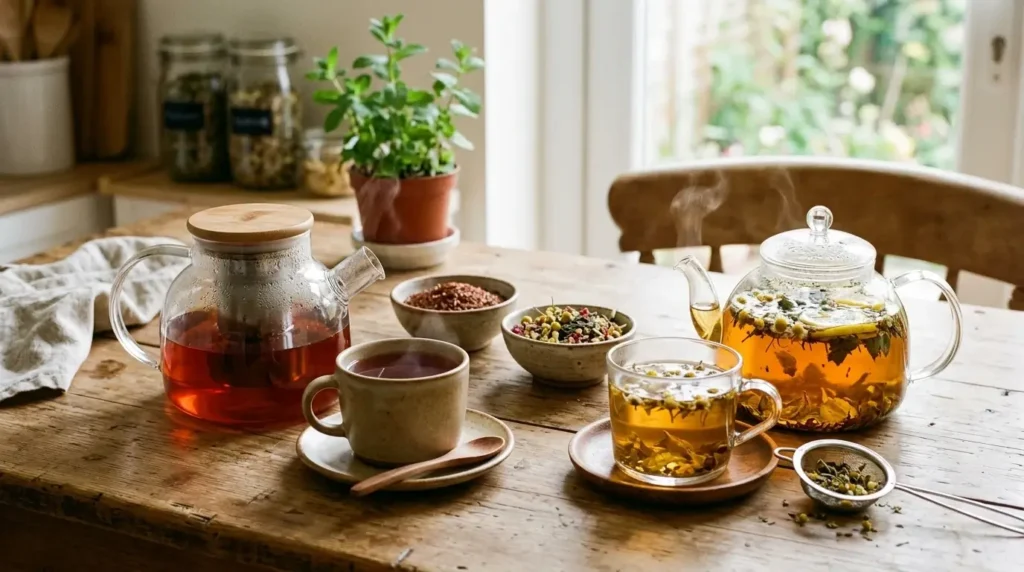
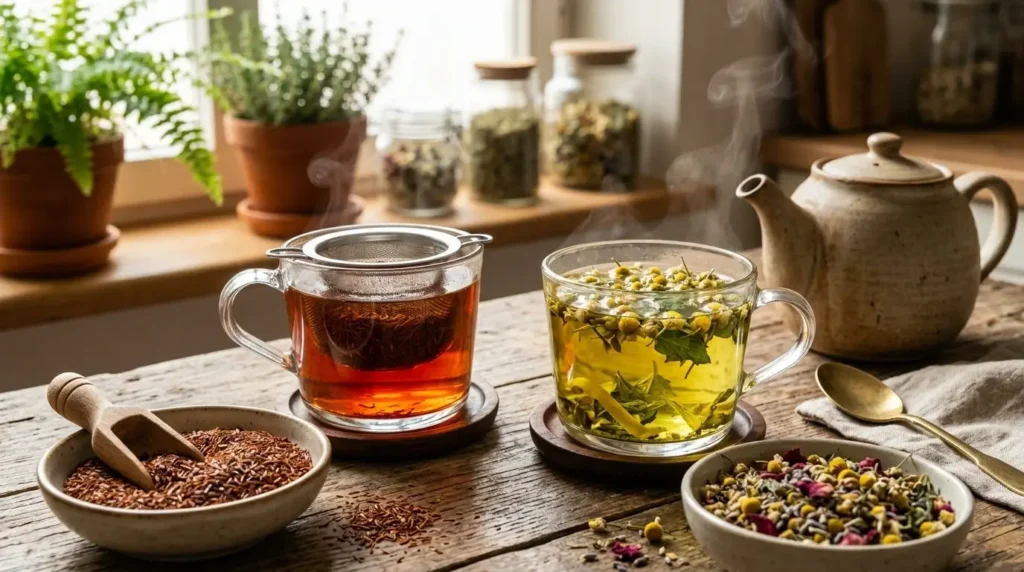
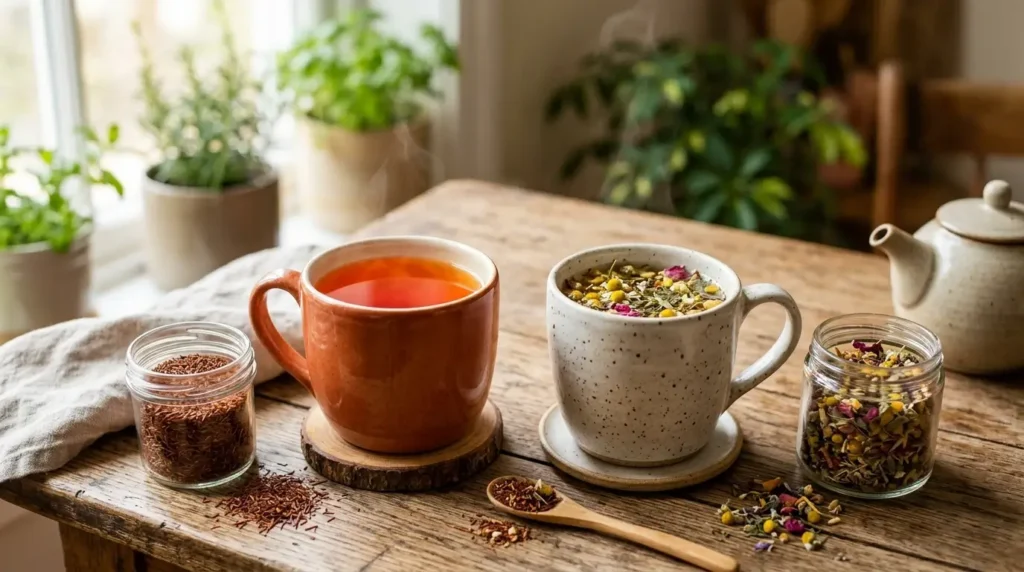
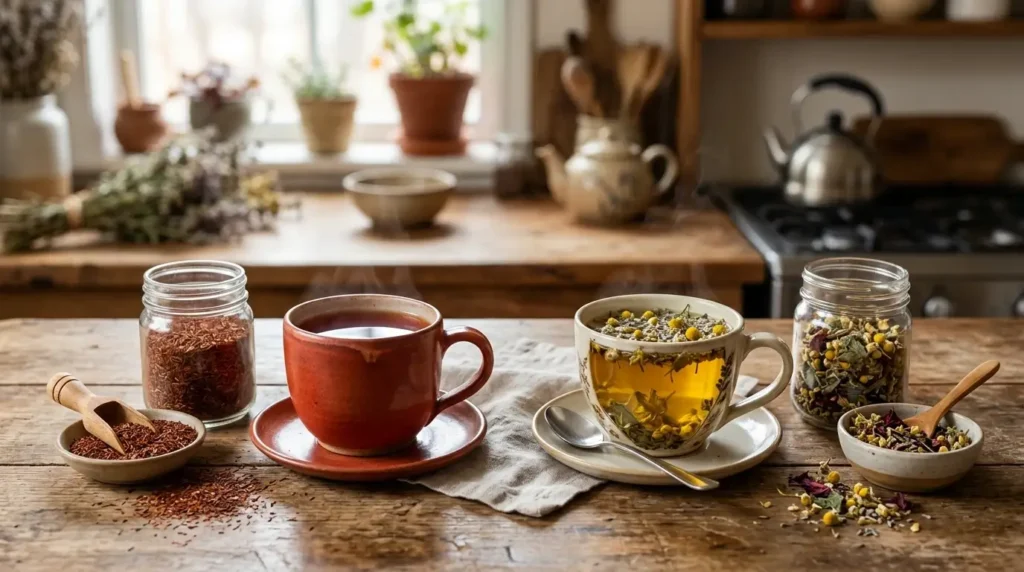
Rooibos tea vs herbal tea comparisons often leave people wondering which option delivers better health benefits. Rooibos tea is gaining popularity as a delicious and healthy drink, and for good reason. This red bush tea stands out with its rich antioxidant content, including unique compounds like aspalathin and quercetin. Notably, rooibos is naturally caffeine-free and contains essential minerals including calcium, iron, potassium, copper, and zinc. We’ll explore how rooibos tea health benefits compare to other herbal teas and help you determine whether this South African favorite deserves a spot in your daily routine.
Key Takeaways
Rooibos tea offers unique health advantages that distinguish it from other herbal teas, making it an excellent choice for specific health needs and daily consumption.
• Rooibos contains aspalathin, a rare antioxidant found nowhere else in nature, representing up to 12% of dry leaf weight and providing exceptional cellular protection.
• With zero caffeine and minimal tannins, rooibos allows 7.25% iron absorption compared to just 1.70% with regular tea, making it ideal for those with iron deficiency.
• Rooibos contains no oxalates and supports kidney health, unlike many herbal teas that can contribute to kidney stone formation in susceptible individuals.
• Safe for pregnancy, children, and evening consumption, rooibos provides minerals like calcium and magnesium that support sleep without any stimulant effects.
• Studies show rooibos can lower blood glucose by 22% and improve cholesterol levels, offering cardiovascular and metabolic benefits through its unique polyphenol content.
While rooibos technically falls under the herbal tea category, its distinctive nutritional profile, complete absence of common tea drawbacks, and proven health benefits position it as a superior choice for those seeking therapeutic benefits alongside great taste.
What is Rooibos Tea
Origin and Plant Source
Rooibos comes from a single plant species called Aspalathus linearis, and it grows in one place on Earth: the Cederberg region of South Africa, roughly 200 kilometers north of Cape Town. The word “rooibos” means “red bush” in Afrikaans, describing the reddish-brown color the plant develops after processing. Despite numerous attempts to cultivate it elsewhere, rooibos refuses to grow outside its native fynbos biome. The sandy, acidic, nutrient-poor soil of the Cederberg mountains isn’t just where rooibos happens to thrive. It’s the only place it can grow.
The plant itself is a broom-like shrub that reaches 1-2 meters tall, with thin, needle-shaped leaves rather than typical tea leaves. In spring, tiny yellow flowers bloom and produce lance-shaped fruits containing one or two seeds. Young branches often appear reddish, though the overall shrub maintains a green appearance. Indigenous Khoisan people first used rooibos as a tea, brewing wild-harvested material long before European colonization. Commercial cultivation began in the 1930s when botanist Benjamin Ginsberg recognized its potential as an affordable alternative to imported black tea.
South Africa now produces around 15,000-20,000 tons annually, making rooibos the country’s most exported agricultural product after wine and citrus.
Red vs Green Rooibos
Both red and green rooibos come from the same Aspalathus linearis plant. The difference lies entirely in processing, similar to how black tea and green tea come from the same Camellia sinensis plant but undergo different treatments.
Red rooibos undergoes oxidation after harvest. The needle-like leaves and stems are bruised to break cell walls, then spread in the sun for 8-24 hours. During this oxidation period, the plant material transforms from green to deep reddish-brown, developing its characteristic sweet, nutty flavor. The process reduces the already-low tannin content, making red rooibos exceptionally smooth. After oxidation reaches the desired level, the material is spread thinly to dry in the sun until moisture drops below 10%.
Green rooibos skips oxidation entirely. The harvested material is dried immediately after harvest to prevent enzymatic browning. This process, analogous to green tea production, preserves the plant’s natural color and results in a lighter, more herbaceous cup. Green rooibos wasn’t widely produced until the 1990s, making it a relatively recent addition to the rooibos family.
Taste and Preparation
Red rooibos brews a rich amber-red cup with naturally sweet notes of honey, vanilla, and caramel, along with subtle nuttiness. Some describe light tobacco or woody notes, though without actual tobacco taste. The sweetness is gentle and occurs naturally without any added sugar.
Green rooibos offers a completely different experience. Its flavor is lighter, less earthy, with grassy, mineral, and mildly floral notes. The cup brews pale golden-green rather than red.
Brewing rooibos is remarkably forgiving. Use one teaspoon per cup with near-boiling water at 95°C (200°F) and steep for 5-7 minutes. Red rooibos handles boiling water well and can steep longer without developing bitterness. Green rooibos prefers slightly cooler water at 85-90°C (185-195°F) to preserve its delicate character. Unlike traditional teas, rooibos never becomes bitter regardless of steeping time.
Understanding Herbal Tea
“Herbal teas are rich in antioxidants, vitamins, and minerals, offering various health‐promoting properties such as immune support, digestion aid, and stress relief.” — Chandrasekara & Shahidi, Researchers in functional foods
Definition of Herbal Tea
Herbal tea doesn’t actually contain tea at all. The term refers to beverages made by steeping plant material that isn’t derived from the Camellia sinensis plant. Camellia sinensis produces what we call true teas: black, green, white, oolong, and yellow teas. Everything else falls under the herbal tea umbrella.
The technical term for herbal tea is “tisane” or “herbal infusion”. These beverages can include any part of a plant. Roots, flowers, leaves, stems, seeds, bark, fruits, and spices all qualify as herbal tea ingredients. Some herbal teas use a single ingredient, while others combine multiple plants to create complex flavor profiles and health benefits.
Most herbal teas are naturally caffeine-free since they don’t contain Camellia sinensis leaves. However, yerba mate stands as a notable exception. The caffeine-free nature makes herbal teas particularly appealing for evening consumption or for people sensitive to stimulants.
Herbal medicine has a rich history spanning centuries across numerous cultures. Traditional Chinese Medicine and Ayurvedic practices both rely heavily on herbal infusions for treating various ailments. The Tang Dynasty saw some of the earliest documented herbal tea preparations, with further development continuing through the Song, Yuan, Ming, and Qing dynasties.
Common Types of Herbal Teas
The herbal tea category encompasses dozens of varieties, each with distinct flavors and properties:
Chamomile: Made from daisy-like flowers, known for supporting sleep and containing antioxidants
Peppermint: An aromatic mint family member believed to support digestive functions
Hibiscus: Produces a crimson red beverage with tart, cranberry-like flavor and beneficial antioxidants
Ginger: Offers a warming spicy taste and may provide anti-nausea effects
Dandelion: Can be made from leaves or roasted roots, suggested to promote liver health
Yerba Mate: A caffeinated exception to the herbal tea category
How Rooibos Fits into the Herbal Tea Category
Rooibos sits firmly within the herbal tea classification[92]. It contains no Camellia sinensis plant material, making it a true tisane rather than a traditional tea. The beverage qualifies as an herbal infusion because it’s brewed from the Aspalathus linearis shrub[91].
Interestingly, rooibos has developed its own identity alongside mate as a named infusion. While technically an herbal tea, rooibos often appears as its own category in tea shops and online retailers. This separate classification reflects its growing popularity and distinct characteristics that set it apart from other herbal options.
Rooibos tea health benefits start with its exceptional antioxidant profile. The plant contains polyphenols like aspalathin and nothofagin that are almost unique to rooibos. These compounds help neutralize free radicals in your body, which are waste substances that can damage cells and lead to oxidative stress. One study showed that drinking red rooibos increased blood antioxidant levels by 6.6 percent, while green rooibos raised them by 2.9 percent. Green rooibos contains roughly three times higher levels of total phenolic compounds than fermented red rooibos. Aspalathin, quercetin, and luteolin work together to reduce oxidative stress and protect your cells against damage.
Naturally Caffeine-Free
Rooibos contains zero caffeine, making it a practical choice when you want to avoid stimulants. Black and green teas contain caffeine that can cause anxiety, insomnia, heart palpitations, and headaches when consumed in excess. You can drink rooibos at any hour without disrupting your sleep patterns. This caffeine-free nature positions rooibos as a genuine alternative to traditional teas for people sensitive to stimulants or managing blood pressure concerns.
Low in Tannins and Oxalates
Rooibos has lower tannin levels than regular black or green tea. Tannins interfere with your body’s ability to absorb certain nutrients, particularly iron. For people with iron deficiency or anemia, this makes rooibos a better choice. In addition to low tannins, rooibos contains no oxalates. Oxalates can combine with calcium in urine and cause kidney stones to form. Studies detected no effect on kidney stone formation from rooibos consumption.
Heart Health Support
Drinking rooibos can improve several cardiovascular markers. In a six-week trial, participants who consumed six cups daily experienced a 14.4 percent decrease in serum glucose levels. The same study found significant reductions in LDL cholesterol and increases in HDL cholesterol. Consuming 500 mL daily led to lower triglycerides, LDL cholesterol, total cholesterol, and markers for lipid oxidation. Rooibos acts as a natural ACE inhibitor, helping relax blood vessels and support healthier blood pressure levels. The flavonoids quercetin and luteolin contribute to these heart-protective properties.
Blood Sugar Management
Aspalathin shows particular promise for blood sugar control. In one crossover study, rooibos treatment lowered blood glucose levels by 22 percent at 2 hours and 18 percent at 6 hours post-ingestion compared to baseline. Aspalathin can help balance glucose levels, improve insulin resistance, and boost insulin secretion. Animal studies demonstrated that aspalathin reduced inflammation resulting from high blood sugar and decreased expression of hepatic enzymes involved in glucose production.
Anti-inflammatory Properties
Rooibos contains compounds that reduce inflammation throughout your body. The anti-inflammatory effects occur through inhibition of COX-2 enzyme. Studies showed rooibos reduced pro-inflammatory markers such as interleukin-6 and tumor necrosis factor-alpha. By moderating inflammation, rooibos may contribute to preventing chronic inflammatory conditions, including cardiovascular disease and diabetes.
How Rooibos Compares to Other Herbal Teas
Antioxidant Content Comparison
In a head-to-head comparison of fifteen herbal teas, rooibos ranked second for in vitro antioxidant power, trailing only dandelion. This places rooibos ahead of thirteen other popular herbal options. Green rooibos performed better than red rooibos in laboratory studies, showing approximately twice the antioxidant capacity. The unfermented green variety displays 28% higher chain-breaking antioxidant activity than fermented red rooibos.
What sets rooibos apart from other herbal teas is aspalathin. This unique molecule exists nowhere else in nature and can represent up to 12% of the dry weight of red rooibos leaves. This exceptional concentration makes it one of the most potent antioxidants in the plant kingdom. Quercetin, another flavonoid present in rooibos, complements the antioxidant action with anti-allergic and anti-inflammatory qualities.
Caffeine and Tannin Levels
Rooibos contains zero caffeine, scientifically confirmed through state-of-the-art analytical methods with detection limits as low as 0.2 μg/L. No caffeine was detected in either red or green rooibos samples, indicating complete absence in the plant itself. This sets rooibos apart from yerba mate, the caffeinated exception in the herbal tea category.
Tannin levels in rooibos remain minimal compared to traditional teas. The low tannin profile means you can steep rooibos for extended periods without developing bitterness. Other herbal teas vary widely in tannin content, but rooibos consistently offers one of the gentlest profiles.
Mineral and Nutrient Profile
A single cup of rooibos provides 0.07 mg of iron, 1.09 mg of calcium, and 7.12 mg of potassium. Zinc, manganese, and magnesium complete the mineral profile. These minerals come from the fertile soils of the Cederberg mountains. While rooibos contains few vitamins and minimal macronutrients, its mineral content makes it a modest but consistent contributor to daily intake.
Flavor and Versatility
Red rooibos holds a robust enough flavor profile to support added ingredients like chocolate, spices, flowers, dried fruits, and other herbs. This strength makes it suitable for both hot and cold brewing, plus lattes. Green rooibos offers a more delicate, light taste somewhat similar to vegetal green tea, with a light earthy sweet note. The naturally sweet profile and complete absence of bitterness give rooibos an advantage over many herbal teas that can turn astringent or require sweeteners.
“The rooibos is often recommended during pregnancy because it is naturally caffeine-free and gentle on the body.” — Kusmi Tea, Tea company
For Kidney Stone Prevention
People prone to kidney stones need to watch their oxalate intake carefully. Rooibos contains no oxalic acid, the compound that combines with calcium in urine to form kidney stones. In contrast, many popular herbal teas contain varying levels of oxalates that can increase stone formation risk in susceptible individuals.
A study of kidney stone formers found that 30 days of rooibos supplementation reduced urinary volume by 17.83%. While most herbal teas require moderation for those at risk, rooibos supports digestion without contributing to kidney stone development.
For Better Iron Absorption
Iron deficiency affects millions globally, and tea choice matters. A study measuring iron absorption revealed striking differences: rooibos allowed 7.25% iron absorption compared to just 1.70% with ordinary tea and 9.34% with water. Rooibos performs nearly as well as water itself.
This advantage comes from its tannin content. Rooibos contains only 4.4% tannins, while black tea contains 11.5% to 17.5%. Tannins interfere with nutrient absorption, especially iron. For people managing anemia or iron deficiency, choosing rooibos over higher-tannin herbal options preserves their ability to absorb this mineral from food and supplements.
For Sleep and Relaxation
Rooibos contains calcium and magnesium, two minerals that assist with sleep. Calcium levels peak during sleep as your brain produces melatonin using this mineral. Magnesium deficiencies inhibit sleep by affecting the nervous system. Consuming rooibos before bedtime increases your body’s natural calcium levels.
The polyphenols in rooibos help lower stress levels, addressing one of the main reasons people struggle to fall asleep during busy weeks. Being naturally caffeine-free, you can drink it right before bed without the stimulation that disrupts sleep patterns.
Safe for Pregnancy and Children
Rooibos is widely considered safe during pregnancy. While you need to approach herbal teas cautiously when pregnant, rooibos offers a caffeine-free alternative to coffee, black tea, or green tea. Studies on pregnant rats showed no ill effects after 21 days of rooibos consumption.
The antioxidant content and potential bone health support make it a practical choice for pregnant people. Rooibos is also considered safe while breastfeeding, with no caffeine passing through your bloodstream to your baby. Most healthcare providers recommend keeping intake to 2-3 cups daily[232].
Rooibos Tea vs Herbal Tea: Which One Should You Drink?
Rooibos tea stands out in the herbal tea category for solid reasons. Its unique antioxidant profile, complete absence of caffeine, and low tannin content give it distinct advantages over many popular herbal options. Significantly, rooibos supports better iron absorption, prevents kidney stone formation, and offers heart health benefits without the drawbacks of traditional teas.
Whether you’re managing specific health concerns, looking for a pregnancy-safe beverage, or simply want a delicious drink you can enjoy any time of day, rooibos deserves consideration. We recommend starting with red rooibos for its naturally sweet flavor, then exploring green rooibos to discover which variety suits your taste preferences best.
Q1. Can drinking rooibos tea cause any negative health effects? While rooibos is generally safe, some animal studies suggest that prolonged exposure in very large amounts may potentially affect reproductive function or liver and kidney health. In humans, a few isolated cases of liver toxicity have been reported with long-term use or consumption of excessive quantities. Moderate consumption of 2-3 cups daily is typically considered safe for most people.
Q2. Is rooibos tea suitable for people with acid reflux or GERD? Yes, rooibos tea can be a good choice for people with acid reflux or GERD. It is naturally caffeine-free, which helps since caffeine can sometimes trigger acid reflux or gastric irritation. Additionally, rooibos has a low tannin content, making it gentle on the stomach and less likely to cause digestive discomfort compared to traditional teas.
Q3. Which tea is considered the healthiest for daily consumption? While green tea is often cited as one of the healthiest teas for daily consumption due to its cardiovascular and cancer-prevention benefits, rooibos tea offers unique advantages. It provides exceptional antioxidant content, is completely caffeine-free, supports heart health, aids blood sugar management, and has anti-inflammatory properties—making it an excellent healthy choice for regular consumption.
Q4. Can rooibos tea interact with cholesterol-lowering medications? There have been a couple of case studies linking chronic rooibos consumption with hepatotoxicity when combined with statin medications like atorvastatin, which are used to lower cholesterol. If you’re taking prescription medications, especially statins, it’s advisable to consult with your healthcare provider before regularly consuming rooibos tea.
Q5. Does rooibos tea help with iron absorption compared to other teas? Yes, rooibos tea is significantly better for iron absorption than traditional teas. Studies show that rooibos allows approximately 7.25% iron absorption, compared to just 1.70% with regular black tea. This is because rooibos contains much lower tannin levels (4.4%) than black tea (11.5-17.5%), making it an excellent choice for people with iron deficiency or anemia.
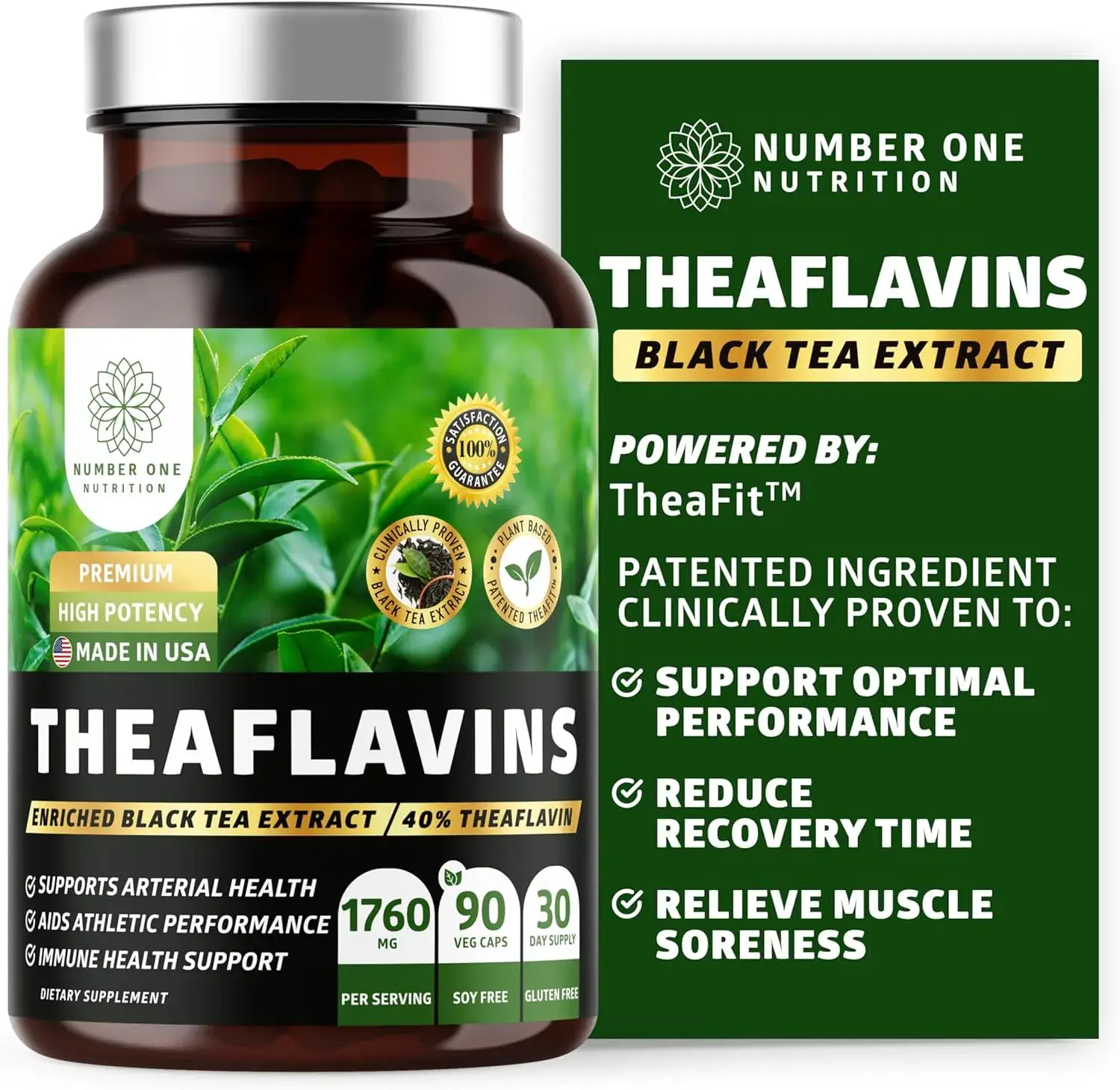
Black Tea Extract that is rich in natural theaflavins and polyphenols that help protect your body from free radicals, promoting overall immune health and well-being
Contains blended amounts of Fruits and Veggies. All natural, with whole foods, fruit and vegetable supplement.Perfect for everyone looking to live a healthier lifestyle.