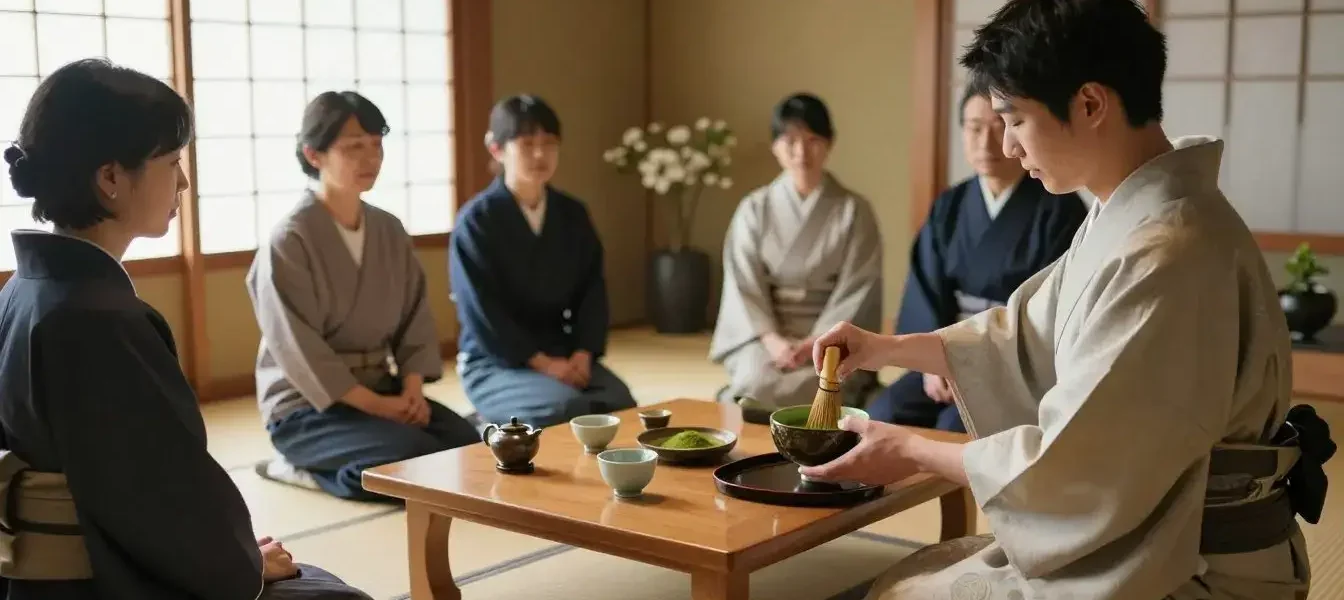
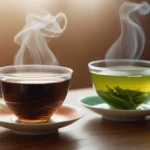
A host sets a bowl before guests as they settle into a quiet room. What does the tea tell you about the gathering? Tea used in Japanese tea ceremony is part of a shared practice, not simply a drink. Chanoyu means the ritualized preparation and drinking of tea, literally “hot water for tea.” The room, the host’s movements, and the guests’ attention all shape the moment.
Knowing what is in the bowl can help you read the gathering. The tea matters, but so does the care shown in preparing and sharing it. A separate loose-leaf tradition offers another way to approach Japanese tea. The distinction is easy to miss if you expect every ceremony to follow one form.
Key Takeaways
Matcha is central to the main tea ceremony tradition.
Senchadō is a distinct ritual built around loose-leaf tea.
Tea style, room, tools, and shared attention shape the gathering.
Koicha and usucha are two ways to serve matcha.
As a guest, you can follow the host’s cues without knowing every gesture.
You will see a clear difference between the main ceremony tea and its less common alternative. That distinction starts with what goes into the bowl.
What Tea Is Used in Japanese Tea Ceremony?
Matcha is the tea most closely associated with the Japanese tea ceremony. It is powdered green tea used in Sado, the main tea tradition, where the host prepares and serves it as part of a formal gathering.
Traditional tea used in Japanese tea ceremony means matcha in the main Sado tradition. Green tea used in Japanese tea ceremony refers to this powdered form, not brewed leaves. Black tea used in Japanese tea ceremony is not the customary choice for these traditions.
Matcha is the customary tea in Sado, while Senchadō follows a separate loose-leaf path.
Matcha is central to chanoyu
In Sado, matcha is more than an ingredient. Its texture and taste shape how the host prepares the bowl and how guests receive it. The powdered tea is made from green tea leaves, which are ground into a fine powder.
Since the tea stays in the bowl rather than being strained away, you drink the powder with the water. That makes matcha different from a cup brewed from leaves. It also explains why the tea’s texture is part of the experience, rather than a small detail.
Senchadō offers a loose-leaf alternative
Senchadō is a separate loose-leaf tea ritual. It uses teas such as sencha, a green tea made from leaves, rather than powdered matcha. Its tools and methods differ from Sado, though both traditions give careful attention to serving tea.
Sencha can be part of a traditional Japanese tea practice, but it is not the main tea used in Sado. Black tea is also not a standard choice in either tradition. The table shows the basic distinction.
Tea
Form
Ceremony context
Role
Matcha
Powdered green tea
Sado
Tea used in the main tradition
Sencha
Loose-leaf green tea
Senchadō
Tea in a distinct ritual
Black tea
Brewed leaves
Neither tradition as standard
Not a customary choice
Even within Sado, matcha is served in more than one style. The main difference is whether the tea is thick and shared or lighter and served in separate bowls.
What’s the Difference Between Koicha and Usucha?
Koicha is a concentrated, thick tea shared from one bowl, while usucha is lighter and served to each guest. Both are matcha, but they create different textures and ways of sharing the tea.
Koicha uses more matcha and less water than usucha. That makes it thick and strong, while usucha is whisked to a light foam. A communal bowl is a feature of koicha, not a rule for every ceremony.
Koicha is thick and shared
Koicha has a dense texture and a deep taste. The host uses more matcha with less hot water, then kneads the mixture rather than making a foamy drink. Guests may share the bowl during a more formal gathering.
Sharing one bowl gives the serving a communal quality. Guests take turns drinking from it, following the host’s lead. This custom does not mean every tea ceremony uses one bowl for everyone.
Because koicha is concentrated, the taste of the matcha is clear and lasting. The tea can feel rich on the tongue, with little foam. Its slow, shared service suits a gathering with a more formal tone.
Usucha is light and served individually
Usucha is thinner and lighter than koicha. The host uses less matcha and more water, then whisks the tea until a fine foam forms. Each guest receives an individual bowl.
The foam gives usucha a softer feel, and its taste is less dense. This style often suits a lighter or more informal service. The separate bowls also make it easy for each guest to enjoy the tea at their own pace.
Both styles depend on the host’s attention to the tea and its texture. The choice changes how the matcha feels and how guests share it. Once you know which style is being served, the host’s movements help you follow the preparation.
How Is Matcha Prepared During the Ceremony?
The host places a tea bowl and utensils before beginning to prepare matcha. Each movement has a purpose, from arranging the tools to presenting the finished bowl.
The host makes matcha in a tea bowl with hot water, then whisks it with a bamboo tea whisk. Exact Japanese tea ceremony steps vary by school and tea style.
Japanese tea ceremony steps begin with preparing the space and tools
The host sets out the tea utensils needed for the gathering. The tea scoop, tea caddy, bowl, and whisk each have a place. The tools are not arranged as a kitchen setup; their order and handling are part of the service.
The host cleans or purifies the utensils through practiced gestures. This care lets guests see the tools and the space receive attention before the tea arrives. The steps can change with the school, the type of tea, and the occasion.
Arrange and purify the utensils.
Warm and clean the bowl.
Measure matcha into the bowl.
Add hot water.
Whisk the tea.
Present the bowl and clean the tools afterward.
Whisking, serving, and clearing the bowl
After the host measures matcha into the bowl, hot water brings the powder together. The host uses a bamboo tea whisk, called a chasen, to mix it. For usucha, quick strokes create a light foam; koicha calls for slower mixing.
The finished bowl is presented to a guest. The host’s steady pace gives you time to notice the tea, bowl, and other utensils. Each action looks simple on its own, yet the full sequence takes practice.
After serving, the host cleans the bowl and tools with care. The details vary, so you may see a different order in another school or tea style. Following the sequence helps you see how practiced movements become hospitality, shaped by a history that reaches back many centuries.
The tea ceremony as you know it today emerged in the sixteenth century. Its development took many people and changes across time, not one founder or single moment.
Sen no Rikyū, who lived from 1522 to 1591, strongly shaped the practice. He helped define its ideals, but Japanese tea ceremony history began earlier and grew through many hands.
From imported tea to a distinct Japanese practice
Tea reached Japan from China, where it had long been used and valued. Its use grew through links with Buddhist practice, including Zen, and with people who gathered to drink and discuss tea. Over time, tea became part of a distinct Japanese art.
Early customs changed as tea practitioners shaped new ways to prepare and serve it. The practice took form through the people, rooms, tools, and values of each period. It was not simply a copy of tea customs from elsewhere.
By the sixteenth century, tea masters had brought the ceremony into a form that strongly influenced later practice. Sen no Rikyū became one of its best-known figures. His ideas shaped the way people understood the gathering, though he did not create the tradition alone.
Tea ceremony in Japanese: chanoyu and chadō
Chanoyu and chadō are names associated with the tea ceremony. Chanoyu refers to preparing and drinking tea, while chadō means “the way of tea.” Both names point to a practice with attention to more than the drink.
The word “way” suggests a discipline learned through repeated practice. You can see that in how the host handles each object and meets the needs of the guests. The practice joins a simple act, making tea, with care for form and setting.
The Japanese tea tradition has changed across centuries and continues in different schools today. Its history helps explain why a bowl or tool can carry meaning beyond its use. The objects in the room make that tradition tangible to guests.
What Do the Tea Bowl and Utensils Contribute?
Before you drink, you may notice the warmth and surface of the bowl in your hands. Its shape, glaze, and feel are part of how the gathering reaches you.
The host selects tea utensils for a particular gathering, balancing use with beauty. Guests may notice clay, color, shape, and marks that show how an object was made.
Utensils are working tools and works of art
The tea bowl, or chawan, is the object you encounter most directly. Other items can include water jars, flower vases, and tea caddies. Each has a practical job, yet its look and feel also matter in the tea room.
Tea practitioners learned to value both rustic and refined ceramics. Wabi, an appreciation of natural or imperfect forms, helps explain why an uneven edge or rough surface can feel right. A bowl does not need a smooth, uniform finish to be prized.
During a gathering, guests can notice more than color. The weight, clay, glaze, and signs of making all give an object character. A familiar utensil can also look different when the host pairs it with another style or season.
Ceramic styles bring distinct textures and colors
Japanese tea gatherings use many kinds of ceramics. Shigaraki, Bizen, Raku, Shino, and Oribe each have features that can help you recognize them. Their differences make the bowl and other objects feel specific to a gathering.
Raku bowls are lightweight glazed earthenware, molded by hand rather than thrown on a wheel. Shigaraki ware can have a fiery orange, speckled, bumpy surface, while Bizen ware often ranges from reddish to blackish brown.
Shino ware is linked with milky white glaze and simple motifs. Oribe can show copper-green glaze and unconventional forms. The table gives you a quick way to compare these styles.
Ceramic style
Typical appearance
Making or material detail
Tea-room association
Shigaraki
Fiery orange, speckled, bumpy
Natural-looking clay surface
Rustic texture
Bizen
Reddish to blackish brown
Unglazed stoneware
Earthy color
Raku
Lightweight, glazed surface
Hand-molded earthenware, not wheel-thrown
Directly held tea bowl
Shino
Milky white glaze, simple motifs
Glazed ceramic
Quiet, pale surface
Oribe
Copper-green glaze, unusual forms
Distinctive glazed ceramic
Unconventional style
These details matter because the host has chosen the objects for a reason. Your role is not to judge them, but to receive the tea and notice what the bowl offers.
What Should You Expect as a Guest?
A host offers you a bowl, and you can begin by watching for a cue. You do not need perfect manners; attentiveness and care are enough for a first visit.
Follow the host’s instructions, handle the bowl gently, and stay quiet during preparation. Japanese tea ceremony for tourists can be adapted for beginners, so advanced gestures are not required.
Etiquette centers on attentiveness, not perfection
In a tea room, the host may show you where to sit and when to receive the bowl. Remove your shoes if the setting requires it. Keep your phone silent, and avoid strong fragrances that could distract from the tea.
Handle the bowl carefully and follow the host’s cues before drinking or setting it down. A visitor does not need to know every gesture in advance. When you are unsure, pause and observe what the host or other guests do.
A few simple habits can help you feel settled:
Follow the host’s instructions.
Silence your phone.
Avoid strong fragrance.
Handle the bowl with care.
Ask questions at an appropriate moment.
Sweets and food balance the gathering
Japanese sweets often accompany matcha. Their sweetness can balance the tea’s bitterness, so the taste of each makes sense beside the other. The host may serve sweets before the tea arrives.
A formal gathering may include food as well. The meal can be part of the occasion rather than a quick snack before the tea. Its place and timing depend on the form of the gathering.
As a guest, you can take your time and let the host set the pace. Pay attention to the bowl, the food, and the people sharing the room. That kind of attention turns manners into something more meaningful, and points toward the values behind the ceremony.
A small gesture, such as waiting while the host sets down a bowl, can express a larger value. The four principles give shape to the way people share the room and the tea.
Sen no Rikyū’s four principles are wa, kei, sei, and jaku: harmony, respect, purity, and tranquility. They guide the host’s actions and the guest’s attention during a tea gathering.
Harmony, respect, purity, and tranquility guide the gathering
Wa, or harmony, can appear in how the people, tea, room, and objects fit together. It does not mean that everything must match. Instead, the gathering feels considered, with each part given room.
Kei means respect. You show it by handling the bowl with care, listening to the host, and treating other guests with courtesy. The host shows respect through thoughtful service and attention to each person.
Sei means purity. The host prepares the space and tools with care, giving the gathering a clear start. Purity here is not only about washing; it also points to a calm, uncluttered approach.
Jaku means tranquility. You may notice it in the quiet, focused pace of the room. People give the host’s movements their attention instead of rushing toward the next part of the event.
Ichi-go ichi-e asks you to value this meeting
Ichi-go ichi-e expresses the idea that each meeting happens only once and should be cherished. The same guests may meet again, but this exact combination of people, time, room, and tea will not return.
The phrase does not ask you to treat every moment as grand. It asks you to notice what is happening now. The host’s care and the guests’ attention make this particular gathering worth receiving.
You can carry that idea into your own actions by taking time to notice the tea and the people around you. Each meeting has its own shape, from a brief cup to a longer event. Those forms give you a sense of how a gathering can vary.
How Do Tea Gatherings Vary in Formality?
A chakai may last about 45 minutes, while a chaji can run for up to four hours and may include a meal. The shorter gathering offers a simpler introduction; the longer one gives more time to food and tea.
A chaji is a formal occasion that can last up to four hours and include kaiseki. A chakai is more informal and typically lasts about 45 minutes.
A chakai typically takes about 45 minutes, while a chaji can last up to four hours with a kaiseki meal.
Chakai is a shorter, informal gathering
A chakai is a shorter tea gathering with a lighter feel. It typically lasts about 45 minutes, though the exact event depends on its host and setting. You may have time for tea and sweets without a full meal.
For a first experience, a chakai can feel easier to follow because it asks less time from you. The host still guides the gathering, and the tea still receives careful attention. Informal does not mean careless.
Chaji is a longer formal occasion
A chaji is a more formal tea gathering that can last up to four hours. It may include kaiseki, a traditional meal served as part of the event. Food and tea both help shape the longer occasion.
Tea schools such as Urasenke and Omotesenke share the broader practice, but differ in execution. Their movements and details may not look exactly the same. The season, time of day, guests, space, and selected utensils can also change the gathering.
These factors can shape what you experience:
Season.
Time of day.
Guest experience or role.
Space and selected utensils.
Formal tea practice continues today, though only a small part of the population practices it. You can choose a fitting first experience by considering how much time you have and whether you prefer a short gathering or a meal-centered one.
Conclusion
Matcha is central to the main tea ceremony tradition, while Senchadō offers a distinct loose-leaf path. The drink matters, but the host’s care and the guests’ attention make the gathering feel complete.
If you attend, notice the host’s movements and the bowl’s details. You can start by observing one gathering, or learn a few basic gestures before you go.
Sencha is generally considered Japan’s most commonly consumed everyday tea. It is a loose-leaf green tea brewed for regular drinking, not the powdered matcha served in the main tea ceremony tradition. Everyday habits and ceremonial practice are different contexts, so the tea used most often at home is not necessarily the tea used in a formal gathering.
What is the traditional Japanese tea ceremony?
Chanoyu or chadō is a ritualized practice of preparing and drinking tea. The gathering gives attention to the host, guests, utensils, and form, rather than focusing only on the drink. The host prepares matcha with care, while guests follow the pace of the event and receive the bowl respectfully.
What are the four principles of Japanese tea ceremony?
The four principles are wa, kei, sei, and jaku, meaning harmony, respect, purity, and tranquility. They guide how people share the room, handle objects, prepare the space, and give attention to the gathering. You can see them in simple actions, such as treating the bowl gently and staying focused while the host serves tea.
What common drink is served in Japanese tea ceremonies?
Matcha, or powdered green tea, is the common drink in the main tea ceremony tradition. The host mixes the powder with hot water and serves it in a tea bowl. The tradition is not based on brewed black tea, though other tea practices use loose leaves and different tools.
What tea is used in Japanese tea ceremony?
Matcha is the tea used in the main Japanese tea ceremony tradition. It is powdered green tea, prepared with hot water in a bowl. Sencha, a loose-leaf green tea, is used in the distinct Senchadō tradition, which follows a different ritual rather than the main matcha practice.
Black Tea Extract that is rich in natural theaflavins and polyphenols that help protect your body from free radicals, promoting overall immune health and well-being
Contains blended amounts of Fruits and Veggies. All natural, with whole foods, fruit and vegetable supplement.Perfect for everyone looking to live a healthier lifestyle.