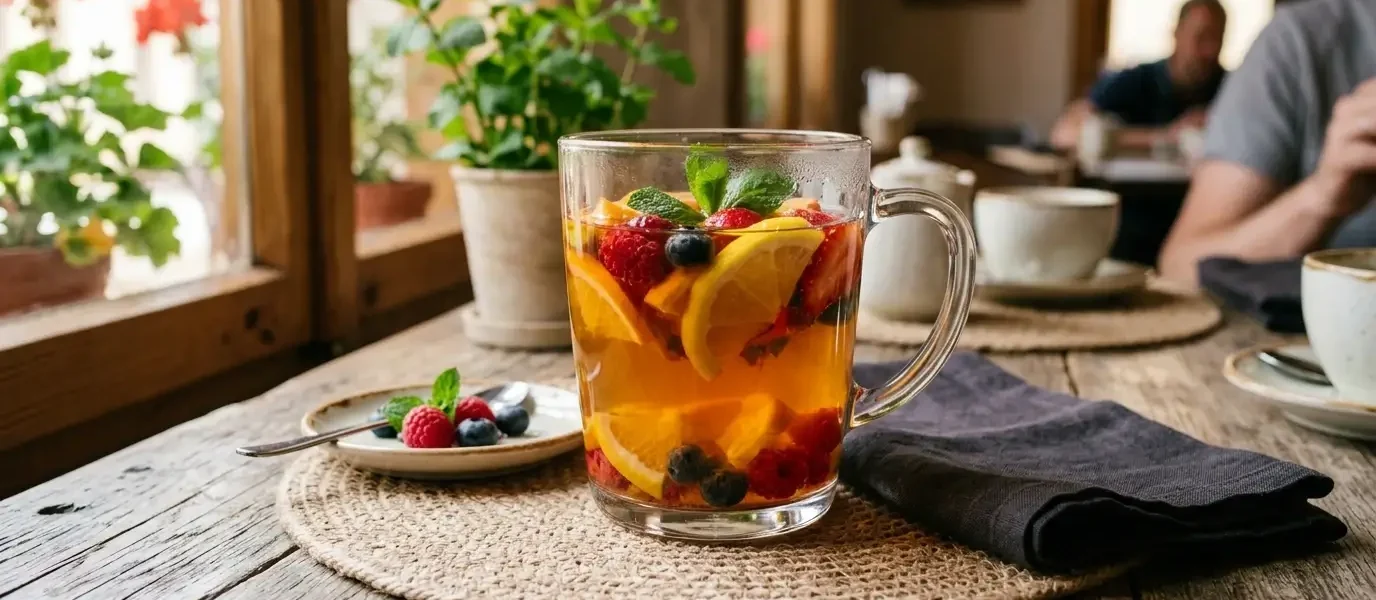
Restaurants in middle Tennessee sell fruit tea gallon after gallon, and there’s a good reason why. This refreshing beverage combines the best of sweet tea and fruit juice, creating a drink that’s both flavorful and adaptable to your taste.
If you’ve ever wondered fruit tea how to make at home, you’re in the right place. Whether you’re interested in classic Southern-style fruit tea, cold brewed versions for a smoother taste, or fun variations like fruit bubble tea and iced tea with fruit, making it at home is surprisingly simple.
We’ll walk you through everything you need to know, including how to make fruit tea step-by-step, the best ingredients to use, and creative serving ideas for parties and special occasions. Let’s get started!
Key Takeaways
Master the art of homemade fruit tea with these essential insights that will help you create refreshing, customizable beverages at home.
• Two distinct styles exist: Southern fruit tea combines sweet tea with fruit juices, while fruit-infused tea steeps dried fruits and herbs directly in water.
• Follow the simple 4-step process: Brew tea base, add sweeteners while warm, mix in fruit juices, then chill and serve over ice.
• Use quality ingredients for best results: Black tea works as the classic base, orange-pineapple juice creates authentic flavor, and fresh garnishes enhance presentation.
• Store properly for freshness: Plain fruit tea lasts 2-3 days refrigerated, but fruit-infused versions should be consumed within 48 hours due to natural fermentation.
• Experiment with creative variations: Try cold-brewing for smoother taste, add alcohol for cocktails, or create bubble tea with syrups and boba.
The beauty of homemade fruit tea lies in its versatility—you can adjust sweetness, try different fruit combinations, and create everything from party punches to sophisticated cocktails, all while enjoying fresher flavors and significant cost savings compared to store-bought alternatives.
What is Fruit Tea?
The term “fruit tea” covers two distinct beverages that share a name but differ in preparation and taste. Understanding this difference helps you choose the right recipe for your needs.
Southern Fruit Tea vs. Fruit-Infused Tea
Southern fruit tea, popular in middle Tennessee restaurants, combines prepared sweet tea with fruit juices. The base is brewed black tea sweetened with sugar, then mixed with citrus juices like orange or pineapple to create a golden, caffeinated drink. Some recipes add ginger, lemon, or mint for extra flavor. The proportions matter: too much juice overpowers the tea, while too little leaves it tasting like regular sweet tea.
Fruit-infused tea takes a different approach. This beverage steeps dried fruit pieces, herbs, and botanicals in hot water. In fact, it’s technically called a tisane or infusion because it doesn’t contain leaves from the Camellia sinensis plant. These blends can be caffeine-free when built on bases like hibiscus, rooibos, or honeybush, or caffeinated when combined with black or green tea. The fruit is in the jar itself: pieces you can see, smell, and recognize.
The base determines how the tea behaves when brewed. Black tea bases can turn bitter with long steeping and may become cloudy when chilled. Herbal bases stay clear and hold their flavor for days in the fridge.
Popular Fruit Tea Variations
Quality fruit-infused teas pair tea leaves with real dried fruits. Popular combinations include ginger peach black tea, açaí green tea, and pineapple guava white tea. Common fruits used in blends are mango, apple, lemon, pineapple, and berries like strawberries, blackberries, and blueberries.
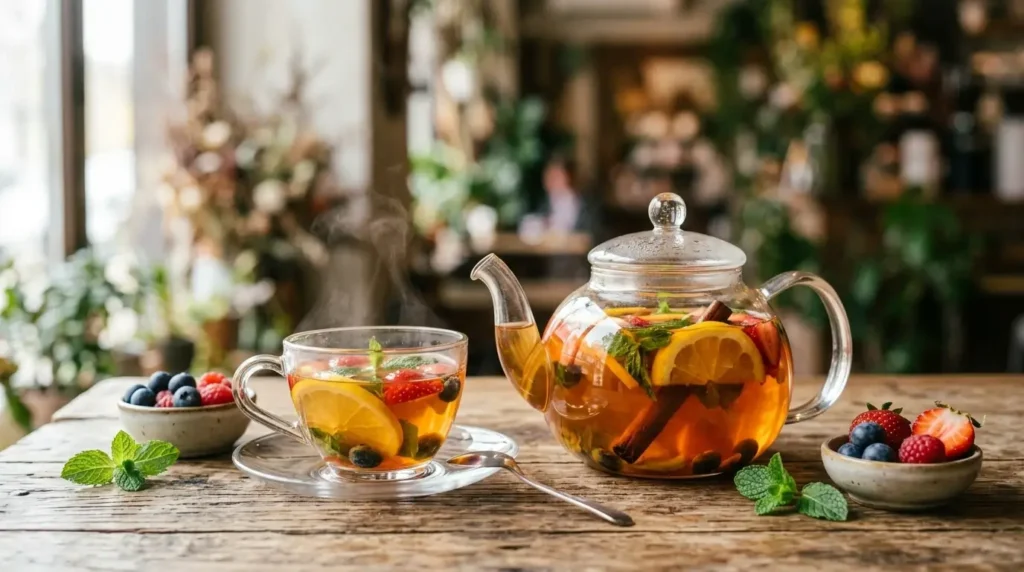
Some blends focus purely on fruits, while others incorporate herbs like mint or spices like cinnamon for warming notes. Hibiscus and rosehips add natural color, brewing coral to magenta tones.
Health Benefits of Homemade Fruit Tea
Fruit tea offers multiple health advantages when made with quality ingredients. The vitamin C content strengthens your immune system and helps fight infections. Antioxidants from both tea and fruit protect cells from free radical damage, potentially reducing inflammation and heart disease risk.
The polyphenols in green tea, particularly EGCG, provide anti-inflammatory properties that benefit heart health by reducing fatty buildup in artery walls. These same compounds support bone health by increasing mineral deposits and vitamin D levels. In addition, certain fruit teas aid digestion, with blends containing ginger and lemon soothing upset stomachs.
Ingredients for Homemade Fruit Tea
Building a homemade fruit tea recipe starts with selecting quality ingredients that complement each other. The right combinations create balanced flavors without overpowering the tea base or making the drink too sweet.
Tea Base Options
Black tea works as the foundation for most Southern-style fruit tea recipes. Lipton black tea bags are a reliable choice. For convenience, you can skip brewing entirely and use prepared sweet tea bottles from brands like Milo’s or Turkey Hill. Green tea, whether jasmine or standard varieties, pairs well with lighter fruit flavors like white grape juice. Herbal options include mint tea, peach tea, rooibos, and chamomile, each bringing distinct flavor profiles to the blend. Decaffeinated versions exist for all these bases if you prefer to avoid caffeine.
Fruit Juices and Concentrates
Orange-pineapple juice serves as the classic combination for Tennessee-style fruit tea. You can use either bottled juice or frozen concentrates. Lemonade concentrate adds tartness, while pineapple juice concentrate brings tropical sweetness. Other options include blackberry juice, white grape juice, blueberry juice, peach juice, and cranberry juice. The concentrates provide stronger flavor than regular bottled juices, so adjust quantities based on your taste preference.
Sweeteners and Flavor Enhancers
Granulated sugar remains the standard sweetener for Southern fruit tea. Natural alternatives include honey, maple syrup, and agave nectar. Simple syrup, made by dissolving equal parts sugar and water, sweetens efficiently without grittiness. Cinnamon sticks and whole cloves add warming spice notes. Fresh ginger slices provide a spicy bite when bruised and steeped.
Fresh Fruits and Herbs for Garnish
Citrus slices from lemons, limes, and oranges brighten both appearance and flavor. Berries like strawberries, raspberries, and blackberries add color and subtle sweetness. Stone fruits including peaches and cherries work well sliced. Fresh mint leaves offer the most popular herbal garnish, though basil, rosemary, and lavender create interesting variations.
Making fruit tea at home requires just four straightforward steps. The process works whether you’re creating Southern-style fruit tea or a fresh fruit-infused version.
Step 1: Brew Your Tea Base
Bring water to a boil and pour it over your tea bags. Fruit and herbal infusions brew best at 212°F for 3-5 minutes. For a stronger concentrate that holds up to dilution from ice and fruit juices, steep for 8-10 minutes. Black tea bags work for most recipes: use 4 bags in 4 cups of boiling water. Once brewed, remove the tea bags and allow the tea to cool to room temperature before proceeding. Cooling takes approximately 20-30 minutes at room temperature.
Step 2: Add Fruit Juices and Sweeteners
While the tea remains warm, add your sweeteners. Sugar and honey dissolve more easily in warm liquid than in cold. Stir until fully dissolved. For jam-based fruit tea, add 1-2 tablespoons of fruit jam to 6 ounces of boiling water, stir to create a flavored syrup, then add your tea bag and brew for 3-5 minutes. Next, pour in your fruit juices and concentrates. Add lemonade and orange-pineapple frozen concentrate directly to the cooled tea. Stir briefly to combine all ingredients.
Step 3: Mix and Combine Ingredients
Transfer everything to a pitcher. Pour half the sweet tea and half the pineapple-orange juice into your pitcher, then stir to combine. If using fresh fruit pieces, add them at this stage along with any herbs like mint leaves.
Step 4: Chill and Serve
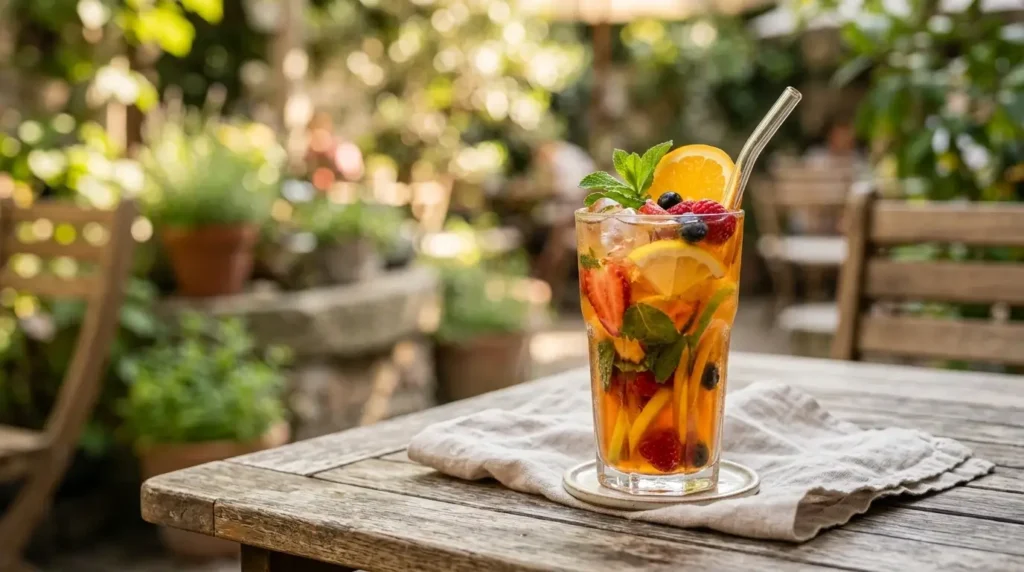
Refrigerate the pitcher until thoroughly cold. Serve over ice in tall glasses. Garnish with additional fruit slices or mint leaves for presentation. The chilled tea stays fresh for several days when refrigerated.
Fruit Tea Variations and Serving Ideas
Expanding your basic fruit tea recipe opens up dozens of serving possibilities, from cold-brewed versions to party punches and even alcoholic cocktails.
Cold Brewed Fruit Tea Recipe
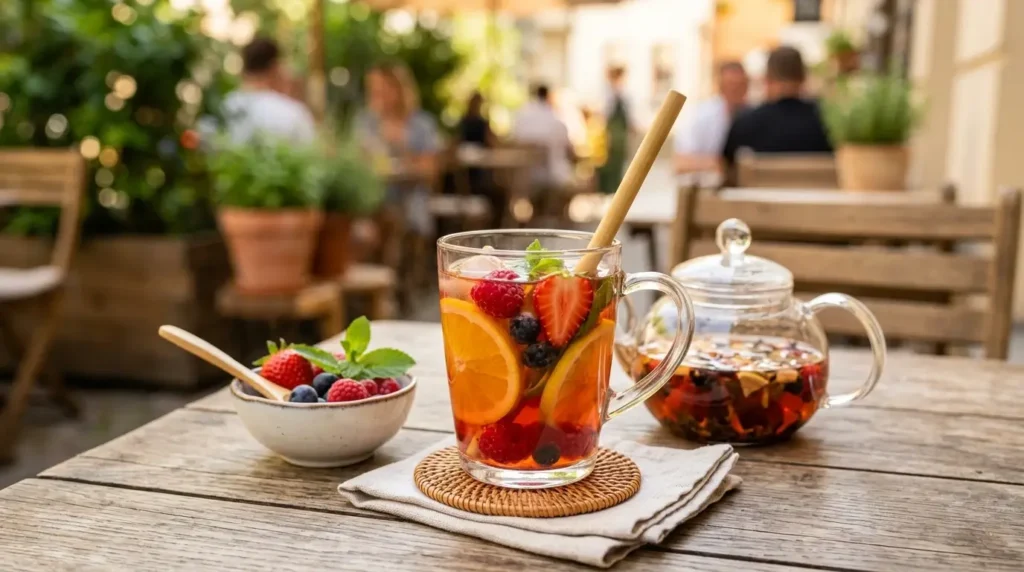
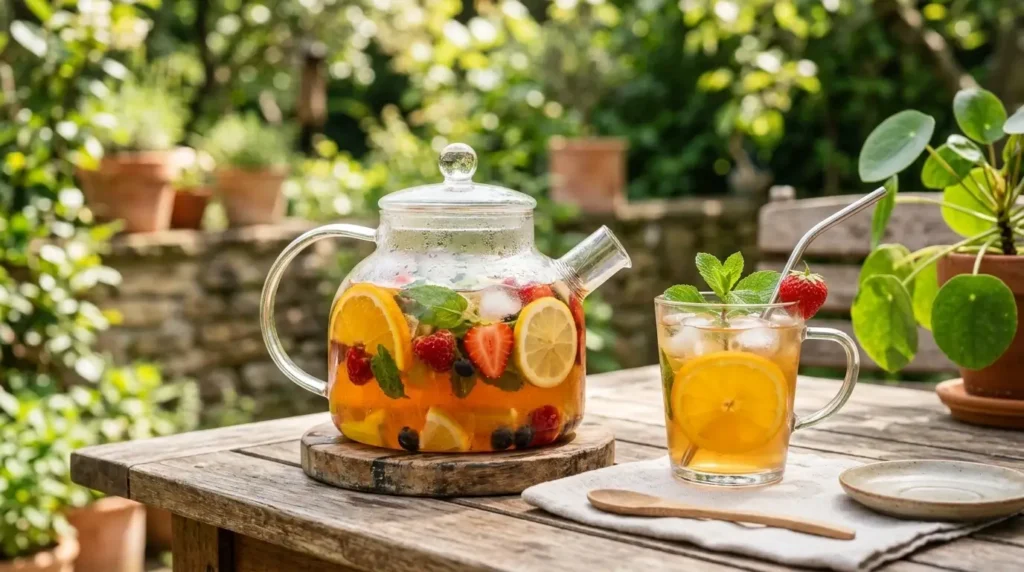
The formula for cold brew fruit tea combines tea with one fruit, one citrus, and one herb. Add sliced strawberries, lemon slices, and mint leaves to a pitcher with tea bags. Refrigerate for 12-24 hours. Remove all solids after steeping. The tea stays fresh in the fridge for 2-3 days after straining.
Fruit Tea Punch for Parties
Mix brewed black tea with frozen lemonade concentrate and orange-pineapple concentrate. Add water to fill your pitcher, then chill. Serve over ice with citrus slices and mint garnish. For larger gatherings, add ginger ale at the end for sparkle.
Making Fruit Bubble Tea at Home
Combine chilled green tea with mango syrup and fructose in a serving glass. Add strawberry popping boba and ice cubes. Shake to blend ingredients. Other fruit syrups work equally well with jasmine tea.
Boozy Fruit Tea Cocktails
Add 1 cup dark rum to a standard fruit tea recipe for 8-10 servings. Coconut rum creates a tropical twist. Vodka with peach schnapps pairs well with iced tea. Bourbon works particularly well with citrus-forward fruit tea blends.
Best Fruit Combinations to Try
Berry mint pairs strawberries, blueberries, and raspberries with fresh mint. Citrus blueberry basil combines orange, lemon, lime slices with blueberries and basil leaves. Green tea pairs naturally with strawberries, while black tea complements peaches and mangos.
Proper Storage and Shelf Life
Store fruit tea in airtight containers in the refrigerator. Plain iced tea keeps for 2-3 days. Fruit-infused teas should be consumed within 48 hours because natural yeasts on fruit skins cause rapid fermentation. Cold-brewed tea lasts longer than hot-brewed versions since bacteria grows less readily at lower temperatures.
You now have everything you need to make delicious fruit tea at home. The four-step process is straightforward, and you can customize it endlessly with different juices, fruits, and garnishes to match your taste preferences.
Start with a basic recipe, then experiment with cold-brewed versions or creative combinations. Your homemade fruit tea will taste fresher and cost less than store-bought options. Give it a try today and enjoy this refreshing beverage all year round!
FAQs
Q1. What ingredients do I need to make fruit tea at home? To make fruit tea, you’ll need a tea base (black, green, or herbal tea), fruit juices or concentrates (like orange-pineapple or lemonade), sweeteners (sugar, honey, or simple syrup), and optional fresh fruits and herbs for garnish. Popular juice combinations include orange-pineapple, while mint, lemon slices, and berries make excellent garnishes.
Q2. How do I make fruit bubble tea at home for the first time? Start by brewing jasmine or green tea and letting it cool. Add fruit-flavored syrup (like Torani brand) to taste—typically 6-8 pumps per 300ml of tea. Mix well, add ice, and shake. Finally, add instant boba or popping boba pearls to your glass. You can find both the syrups and boba on Amazon for convenience.
Q3. What’s the difference between Southern fruit tea and fruit-infused tea? Southern fruit tea combines brewed sweet tea with fruit juices like orange or pineapple, creating a caffeinated, golden-colored drink. Fruit-infused tea, on the other hand, steeps dried fruit pieces, herbs, and botanicals in hot water without actual tea leaves, making it technically a tisane that can be caffeine-free.
Q4. How long does homemade fruit tea last in the refrigerator? Plain iced tea keeps for 2-3 days when refrigerated in an airtight container. However, fruit-infused teas with fresh fruit should be consumed within 48 hours, as natural yeasts on fruit skins can cause rapid fermentation. Cold-brewed tea generally lasts longer than hot-brewed versions.
Q5. What are some popular fruit tea variations I can try? You can make cold-brewed fruit tea by steeping tea with fruit, citrus, and herbs for 12-24 hours. For parties, create fruit tea punch by mixing tea with frozen concentrates and ginger ale. Other options include boozy fruit tea cocktails with rum or vodka, and creative combinations like berry mint or citrus blueberry basil.
Black Tea Extract that is rich in natural theaflavins and polyphenols that help protect your body from free radicals, promoting overall immune health and well-being
Contains blended amounts of Fruits and Veggies. All natural, with whole foods, fruit and vegetable supplement.Perfect for everyone looking to live a healthier lifestyle.