In the vast world of tea, few varieties are as delicate, minimally processed, and misunderstood as this elegant brew. While green and black teas often steal the spotlight, many enthusiasts are now asking about white tea what is it exactly that makes it so unique? In this guide, we will explore its fascinating origins, the six distinctive types ranging from Silver Needle to Shou Mei, and the powerful antioxidants that offer incredible benefits for your health.
What is White Tea?
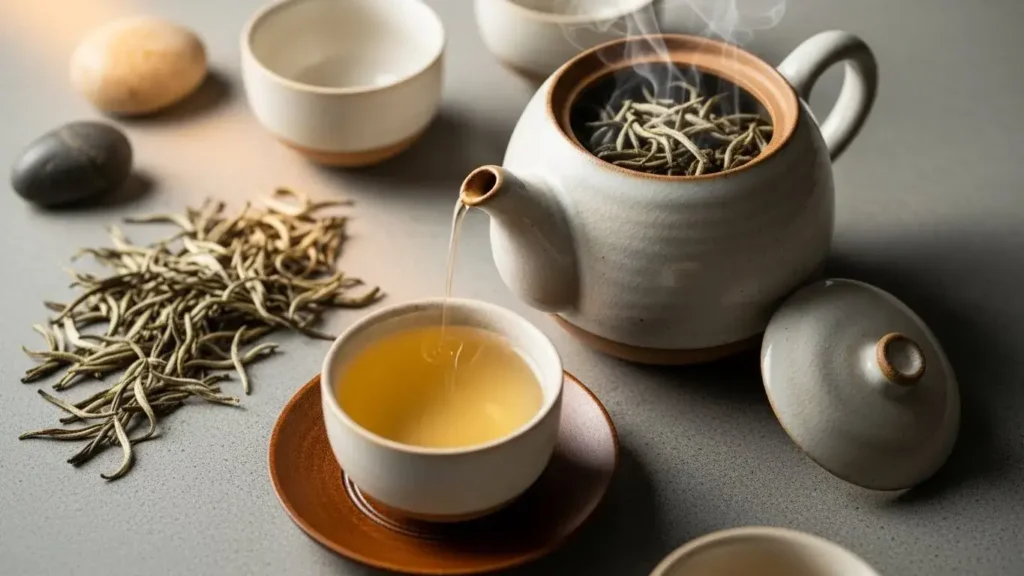
White tea is a minimally processed tea made from the young buds and leaves of the Camellia sinensis plant, the same plant used to produce black, green, and oolong teas. These leaves and buds are harvested just before they fully open, when they’re covered in fine white downy hairs, which give white tea its distinctive name. The silvery-white hairs on the unopened buds create a whitish appearance on the plant.
Unlike more common varieties, white tea undergoes minimal processing after harvesting. The leaves are simply withered and air-dried, with little to no rolling or oxidation. This minimal processing preserves high levels of catechins and polyphenols. While often described as non-oxidized, white tea actually experiences slight natural oxidation (approximately 2-10%) during the withering phase.
White tea originated in China’s Fujian province, with historical references dating back to the Tang Dynasty (618-907 CE). During the Song Dynasty (960-1279 CE), it became a luxury item presented as tribute to Chinese emperors. Traditionally, only specific regions in Fujian produced authentic white tea, though production has expanded to include Taiwan, Eastern Nepal, Thailand, Sri Lanka, and northeast India.
The tea industry recognizes several varieties of white tea, including Silver Needle (Bai Hao Yin Zhen), White Peony (Bai Mu Dan), Shou Mei, and Gong Mei. Silver Needle, made exclusively from buds, is considered the highest quality and most sought-after white tea.
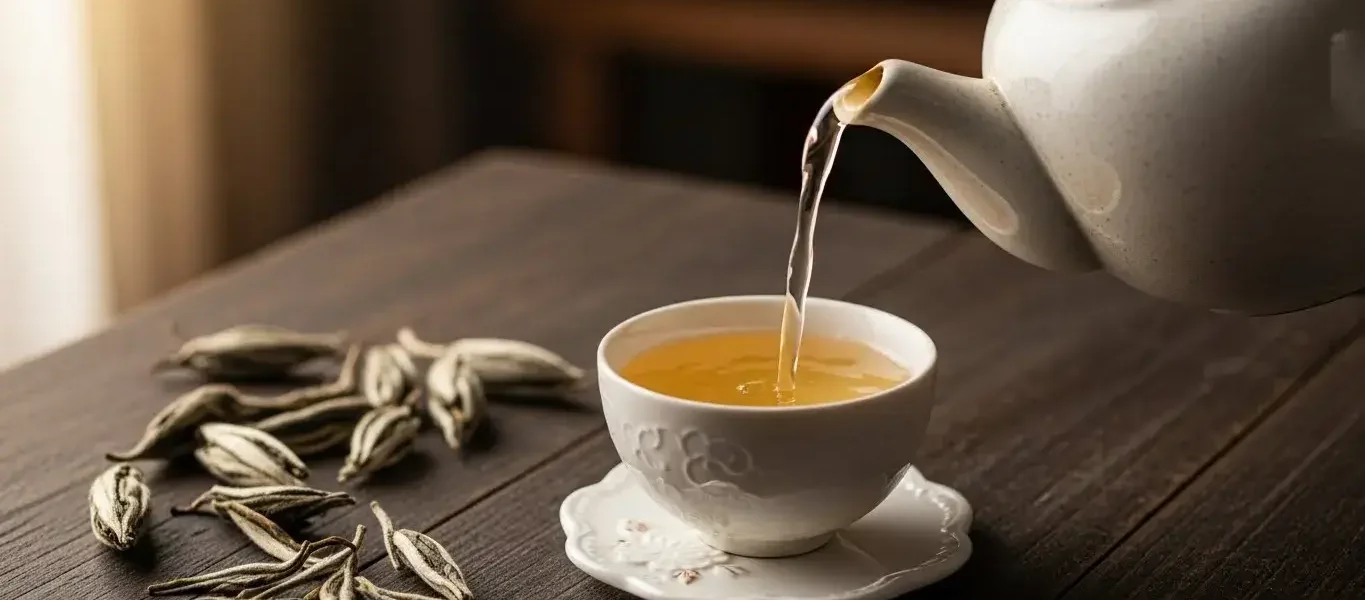
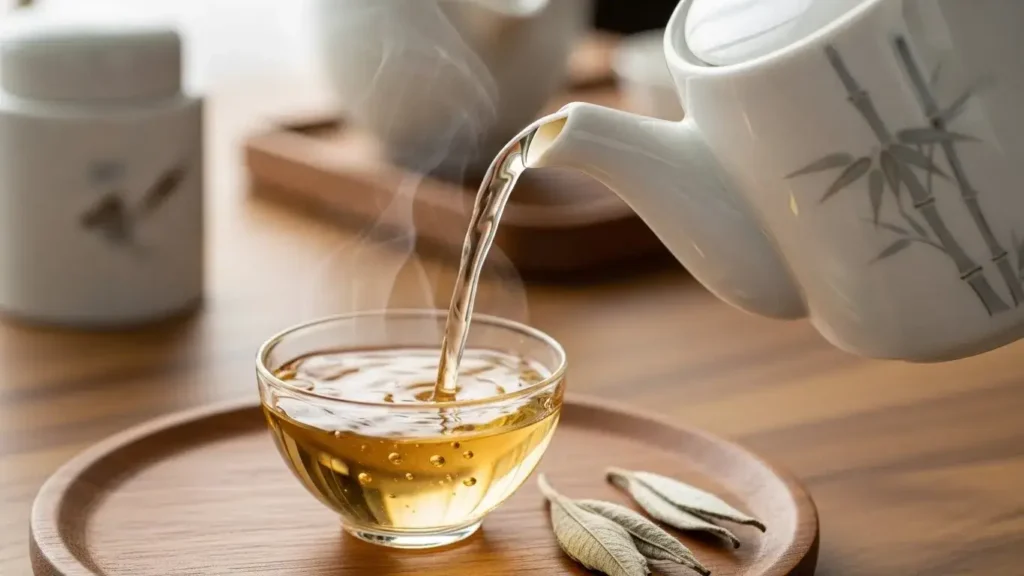
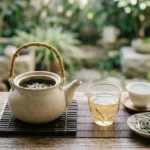
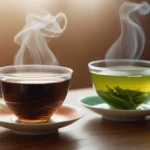
Despite its name, brewed white tea actually yields a pale yellow color in the cup. Its flavor profile is delicate and subtle compared to other teas, often featuring gentle floral notes, light sweetness reminiscent of honey, and hints of fresh fruits like peach or melon. The taste remains light and clean without overwhelming the palate.
Furthermore, white tea contains antioxidants that contribute to its health benefits. It’s particularly rich in polyphenols called catechins, which help fight free radicals and reduce inflammation. Additionally, white tea contains caffeine, though typically in lower amounts than black or green teas, making it a gentler option for caffeine-sensitive individuals.
Due to its limited harvesting period and labor-intensive production, white tea is often considered more rare and premium than other tea varieties. The plucking season typically occurs between mid-March and early April, during a narrow two to three-week window when weather conditions must be dry.
How is White Tea Made?
The production of white tea epitomizes the principle that simplicity requires mastery. Tea producers often remark that white tea is the most challenging to make precisely because of its minimal processing. The manufacturing involves just two deceptively straightforward stages: withering followed by drying or baking. Nevertheless, this apparent simplicity conceals a subtle and exacting process.
After harvesting the young buds and leaves in early spring, tea makers begin the critical withering phase where most of white tea’s character develops. This stage alone accounts for roughly three-quarters of the water loss in the leaves. Withering follows three primary methods: Natural Indoor Withering, Sunlight/Solar Withering, and Heated Withering. Most producers employ a combination of techniques, adjusting their approach based on weather conditions.
For traditional early spring white teas, craftsmen often use Staggered Withering—alternating between sunshine exposure and shade. The fresh leaves are placed outside for approximately 20 minutes, then retrieved and cooled in the shade before returning them outdoors. This careful cycle continues several times but rarely exceeds two hours total.
Throughout withering, four essential factors require precise management: temperature, light, humidity, and air flow. The ambient temperature must remain warm yet moderate; sunlight should be used sparingly; air circulation cannot be too aggressive; moreover, the atmosphere must be neither muggy nor stale. Only a slow, steady rate of moisture loss will produce quality white tea.
In contrast to other tea varieties, white tea undergoes slight spontaneous oxidation (8-15%) during processing. Unlike green tea, which halts enzyme activity through pan-frying or steaming, white tea processing deliberately avoids manipulating the leaves. This minimal intervention allows natural chemical changes to occur, creating the tea’s distinctive character.
The withering phase in traditional production typically takes two to three days, sometimes extending up to a month for complete production. This unhurried pace is intentional—faster dehydration intensifies oxidation, causing undesirable reddening of the leaf edges. As one producer notes: “Hot weather reddens, cold weather darkens”.
After withering comes the final baking or drying stage. This shorter phase completes the dehydration process, typically using low temperatures between 40-60°C. Baking not only draws out remaining moisture but also helps dispel any lingering green aromas while enhancing the tea’s aromatic profile.
Despite appearing simple, white tea production demands exceptional skill. The tea maker must constantly observe and respond to subtle changes in leaf color, shape, and aroma. Even small errors in judgment significantly impact the final product, making white tea production among the riskiest of all tea types.
White tea classification encompasses several distinct varieties, each with unique characteristics based on the part of the plant used, harvest timing, and processing methods. From premium buds-only selections to more robust leaf varieties, each type offers its own flavor profile and appearance.
Silver Needle (Bai Hao Yin Zhen)
Silver Needle represents the highest grade white tea, made exclusively from hand-plucked tea buds harvested in early spring. It requires over 30,000 buds to produce a single kilogram. Genuine Silver Needle comes from cultivars of the Da Bai (Large White) tea tree family, primarily from Fujian Province. The downy fuzz covering these buds creates its distinctive silvery appearance. When brewed, Silver Needle yields a pale yellow-green liquor with subtle sweetness, light vegetal notes, and hints of honeysuckle. As a traditional tribute tea, it was historically reserved for Chinese emperors and royalty.
White Peony (Bai Mu Dan)
White Peony consists of a budset with one or two young leaves and a silvery bud. Originating from Zhenghe town in Fujian Province, it ranks as the second highest quality white tea. This tea undergoes gentle air-drying, creating a brilliant amber infusion with honey-like viscosity. White Peony offers a more robust herbaceous flavor than Silver Needle, featuring a slightly stronger body and nutty, roasted finish. The tea uses the Da Bai cultivar, with distinct regional variations in Fuding and Zhenghe styles.
Shou Mei
Shou Mei (Longevity Eyebrow) uses mature leaves and occasional buds harvested in late spring or summer. Technically a fourth-grade white tea, it’s a by-product of Silver Needle production. Shou Mei features a chaotic mix of tips and upper leaves, creating a darker brew with more depth than other white teas. Its flavor profile resembles lighter oolongs, with earthy, woody notes and a mellow character. Despite its lower grade classification, quality Shou Mei retains light green coloration and wholeness in the leaves.
Gong Mei
Gong Mei (Tribute Eyebrow) ranks as third-grade white tea, made from the Da Bai subvariety of Camellia sinensis. It’s grown primarily in Fujian and Guangxi provinces. Harvested later than White Peony, its liquor appears darker—golden yellow—with stronger taste. Classic Gong Mei from Fuding uses tea from the “Small White” varietal planted from seeds rather than cuttings, resulting in more complex flavor with thicker, rounder texture. Despite similarities, Gong Mei is considered higher quality than Shou Mei.
Fujian New Craft
Fujian New Craft white tea emerged in 1968, developed by the Fuding Bailin Tea Factory to meet growing demand from Hong Kong and Macao markets. Unlike traditional white teas, it undergoes additional processing: withering, slight rolling, and drying. This creates curly, bar-shaped leaves with dark green color and brownish tones. The processing involves extended oxidation (approximately 30%) through controlled dehydration lasting over 72 hours. Its orange-red liquor offers stronger flavor than other white teas, with minimal aroma but robust taste.
Darjeeling White Tea
Darjeeling White Tea comes from the misty Himalayan foothills in northeastern India. Grown at elevations between 2,000-4,000 feet, it benefits from cool, misty climate and mineral-rich soils. Like other white teas, it uses tender buds and leaves but develops unique characteristics from its terroir. Darjeeling white tea contains abundant polyphenols and antioxidants. Limited quantities are produced, primarily from estates like Namring, which was founded in 1855.
What Does White Tea Taste Like?
White tea possesses a delicate and subtle taste profile, characterized primarily by its light, refreshing quality. The flavor is often described as sweet and smooth with floral undertones and completely lacking bitterness. This gentleness results directly from its minimal processing, which preserves the tea’s natural qualities.
Unlike green tea’s grassy notes or black tea’s boldness, white tea offers a softer, naturally sweet experience. Most varieties exhibit a clean, crisp finish with varying degrees of complexity depending on the specific type. Silver Needle delivers a soft, subtle taste with a marshmallowy mouthfeel and enduring sweetness. White Peony, meanwhile, presents a similar flavor but with enhanced floral depth and notably creamy texture.
Consequently, many detect fruity notes reminiscent of peach, melon, or honeydew alongside hints of nectar. Certain varieties may develop subtle woody characteristics, especially in aged versions where the flavor evolves toward spicy-sweet notes of dried fruit.
The liquor itself appears pale golden, creating a visual experience that matches its gentle taste profile. Remarkably, white tea’s flavor complexity requires a trained palate to fully appreciate. For newcomers accustomed to stronger beverages, white tea might initially seem extraordinarily mild, yet with time, its nuanced character becomes increasingly apparent.
Among tea varieties, white tea stands out for its remarkable health-promoting properties stemming from its minimal processing and high concentration of bioactive compounds.
Rich in antioxidants
White tea contains abundant catechins, polyphenols, and other antioxidant compounds that fight harmful free radicals. Notably, white tea retains higher concentrations of antioxidants than other tea types, primarily due to its minimal processing. These compounds include gallic acid, catechin, epicatechin, gallocatechin, epigallocatechin, epicatechin 3-gallate, and epigallocatechin 3-gallate (EGCG).
May support heart health
Regular white tea consumption could reduce cardiovascular disease risk by improving blood vessel function. Studies show it effectively decreases total cholesterol, LDL cholesterol, and triglyceride levels. Accordingly, drinking three cups daily might lower heart disease risk by 21%.
Can help with skin aging
White tea protects skin from both internal and external aging factors. Its components inhibit enzymes that break down elastin and collagen—proteins essential for youthful skin. Furthermore, white tea extract applied topically helps protect against harmful UV rays.
May boost brain function
The neuroprotective properties of white tea potentially reduce risk of neurodegenerative diseases. Its catechins, particularly EGCG, suppress free radicals, reduce inflammation, and prevent protein misfolding associated with Alzheimer’s and Parkinson’s diseases. Research indicates white tea improves cerebral cortex metabolic function.
Conclusion: The Final Verdict on White Tea What Is It
From the pristine buds of Silver Needle to the bold character of Shou Mei, understanding white tea what is it opens up a new world of flavor and wellness. We hope this guide has clarified how this antioxidant-rich brew is crafted and why it deserves a spot in your daily routine. With its proven ability to support heart health, boost brain function, and protect your skin, pouring a cup of white tea is truly a simple act of self-care.
Key Takeaways
White tea stands apart as the most delicate and minimally processed tea variety, offering unique health benefits and subtle flavors that make it a premium choice for tea enthusiasts.
• White tea uses only young buds and leaves with minimal processing, preserving the highest antioxidant levels among all tea types
• Silver Needle represents the premium grade made from buds only, while White Peony and Shou Mei offer different flavor profiles using leaves
• The delicate taste features natural sweetness, floral notes, and fruity hints without bitterness, creating a gentle drinking experience
• Rich in catechins and polyphenols, white tea may support heart health, protect skin from aging, and boost brain function
• Production requires exceptional skill despite appearing simple—just withering and drying—making it one of the most challenging teas to craft perfectly
White tea’s combination of health benefits, unique processing method, and subtle complexity makes it a valuable addition to any tea collection, though its gentle nature requires patience to fully appreciate its nuanced character.
Q1. What makes white tea unique compared to other tea varieties? White tea is unique due to its minimal processing, which involves only withering and drying of young buds and leaves. This preserves high levels of antioxidants and results in a delicate, naturally sweet flavor profile.
Q2. How does the taste of white tea differ from other teas? White tea has a subtle, sweet taste with floral undertones and no bitterness. It often features light fruity notes like peach or melon, and has a clean, crisp finish. The flavor is more delicate compared to green or black teas.
Q3. What are the main health benefits of drinking white tea? White tea is rich in antioxidants, which may support heart health by improving blood vessel function and reducing cholesterol levels. It also has potential benefits for skin health and may boost brain function, possibly reducing the risk of neurodegenerative diseases.
Q4. What are the most popular types of white tea? The most popular types of white tea include Silver Needle (Bai Hao Yin Zhen), which is made only from buds, White Peony (Bai Mu Dan), which includes buds and young leaves, and Shou Mei, which uses more mature leaves.
Q5. How is white tea produced?White tea production involves two main stages: withering and drying. The leaves are carefully withered using a combination of indoor and outdoor methods, then gently dried or baked at low temperatures. This process requires great skill to manage factors like temperature, light, humidity, and air flow.
Black Tea Extract that is rich in natural theaflavins and polyphenols that help protect your body from free radicals, promoting overall immune health and well-being
Contains blended amounts of Fruits and Veggies. All natural, with whole foods, fruit and vegetable supplement.Perfect for everyone looking to live a healthier lifestyle.