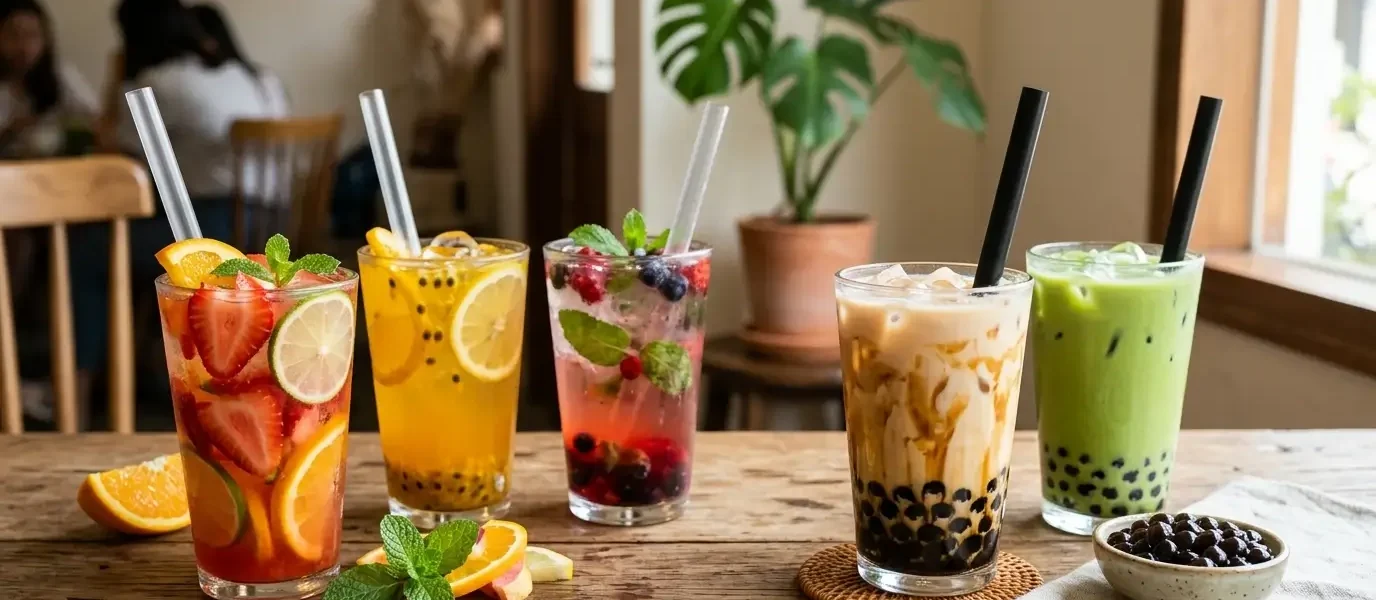
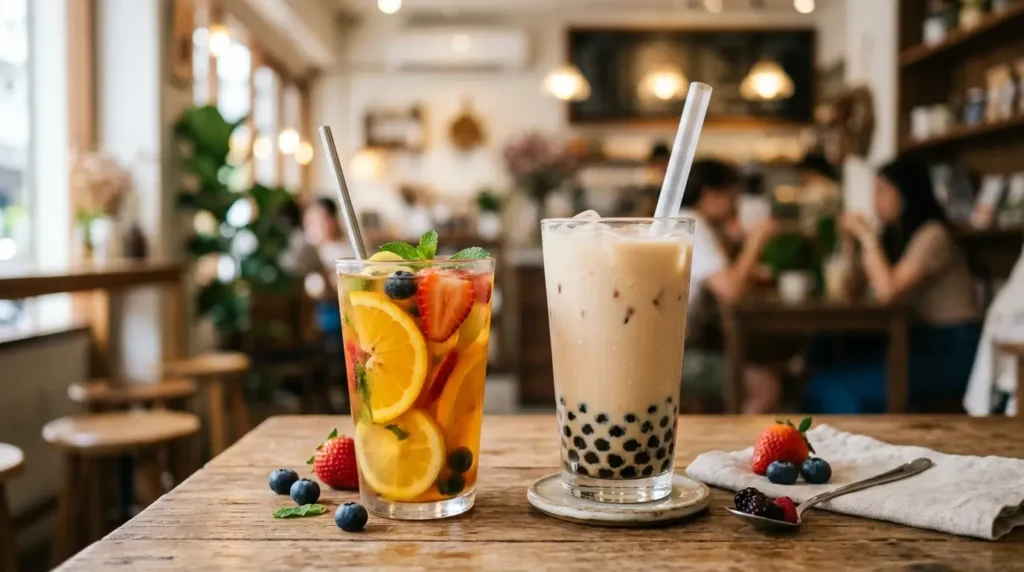
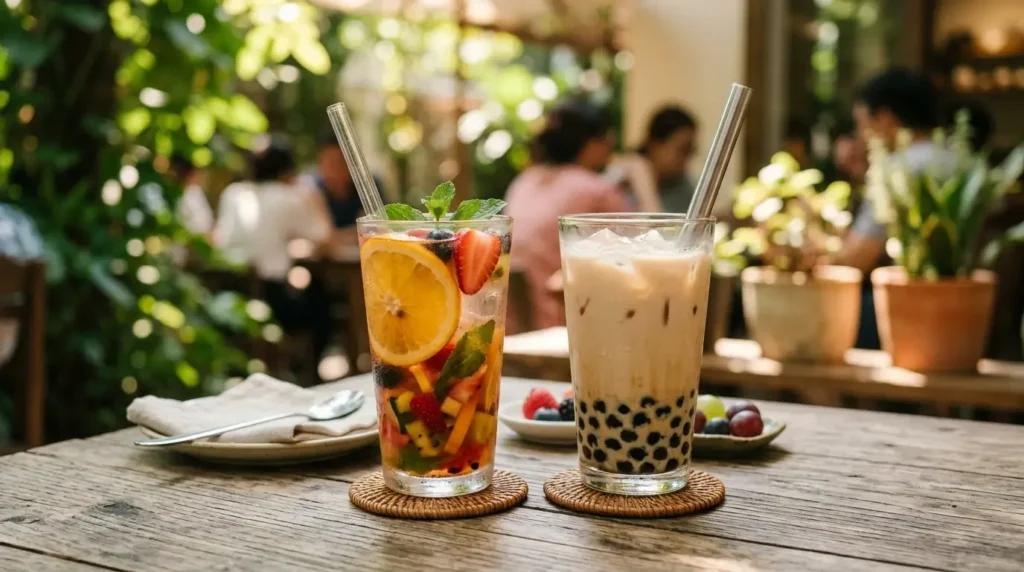
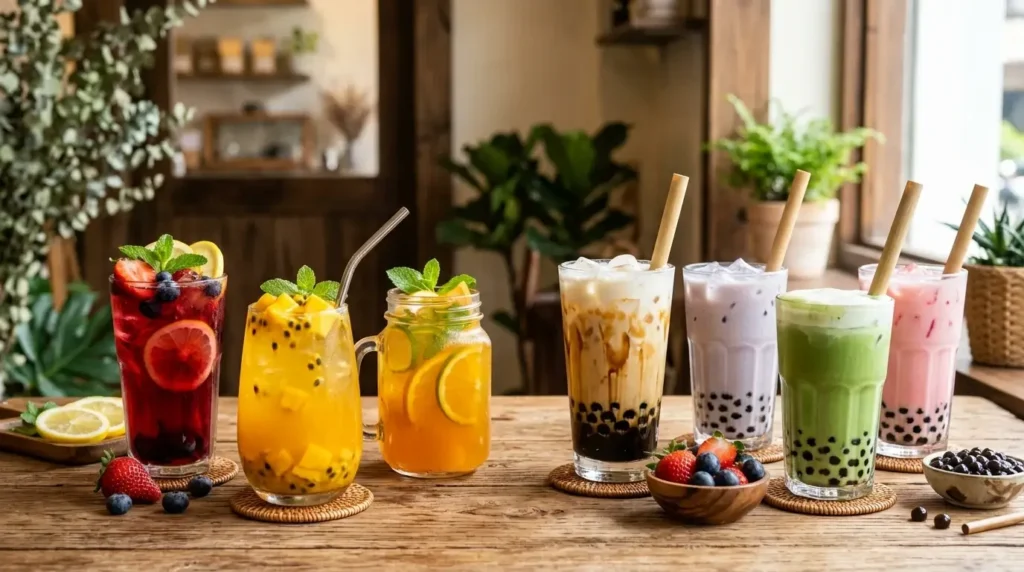
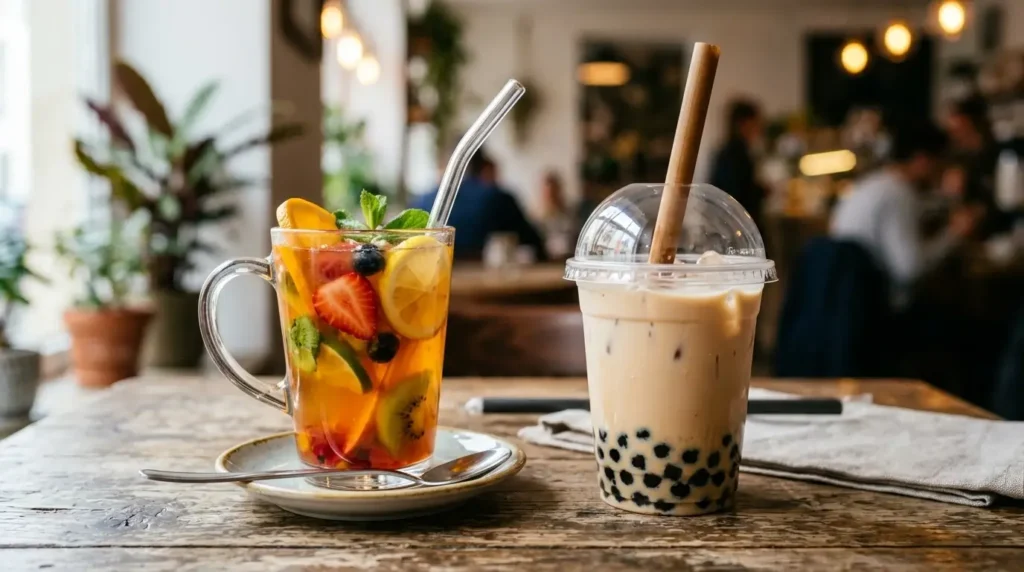
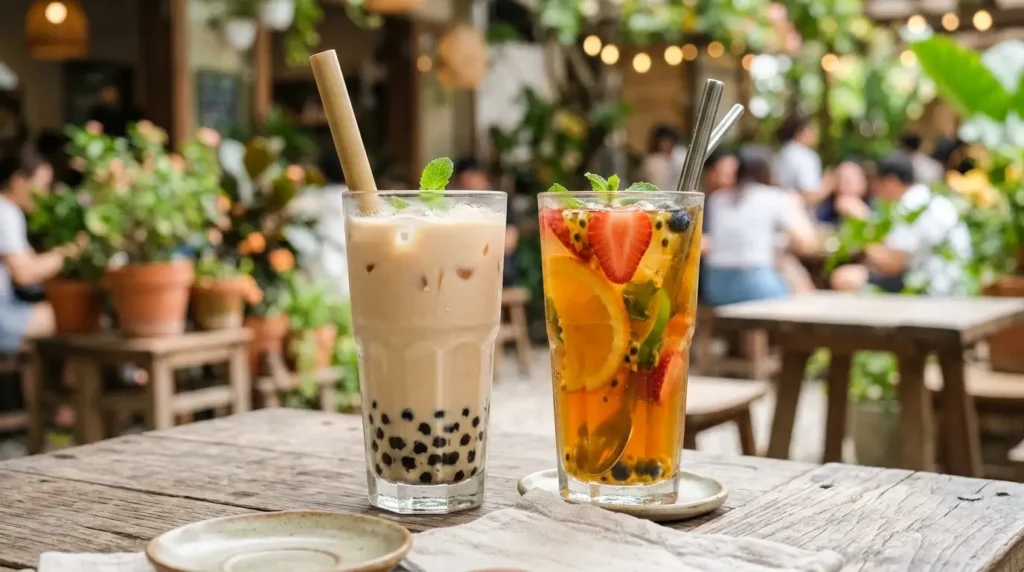
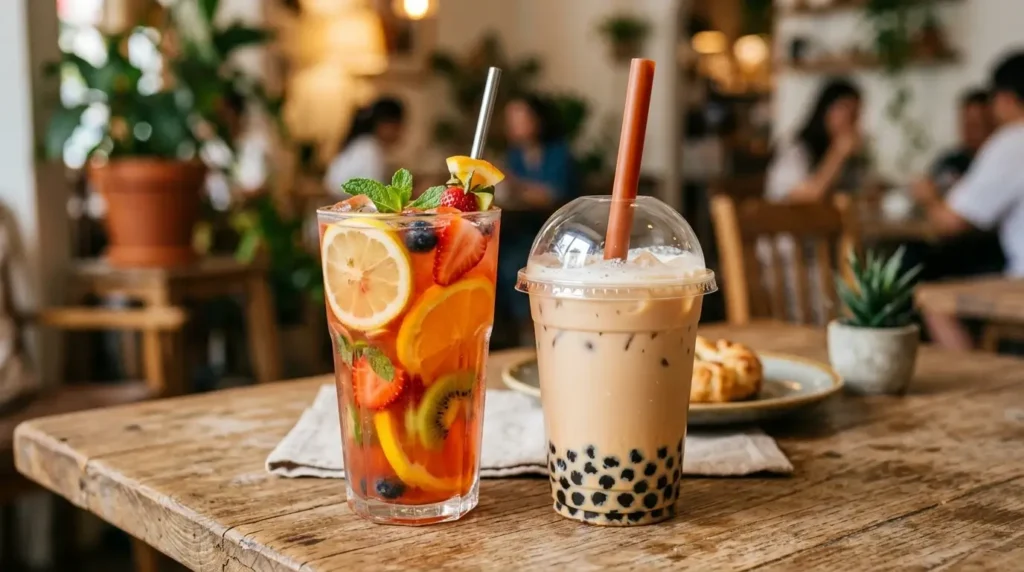
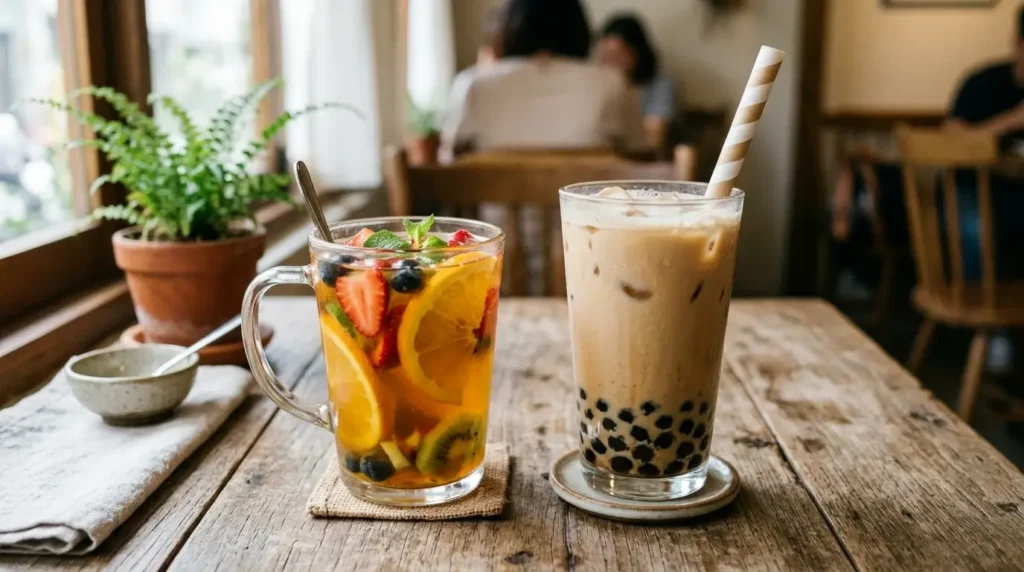
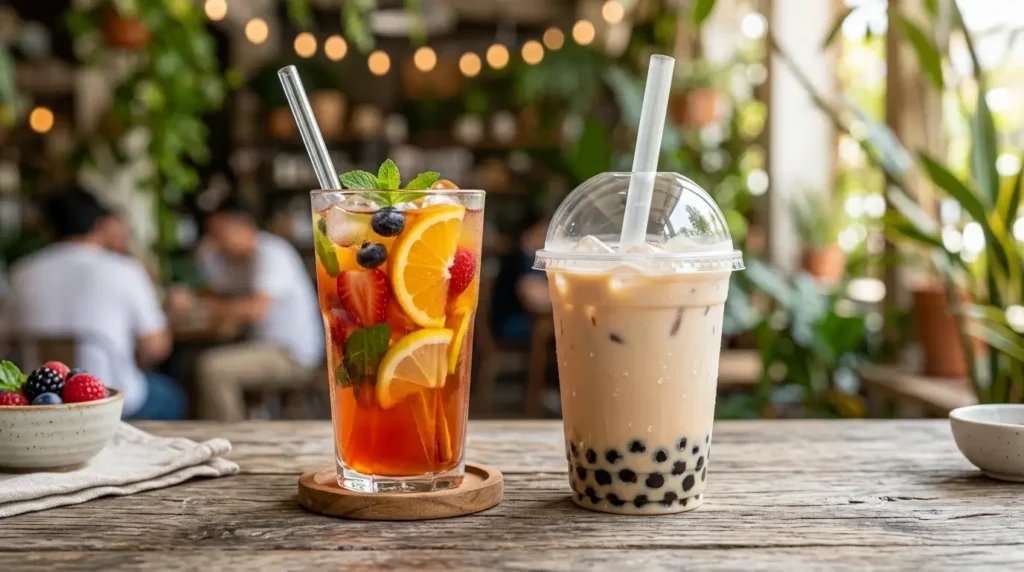
Craving a refreshing beverage but can’t decide what to order? You’re not alone. The great debate of fruit tea vs bubble tea is a familiar dilemma for drink enthusiasts everywhere. While both iconic drinks have captivated taste buds globally, they offer entirely different ingredients, cultural histories, and nutritional profiles. In this ultimate flavor showdown, we will break down everything you need to know so you can finally crown your perfect cup.
Introduction to Fruit Tea and Bubble Tea
Two drinks dominate café menus worldwide, and choosing between them is anything but simple. Fruit tea and bubble tea each represent distinct philosophies of flavor, texture, and experience — and the debate between them has never been more relevant as global tea culture reaches new heights.
Bubble tea, often called boba, is a Taiwanese innovation built on a creamy, indulgent foundation. It typically combines tea with milk, sweeteners, and signature tapioca pearls that deliver a uniquely satisfying chew. Fruit tea, by contrast, strips things back to their vibrant essentials — real or concentrated fruit blended with tea, usually served over ice with a refreshingly clean finish.
The distinction matters more than mere personal preference. For health-conscious consumers seeking a low calorie tea option, fruit tea often presents a lighter alternative to the richer, milk-based profiles of classic bubble tea. On the other hand, those chasing bold, dessert-like complexity tend to gravitate toward boba’s layered sweetness.
“The choice between fruit tea and bubble tea ultimately reflects what you want from a drink — refreshment and clarity, or richness and indulgence.”
Understanding what separates these two beverages requires looking at where they came from — and how their remarkable histories shaped every sip.
History and Evolution of Fruit Tea and Bubble Tea
Two drinks with vastly different origins now share the same café counters — and understanding how each arrived there adds surprising depth to the comparison.
Bubble tea traces its roots to Taiwan in the early 1980s. The most widely cited origin story credits Chun Shui Tang teahouse in Taichung, where staff reportedly began adding sweetened tapioca pearls to cold milk tea. The drink spread rapidly across Southeast Asia throughout the 1990s before reaching Western markets in the early 2000s. Today, the global bubble tea market reflects decades of cultural momentum, continuous innovation, and an ever-expanding flavor landscape.
Fruit tea, by contrast, has a far older and more diffuse history. Herbal and fruit infusions appear across European, Middle Eastern, and Asian traditions spanning centuries. What’s new is their modern café-ready presentation — chilled, sweetened, and dressed with fresh fruit slices or popping boba. This contemporary format emerged largely as a response to growing demand for a health-conscious drink alternative to milk-heavy beverages.
The evolution of both drinks reflects a broader cultural shift toward beverages that balance indulgence with intention — satisfying flavor cravings without entirely abandoning wellness goals.
Both histories, however, are inseparable from the ingredients and preparation methods that define each drink’s character.
Understanding what goes into each drink clarifies much of the ongoing fruit tea vs bubble tea debate — because the ingredient lists couldn’t be more different.
Fruit tea is built on a straightforward foundation: a brewed base (typically green, white, or herbal tea), fresh or preserved fruit, natural fruit purees, and a sweetener such as honey or cane syrup. Many preparations layer in dried fruit, edible flowers, or cold-pressed juice to amplify color and aroma. The process is minimal — steep, cool, blend, and serve over ice. No specialized equipment is required.
Milk tea, by contrast, demands more deliberate construction. According to Ultimate Guide to The Best Milk Tea, a quality bubble tea starts with a strong brewed tea base — most commonly black or oolong — combined with a dairy or non-dairy creamer, sweetener, and ice. The signature tapioca pearls are cooked separately, requiring precise timing to achieve their characteristic chewy texture. Additional toppings — grass jelly, pudding, or popping boba — each involve their own preparation steps.
The complexity of milk tea preparation directly shapes its richer, more layered character — a contrast that becomes immediately apparent with the first sip.
That layered character, of course, begins with flavor — which is where the two drinks diverge most dramatically.
Flavor Profiles and Taste Experiences
The milk tea vs fruit tea difference becomes most apparent the moment either drink touches your lips — and understanding that contrast is central to appreciating what each beverage uniquely offers.
Fruit tea delivers a bright, clean sensory experience. Because it’s built on real fruit juice, dried botanicals, and brewed tea bases, the flavor profile tends to be refreshingly tart, floral, or lightly sweet depending on the blend. Hibiscus-based versions carry a cranberry-like acidity. Citrus blends feel energizing and sharp. There’s very little heaviness — the drink is almost translucent in both color and taste.
Boba tea, by contrast, is a study in layered richness. The creamy milk or non-dairy base wraps around a strong brewed tea foundation — typically black or oolong — creating a flavor that’s simultaneously robust and smooth. The signature chewy tapioca pearls add a subtly sweet, almost neutral chew that complements rather than competes with the drink itself. In practice, boba tea functions more like a dessert-beverage hybrid than a simple refreshment.
Dimension
Fruit Tea
Boba Tea
Sweetness
Light to moderate
Moderate to heavy
Body
Thin, refreshing
Thick, creamy
Complexity
Bright and straightforward
Layered and indulgent
Both drinks can be customized for sweetness level, but their baseline flavor experiences point in fundamentally different directions — a distinction that carries real implications for everyday dietary choices.
Nutritional Considerations and Health Implications
When asking fruit tea vs milk tea healthier, the answer depends heavily on preparation choices and individual dietary needs — and the gap between options is more significant than most consumers realize.
Fruit teas generally carry a lighter nutritional footprint. Without dairy or creamer, they rely on brewed tea bases rich in polyphenols and antioxidants. When made with whole fruit rather than syrup, sugar content remains comparatively modest. However, commercially prepared fruit teas often include substantial added sugars that can offset those natural benefits considerably.
Milk tea, by contrast, introduces additional variables. Non-dairy creamers — common in traditional preparations — frequently contain hydrogenated oils and added sugars. The milk tea vs fruit tea calorie comparison shifts dramatically once tapioca pearls enter the equation; a standard serving of pearls adds roughly 100–150 calories of primarily simple carbohydrates.
Key considerations for health-conscious consumers:
Sugar levels: Both drinks can be customized; requesting 25–50% sugar is standard practice at most shops
Dairy content: Milk tea may not suit lactose-intolerant individuals depending on base ingredients
Portion size: Larger serving formats amplify caloric impact across both categories
Neither drink qualifies as a health food in conventional terms. However, both can be enjoyed mindfully with informed customization choices — a reality that shapes how deeply both beverages have embedded themselves into everyday consumer culture.
The cultural footprint of fruit bubble tea and its milk-based counterpart extends far beyond the drink itself — these beverages have become social signals, aesthetic experiences, and markers of cultural identity worldwide.
Originating in Taiwan during the 1980s, bubble tea culture spread rapidly across East Asia before gaining mainstream recognition in Western markets. Today, the global bubble tea market reflects a striking diversification: milk tea variants dominated early adoption, but fruit-forward offerings have increasingly captured younger demographics drawn to vibrant, photogenic presentations. The visual appeal of layered fruit teas — particularly on social platforms — has accelerated this shift considerably.
Cultural context shapes consumption patterns in meaningful ways. In many East Asian communities, milk tea carries nostalgic significance tied to heritage and shared ritual. Fruit tea, by contrast, tends to attract consumers seeking novelty and lighter refreshment, particularly in warmer climates or fitness-conscious demographics.
The DIY movement has also broadened accessibility. Interest in how to make fruit bubble tea at home surged during the pandemic, reflecting consumers’ desire to recreate café experiences independently and adapt recipes to personal taste.
As both beverages continue evolving into cultural touchstones rather than mere refreshments, it’s worth separating genuine tradition from popular mythology — a distinction that clears up several persistent misconceptions worth addressing directly.
Common Misconceptions About Fruit Tea and Bubble Tea
Despite their widespread popularity, both boba fruit tea and milk-based bubble tea carry persistent myths that distort how consumers approach each drink. Clearing up these misunderstandings helps build a more accurate picture before making any final choice.
Misconception #1: Fruit tea is always the “healthy” option. Not necessarily. Blended fruit teas at commercial shops frequently contain syrups, flavored powders, and added sugars that rival — or exceed — the sugar content in lightly sweetened milk tea. The base ingredient doesn’t automatically determine nutritional value.
Misconception #2: Bubble tea always means tapioca pearls. In practice, “bubble tea” refers broadly to the category. Many variations skip tapioca entirely, featuring jelly cubes, popping boba, or simply foam toppings.
Misconception #3: Why choose fruit tea over milk tea is a simple question. It isn’t. The decision involves dietary goals, flavor preference, caffeine sensitivity, and preparation method — variables that shift the calculus considerably for each individual.
Misconception #4: Fruit teas are caffeine-free. Most are not. Green tea, black tea, and oolong bases all contribute meaningful caffeine levels regardless of added fruit flavoring.
Separating myth from fact makes the next step — actively deciding which drink fits your lifestyle — considerably more straightforward.
After unpacking the myths and cultural context, the practical question remains: which drink actually suits you? A thoughtful fruit tea vs bubble tea flavor comparison reveals that the right choice depends on several intersecting factors — taste preference, dietary goals, and even the occasion itself.
Start with your flavor baseline. Those who gravitate toward bright, acidic, and refreshing profiles typically find fruit tea more satisfying. In practice, lighter drinkers or those sensitive to dairy often default to fruit-based options without hesitation. On the other hand, anyone seeking richness, depth, and a more indulgent experience tends to reach for milk-based bubble tea.
Consider texture as a decision factor. Toppings dramatically shift the drinking experience. Popping boba — juice-filled spheres that burst on contact — pair especially well with fruit teas, amplifying fruity notes without adding creaminess. Chewy tapioca pearls, however, complement the heavier body of milk teas more naturally.
A few practical questions worth asking: Are you managing calorie intake?, Do you prefer cold, light beverages or warm, comforting ones?, and Is dairy sensitivity a concern? Neither option is universally superior — each excels within its own context. The clearest way to map these differences side by side is through a structured breakdown, which the next section provides in full.
Comparison Table: Fruit Tea vs Bubble Tea
With the decision-making framework established, a side-by-side breakdown makes the distinctions concrete and actionable. The table below synthesizes the key differentiators across the most relevant criteria.
Category
Fruit Tea
Bubble Tea
Base
Brewed tea + fruit juice/puree
Brewed tea + milk or creamer
Texture
Light, smooth, refreshing
Rich, creamy, often includes tapioca pearls
Calorie Range
Typically lower (varies by sweetener)
Generally higher due to dairy/creamers
Best Flavors
Passion fruit, lychee, strawberry
Taro, matcha, brown sugar
Caffeine Level
Moderate
Moderate to high
Dairy-Free
Naturally yes
Requires substitution
Customization
High
Very high
When exploring the best fruit flavors for bubble tea hybrids — drinks that combine fruit bases with chewy toppings — passion fruit and mango consistently rank as consumer favorites due to their bold acidity balancing the sweetness of added toppings.
One practical pattern worth noting: fruit teas tend to appeal to those prioritizing lighter profiles, while bubble tea rewards those seeking indulgent complexity. Neither is objectively superior — the right choice depends entirely on personal preference, dietary needs, and occasion.
The distinctions summarized here point toward several broader conclusions worth crystallizing into clear takeaways.
Key Takeaways
The fruit tea vs bubble tea debate doesn’t have a universal winner — and that’s precisely the point. Each drink occupies a distinct niche, serving different preferences, dietary needs, and occasions with equal legitimacy.
Here’s what the full comparison ultimately reveals:
Fruit tea prioritizes brightness, lightness, and botanical complexity. For those who find make fruit tea at home easier than navigating specialty café menus, it’s also a highly accessible everyday option requiring minimal equipment.
Bubble tea delivers richness, textural drama, and deep cultural roots. Dairy-free bubble tea options — including oat milk and coconut milk bases — have expanded its appeal significantly, removing one of the most common barriers for lactose-intolerant or vegan drinkers.
Flavor intensity and caloric load diverge sharply between the two, making the choice meaningful for health-conscious consumers.
Customization is the shared strength: both drinks reward experimentation.
In practice, the most satisfying approach is treating these beverages as complementary rather than competing — a refreshing fruit tea on a warm afternoon, a indulgent bubble tea as a deliberate treat.
The category you choose matters less than understanding what you’re choosing. Approach both drinks with curiosity, and neither will disappoint.
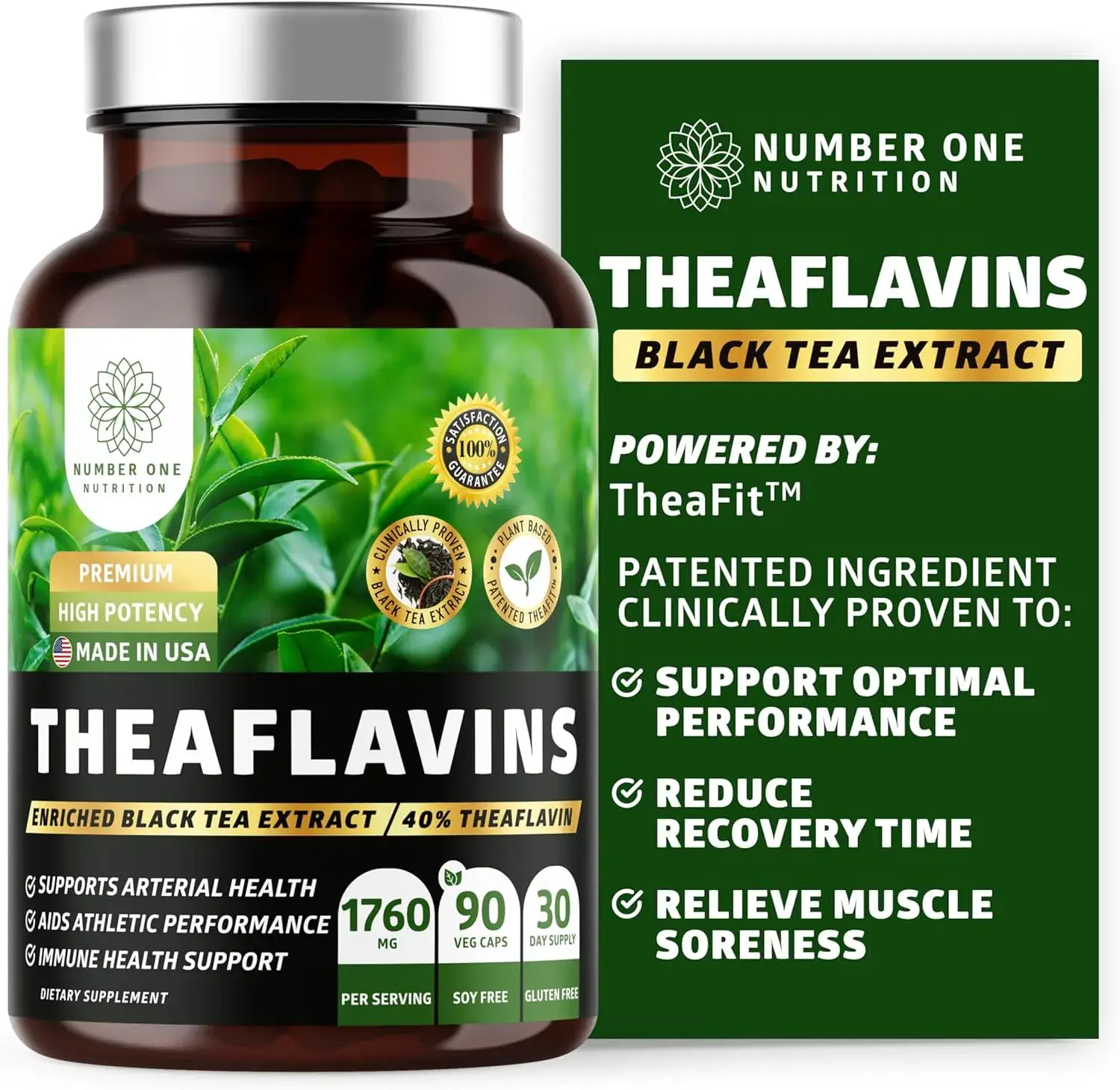
Black Tea Extract that is rich in natural theaflavins and polyphenols that help protect your body from free radicals, promoting overall immune health and well-being
Contains blended amounts of Fruits and Veggies. All natural, with whole foods, fruit and vegetable supplement.Perfect for everyone looking to live a healthier lifestyle.