You’ve probably seen it on social media — a deep blue tea that magically turns purple when you squeeze in a lemon. But beyond the visual drama, butterfly pea flower tea has been quietly earning a reputation as one of the most calming herbal drinks you can add to your nighttime routine.
If you’ve been lying awake at night, scrolling through your phone and wondering whether there’s a gentler, more natural way to wind down, you’re not alone. Millions of people are turning to herbal teas as a first step toward better sleep — and butterfly pea flower tea is increasingly at the top of that list.
In this guide, we’ll break down exactly what butterfly pea flower tea is, whether butterfly pea flower tea for sleep really works, what compounds it contains that might support sleep, what the science actually shows, and how to brew the perfect bedtime cup.
What Is Butterfly Pea Flower Tea?
Origins and Traditional Use
Butterfly pea flower tea is brewed from the dried petals of Clitoria ternatea, a flowering vine native to Southeast Asia. For centuries, communities across Thailand, Malaysia, Indonesia, and India have incorporated this plant into their food, medicine, and spiritual rituals.
In Thailand, the tea is known as nam dok anchan and has been a staple of traditional medicine for generations. In Ayurveda — the ancient Indian system of holistic healing — the butterfly pea flower is considered a powerful brain herb, used to treat anxiety, stress, depression, and sleep disorders. The plant’s deep blue flowers are also offered in Hindu puja rituals, a testament to how deeply embedded this flower is in Asian culture.
In recent years, butterfly pea flower has crossed into Western wellness culture, showing up in upscale cocktail bars, spa menus, health food stores, and Instagram feeds worldwide — largely because of its visual magic and its growing list of studied health benefits.
What Makes It Unique — The Color-Changing Magic
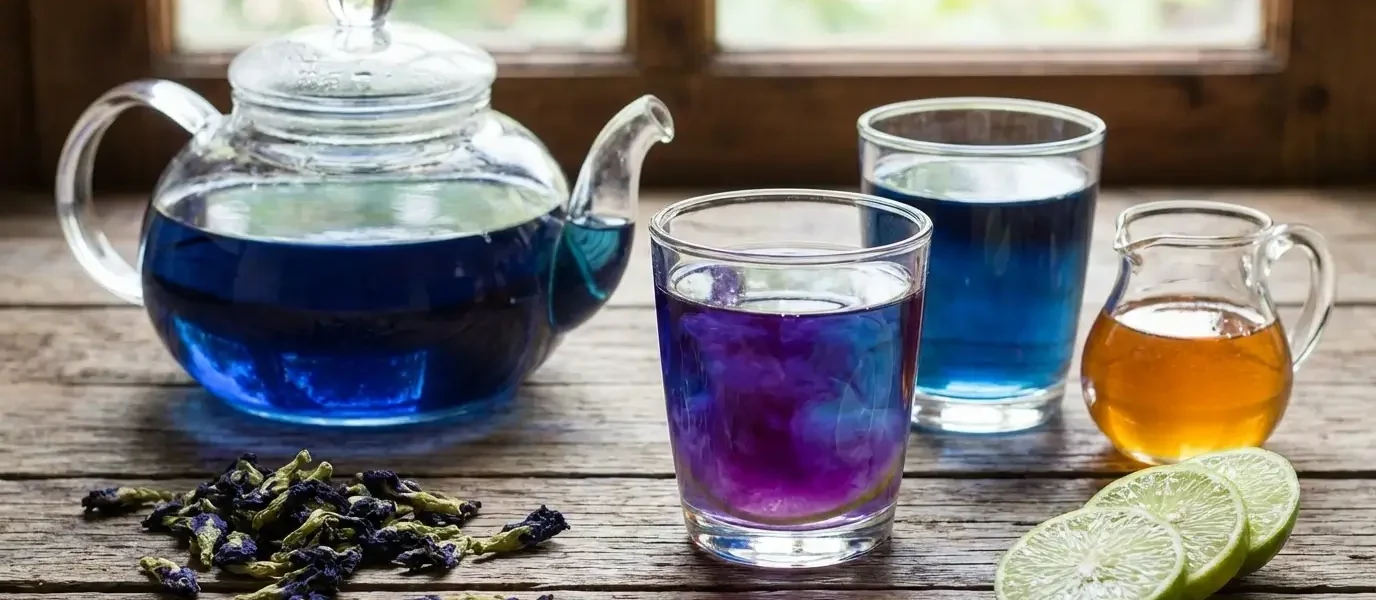
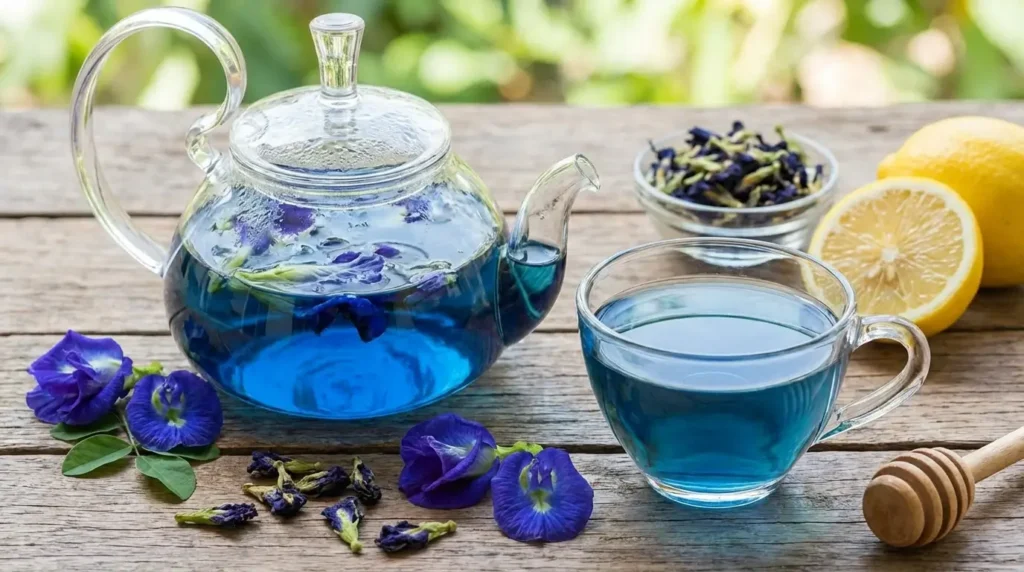
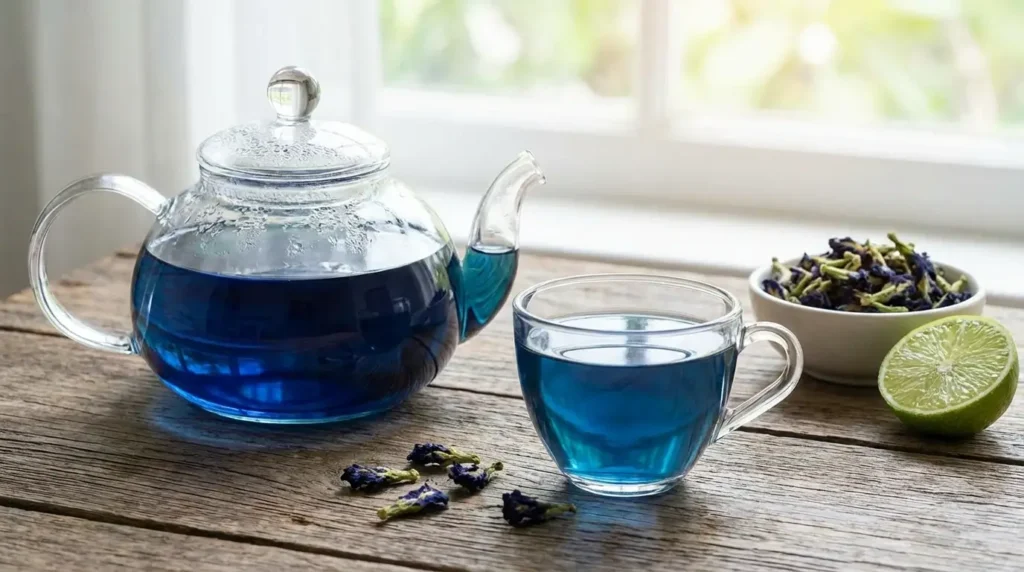
One of the most distinctive features of butterfly pea flower tea is its vibrant, electric-blue color — something almost no other natural beverage can claim. The hue comes from a high concentration of anthocyanins, a class of antioxidant pigments also found in blueberries, purple cabbage, and red wine.
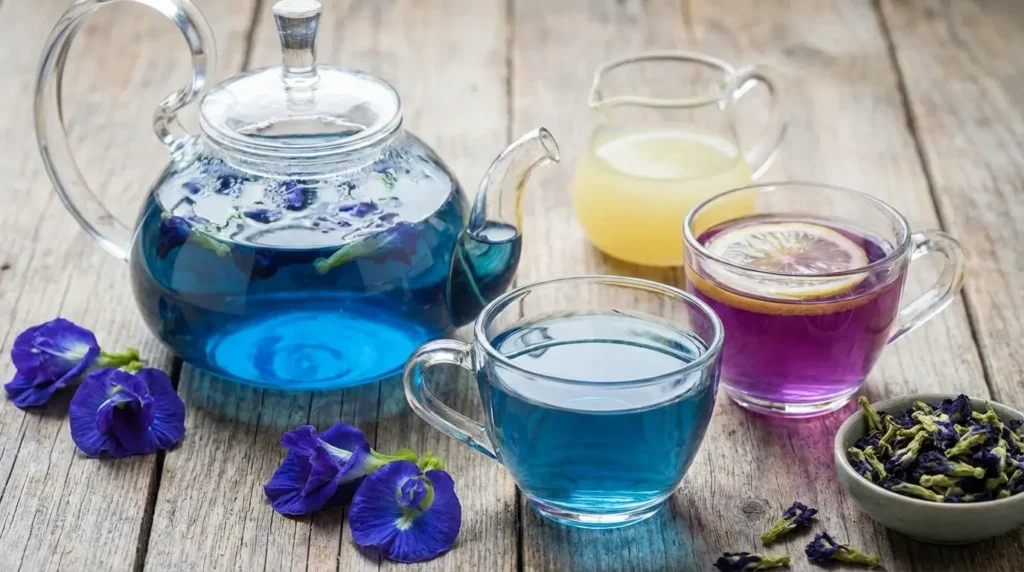
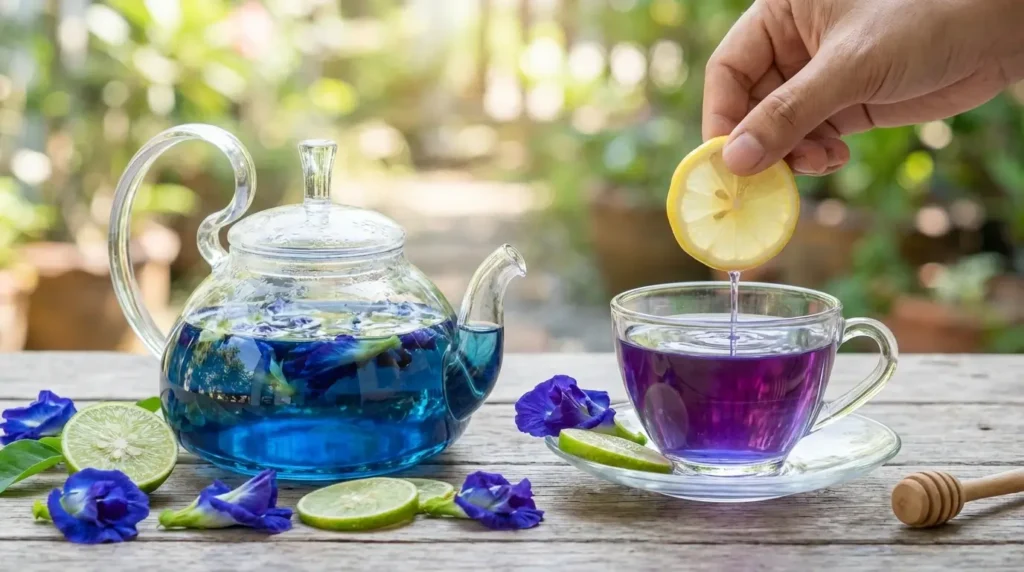
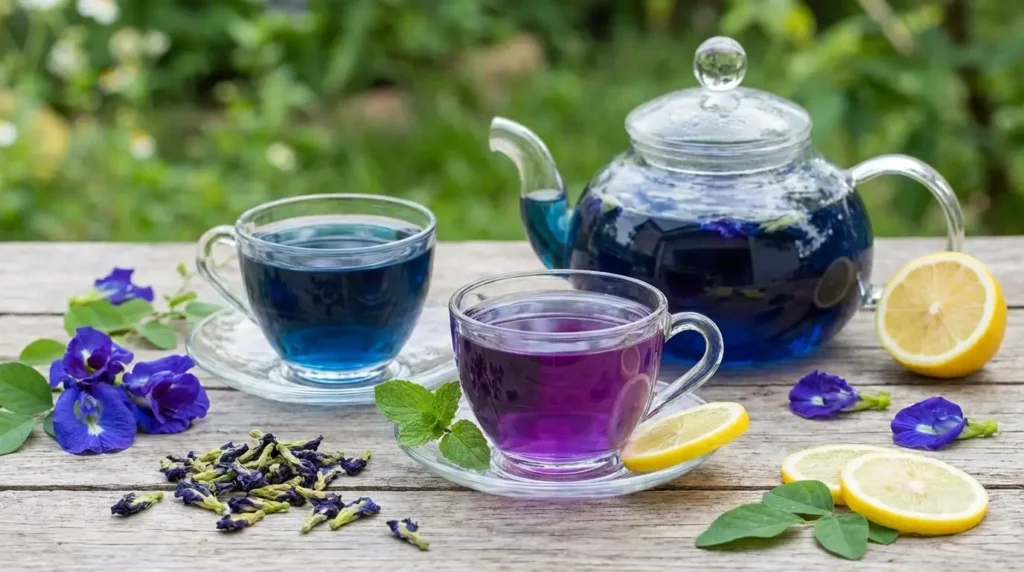
When you add an acidic ingredient like lemon juice, the tea undergoes a dramatic transformation from deep blue to bright purple. This pH-sensitive color shift is entirely natural and is caused by the specific anthocyanin compounds called ternatins, which react to changes in acidity. It’s both a party trick and a genuine marker of the plant’s rich bioactive content.
Nutritional and Bioactive Profile
Butterfly pea flower isn’t just pretty — it’s packed with compounds that researchers are increasingly interested in. Key bioactive components include:
Anthocyanins (ternatins, delphinidin): Powerful antioxidants with anti-inflammatory and neuroprotective properties
Flavonoids (kaempferol, quercetin): Known for anti-anxiety and calming effects
Proanthocyanidins: Support brain health and improve circulation to the nervous system
p-Coumaric acid: An anti-inflammatory, antimicrobial compound
Tryptophan: An amino acid precursor to serotonin and melatonin — two molecules directly tied to sleep
Crucially, butterfly pea flower tea contains zero caffeine, making it fundamentally different from green or black teas when it comes to bedtime consumption.
Why People Drink Butterfly Pea Flower Tea for Sleep
Caffeine-Free by Nature
This might sound simple, but it’s actually foundational. Many popular teas — including green tea, white tea, and matcha — contain caffeine, which directly interferes with adenosine, the brain chemical responsible for making you feel sleepy. Butterfly pea flower tea contains none of it.
That makes it a safe, zero-stimulant option for the evening hours. You can sip a full cup an hour before bed without worrying about lying awake staring at the ceiling. For people who are caffeine-sensitive, this alone is a major advantage over most mainstream teas.
The Relaxation Ritual Itself
There’s genuine science behind the power of a pre-sleep ritual. When you consistently perform a calming activity before bed — whether it’s journaling, light stretching, or brewing a warm cup of herbal tea — your brain begins to associate that activity with sleep. Over time, the ritual itself becomes a signal to your nervous system that it’s time to slow down.
The warmth of the liquid, the slow process of steeping, the striking color of the tea — butterfly pea flower tea engages multiple senses in a way that actively encourages you to pause and decompress. That mindful, sensory quality is part of what makes it an effective wind-down tool, independent of its chemistry.
Traditional Use as a Nighttime Remedy
Across Southeast Asia, butterfly pea flower tea has long been consumed specifically in the evening or before bed — much like chamomile tea is used in the West. Traditional healers in Thailand and India have used it to address stress, nervousness, and sleeplessness for generations. This centuries-long track record isn’t scientific proof, but it does represent a broad base of accumulated human experience worth paying attention to.
Anthocyanins — the antioxidant pigments responsible for the tea’s blue color — do more than just look beautiful. Research suggests they have meaningful effects on the central nervous system. In particular, they appear to help reduce oxidative stress in neural tissue, which is associated with anxiety, mood dysregulation, and impaired sleep.
Anthocyanins have also been shown in various studies to influence the production of neurotransmitters, including serotonin and GABA (gamma-aminobutyric acid). GABA is the brain’s primary inhibitory neurotransmitter — it slows neural activity, promotes calm, and is the exact mechanism targeted by many pharmaceutical sleep aids and anti-anxiety medications. While butterfly pea flower doesn’t work as powerfully as those drugs, its compounds appear to gently nudge the same pathways.
Flavonoids and Anti-Anxiety Effects
Butterfly pea flower is rich in flavonoids, particularly kaempferol and quercetin. These compounds have been studied for their anxiolytic (anti-anxiety) properties in both animal models and limited human research. Reducing anxiety is directly relevant to sleep — a significant percentage of people with insomnia cite racing thoughts and worry as their primary barrier to rest.
Quercetin, in particular, has demonstrated mild sedative properties in animal studies, with some research suggesting it may modulate GABA-A receptors in ways similar to benzodiazepines — but far more gently and without the dependency risk. This doesn’t mean drinking a cup of butterfly pea tea is equivalent to taking a sleep medication. It means the chemistry is moving in a direction that supports calmer neural states.
Tryptophan and the Melatonin Connection
Butterfly pea flower contains tryptophan, an essential amino acid that serves as the raw material for the body’s production of both serotonin and melatonin. Melatonin is the hormone that governs your circadian rhythm — it rises in the evening to signal that it’s time to sleep and falls in the morning as you wake.
While the amount of tryptophan in a single cup of tea is modest, drinking butterfly pea flower tea in the evening — especially as part of a consistent pre-sleep routine — may offer a small but meaningful boost to your body’s natural melatonin production pathway. Combined with the anxiety-reducing flavonoids and calming anthocyanins, the overall effect is a multi-pronged, gentle nudge toward restfulness.
What the Science Actually Says
Animal and In-Vitro Studies
Most of the scientific research on butterfly pea flower comes from animal studies and laboratory experiments — not large-scale human clinical trials. That’s an important distinction to understand upfront.
That said, the findings from these studies are genuinely promising. Animal models have shown that Clitoria ternatea extract can reduce anxiety-like behavior, improve memory, and support neuroprotection. Studies have also demonstrated that the plant’s bioactive compounds can modulate neurotransmitter activity in ways consistent with calming and sleep-supporting effects. One frequently cited study found that butterfly pea flower extract had a dose-dependent sedative effect in mice, reducing locomotor activity in a pattern similar to low-dose pharmaceutical sedatives.
Gaps in Human Clinical Trials
Here’s where honesty matters: robust human clinical trials on butterfly pea flower tea specifically for sleep are still limited. Much of the research uses concentrated extracts rather than brewed tea, and at doses that are significantly higher than what you’d get from a typical cup. The bioavailability of the active compounds in tea form — how much your body actually absorbs — is also likely lower than in extract form.
This doesn’t mean the tea doesn’t work. It means the evidence is preliminary and we should hold reasonable expectations. Many people report meaningful improvements in relaxation and sleep quality from drinking butterfly pea tea regularly, and the compound science supports plausible mechanisms for these effects. It just hasn’t been definitively proven in large-scale human studies yet.
How It Compares to Chamomile and Valerian
When it comes to herbal teas and sleep, chamomile and valerian root are the most extensively studied options. Both have more robust human trial data supporting their use as mild sleep aids. Chamomile, in particular, contains apigenin, a flavonoid that binds to GABA-A receptors and has demonstrated genuine sedative effects in human studies.
Butterfly pea flower tea, by comparison, is earlier in its research journey — but it shares similar mechanistic pathways and has a longer documented history of traditional use than many Western herbal remedies. A smart approach is to combine butterfly pea flower tea with chamomile for a synergistic evening blend that layers the strengths of both plants.
How to Brew Butterfly Pea Flower Tea for Better Sleep
The Simple Bedtime Brew
Making butterfly pea flower tea is refreshingly simple. Here’s the standard method:
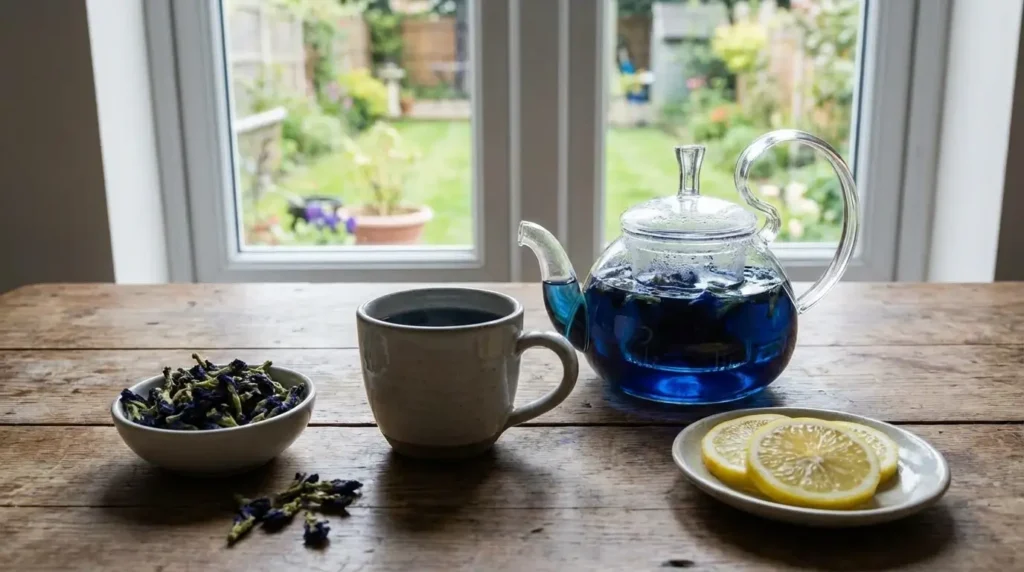
Measure your flowers: Use 1–2 teaspoons of dried butterfly pea flowers per cup (240 ml / 8 oz) of water. More flowers will produce a deeper blue color and a more concentrated brew.
Heat your water: Bring water to around 90–95°C (195–205°F) — just off the boil. Boiling water can slightly degrade delicate flavonoids.
Steep: Add the dried flowers to your cup or infuser and steep for 5–10 minutes. The longer you steep, the richer the color and the stronger the flavor.
Strain and enjoy: Remove the flowers and drink slowly. The tea has an earthy, mildly floral taste — subtle enough to be soothing without being overwhelming.
Optional additions: A small drizzle of honey adds gentle sweetness without significantly altering the tea’s properties. Avoid adding lemon if you’re drinking it for sleep, as the acidity can slightly affect how your body processes some of the compounds — plus the color change is best saved for daytime fun.
Sleep-Enhancing Combinations
Butterfly pea flower tea is wonderfully versatile as a blending base. For a more potent sleep-support blend, consider these combinations:
Butterfly Pea + Chamomile: The classic duo for nighttime calm. Chamomile’s apigenin complements butterfly pea’s anthocyanins for a genuinely soothing combination.
Butterfly Pea + Lavender: A floral, aromatic blend that engages the olfactory senses — lavender’s scent alone has documented calming effects on the nervous system.
Butterfly Pea + Ashwagandha: For people whose sleep issues are driven primarily by stress, adding a pinch of ashwagandha powder (an adaptogen) to the brew may enhance the stress-reducing effect.
Butterfly Pea + Passionflower: Both plants share flavonoid-based calming mechanisms, making this a powerful pairing for anxiety-driven sleeplessness.
Best Time to Drink It
Most herbal tea experts and sleep practitioners suggest drinking your butterfly pea flower tea 30 to 60 minutes before your intended bedtime. This gives the active compounds time to begin working while also giving you a meaningful head start on any pre-sleep bathroom trip (herbal teas are mildly diuretic, so timing matters).
Consistency is key. The benefits of herbal teas for sleep tend to be cumulative — people who drink them as part of a regular nightly ritual report better results over weeks than those who use them sporadically in moments of acute stress.
Side Effects and Who Should Be Cautious
Generally Well-Tolerated
Butterfly pea flower tea is considered safe for most healthy adults when consumed in typical amounts (1–2 cups per day). It has a long history of use across multiple cultures without widespread reports of serious adverse effects. Most people tolerate it well and some drink it daily for extended periods without issue.
Minor side effects are rare but have been reported, including mild nausea or digestive discomfort in people who drink it on an empty stomach. This is easily avoided by having a light snack beforehand or drinking it after dinner.
Groups Who Should Check With a Doctor
Certain populations should exercise extra caution or consult a healthcare provider before making butterfly pea flower tea a regular habit:
Pregnant or breastfeeding women: There is insufficient research on the safety of butterfly pea flower during pregnancy or lactation. Given the compounds’ effects on blood circulation and uterine stimulation in some animal studies, it’s best to avoid it during these periods.
People with low blood pressure: The tea may have mild blood pressure-lowering properties. For those already managing hypotension, this could cause dizziness or lightheadedness.
People taking anticoagulant medications: Butterfly pea flower may inhibit platelet aggregation. If you’re on blood thinners like warfarin or aspirin therapy, speak with your doctor before incorporating it regularly.
People about to have surgery: Due to its effects on blood circulation, it’s generally recommended to stop drinking butterfly pea tea at least 2 weeks before any scheduled surgical procedure.
People on diabetes or blood pressure medications: The tea may potentiate the effects of these drugs, potentially requiring dosage adjustments.
As with any herbal supplement or remedy, if you have an underlying health condition or take prescription medications, a quick conversation with your doctor or pharmacist is always a smart move before adding something new to your routine.
Frequently Asked Questions About Butterfly Pea Flower Tea for Sleep
How much butterfly pea flower tea should I drink for sleep?
One cup (240 ml) brewed with 1–2 teaspoons of dried flowers, consumed 30–60 minutes before bed, is the standard recommended approach. There’s no established clinical dosage for sleep specifically, so starting with one cup and assessing your response over a week or two is a sensible approach.
How long does it take to notice sleep benefits?
Most people who find butterfly pea flower tea helpful for sleep report noticing a difference within one to two weeks of consistent nightly use. The calming effects from the warm tea and ritualistic aspect can be felt more immediately, but the cumulative impact of the bioactive compounds builds over time.
Is it safe to drink butterfly pea flower tea every night?
For healthy adults, yes — butterfly pea flower tea is generally considered safe for daily consumption. It’s caffeine-free, low in compounds that accumulate harmfully in the body at typical serving sizes, and has a well-established history of regular use in Southeast Asian cultures. That said, if you’re in one of the caution groups listed above, consult your healthcare provider first.
Can butterfly pea flower tea replace sleep medication?
No. Butterfly pea flower tea is a gentle, supportive tool — not a substitute for prescribed sleep medication. If you have a diagnosed sleep disorder like chronic insomnia or sleep apnea, work with a healthcare professional. Herbal teas can complement a comprehensive sleep hygiene approach but should not replace medical treatment when it’s needed.
Does butterfly pea flower tea taste good?
The taste is mild and earthy with subtle floral notes — often described as similar to unsweetened green tea but lighter and less astringent. Most people find it pleasant and easy to drink plain. Adding honey or combining it with chamomile or lavender makes it even more enjoyable as a bedtime ritual.
Where can I buy butterfly pea flower tea?
Butterfly pea flower tea is now widely available online through health food retailers and specialty tea shops. Look for products that use organic, food-grade dried butterfly pea flowers with no added artificial colors or preservatives. It’s also available in convenient pre-packed tea bags, though loose dried flowers typically yield a richer, more bioactive brew.
Final Thoughts
Butterfly pea flower tea for sleep isn’t magic — but it’s also not a gimmick. It’s a caffeine-free herbal tea rich in anthocyanins, flavonoids, and tryptophan, all of which contribute to calmer neural states, reduced anxiety, and a more restful transition into sleep. It comes backed by centuries of traditional use and a growing body of scientific research, even if the large-scale human clinical trials haven’t fully caught up yet.
What it offers is something genuinely valuable: a beautiful, sensory nighttime ritual that works on multiple levels — chemically, psychologically, and physiologically. It won’t knock you out like a sleeping pill, but it can gently ease the tension out of your evenings and help your body find its own natural rhythm toward rest.
If you’ve been struggling with mild sleep issues, stress-related wakefulness, or simply want a more intentional wind-down routine, adding a warm cup of butterfly pea flower tea to your evenings is a low-risk, high-reward experiment worth trying. Brew it, sip it slowly, and give yourself the gift of a truly quiet night.
As always, if you have a medical condition or take prescription medications, check with your healthcare provider before making any new herbal tea a regular part of your health routine.
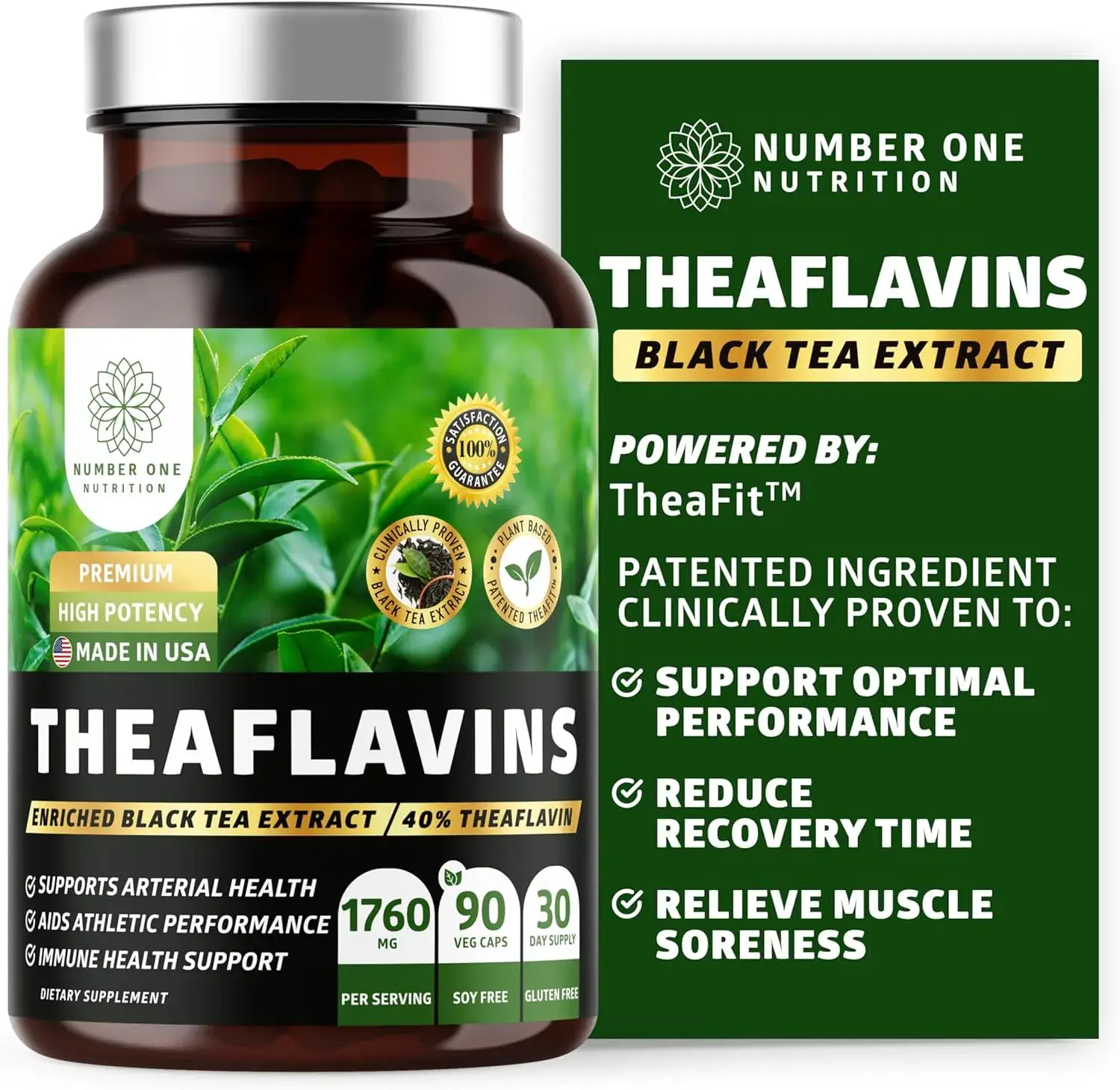
Black Tea Extract that is rich in natural theaflavins and polyphenols that help protect your body from free radicals, promoting overall immune health and well-being
Contains blended amounts of Fruits and Veggies. All natural, with whole foods, fruit and vegetable supplement.Perfect for everyone looking to live a healthier lifestyle.