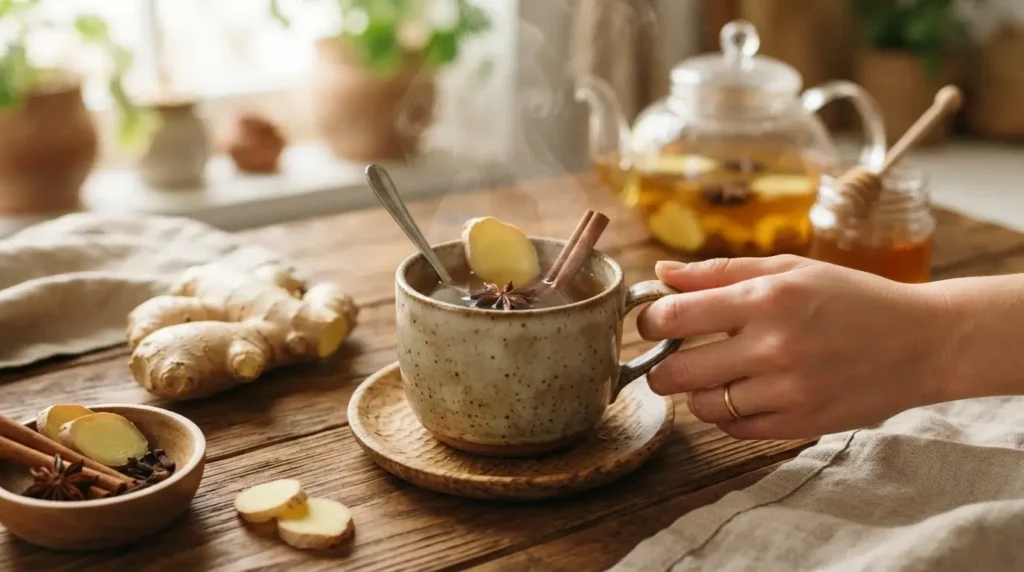
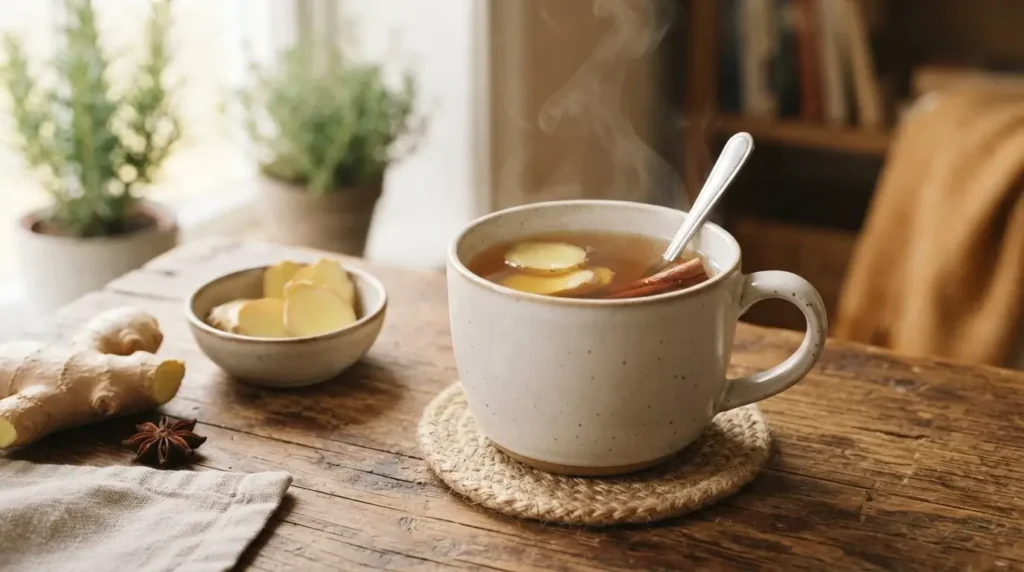
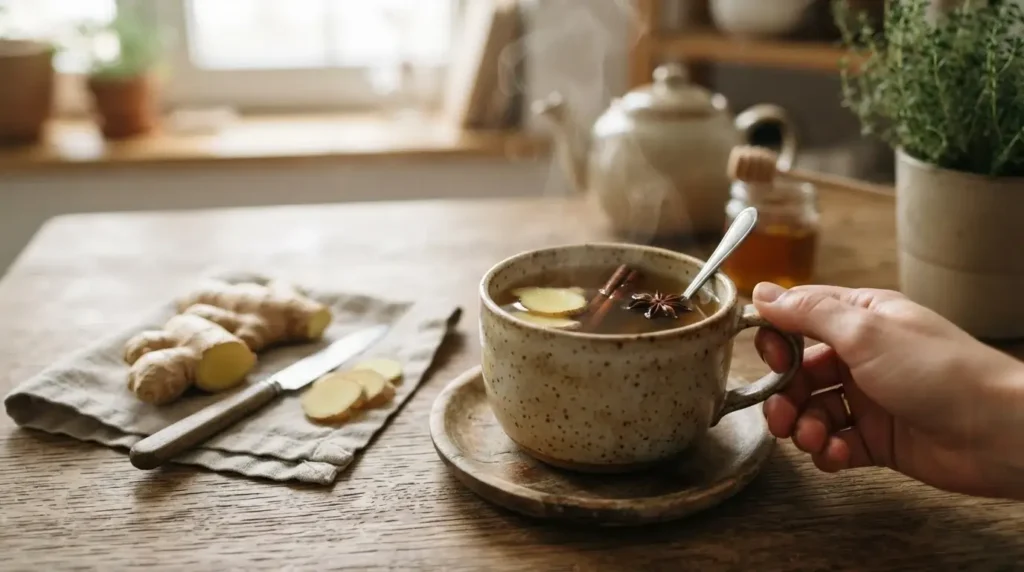
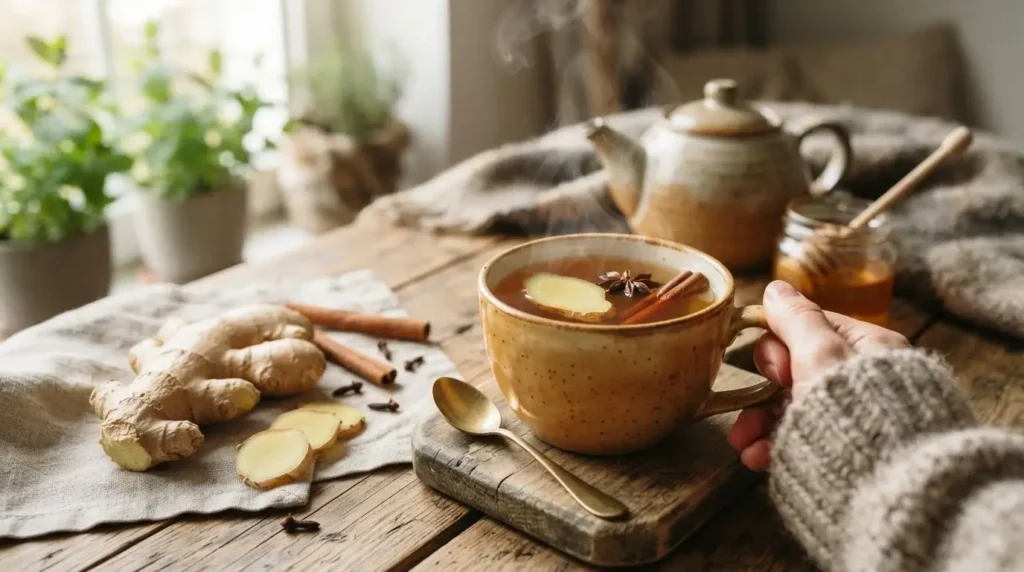
If you’ve typed “ginger tea to get periods immediately” into a search bar, you’re probably staring at a calendar app, mentally recalculating dates, and hoping a warm drink can nudge your cycle along. You’re not alone — ginger is one of the most searched-for “natural period remedies” online, alongside cinnamon, parsley tea, and vitamin C.
But here’s the honest answer up front: ginger tea cannot reliably make your period start “immediately,” and no food or herbal tea can override the hormonal signals that control ovulation and menstruation. What ginger can do — and where the science is genuinely encouraging — is different from what most people are hoping for. This article breaks down the folklore, the actual research, what really delays a period, and how to use ginger tea safely if you’d still like to try it.
Why People Search for Ginger Tea to Get Periods Immediately
There are usually two very different reasons someone searches this phrase, and it’s worth being clear about which one applies to you:
A period that’s late and you want reassurance. Stress, travel, illness, or a hormonal shift pushed your cycle off schedule, and you’re hoping to “reset” it.
A missed period with a possible pregnancy. In this case, herbal teas are not an appropriate way to find out what’s happening or to try to change the outcome. A pregnancy test and a conversation with a healthcare provider are the right next steps, not ginger tea.
If pregnancy is a possibility for you, please take a home pregnancy test or see a clinician before trying any remedy aimed at “bringing on” a period. The rest of this article focuses on the first scenario: a delayed but non-pregnant cycle, and general menstrual comfort.
How Ginger Is Believed to Affect Your Cycle
Ginger as a Traditional Emmenagogue
In traditional and folk medicine systems, ginger has long been classified as an “emmenagogue” — a substance believed to stimulate menstrual flow. Ayurvedic and traditional Chinese medicine practices have used warming herbs like ginger for centuries to address what they describe as “cold” or “stagnant” conditions in the body, which were thought to delay periods.
The Uterine Contraction Theory
The modern version of this idea centers on gingerols and shogaols, the active compounds in ginger. Some researchers have theorized that these compounds may have a mild effect on prostaglandins — hormone-like substances involved in triggering uterine contractions during menstruation. The logic follows that if ginger nudges prostaglandin activity, it might encourage the uterine lining to shed slightly sooner.
This is a reasonable hypothesis, but it’s important to separate a plausible mechanism from proven results — which is where the actual research comes in.
A Quick Look at Cross-Cultural Use
What’s notable is that ginger shows up as a “period herb” across several unrelated traditions — not just one region. Some East African folk practices pair ginger with hot water and cloves for menstrual discomfort. Caribbean home remedies often steep ginger with cinnamon bark. This kind of independent, repeated use across cultures is one reason researchers took the idea seriously enough to actually test it in clinical settings, even though the results, as you’ll see below, are more modest than the folklore suggests.
What the Research Actually Says
Ginger and Menstrual Pain (Dysmenorrhea)
The strongest evidence for ginger and periods isn’t about starting a period faster — it’s about easing the pain of the period you already have. Several clinical trials have compared ginger powder capsules to NSAIDs like mefenamic acid or ibuprofen for primary dysmenorrhea (period cramps), and found ginger performed comparably well at reducing pain intensity over the first few days of a cycle.
This matters because it tells us ginger has a real, measurable interaction with the prostaglandin pathways involved in menstruation. That’s the biological basis for why people believe it might also affect timing, not just pain.
Ginger and Cycle Regulation
When it comes to actually shortening the wait for a period, the evidence is much thinner. A small number of studies and reviews have looked at ginger’s effects on menstrual bleeding patterns, with some limited data suggesting it may modestly influence flow or cycle regularity in specific groups. However, there is no robust, well-designed clinical trial demonstrating that ginger tea reliably induces a period on demand, or that it works “immediately” as the popular search phrase implies.
Limits of Current Evidence
Most existing studies use concentrated ginger powder in capsule form at standardized doses — not a cup of brewed tea, which contains a much smaller and less consistent amount of the active compounds. Study sizes are often small, and results don’t always replicate. In plain terms: there’s decent evidence ginger tea may ease cramps and general discomfort, and weak, inconsistent evidence for it changing when your period arrives.
It’s also worth noting how these trials are usually designed: participants already know their period is imminent or underway, and researchers are measuring pain scores or bleeding volume during days already confirmed to be menstrual days. That’s a very different setup from someone hoping to pull a period forward by a week when it hasn’t started yet — a scenario that, as far as current literature shows, hasn’t been rigorously studied.
How Ginger Compares to Other “Bring On Your Period” Remedies
Ginger tea rarely appears alone in search results — it’s usually mentioned alongside a handful of other folk remedies. Here’s how the evidence for each actually stacks up:
Remedy
Claimed Effect
What Evidence Shows
Ginger tea
Stimulates uterine contractions
Good evidence for cramp relief; weak evidence for timing
Parsley tea
Traditional emmenagogue
Very limited human research; mostly animal or lab studies
Vitamin C (high-dose)
Lowers progesterone, “triggering” a period
No solid clinical evidence in humans
Cinnamon
Improves circulation to the uterus
Some support for regulating cycles in PCOS, not for immediate onset
Pineapple / bromelain
Softens the uterine lining
Largely anecdotal; no meaningful clinical data
The pattern across nearly all of these is the same one you’ve seen with ginger: plausible-sounding traditional use, a little supporting lab data, and not much showing they can move up the actual start date of a period.
What Actually Controls When Your Period Starts
Hormonal Triggers
Your period begins when estrogen and progesterone drop sharply after ovulation, signaling the uterine lining to shed. This cascade is governed by your hypothalamus, pituitary gland, and ovaries — a finely tuned feedback loop that isn’t meaningfully overridden by a beverage. No tea, herb, or food can force this hormonal sequence to happen faster than your body is ready for.
Common Causes of a Late Period
If your period is running late, ginger tea won’t address the underlying cause. Some of the most common reasons include:
Cause
How It Delays Your Cycle
Stress
Elevated cortisol can suppress the hormones that trigger ovulation, pushing back your whole cycle
Significant weight change
Rapid weight loss or gain affects hormone production, particularly estrogen
Intense exercise
High training loads can disrupt ovulation, common in athletes
PCOS
Irregular or absent ovulation is a hallmark feature
Thyroid imbalances
Both hypo- and hyperthyroidism can throw off cycle regularity
Travel and disrupted sleep
Circadian rhythm shifts can temporarily affect hormonal timing
Perimenopause
Natural hormonal fluctuations as ovarian function changes with age
Pregnancy
Always worth ruling out with a test if there’s any chance
If your period is consistently irregular, or absent for more than a few months, that’s worth discussing with a doctor rather than managing with home remedies alone.
How to Drink Ginger Tea Safely (If You Want to Try It)
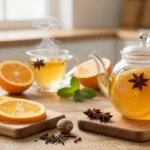
Basic Recipe
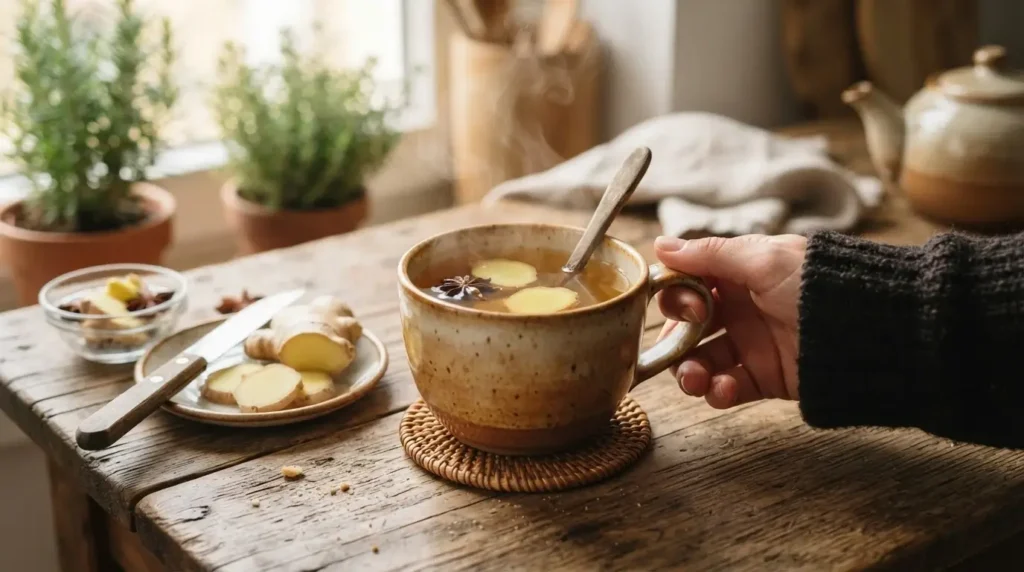
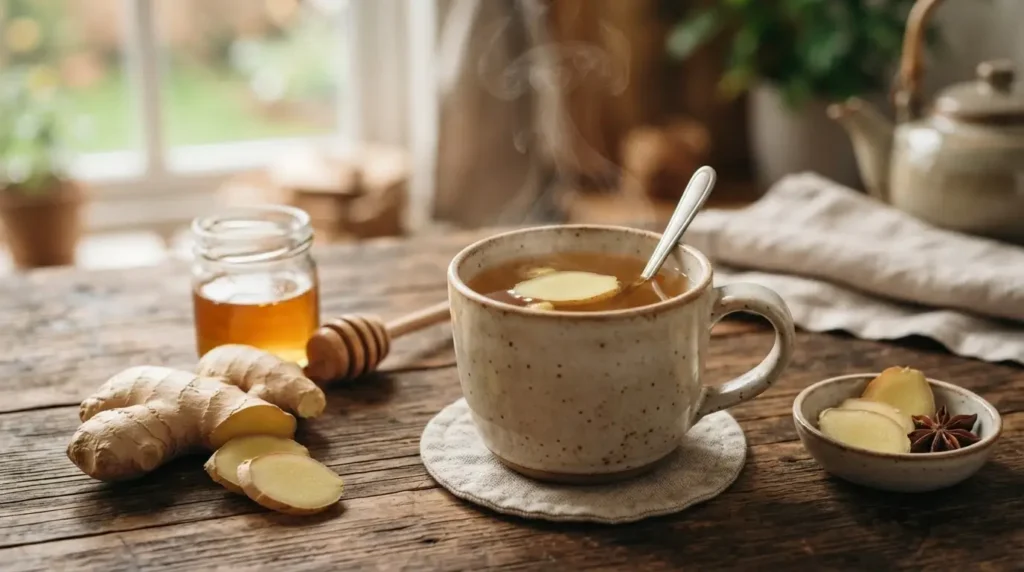
Peel and thinly slice about 1 inch (roughly 1 tablespoon) of fresh ginger root.
Add it to 2 cups of water and bring to a gentle boil.
Drink warm, 1–2 times a day around the days you expect your period.
How Much Is Too Much
Most safety guidelines suggest keeping total ginger intake to around 3–4 grams per day from food and drink combined for most healthy adults, which is roughly 3–4 cups of moderately strong tea. Going well beyond this doesn’t make the effects stronger or faster — it mainly raises the odds of side effects like heartburn, stomach upset, or diarrhea.
There’s no dose or frequency of ginger tea that will make a period arrive “immediately” — patience, alongside general self-care, is realistically part of the process.
People on blood thinners (like warfarin) — ginger may have a mild anticoagulant effect and can interact with these medications.
People with gallstones — ginger can stimulate bile production.
Anyone who is or might be pregnant — while moderate culinary use is generally considered fine for nausea, using concentrated ginger specifically to try to affect a pregnancy is not appropriate, and you should speak with a doctor rather than self-manage this with tea.
People with acid reflux or ulcers — ginger can sometimes worsen heartburn in sensitive individuals.
Anyone with a known ginger allergy or sensitivity.
If you have an existing health condition or take regular medication, it’s worth a quick check with a pharmacist or doctor before adding daily ginger tea to your routine.
Frequently Asked Questions
Can ginger tea really make my period start today?
No. There’s no scientific evidence that ginger tea can trigger a period within hours or a single day. Menstruation depends on a hormonal sequence that unfolds over days, not minutes.
How long does it take for ginger tea to affect my period, if at all?
If ginger has any influence on cycle timing, it would be gradual — over the days leading up to when your period is expected — not immediate. Most of ginger’s well-supported benefits relate to reducing cramp intensity once your period has started, not moving up the start date.
Is ginger tea better than ibuprofen for period pain?
Research comparing the two generally shows similar pain relief for menstrual cramps, though individual results vary. Ginger may be a gentler option for people who want to avoid frequent NSAID use, but it’s not automatically “better” — talk to a doctor if your pain is severe.
My period is two weeks late — should I just keep drinking ginger tea?
No. A period that’s two or more weeks late warrants a pregnancy test if that’s a possibility, and a conversation with a healthcare provider if it isn’t. Ginger tea is not a substitute for finding out why your cycle is delayed.
Can I combine ginger tea with other “period-inducing” foods like pineapple or cinnamon?
There’s no strong evidence that any food combination reliably speeds up a period. Combining them doesn’t add real benefit, and stacking multiple emmenagogue herbs can increase the chance of digestive side effects without improving results.
Is it safe to drink ginger tea every day?
For most healthy adults, 1–3 cups a day within the general 3–4 gram daily ginger limit is considered safe. If you notice heartburn, stomach upset, or you’re on blood-thinning medication, scale back or check with a doctor.
Will ginger tea affect birth control or hormonal medication?
There’s no established evidence that ginger interferes with hormonal contraceptives. It’s still a reasonable question to raise with a pharmacist if you’re taking multiple medications, simply because ginger does have mild effects on blood clotting and digestion that are worth flagging in a full medication review.
Final Thoughts
Ginger tea is a genuinely useful, low-risk addition to your routine around your period — it has real, research-backed benefits for easing cramps and general discomfort. What it isn’t is a reliable way to force your period to arrive “immediately.” Cycle timing is governed by hormones, not herbs, and a tea alone can’t override that biology.
If your period is late and you’re anxious about it, the most useful next steps are a pregnancy test (if relevant), a look at recent stress, sleep, weight, or exercise changes, and — if lateness is a recurring pattern — a conversation with your doctor or gynecologist. Enjoy your ginger tea for the comfort and mild anti-inflammatory benefits it does offer, but let go of the expectation that it’s a fast-forward button for your cycle.
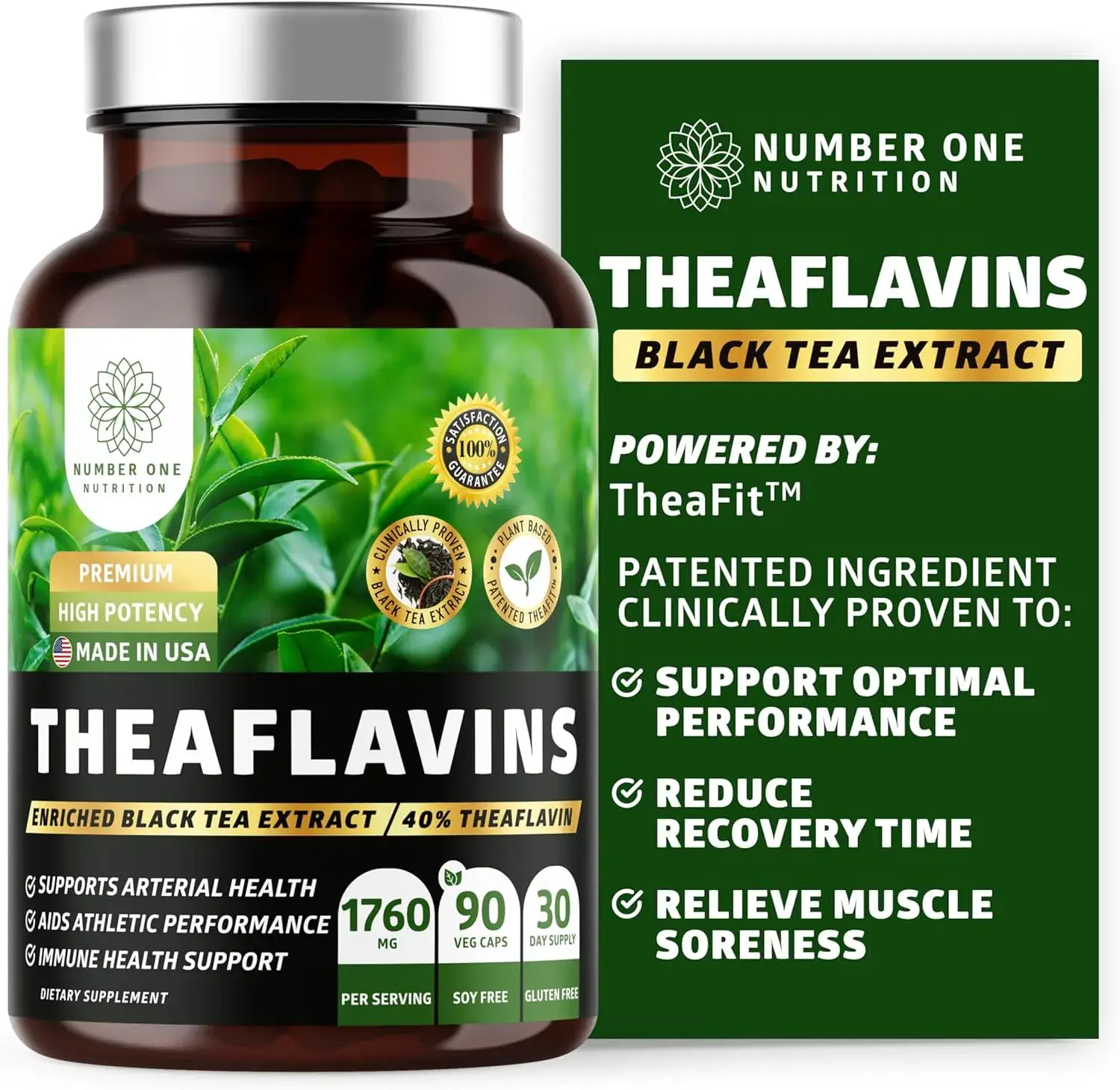
Black Tea Extract that is rich in natural theaflavins and polyphenols that help protect your body from free radicals, promoting overall immune health and well-being
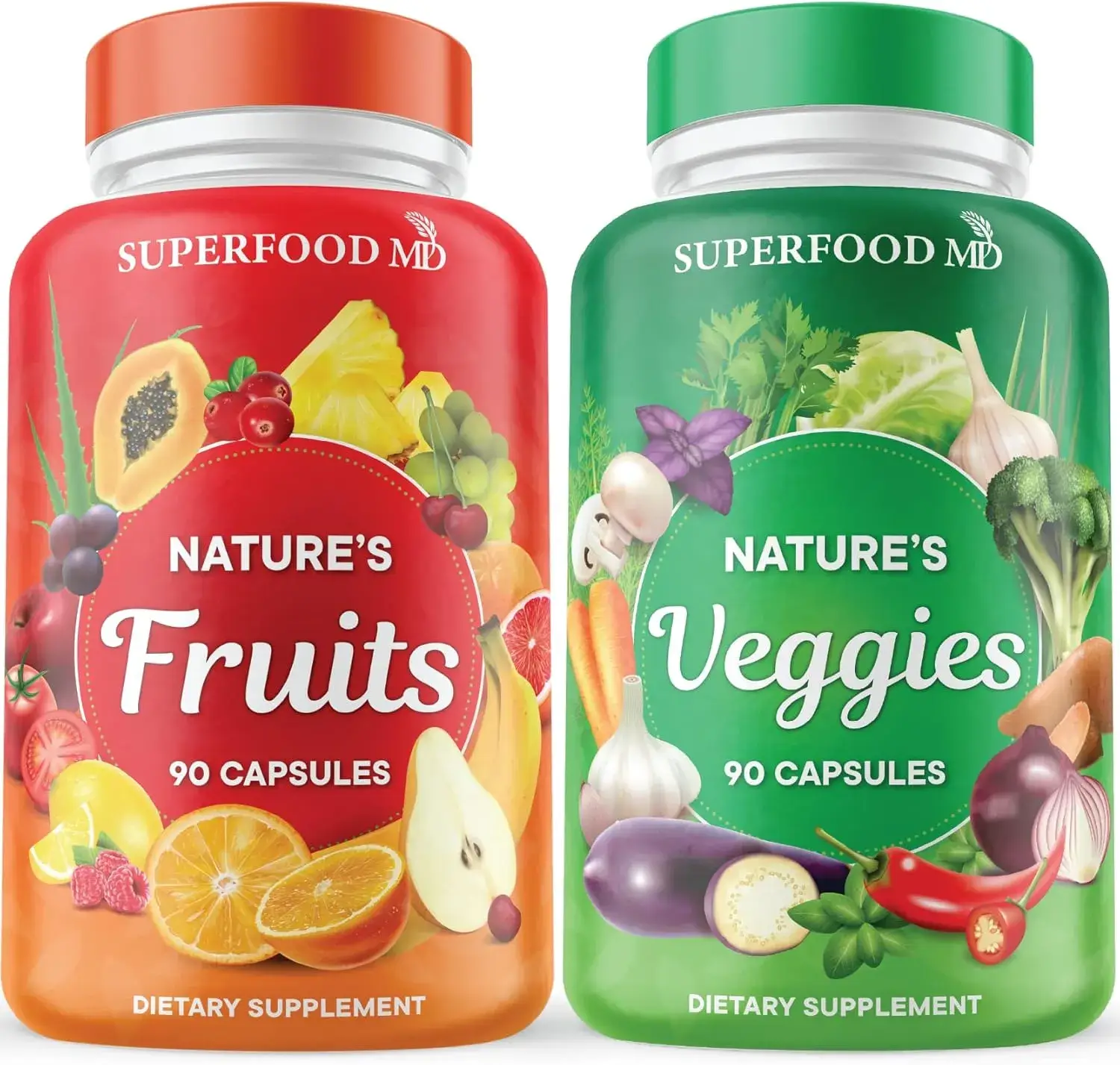
Contains blended amounts of Fruits and Veggies. All natural, with whole foods, fruit and vegetable supplement.Perfect for everyone looking to live a healthier lifestyle.