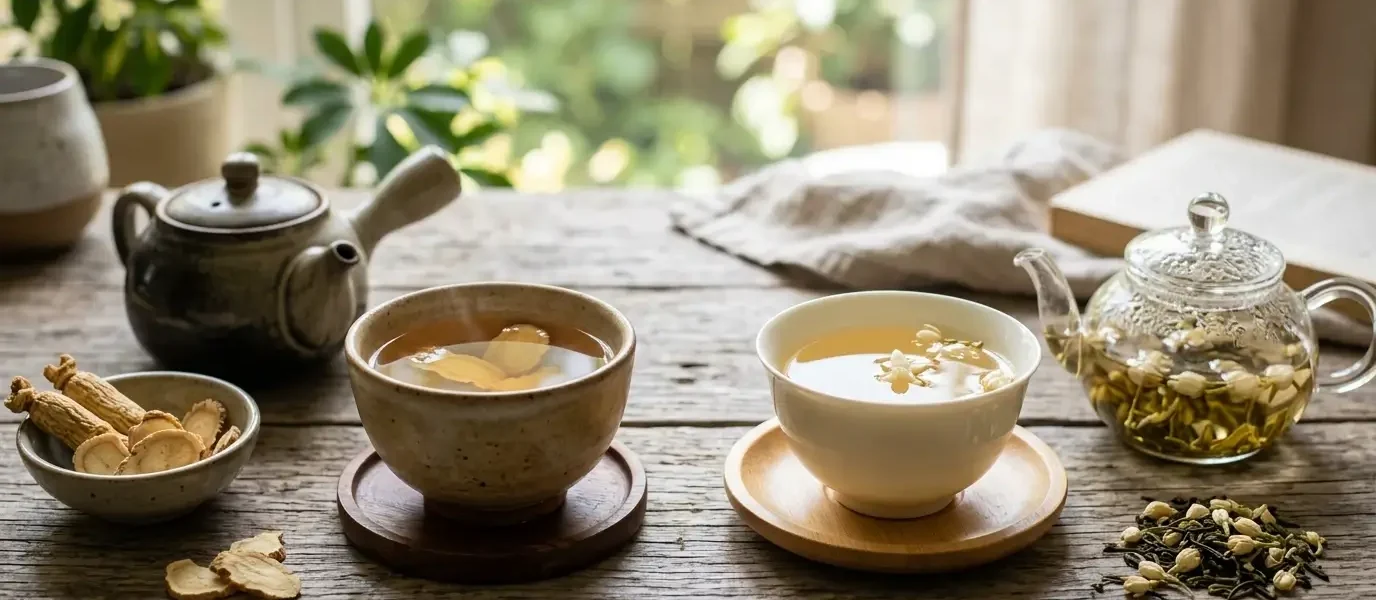
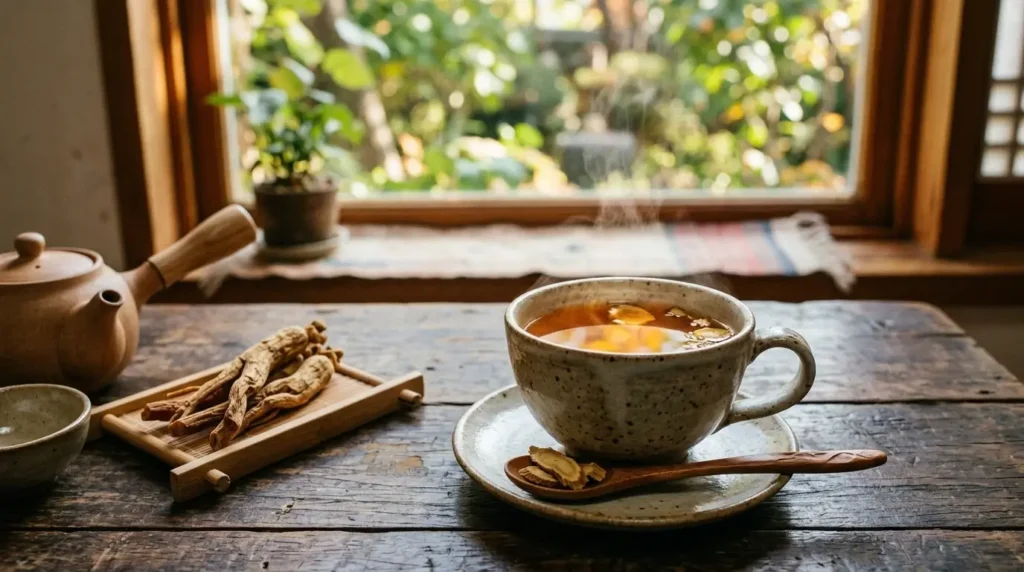
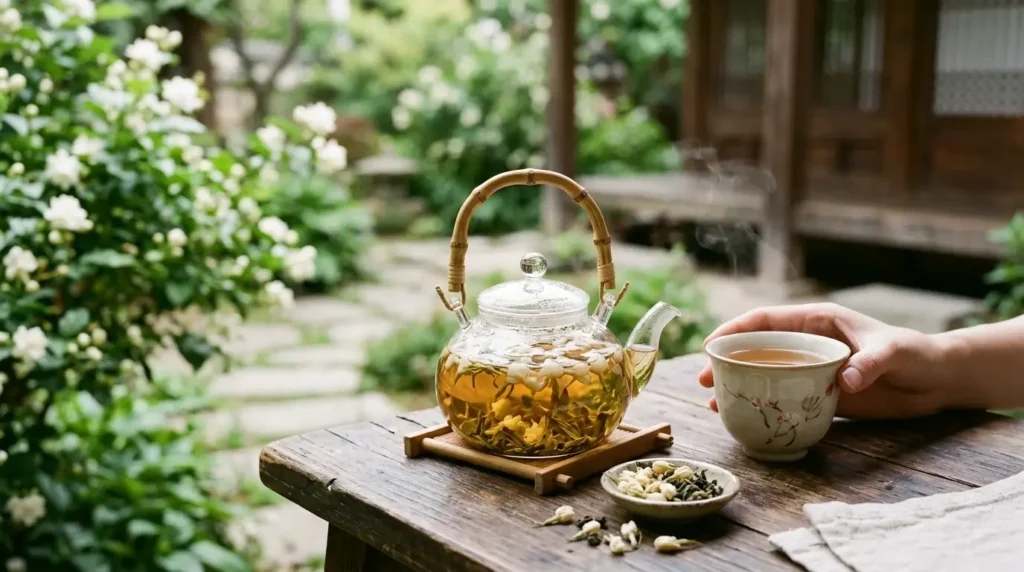
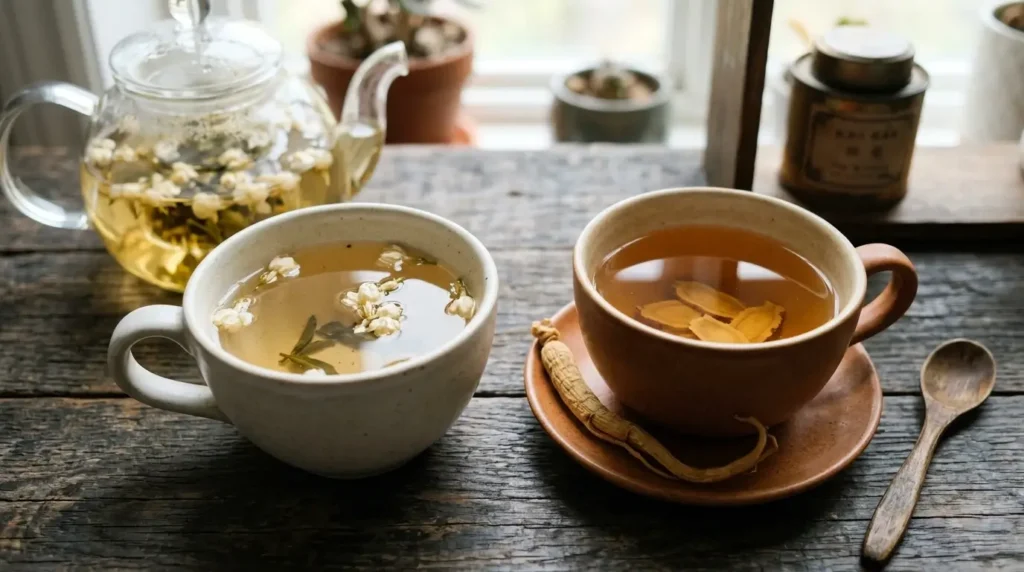
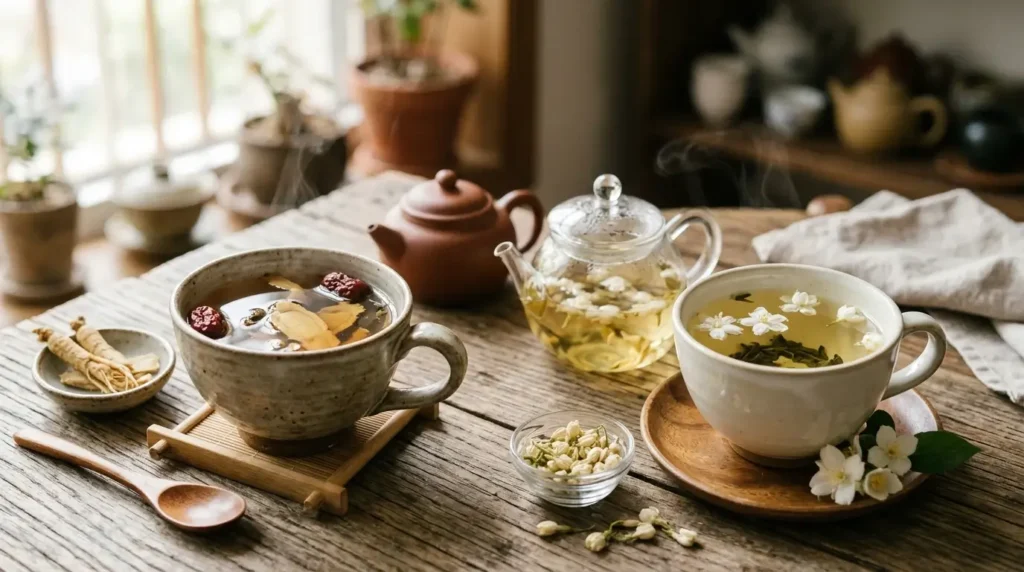
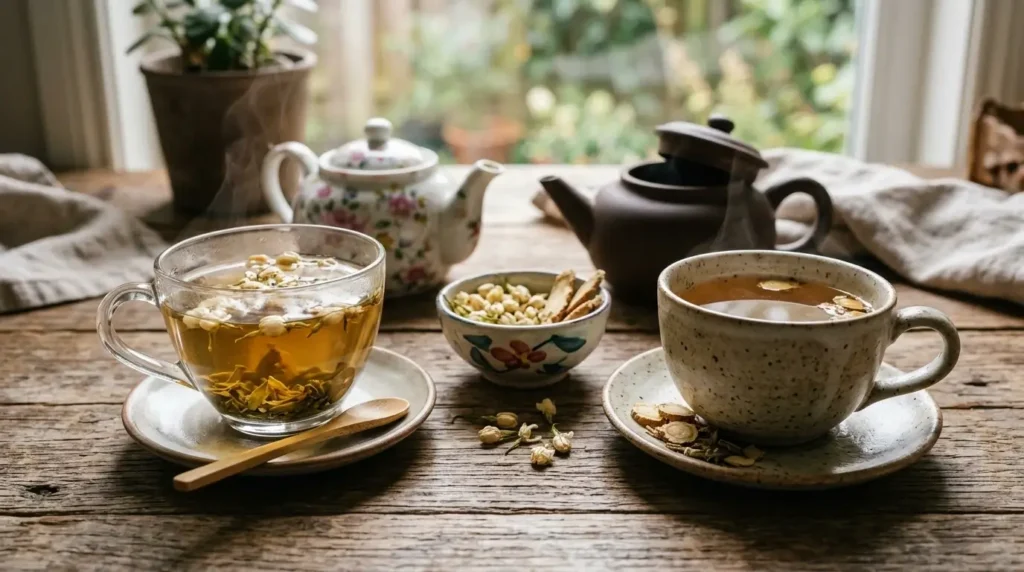
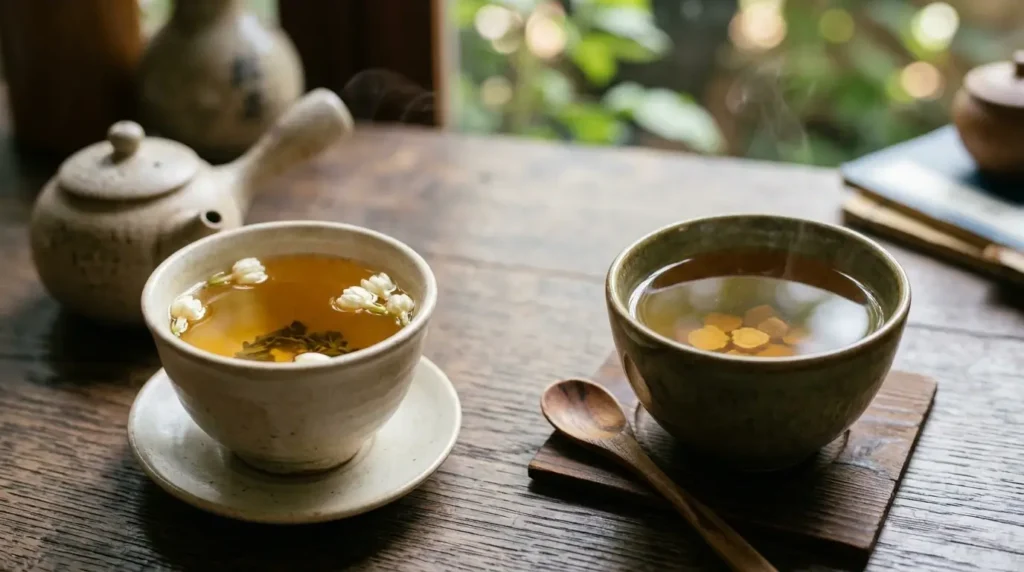
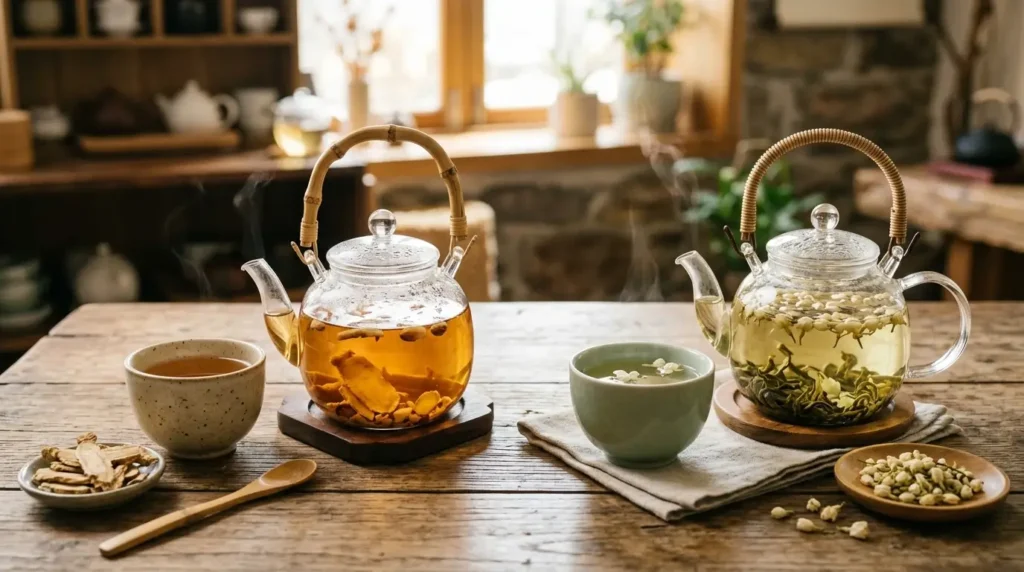
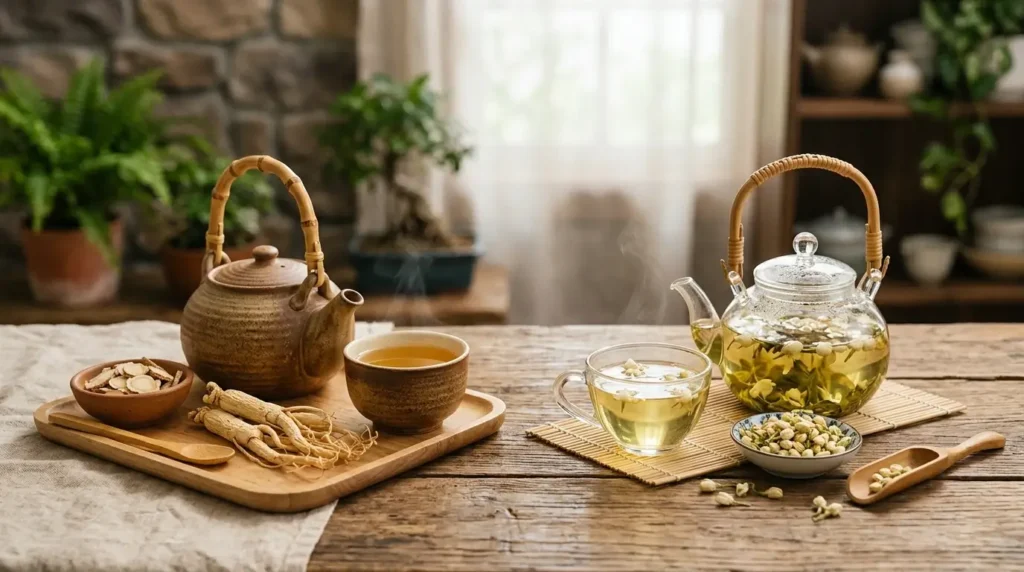
Standing in front of a wall of tea tins, two very different jars catch your eye: one earthy and slightly bitter, one light and impossibly floral. Ginseng tea and jasmine tea couldn’t be more different in how they taste, what they do for your body, and when you’d actually want to drink them.
This guide breaks down ginseng tea vs jasmine tea across taste, health benefits, caffeine content, and everyday use, so you can figure out which one actually fits your routine — or whether you have good reason to keep both in the cupboard.
At a Glance
Ginseng Tea
Jasmine Tea
Type
Herbal root infusion
Scented true tea (usually green tea)
Caffeine
None (unless blended)
Low to moderate
Best for
Energy, alertness, traditional wellness use
Relaxation, everyday sipping, light refreshment
Flavor
Earthy, bitter, warming
Floral, light, mildly sweet
Best time to drink
Morning or early afternoon
Any time, especially afternoon or after meals
What Is Ginseng Tea?
Ginseng tea is an infusion made from the root of the ginseng plant, most commonly Panax ginseng (Korean or Asian ginseng) or Panax quinquefolius (American ginseng). Unlike jasmine tea, it isn’t a “true tea” in the botanical sense — it contains no leaves from the Camellia sinensis plant at all. It’s an herbal root infusion, closer in spirit to a tonic than a traditional tea.
Origins and How It’s Made
Ginseng has been used in Traditional Chinese Medicine and Korean herbal practice for thousands of years, prized as an adaptogen — a substance believed to help the body adapt to physical and mental stress. To make the tea, dried or fresh ginseng root is sliced and simmered, sometimes for 20 minutes or longer, to draw out its compounds. Some commercial versions blend ginseng extract with green tea or honey to soften the flavor.
Key Active Compounds (Ginsenosides)
The compounds responsible for ginseng’s reputation are called ginsenosides, a class of steroid-like molecules unique to the ginseng plant. Researchers have studied ginsenosides for their potential effects on energy metabolism, cognitive function, and inflammation, though much of the strongest evidence still comes from smaller or short-term studies rather than large, long-term human trials.
Not all ginseng tea is the same, either. Korean red ginseng is steamed and dried, which is thought to concentrate certain ginsenosides and gives the tea a deeper, slightly sweeter flavor. American ginseng, grown mostly in the U.S. and Canada, is milder and is often described in traditional use as more “cooling,” while Asian ginseng is considered more warming and stimulating. If a recipe or product just says “ginseng tea” without specifying, it’s most likely made from Korean (Asian) ginseng, since it’s the more widely cultivated and exported variety.
What Is Jasmine Tea?
Jasmine tea is a scented tea, not a separate plant species. It starts as a base tea — usually green tea, though white or oolong bases exist too — that’s layered with fresh jasmine blossoms over several nights so the leaves absorb the flower’s fragrance.
Origins and How It’s Made
Jasmine tea originated in China, with production centered in Fujian province, where the scenting technique was refined centuries ago. Fresh jasmine flowers are laid alongside the tea leaves at night, when the blossoms release the most fragrance, then removed in the morning. This process is repeated multiple times — sometimes five to seven rounds for higher-grade teas — before the leaves are dried and packaged.
The Tea Base Behind the Scent
Because jasmine tea is built on a green tea (or occasionally white tea) base, it inherits that base’s natural compounds, including catechins and a moderate amount of caffeine. The jasmine scenting adds aroma and a light sweetness but doesn’t change the underlying tea chemistry much — it’s a flavor and fragrance layer on top of a genuine tea leaf.
Ginseng Tea vs Jasmine Tea: Taste Comparison
If you’ve never tried either, the taste difference is probably the single biggest factor in deciding between them. These two teas sit at opposite ends of the flavor spectrum.
Aspect
Ginseng Tea
Jasmine Tea
Primary flavor
Earthy, slightly bitter, faintly sweet aftertaste
Light, floral, delicately sweet
Mouthfeel
Thicker, almost root-vegetable-like
Smooth and clean, typical of green tea
Best paired with
Honey, ginger, or a splash of milk to soften bitterness
Light desserts, dim sum, or on its own
Beginner-friendly?
Can be an acquired taste
Generally easy to enjoy right away
Ginseng’s bitterness tends to divide people — some find it grounding, others find it hard to get through without added honey or ginger. Jasmine tea, by contrast, is one of the more approachable scented teas, which is part of why it shows up so often at restaurants and tea houses as a default offering.
Both teas come with genuine wellness reputations, but they tend to pull in different directions — one toward stimulation, the other toward calm.
Energy and Mental Focus
Ginseng is most associated with fighting fatigue and supporting mental alertness. Some research suggests ginsenosides may help support energy metabolism and reduce feelings of tiredness, which is why ginseng shows up in so many “energy support” supplements. It’s often reached for in the morning or before a mentally demanding task, similar to how people use coffee.
Relaxation and Stress Relief
Jasmine tea takes the opposite lane. The aroma of jasmine itself has been studied for its calming effect — the scent is linked to reduced feelings of anxiety and a subtle mood lift, even before you factor in the tea’s chemistry. Many people use jasmine tea as an evening or afternoon ritual specifically because it feels soothing rather than stimulating.
Immune Support and Antioxidants
Ginseng contains antioxidant compounds that may help the body manage oxidative stress, and it has a long history of use for general immune resilience in traditional medicine. Jasmine tea, thanks to its green tea base, is rich in catechins — a different class of antioxidants linked to cardiovascular and metabolic health in various studies. Both offer antioxidant value, just from different sources.
Digestive Benefits
Ginseng tea is sometimes used to settle the stomach and support digestion after a heavy meal. Jasmine tea is also traditionally sipped after eating in Chinese tea culture, valued for its light, cleansing quality that pairs well with rich or oily dishes like dim sum.
Caffeine Content: Ginseng Tea vs Jasmine Tea
This is one of the most searched parts of the comparison, and the answer is pretty clear-cut.
Some blends add green tea or ginseng extract with caffeine — check the label
Jasmine tea (green tea base)
Low to moderate (roughly 15–40mg per cup)
Less than coffee, similar to or slightly less than plain green tea
A pure, root-only ginseng tea is naturally caffeine-free, which makes it a common choice for people avoiding caffeine but still wanting a warming, functional drink. Jasmine tea, because it’s built on a green tea base, does carry caffeine — generally on the lower end of the tea spectrum, but not zero. If you’re caffeine-sensitive or drinking in the evening, that distinction matters more than almost anything else on this list.
Which One Should You Choose? (Decision Guide)
Rather than picking a single “winner,” it’s more useful to match the tea to what you actually need in the moment.
Choose Ginseng Tea If…
You want a caffeine-free way to feel more alert or less fatigued
You’re drawn to traditional herbal remedies and adaptogens
You don’t mind an earthy, slightly bitter flavor (or you’re happy to add honey)
You want something to drink before a workout or a demanding task
Choose Jasmine Tea If…
You want a light, easy-drinking tea with a pleasant aroma
You’re looking for a calming afternoon or after-dinner ritual
You want the antioxidant benefits of green tea with a gentler taste
You’re new to specialty tea and want something approachable
Can You Drink Both?
Yes — and many people do, just at different times. A common pattern is ginseng tea in the morning for a caffeine-free lift, and jasmine tea in the afternoon or evening to wind down. There’s no meaningful interaction between the two that would stop you from enjoying both across the day.
Getting the brew right makes a bigger difference than most people expect, especially for ginseng, which can turn unpleasantly bitter if oversteeped.
Brewing Ginseng Tea
Use 2–3 thin slices of dried ginseng root (or 1 ginseng tea bag) per cup
Pour water just off the boil, around 90–95°C (194–203°F)
Steep for 8–10 minutes for sliced root, or 3–5 minutes for tea bags
Add honey or a slice of ginger to balance the bitterness if needed
Brewing Jasmine Tea
Use about 1 teaspoon of loose jasmine tea per cup
Use water around 80–85°C (176–185°F) — too hot and it turns bitter
Steep for just 2–3 minutes
Re-steep the same leaves once or twice; jasmine tea often tastes even better on the second infusion
Who Should Be Cautious With Each Tea
Neither tea is dangerous for most healthy adults in normal amounts, but each comes with a few groups who should be more careful.
Because ginseng can act like a mild stimulant and may affect blood sugar and blood pressure, it’s generally advised that pregnant or breastfeeding people, anyone on blood thinners or diabetes medication, and people with uncontrolled high blood pressure check with a doctor before drinking it regularly. Ginseng can also interact with certain medications, including some antidepressants, so it’s worth a quick conversation with a pharmacist if you’re on prescription drugs.
Jasmine tea is generally considered low-risk since it’s just scented green tea, but its caffeine content means people who are pregnant, caffeine-sensitive, or managing anxiety or insomnia may want to keep intake moderate, especially later in the day. As with any tea, drinking it excessively hot has also been linked in some studies to esophageal irritation over time, so letting it cool slightly before sipping is a simple precaution.
Frequently Asked Questions
Is ginseng tea or jasmine tea better for energy? Ginseng tea is the better pick for energy since it’s traditionally used to fight fatigue and support alertness without caffeine. Jasmine tea does contain some caffeine from its green tea base, but it’s generally chosen for its calming qualities rather than an energy boost.
Does ginseng tea have caffeine? Pure ginseng root tea is naturally caffeine-free. Some commercial blends mix in green tea or ginseng extract that does contain caffeine, so it’s worth checking the ingredient label if you’re avoiding it entirely.
Which is better for sleep, ginseng tea or jasmine tea? Jasmine tea is the more sleep-friendly option in small amounts thanks to its calming aroma, though its caffeine content means it’s best enjoyed a few hours before bed rather than right at bedtime. Caffeine-free ginseng tea won’t interfere with sleep chemically, but its energizing reputation makes it a better fit for daytime.
Can I mix ginseng tea and jasmine tea together? Yes, some blends combine ginseng with jasmine-scented green tea for a drink that balances earthy and floral notes. If you’re curious, try steeping them separately first so you know how each tastes before combining them.
Is jasmine tea good for weight loss? Jasmine tea’s green tea base contains catechins that have been studied for a possible role in metabolism, though it’s not a standalone weight-loss solution. It’s better thought of as a low-calorie, antioxidant-rich swap for sugary drinks rather than a fat-burning shortcut.
Does ginseng tea have side effects? Ginseng is generally well tolerated, but some people report headaches, digestive upset, or trouble sleeping if consumed in large amounts or too late in the day. If you’re pregnant, on blood thinners, or managing diabetes, it’s worth checking with a doctor before adding ginseng tea to your routine.
Final Thoughts
Ginseng tea and jasmine tea aren’t really competing for the same job. Ginseng leans into function — an earthy, caffeine-free root infusion built around alertness and traditional wellness use. Jasmine leans into pleasure — a fragrant, easy-drinking green tea meant to be savored and to help you slow down.
If you had to pick just one, let your goal decide: reach for ginseng tea when you want a natural lift, and reach for jasmine tea when you want something light, calming, and easy to enjoy every day. And if you can’t choose, there’s a simple answer — keep both in the cupboard and let the time of day decide for you.
Black Tea Extract that is rich in natural theaflavins and polyphenols that help protect your body from free radicals, promoting overall immune health and well-being
Contains blended amounts of Fruits and Veggies. All natural, with whole foods, fruit and vegetable supplement.Perfect for everyone looking to live a healthier lifestyle.