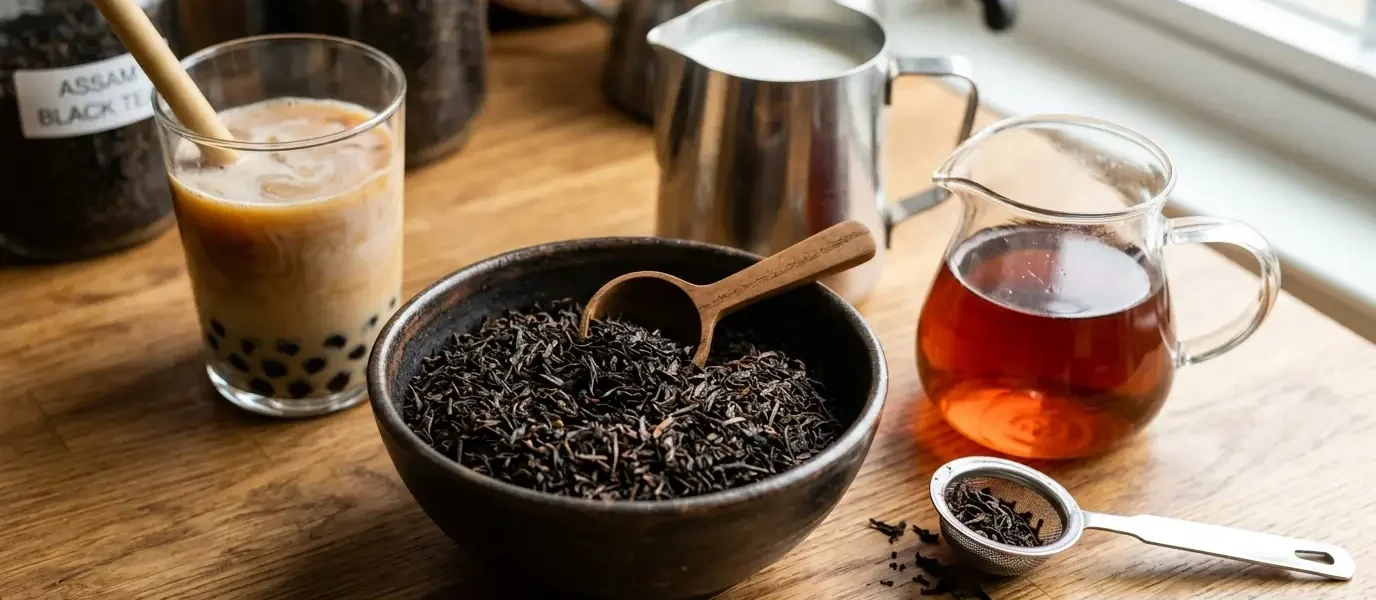
Walk into any bubble tea shop, Hong Kong-style café, or Thai restaurant, and you’ll likely find a creamy, amber-hued cup of milk tea sitting at the center of the menu. But here’s what most people never think about: not all black teas are created equal when it comes to milk tea. The type of black tea used for milk tea is arguably the single most important decision in the entire recipe — and getting it wrong means a flat, watery, or off-tasting drink no matter how good your milk or sweetener is.
Whether you’re making a classic Hong Kong-style milk tea, a sweet Thai iced tea, or a creamy boba base at home, this guide will walk you through every major black tea variety worth knowing — and tell you exactly which ones deliver the bold, rich, and malty flavor that milk tea demands.
Why the Type of Black Tea Used for Milk Tea Matters
The Role of Tannins in Milk Tea
Tannins are naturally occurring compounds in tea that create astringency — that dry, slightly bitter sensation on your palate. In a plain cup of tea, excessive tannins can be unpleasant. But in milk tea, tannins are your best friend. They provide the backbone that cuts through the fat and sweetness of milk, keeping the drink from tasting flat or cloying.
Teas high in tannins — like Assam or strong blended varieties — hold up beautifully against full-fat milk or condensed milk. Delicate teas with low tannin content tend to get “swallowed up” by dairy, leaving you with a milky drink that barely tastes like tea at all.
How Tea Strength Affects Flavor Balance
The golden rule of milk tea is simple: brew strong, add generously. A weak tea base produces a pale, insipid cup once milk is added. You need a tea that brews dark, bold, and flavorful — one that retains its character even when diluted with milk and sweetener.
This is why many milk tea recipes call for double the normal amount of loose leaf tea or steeping for longer than usual. Starting with the right tea variety makes this process much easier and more forgiving.
Loose Leaf vs. Tea Bags — Which Is Better?
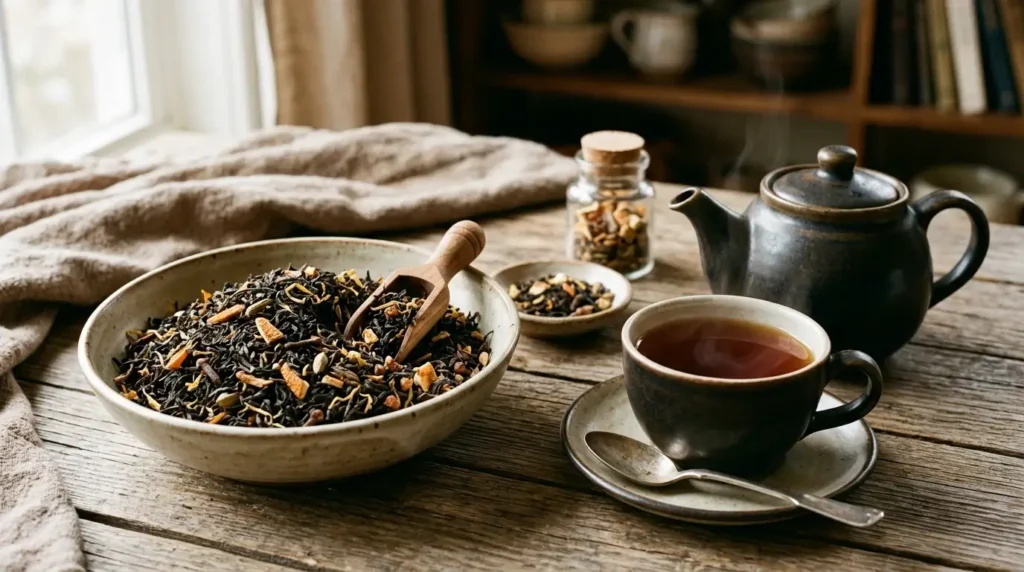
Both can work, but they serve different purposes. Loose leaf tea typically offers better flavor complexity, freshness, and control over brewing strength. Tea bags, especially commercial-grade ones (like those used in Hong Kong tea houses), are often made from smaller, more broken tea leaves called “fannings” or “dust” — which brew faster and stronger, making them surprisingly effective for milk tea.
The best approach: use high-quality loose leaf tea for artisan-style milk teas, and purpose-made tea bags or commercial blends when speed and convenience matter most.
Assam Black Tea — The Bold Classic
Flavor Profile and Why It Works
Assam tea comes from the Assam region of northeastern India, where the low-altitude, humid climate produces leaves with an exceptionally robust, malty, and full-bodied flavor. It brews into a deep reddish-brown liquor with strong tannins and a natural sweetness that pairs beautifully with dairy.
When you add milk to Assam tea, something almost magical happens: the malt notes intensify, the astringency softens, and you’re left with a deeply satisfying, rich cup that feels almost dessert-like. This is the backbone of most traditional milk teas.
Best Uses — Hong Kong Milk Tea, Boba Base
Assam is the go-to black tea used for milk tea in many professional settings. It’s the primary base for:
Hong Kong-style milk tea (港式奶茶) — often brewed with a mix of Assam grades and strained through a cloth filter
Boba/bubble tea — provides the assertive tea flavor that holds up to tapioca pearls and extra sweeteners
Masala chai — the spices and milk demand a sturdy tea base, and Assam delivers
Taro milk tea — Assam’s boldness balances the earthiness of taro
How to Brew Assam for Milk Tea
Use about 2 teaspoons of loose leaf Assam per 6 oz of water, brewed at 95–100°C (just off boiling) for 4–5 minutes. The result should be a dark, almost mahogany-colored brew. Strain, then add warm or cold milk to taste. For a Hong Kong-style version, use evaporated milk instead of fresh milk for a creamier, silkier texture.
Ceylon tea, grown in Sri Lanka, is one of the most widely used black teas in the world — and for good reason. It has a clean, bright, slightly citrusy flavor with moderate tannins and a golden-orange brew color. While it’s less malty than Assam, it offers a lovely crispness that makes it especially enjoyable in lighter, more delicate milk tea preparations.
If Assam is a full-bodied red wine, Ceylon is a smooth, approachable rosé. It works exceptionally well when you want your milk tea to feel refreshing rather than heavy.
Ceylon in Iced Milk Tea Recipes
Ceylon’s bright, slightly fruity notes make it an outstanding choice for iced milk tea. The flavor remains vibrant even when chilled, unlike some heavier teas that can taste flat when served cold. Many popular iced milk tea and iced latte recipes specifically call for a Ceylon base, especially when paired with vanilla, lavender, or honey.
For an iced Ceylon milk tea, brew it double strength, pour over ice, and finish with a splash of oat milk or full-fat coconut milk for a tropical twist.
Choosing the Right Ceylon Grade
Ceylon tea comes in several grades. For milk tea, look for:
BOP (Broken Orange Pekoe) — broken leaves that brew strongly and quickly, ideal for milk tea
BOPF (Broken Orange Pekoe Fannings) — very fine grade, brews the fastest and strongest
OP (Orange Pekoe) — whole leaf, more refined flavor, better for sipping with just a touch of milk
Darjeeling Black Tea — The Aromatic Choice
Muscatel Notes and How They Complement Milk
Darjeeling tea, often called the “Champagne of teas,” is produced in the foothills of the Himalayas in West Bengal, India. Its most celebrated quality is the muscatel character — a grape-like, floral, slightly musky aroma that is utterly unique in the world of tea. First-flush Darjeeling (spring harvest) is especially prized for its light, floral notes.
When used in milk tea, Darjeeling adds complexity and elegance. The floral, fruity notes cut through creaminess in a way that feels sophisticated rather than heavy. However, it requires a careful touch — too much milk can overwhelm its delicate character.
Best Milk Pairings for Darjeeling
Darjeeling pairs best with lighter dairy options that don’t overpower its nuanced flavor:
Whole milk — adds creaminess without masking the muscatel notes
A touch of cream — a small splash of heavy cream gives richness without diluting flavor
Avoid condensed milk or evaporated milk with Darjeeling — the intense sweetness and fat content tend to bury what makes this tea special.
When to (and Not to) Use Darjeeling
Use Darjeeling when you want a refined, aromatic milk tea experience — think afternoon tea, light brunch, or a delicate iced latte. Avoid it when making bubble tea or strongly sweetened drinks, where its subtlety will be completely lost. It’s also more expensive than Assam or Ceylon, so save it for occasions when you want to savor every sip.
Yunnan black tea (also known as Dianhong) is produced in China’s Yunnan Province, one of the oldest tea-growing regions in the world. Unlike its Indian counterparts, Yunnan black tea tends to have a smoother, earthier, and less astringent profile. High-quality Yunnan teas feature golden tips (young buds) that contribute a natural honey-like sweetness and a velvety mouthfeel.
The result in the cup is warm, woody, slightly chocolatey, and extraordinarily smooth — making it one of the most interesting and underused black teas for milk tea preparation.
Pairing Yunnan with Condensed Milk
Yunnan’s natural sweetness and earthy depth make it a dream pairing for condensed milk. Rather than fighting the sweetness, Yunnan’s chocolate and honey notes enhance it, creating a layered, caramel-like milk tea that feels deeply indulgent. This combination is especially popular in Chinese-style milk tea preparations and deserves far more attention from home brewers.
Yunnan in Thai Milk Tea
Traditional Thai milk tea uses a specific commercial Thai tea blend (often including orange food coloring), but Yunnan black tea can serve as an excellent base for homemade versions. Pair it with star anise, a pinch of vanilla, and sweetened condensed milk for a close approximation of the real thing — with even more depth and complexity.
Blended Black Teas — Convenience Without Compromise
English Breakfast and Irish Breakfast Blends
English Breakfast and Irish Breakfast are both blended teas — typically combining Assam, Ceylon, and sometimes Kenyan tea — designed specifically to produce a strong, robust cup that holds up to milk. This makes them naturally excellent for milk tea, and their widespread availability means you can find them in any supermarket.
English Breakfast tends to be slightly lighter and more balanced, while Irish Breakfast leans heavier on Assam, giving it a stronger, more malty character. Both are solid, dependable choices for everyday milk tea at home.
Purpose-Made Milk Tea Blends
Several specialty tea brands now produce blends specifically formulated for milk tea. These often combine multiple Assam grades or add ingredients like vanilla, cinnamon, or chicory to enhance the tea’s performance with dairy. Brands popular in Asia — such as Ten Ren, Lipton’s Yellow Label (widely used in Taiwan), and various Taiwanese tea suppliers — have built entire product lines around the milk tea market.
If convenience matters and you’re making milk tea regularly, investing in a purpose-built blend is an excellent shortcut that still delivers professional-quality results.
How to Evaluate a Blend for Milk Tea
When testing any blended tea for milk tea use, ask yourself:
Does it brew dark and boldly in under 5 minutes?
Does the flavor survive being mixed with a generous pour of milk?
Is there a pleasant bitterness or astringency that balances sweetness?
Does it taste flat, grassy, or weak after adding milk? (If yes, skip it)
What is the most commonly used black tea for milk tea?
Assam black tea is the most widely used black tea for milk tea worldwide. Its high tannin content, malty flavor, and bold brew strength make it ideal for holding up against milk and sweeteners. It’s the foundation of Hong Kong milk tea, many boba recipes, and traditional Indian chai.
Can I use regular grocery store tea bags for milk tea?
Yes, absolutely. Brands like Lipton, Tetley, PG Tips, Twinings English Breakfast, and Barry’s Tea (Irish Breakfast) all perform well for milk tea. Commercial tea bags are often made from finely broken leaves that brew quickly and strongly — exactly what milk tea needs. For a more artisan result, upgrade to loose leaf Assam or a specialty blend, but store-bought bags are a perfectly respectable starting point.
What black tea does bubble tea use?
Most bubble tea shops use Assam black tea or a proprietary blended black tea as their base. Some Taiwanese shops use a specific “four seasons” or “ruby tea” blend. At home, Assam loose leaf or a strong English/Irish Breakfast blend will get you closest to the real bubble tea shop experience.
How much black tea should I use for milk tea?
For milk tea, use roughly 1.5 to 2 times the normal amount of tea you’d use for a plain cup. A general rule is 2 teaspoons of loose leaf tea per 6 oz of water, steeped for 4–5 minutes at near-boiling temperature. The tea should look very dark before you add milk — think strong espresso-like intensity.
Is it better to use loose leaf or tea bags for milk tea?
Both work well, and it depends on your goals. Loose leaf tea generally offers better flavor and more control. Tea bags (especially commercial-grade “fanning” bags) brew faster and stronger, which is practical for everyday use. Many professional tea houses actually prefer commercial tea bags or bulk loose fannings precisely because of their ability to brew a consistently strong cup quickly.
Can green tea or white tea be used for milk tea instead?
Green tea and white tea can be used for milk tea variations (matcha milk tea is incredibly popular), but they don’t work as substitutes for black tea in traditional recipes. Black tea’s tannin levels, roasted depth, and robust flavor are specifically what gives classic milk tea its characteristic boldness. Green tea milk tea is a wonderful drink — just a completely different one.
Final Thoughts
The black tea used for milk tea is the foundation of everything — the soul of the drink. Get it right, and no amount of fancy milk or elaborate sweetener can ruin your cup. Get it wrong, and no amount of premium ingredients can save it.
For most people starting out, Assam black tea is the smartest choice: it’s bold, widely available, forgiving to brew, and produces the kind of satisfying, malty milk tea that made this drink famous around the world. As you grow more confident, experiment with Ceylon for something brighter, Yunnan for something smoother, and Darjeeling for those moments when you want something truly refined.
The world of black tea for milk tea is richer and more diverse than most people realize — and exploring it is one of the most rewarding journeys any tea lover can take. Start with a good Assam, brew it strong, add your milk of choice, and see just how extraordinary a humble cup of milk tea can be.
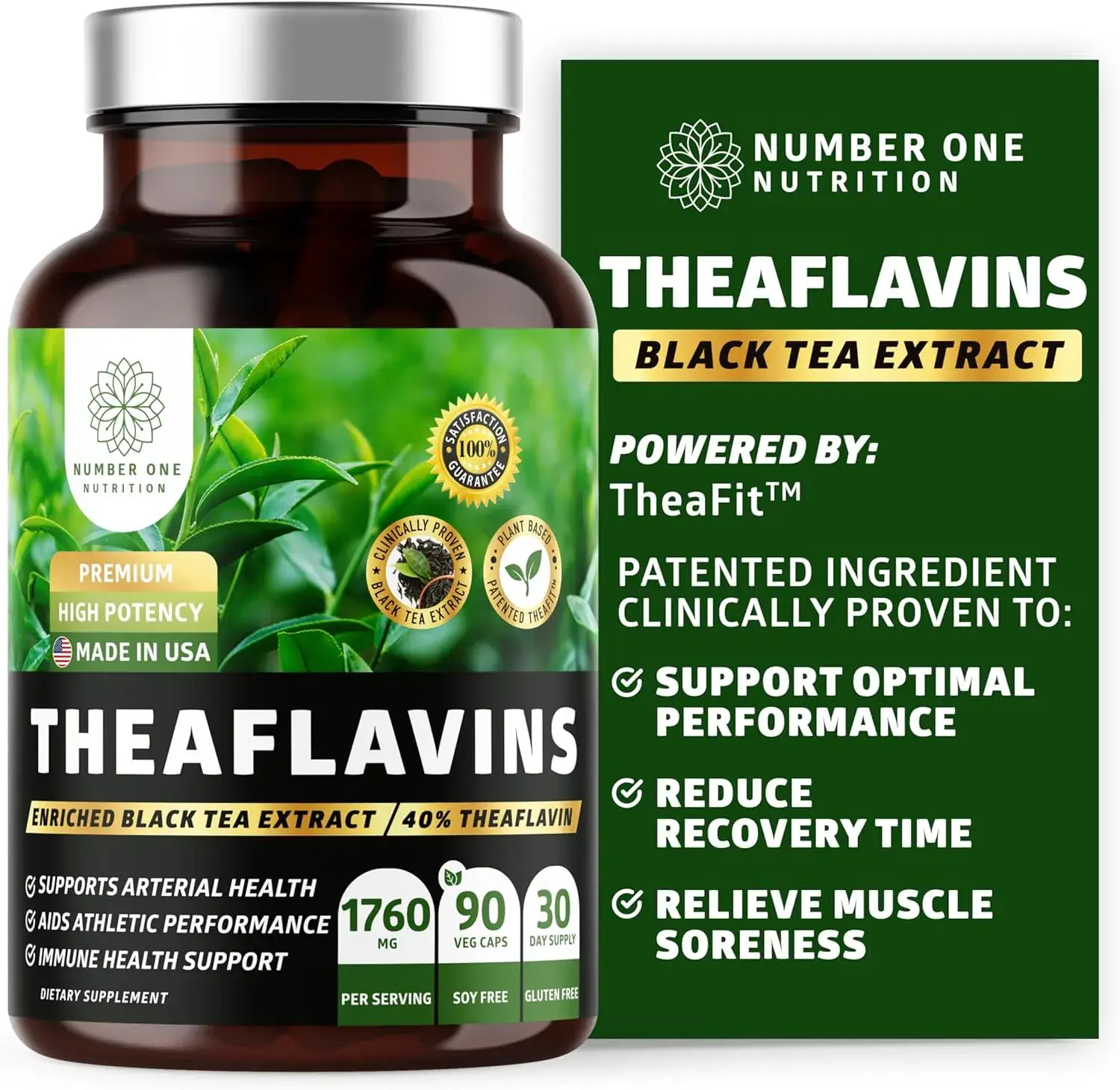
Black Tea Extract that is rich in natural theaflavins and polyphenols that help protect your body from free radicals, promoting overall immune health and well-being
Contains blended amounts of Fruits and Veggies. All natural, with whole foods, fruit and vegetable supplement.Perfect for everyone looking to live a healthier lifestyle.