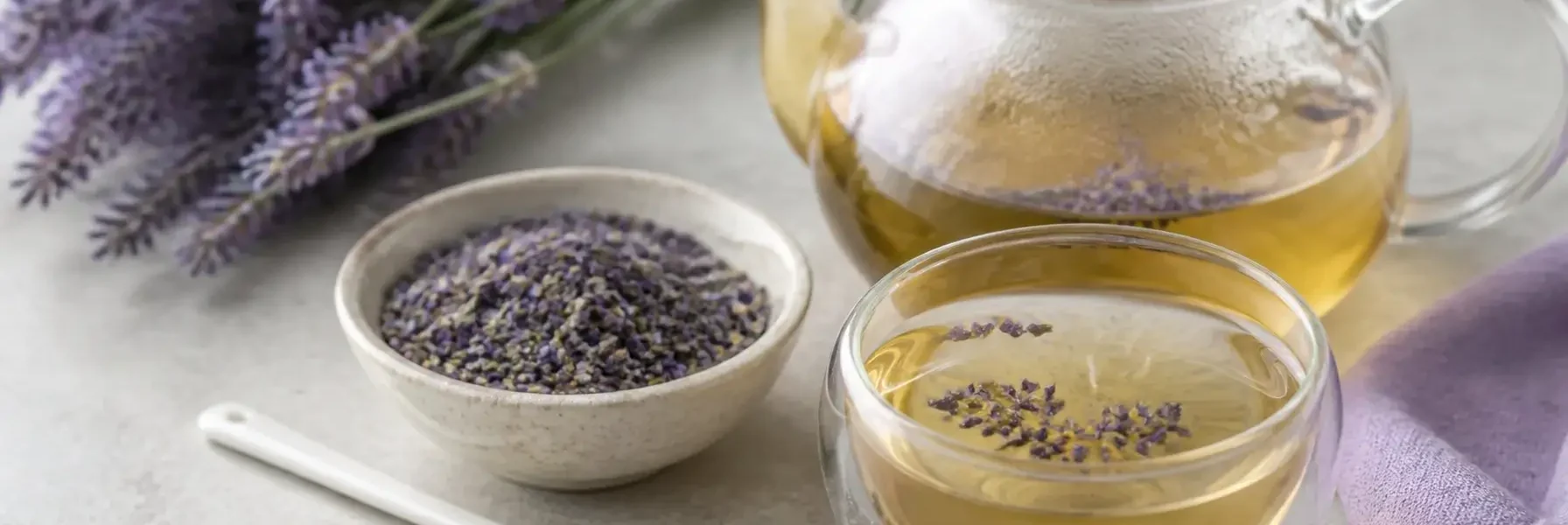
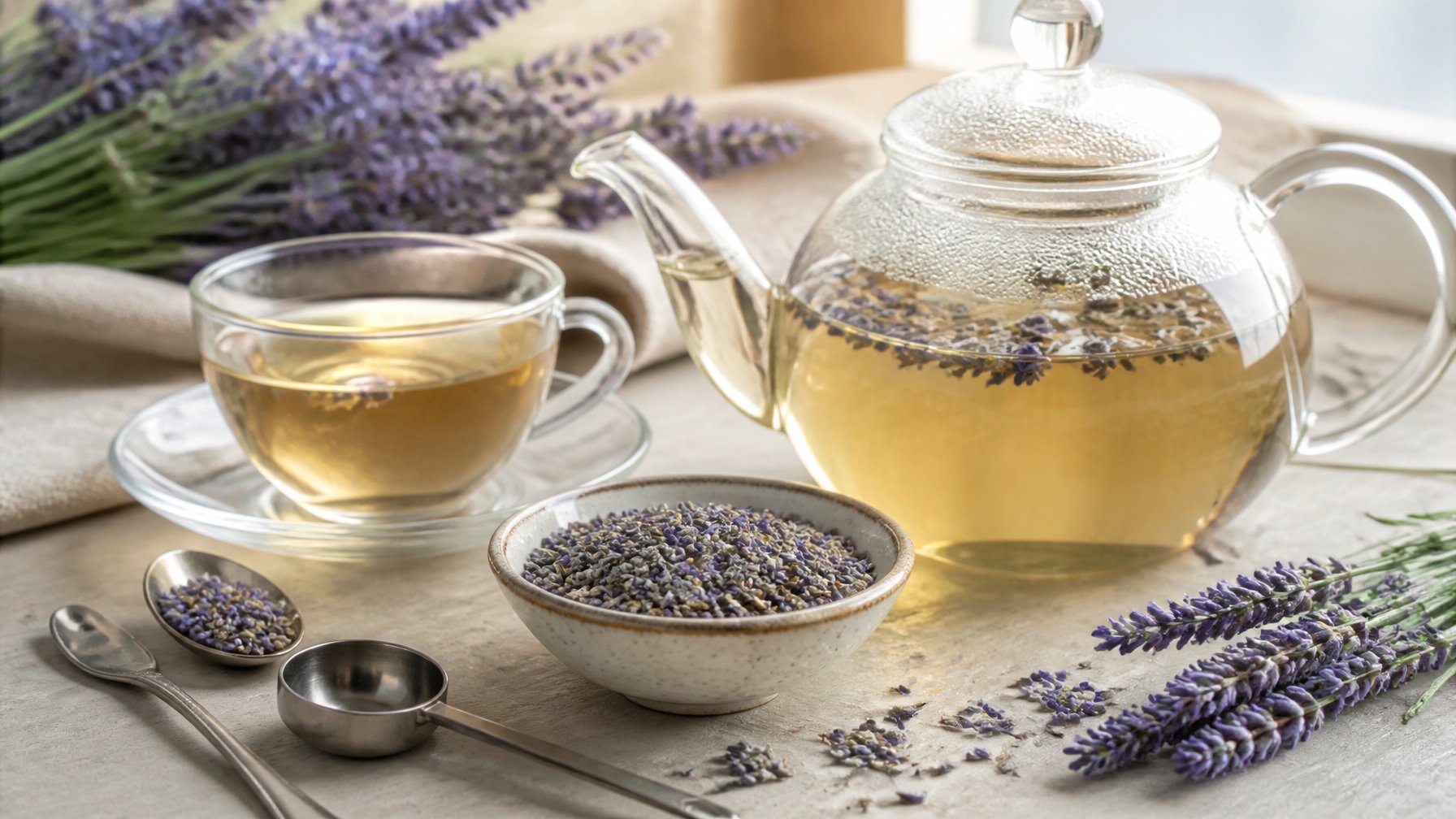
Getting lavender tea right comes down to one thing: knowing how much lavender for tea to use. Too much and your cup tastes like soap. Too little and you’re drinking barely scented water.
For one 8-ounce cup, use 1/2 to 1 teaspoon of dried culinary lavender buds, or about 1 tablespoon of fresh lavender. That ratio keeps the floral flavor pleasant instead of bitter. Start at the lower end if you’ve never tried this herbal tea before, since the flavor is stronger than most people expect.
Water temperature and steeping time matter almost as much as the amount you use. This guide walks you through the full brewing process, how to pick buds that are safe to drink, easy flavor pairings, and what to know about lavender and relaxation before you make your first cup.
Key Takeaways
Use 1/2 to 1 teaspoon of dried lavender buds per 8-ounce cup of water.
Choose culinary-grade buds and steep with just-off-boiling water for the best flavor.
Shorten your steep time or reduce the buds if your herbal infusion tastes soapy.
Quick Lavender Tea Measurements and Recipe
The standard ratio is 1/2 to 1 teaspoon of dried lavender buds per 8 ounces of water, steeped for 5 to 10 minutes. Fresh buds need about three times that amount, and a full teapot needs the same math repeated for each cup you pour.
Dried Buds Per 8-Ounce Cup
For a single mug, start with 1/2 teaspoon of dried culinary lavender. That gives you a light floral cup that most people find pleasant.
If you want a stronger flavor, move up to 1 full teaspoon. Going past that is where the soapy bitterness starts to show up.
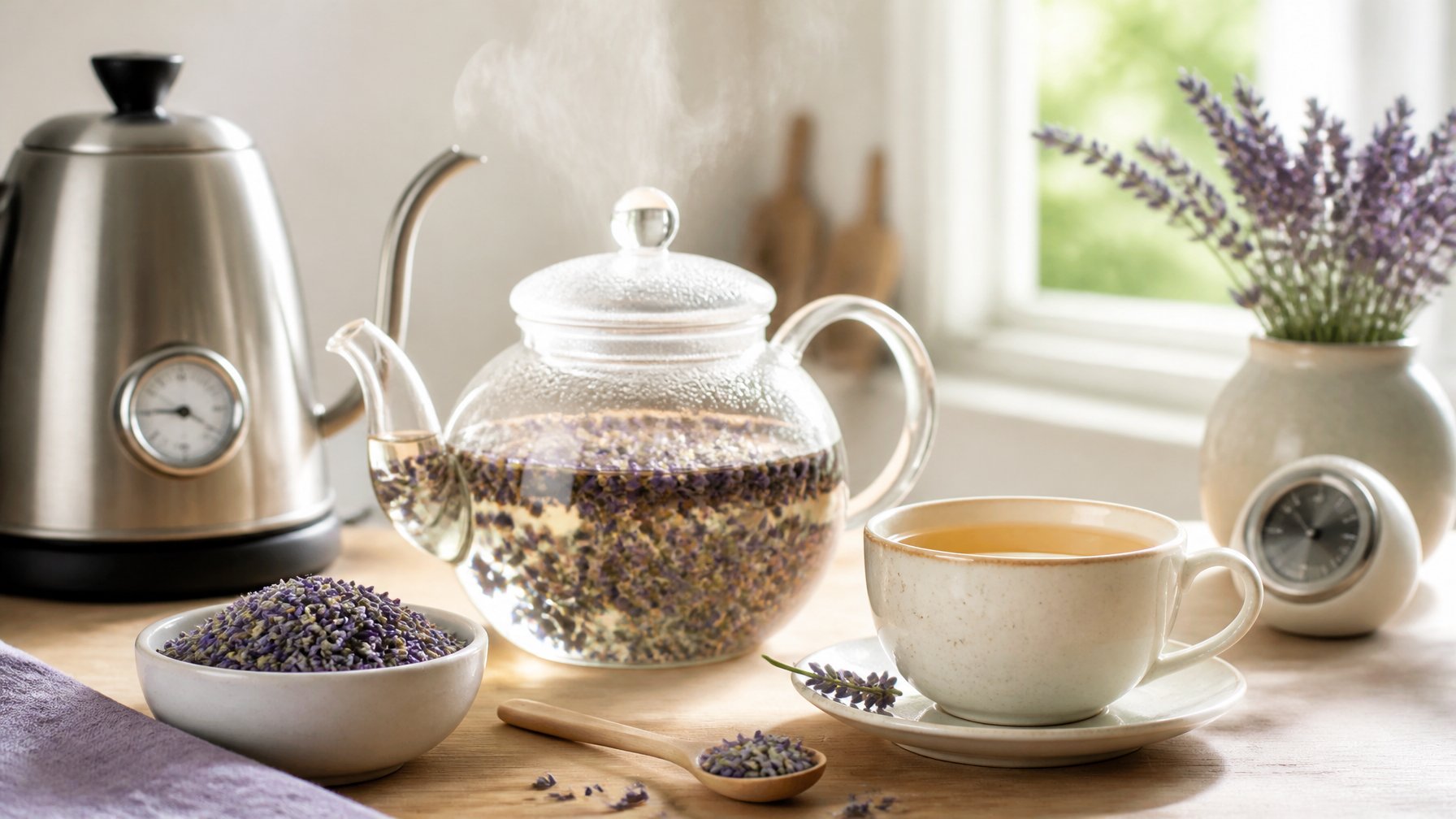
Heat your water to about 200°F, just under boiling. Pour it over the buds in a tea infuser or strainer.
Steep for 5 minutes for a mild cup, or up to 10 minutes if you like it bolder. Longer steeping time pulls out more of the resinous, slightly bitter notes, so taste as you go.
Strain the buds out when you’re done. Add honey or a squeeze of lemon if you want, though it’s fine plain.
Fresh Lavender Conversion
Fresh lavender holds water, so it’s less concentrated by volume. Use about 1 tablespoon of fresh buds for each 8-ounce cup, which is roughly three times the dried amount.
Only use flowers you know haven’t been sprayed. Pick them when the buds are just opening, since that’s when the oils are strongest.
Rinse them gently and shake off the water. Then steep the same way you would with dried buds.
Fresh lavender tastes greener and slightly grassier than dried. You may find you need the longer end of the steeping range to get the same floral punch.
Scaling the Recipe for a Teapot
Multiply your per-cup measurement by the number of cups your teapot holds. Here’s a quick reference:
Teapot Size
Dried Buds
Fresh Buds
16 oz (2 cups)
1–2 tsp
2 tbsp
24 oz (3 cups)
1.5–3 tsp
3 tbsp
32 oz (4 cups)
2–4 tsp
4 tbsp
Put the buds in a basket infuser or loose in the pot. A basket makes it easier to pull them out on time.
Fill the pot with hot water and set a timer. Since the tea keeps steeping while it sits, remove the buds at 5 to 7 minutes if you plan to drink it slowly.
The right amount of lavender only works if the water temperature and steep time match it. Water just under a full boil, a steep of about 4 to 8 minutes, and a vessel that gives the buds room to move will pull out floral flavor without the bitter edge.
Why Water Should Be Just Below Boiling
Aim for water around 200°F to 208°F, or water that has sat off the boil for about 30 seconds.
Dried lavender flowers hold their scent in delicate oils. Rolling boiling water can scorch the buds and push out sharp, soapy notes instead of the sweet floral ones you want.
A temperature-controlled kettle makes this easy, since you can set the exact number and walk away. Without one, just bring the kettle to a boil, lift the lid, and count to 30 before you pour.
Some guides suggest an even hotter pour. Island Lavender, for example, lists a range of 205 to 212°F for lavender buds. If you brew at the top of that range, shorten your steep to keep the cup balanced.
Recommended Steeping Time
Steeping time controls strength more than any other step once your measurement is set.
Steep Time
Result
3–4 minutes
Light, mildly floral
5–6 minutes
Balanced, clearly lavender
7–8 minutes
Strong, slightly drying
10+ minutes
Often bitter or perfume-like
Most recipes land in the 5 to 10 minute range for a standard cup, and 5 minutes is a good starting point for a milder brew.
Cover your cup or pot while it steeps. That traps the aromatic steam instead of letting the scent drift off into the room.
Taste at 4 minutes if you are unsure. You can always steep longer, but you cannot undo a bitter cup.
Using an Infuser, Teapot, or French Press
Lavender buds are small, so your gear needs to hold them back while still letting hot water circulate.
Tea infuser or steel mesh ball: Fill it no more than halfway so the buds can expand. Fine mesh works better than large-hole baskets.
Teapot: Add loose buds straight to the pot and pour through a small strainer when you serve. This gives the flowers the most room to open.
French press: A strong choice for batches. Add buds, pour water, cap it, and press down slowly at the end of your steep.
Paper filter bags: Convenient, but they mute the flavor a little. Use slightly more lavender to compensate.
Whatever you use, strain the buds out once time is up. Leaving them in the water keeps the extraction going and turns a good cup harsh.
Choosing Lavender That Is Safe and Pleasant to Drink
The lavender you pick matters as much as how much you use. Some types taste sweet and floral, while others taste sharp and medicinal because of their natural oils.
Why Culinary-Grade Lavender Matters
Look for bags labeled culinary lavender or food-grade lavender. This means the flowers were grown and processed for eating, not for potpourri or crafts.
Craft lavender is often treated with pesticides that are not approved for food. It may also sit in storage for a long time and pick up dust or mold.
Good culinary lavender should be deep purple, not brown or gray. It should smell sweet and strong when you rub a few buds between your fingers.
Buy from a spice shop, tea shop, or farm that lists the plant species on the label. If a package only says “lavender” with no species name, treat it as decorative until you can confirm otherwise.
English Lavender Versus Other Varieties
Not all lavender plants taste the same. The difference comes down to camphor content, a compound that gives off a sharp, cooling, medicine-like flavor.
Variety
Botanical Name
Camphor Level
Good for Tea?
English lavender
Lavandula angustifolia
Low
Yes, the standard choice
Spanish lavender
Lavandula stoechas
High
No
French lavender
Lavandula dentata
High
No
Lavandin (hybrid)
Lavandula x intermedia
High
Not recommended
English lavender is the one you want. Growers pick it for tea because Lavandula angustifolia dried buds give a soft floral flavor without harsh notes.
Lavandula stoechas and Lavandula dentata are pretty in the garden but taste bitter in a cup. Choosing the right species for brewing is the easiest way to avoid a soapy result.
Fresh, Dried, and Ornamental Flowers
Both fresh and dried lavender flowers work in tea, but they measure differently.
Dried lavender is more concentrated. You need about 1/2 to 1 teaspoon per 8-ounce cup.
Fresh lavender still holds water, so it takes more volume. Plan on roughly 1 tablespoon of fresh buds for the same size cup, since fresh and dried ratios differ.
Skip ornamental lavender from a garden center or florist. These plants are usually sprayed with chemicals meant to keep bugs off leaves, not to keep food safe.
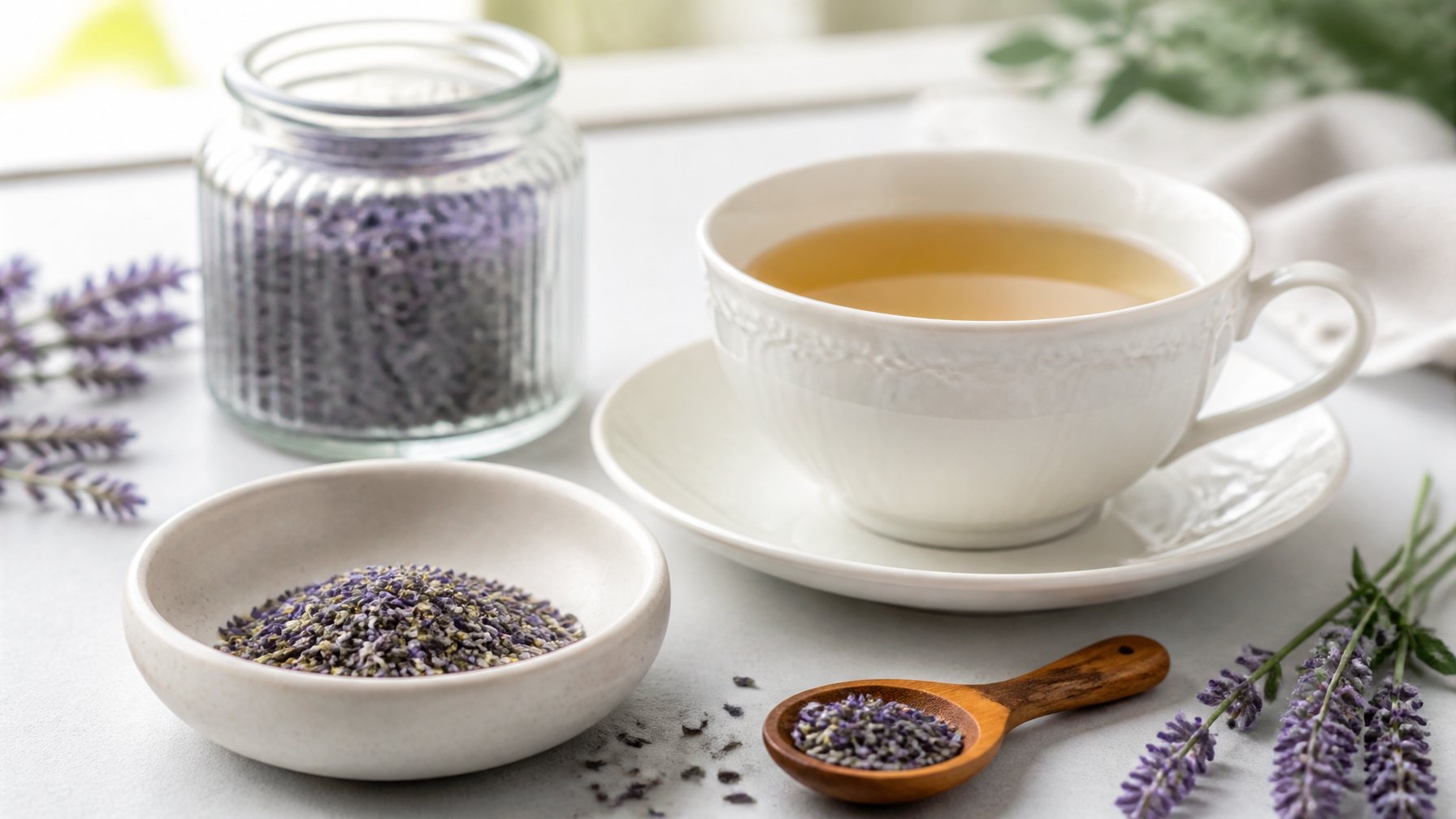
If you grow your own English lavender, harvest the buds just as they open and dry them in a dark, airy spot. Store them in a sealed jar away from light, and use them within about a year for the best flavor.
Adjusting Strength and Avoiding a Soapy Flavor
The line between a pleasant floral cup and a mouthful of perfume is thin, and it usually comes down to three things: how much lavender you add, how long you steep it, and which part of the plant ends up in your cup.
Signs You Have Used Too Much Lavender
A well-balanced lavender tea tastes sweet and slightly herbal. When you cross the line, the flavor changes in ways that are easy to spot.
Watch for these signals:
A soapy or perfume-like taste that coats your tongue
Sharp bitterness at the back of your throat
A cooling, medicinal note from camphor, a natural compound in the plant
A dark, cloudy brew instead of a pale yellow or light amber liquid
A numbing feeling on your lips or the roof of your mouth
Camphor is the main reason lavender tastes soapy when you use too much. Some varieties, like spike lavender, carry more of it than culinary types such as Lavandula angustifolia.
If you smell the tea and it reminds you of a candle or hand soap, the taste will match.
How to Fix an Overly Strong Cup
You do not have to throw out a bitter batch. Start by diluting it with hot water, a few ounces at a time, until the floral note settles back.
Other quick fixes:
Add a squeeze of lemon to cut the bitterness
Stir in honey or a little sugar to soften the sharp edges
Pour in warm milk or oat milk to round out the flavor
Blend it with black tea, green tea, or chamomile so lavender plays a supporting role
For your next cup, adjust the recipe instead. Drop to 1/2 teaspoon of dried lavender buds per 8 ounces and shorten the steeping time.
Most guides suggest steeping for 5 to 7 minutes at about 200°F, not boiling water. Try 3 minutes first, taste it, then let it sit longer if you want more strength. Always strain the buds out once you hit the flavor you like, since they keep releasing camphor and tannins the longer they sit.
Using Buds Instead of Stems and Leaves
Only the flower buds belong in your teapot. Stems and leaves hold a higher share of camphor and green, grassy compounds, which is where much of the harsh flavor comes from.
Buy or harvest culinary lavender buds that have already been separated from the stalk. If you dry your own bunches, rub the dried flowers between your fingers over a bowl and discard the woody bits.
Fresh lavender works too, but it holds water, so you need roughly three times as much as dried. Dried lavender buds are more concentrated, which is why 1/2 to 1 teaspoon is enough for a standard 8-ounce cup.
Store buds in a sealed jar away from light. They keep their flavor for about a year, then fade and turn dusty rather than fragrant.
Lavender works best when it shares the cup with something softer, brighter, or slightly sweet. Small amounts of chamomile, mint, citrus, or tea leaves all change the character of the brew without hiding the floral notes.
Lavender Chamomile Tea
Chamomile and lavender are a common pairing because both taste mild and slightly sweet. Chamomile flowers add an apple-like, honey note that rounds out lavender’s sharper edge.
A good starting ratio is 1/2 teaspoon dried lavender buds to 1 teaspoon dried chamomile per 8-ounce cup. Steep for 5 minutes.
Keep the lavender in the smaller role. If you use equal parts, the floral flavor tends to take over and the cup can taste soapy.
This blend is caffeine free, so it works well as an evening drink. You can add a small piece of dried lemon balm if you want a light citrus background without adding acid.
Mint and Lemon Herbal Blends
Mint gives lavender a cooling finish. Peppermint is the stronger of the two common types, with a sharp menthol bite. Spearmint is gentler and sweeter, which makes it easier to balance with floral notes.
Try these ratios per 8-ounce cup:
Blend
Lavender
Partner herb
Lavender–peppermint
1/4 tsp
3/4 tsp peppermint
Lavender–spearmint
1/2 tsp
1 tsp spearmint
Lavender–lemon balm
1/2 tsp
1 tsp lemon balm
Add a strip of lemon peel during steeping for a brighter cup. Fresh lemon juice is better added after straining, since acid can dull the mint’s aroma while it steeps.
Iced versions work well here. Brew the herbal infusion at double strength, then pour it over ice.
Adding Honey, Lemon, or Tea Leaves
Honey is the most forgiving sweetener for lavender. Start with 1/2 teaspoon and stir it in after straining, once the water has cooled slightly below boiling.
Lemon juice sharpens the flavor and lightens the color. About 1/4 teaspoon per cup is usually enough to notice.
You can also build lavender into a true tea base. Use less lavender than you would for a plain herbal infusion, since tannins add their own bitterness:
Black tea: 1 teaspoon leaves plus a scant 1/4 teaspoon lavender, steeped 3–4 minutes in water just off the boil.
Green tea: 1 teaspoon leaves plus 1/4 teaspoon lavender, steeped 2 minutes at about 175°F.
Lavender with black tea also takes milk well, which softens the floral edge into something closer to a London Fog. Keeping the ratio around 1/2 teaspoon or less per cup prevents the bitter, perfume-like taste that comes from using too much.
Potential Benefits and Sensible Safety Considerations
The amount of lavender you steep affects both how the tea tastes and how your body responds to it. Most people drink lavender tea for calm and better sleep, but the research is limited, and a few groups should check with a doctor first.
Relaxation and Restful Sleep
Lavender tea is a caffeine-free herbal infusion made from the buds of Lavandula angustifolia. That means you can drink it in the evening without the stimulant effect you get from black or green tea.
The main plant compounds are linalool and linalyl acetate. These give lavender its scent and are the focus of most sleep and anxiety research.
Many people find that a warm cup about 30 to 60 minutes before bed helps them wind down. Part of that effect likely comes from the aroma and the routine itself, not the tea alone.
A standard cup uses 1 to 2 teaspoons of dried buds per 8 ounces of water. Steeping longer or using more buds makes the flavor sharper and more soapy, not necessarily more calming.
What Research Can and Cannot Confirm
Most of the strongest evidence comes from lavender essential oil capsules, not from tea. A standardized oil preparation has been studied for anxiety symptoms in several trials, and the doses used are far higher than what you get from steeped buds.
Studies on the benefits of lavender tea and extract suggest possible help with mild anxiety, sleep quality, and menstrual cramps. The trials are usually small, and some use aromatherapy rather than a drink.
Here is a simple breakdown:
Claim
Evidence level
Feeling relaxed
Modest, mostly from oil and aroma studies
Better sleep quality
Limited, small trials
Soothing mild indigestion
Traditional use, weak clinical data
Treating diagnosed anxiety or insomnia
Not supported for tea
Lavender tea is not a treatment for a medical condition. Think of it as a pleasant habit that may support relaxation.
When to Seek Individual Medical Advice
Talk to a doctor or pharmacist before drinking lavender tea regularly if any of these apply to you:
You take sedatives, sleep aids, or anti-anxiety medication. Lavender may add to drowsiness.
You are pregnant or breastfeeding. There is not enough safety data.
You have a hormone-sensitive condition. Some case reports have raised questions about lavender and hormonal effects in young boys, though the evidence is unclear.
You have surgery scheduled within two weeks, since sedative effects can interact with anesthesia.
You are allergic to plants in the mint family, such as sage or oregano.
Side effects are uncommon but can include headache, nausea, or an upset stomach, especially with strong brews. Children should drink weaker tea and smaller amounts, and only with a pediatrician’s approval.
Most lavender tea questions come down to a few numbers: 1/2 to 1 teaspoon of dried buds per cup, water around 200°F, and a steep of 3 to 5 minutes. Here are answers to the questions people ask most often about measuring, steeping, and drinking lavender tea.
What is the recommended amount of dried lavender to use per cup of tea?
Start with 1/2 to 1 teaspoon of dried, culinary-grade buds for every 8 ounces of hot water. Many guides, including this complete guide to serving lavender tea, use that same range.
If you like a softer flavor, begin at 1/2 teaspoon. You can always add more buds to the next cup.
For a pot, multiply by the number of cups. A four-cup pot needs roughly 2 to 4 teaspoons. This lavender tea dosage tool breaks down per-cup and per-pot amounts.
Can I use fresh lavender flowers to make tea, and how much should I add?
Yes. Fresh flowers work well, but they hold water, so you need more of them.
Use about three times the amount of fresh buds as dried. That means roughly 1 1/2 to 3 teaspoons of fresh flowers per cup.
Rinse fresh lavender first, and only use plants that have not been sprayed with pesticides. A guide to lavender amounts for tea covers both fresh and dried ratios.
How long should lavender tea steep before drinking?
Three to five minutes is the standard window. Past the five-minute mark, the tea often turns bitter and tastes more like soap than flowers.
Water temperature matters just as much. Use hot water around 200°F rather than a full boil, since boiling water scorches the delicate oils. A step-by-step brewing guide explains this bitterness threshold in more detail.
Cover your cup while it steeps. That keeps the aromatic oils in the water instead of letting them escape as steam.
What parts of the lavender plant are safe to use for tea?
The flower buds are the part you want. They hold the most fragrance and the sweetest flavor.
Leaves and stems are edible but taste sharper and more resinous. Some people add a small amount of leaf for a stronger herbal note, though most recipes skip them.
Stick with Lavandula angustifolia, often sold as English lavender, for cooking and brewing. It has lower camphor content than French or Spanish types, which is why it tastes less medicinal. Instructions from a Michigan lavender farm recommend the same variety.
Is it safe to drink lavender tea every day?
For most healthy adults, one to three cups a day is considered fine. Lavender has a long history as a culinary and herbal tea.
That said, a few groups should check with a doctor first:
People who are pregnant or breastfeeding
Anyone taking sedatives, sleep aids, or blood thinners
Children, especially young boys, since some research has looked at lavender oil and hormone effects
People scheduled for surgery within two weeks
Tea made from steeped buds is much weaker than lavender essential oil. Never drink essential oil.
What are the possible side effects of drinking lavender tea?
Side effects are uncommon at normal amounts, but they do happen. Drowsiness is the most frequent one, which is part of why people drink it at night.
Other reported effects include:
Upset stomach or nausea, usually from steeping too much lavender
Headache, more likely with strong brews
Allergic reaction, especially if you react to mint, sage, or other plants in the same family
Increased sedation when combined with sleep medication or alcohol
Cut back your amount or steep time if the tea bothers you. Stop drinking it and talk to a doctor if you notice a rash, swelling, or trouble breathing. A simple recipe with pairing suggestions can help you balance flavor if a milder cup works better for you, and this overview of brewing steps explains how to adjust the strength.
Final Thoughts on How Much Lavender for Tea
Finding the right amount of lavender helps create a smooth, fragrant cup without an overpowering or soapy flavor. With the right lavender, brewing method, and amount, you can easily adjust each cup to your preferred strength.
Black Tea Extract that is rich in natural theaflavins and polyphenols that help protect your body from free radicals, promoting overall immune health and well-being
Contains blended amounts of Fruits and Veggies. All natural, with whole foods, fruit and vegetable supplement.Perfect for everyone looking to live a healthier lifestyle.