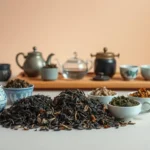
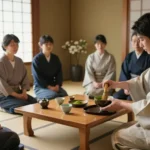
You step into Moroccan tea culture the moment someone pours you a glass of atay. Moroccan mint tea is more than a drink in the Maghrebi world. It shapes daily life, social visits, and business talks.
In the tea culture of the world moroccan mint stands out as a ritual of welcome and respect: Chinese gunpowder green tea blended with fresh spearmint and sugar, served again and again throughout the day. You taste sweet mint first, followed by a light green tea base. Hosts pour it from a height to cool the tea and raise a thin foam on top.
You will see Moroccan tea served in homes, shops, and desert camps. Each glass carries meaning, from how you hold it to how many rounds you accept. When you understand the custom, you connect more deeply with the culture behind every cup of mint tea.
Key Takeaways
Moroccan mint tea combines green tea, spearmint, and sugar in a ritual drink called atay.
Tea culture in Morocco centers on hospitality, careful pouring, and shared social time.
Regional habits and global trade shaped how Moroccan tea became a symbol of daily life.
Origins and Evolution in Moroccan Life
Moroccan mint tea grew from foreign trade into a daily ritual that shapes social life. You can trace its roots to imported gunpowder green tea, cross‑regional trade, and the rise of tea as a national symbol.
Arrival of Gunpowder Green Tea
You can link the start of tea in Morocco to the 18th and 19th centuries. Merchants brought Chinese gunpowder tea to North Africa through European trade networks, especially during times when other markets faced blockades.
Gunpowder green tea, named for its tightly rolled leaves, traveled well by ship. The leaves kept their flavor over long distances. This made it practical for export to Moroccan ports such as Tangier and Essaouira.
At first, elites and royal courts drank tea as a luxury item. Over time, wider access lowered the cost. You began to see tea in Moroccan homes across cities and rural areas.
Its strong, slightly bitter taste also made it suitable for blending. That quality shaped the drink you now know as Moroccan mint tea.
Blend of Cultures and Trade Routes
You see Moroccan mint tea as the result of layered cultural exchange. Trade routes across the Mediterranean and the Sahara connected Morocco with Europe, sub‑Saharan Africa, and the Middle East.
Moroccans adapted gunpowder tea to local tastes by adding fresh spearmint and large amounts of sugar. This mix balanced bitterness with sweetness and aroma. The result fit well within Maghrebi food traditions, which favor bold and balanced flavors.
Caravan routes carried tea inland to cities such as Fez and Marrakech. In tea in Marrakech markets, you can still find metal teapots, engraved trays, and slim glasses that reflect this shared history.
Tea culture grew around hospitality. When you visit a home, your host often pours tea from a height to create foam. This pouring style signals care and respect.
Transformation Into a National Symbol
Over time, tea in Morocco moved beyond a drink. It became a daily social practice.
You now find tea served at business meetings, family gatherings, and public celebrations. Refusing tea can seem impolite because offering it shows welcome and trust.
The preparation follows a clear structure:
Rinse the gunpowder green tea leaves
Steep the tea in a metal pot
Add fresh mint and sugar
Pour and return the tea to mix flavors
This routine turned tea into a shared ritual. In cities and villages alike, you see how tea culture defines moments of pause, conversation, and connection.
Through trade, adaptation, and daily use, Moroccan mint tea became a visible sign of national identity.
Key Ingredients and Their Significance
Moroccan mint tea depends on a small group of ingredients that each serve a clear role. The type of green tea, the freshness of the mint, and the level of sweetness all shape the final taste and meaning of the drink.
Chinese Gunpowder Green Tea Selection
You build Moroccan mint tea on gunpowder green tea, often labeled as Chinese gunpowder tea or simply gunpowder tea. This Chinese green tea gets its name from the way producers roll the leaves into tight pellets. The shape helps the tea travel well and keeps its flavor strong.
When you brew it, the pellets unfurl and release a bold, slightly smoky taste. That firm base stands up to large amounts of fresh mint and sugar. Lighter green teas often taste too soft in comparison.
Look for pellets that feel tight and look dull green, not gray. Very dusty or broken leaves can taste harsh. Many traditional recipes rinse the tea quickly with hot water before brewing. This step reduces surface bitterness and prepares the leaves for full infusion.
Moroccan Spearmint and Fresh Mint Varieties
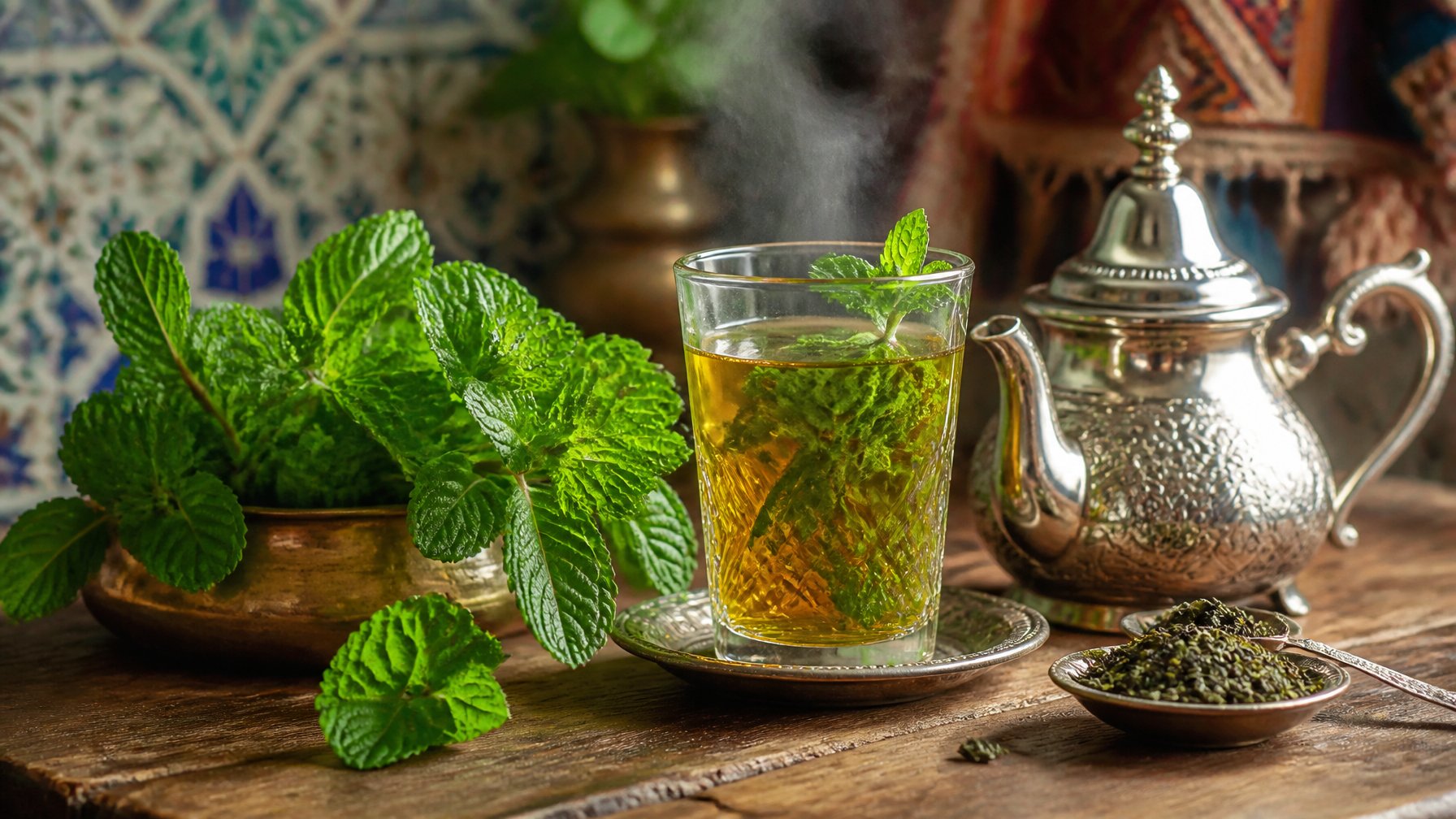
You need fresh spearmint for an authentic cup. In Morocco, people often use nana mint, also called Moroccan spearmint. It has a clean, sweet aroma that blends smoothly with green tea.
Use whole sprigs with stems attached. The stems hold flavor and help anchor the leaves in the pot. Crush the sprigs lightly between your fingers before adding them to release more scent.
Avoid dried mint when possible. Dried Moroccan spearmint lacks the bright oils found in fresh mint leaves. It can taste flat or dusty.
If you cannot find nana mint, choose another fresh spearmint variety. Peppermint works in small amounts, but it gives a sharper, cooler taste that changes the profile.
Role of Sugar and Sweetness
Sugar plays both a flavor and cultural role. In many Moroccan homes, you add sugar directly to the teapot with the tea and mint. This method blends the sweetness evenly into the brew.
Traditional service often tastes very sweet. You may hear the phrase “shwiya sukkar,” which means “a little sugar,” if someone prefers less. Adjust the amount to suit your needs, but know that strong sweetness is common.
Granulated sugar and sugar cubes both work. The key is to dissolve the sugar fully before serving. Many hosts pour a glass and return it to the pot to mix the tea and sugar well.
The pairing of tea and sugar also signals hospitality. Offering a sweet glass shows care for your guest.
Flavor Variations and Additional Aromatics
While green tea, fresh mint, and sugar form the core, you can add small touches for variety. Some families include a splash of orange blossom water. It adds a light floral note without overpowering the mint.
In certain regions, people add herbs such as wormwood for a bitter edge, especially in cooler months. A few threads of saffron may appear in special settings, giving color and aroma.
Use these additions with restraint. Too many aromatics can mask the balance between gunpowder green tea and Moroccan mint.
Focus on quality first. Fresh mint leaves, solid Chinese gunpowder tea, and balanced sweetness create the foundation. Any extra flavor should support, not replace, that base.
You prepare Moroccan mint tea (atay) with specific tools, clear steps, and careful presentation. Each action—from rinsing the leaves to the high pour—shapes the flavor and shows respect to your guests.
The Moroccan Teapot and Glassware
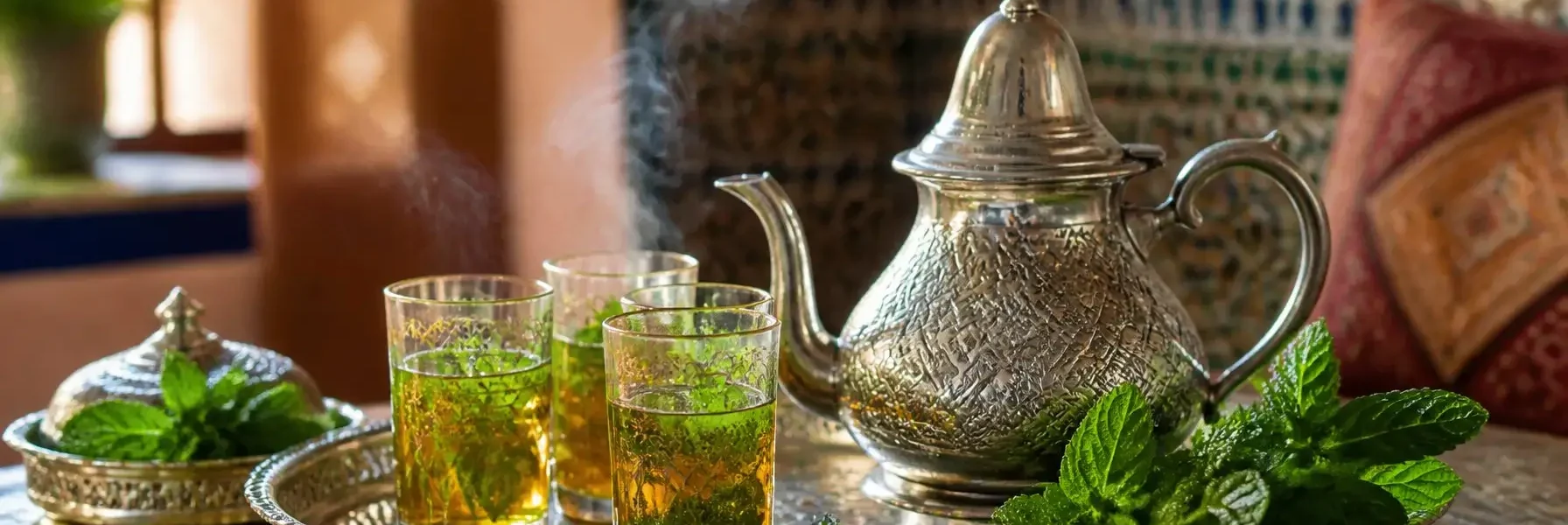
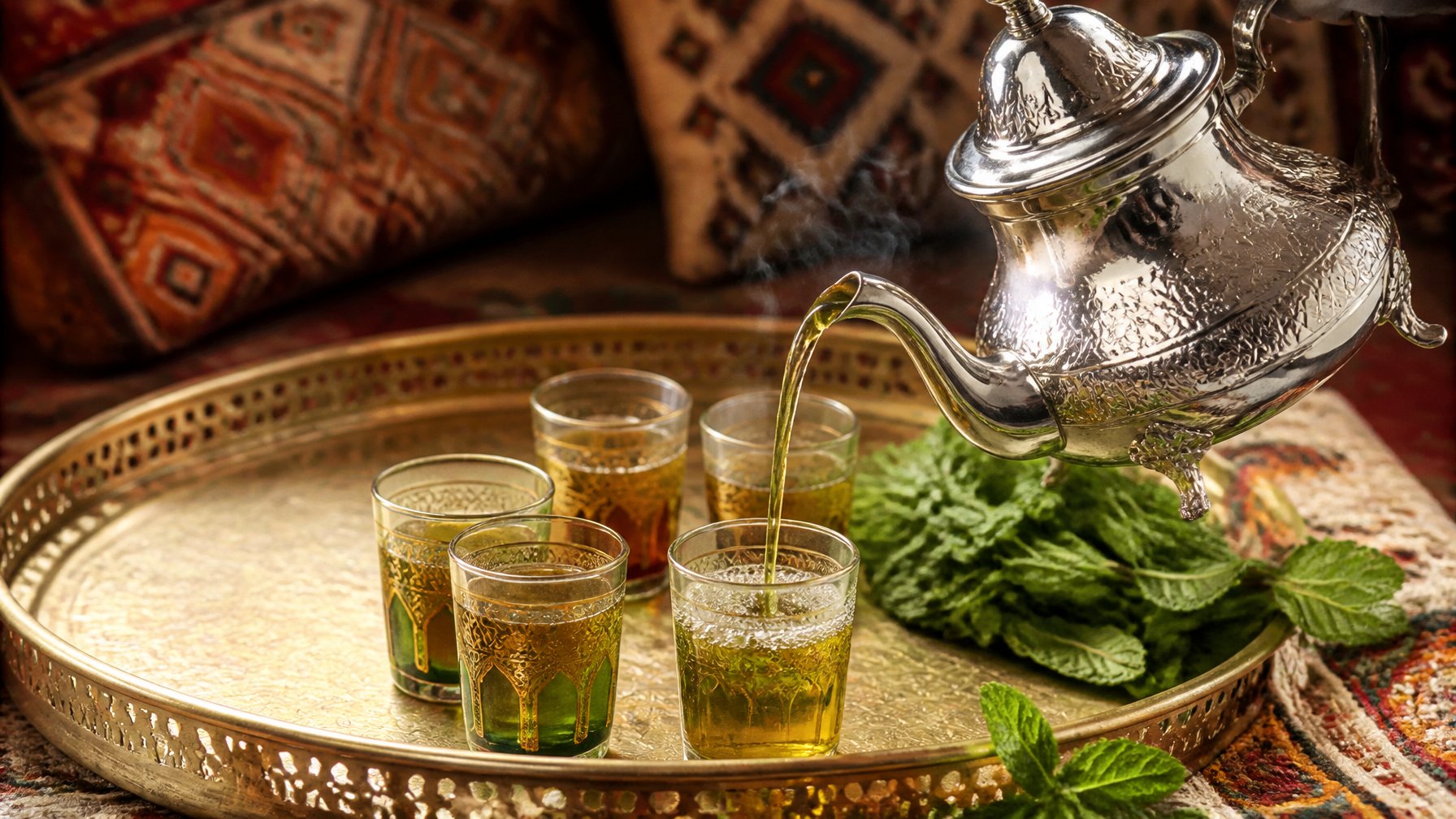
You brew authentic Moroccan mint tea in a Moroccan teapot made of stainless steel, brass, or silver-plated metal. The pot has a rounded body and a long curved spout.
The rounded shape lets the tea leaves and fresh mint move freely in hot water. The long spout supports the high pour and helps you control the stream.
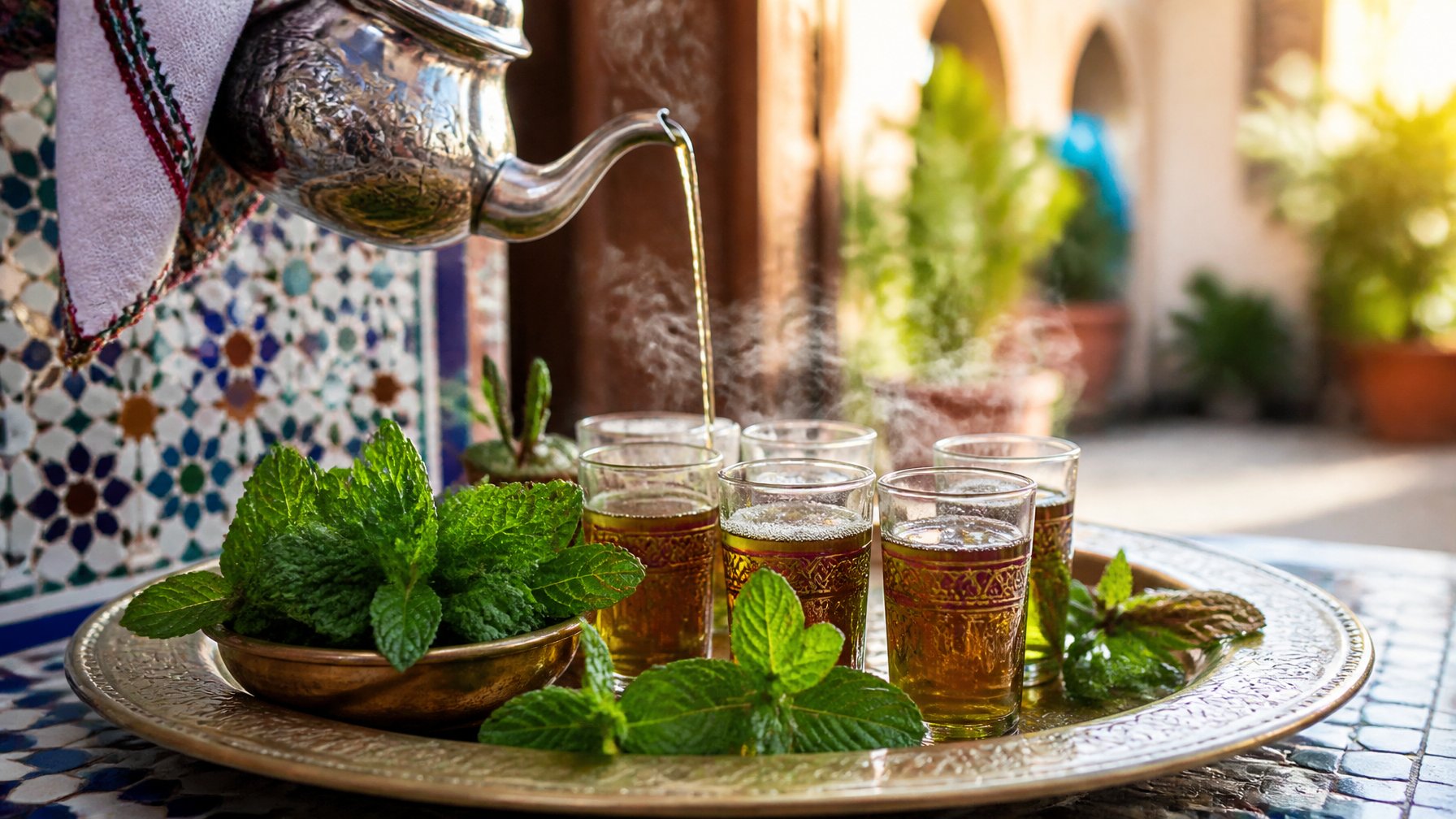
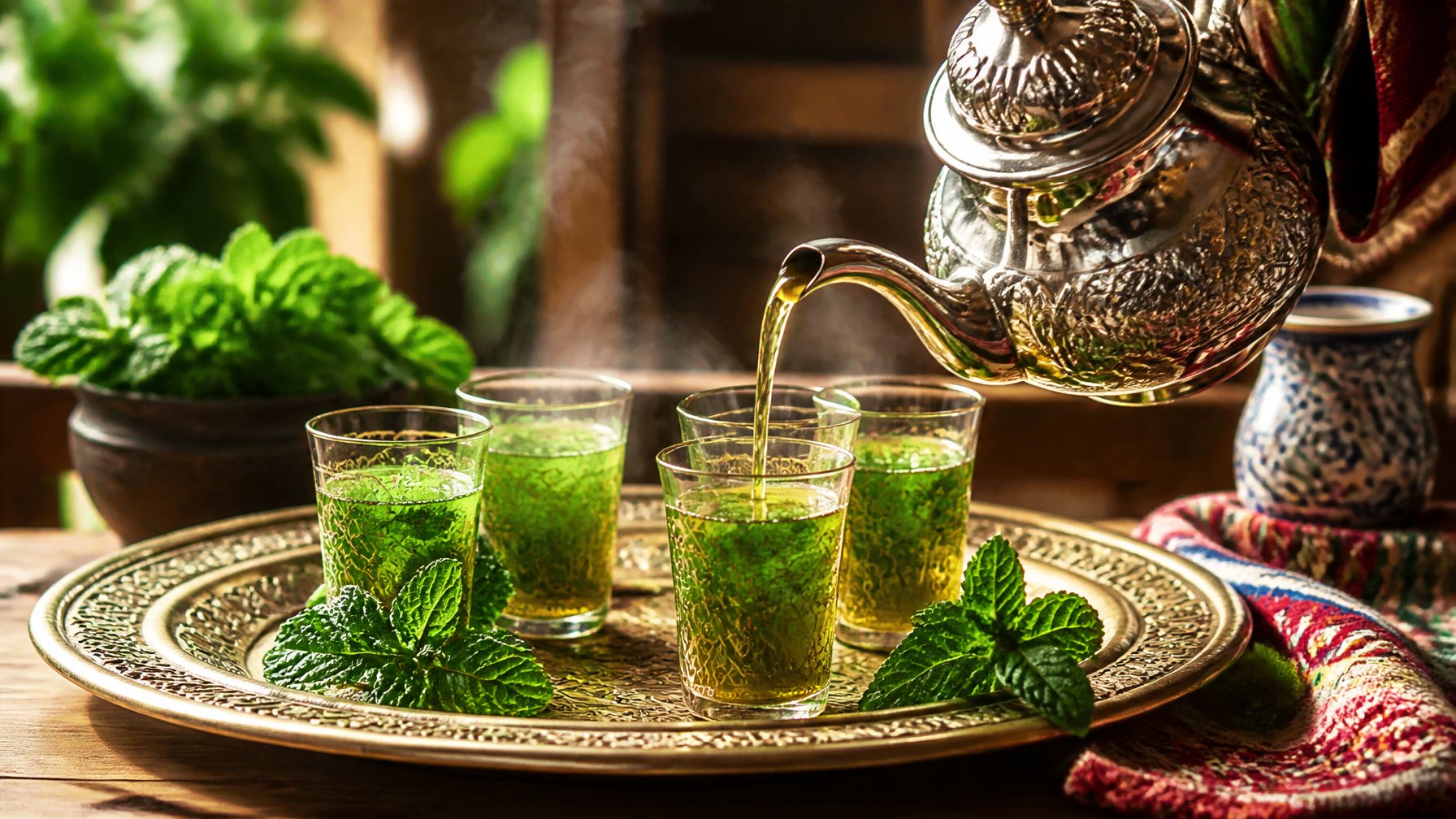
You serve the tea in small, decorated glasses instead of cups. Most glasses hold about 2–3 ounces. Their clear sides show the amber color and the light foam on top.
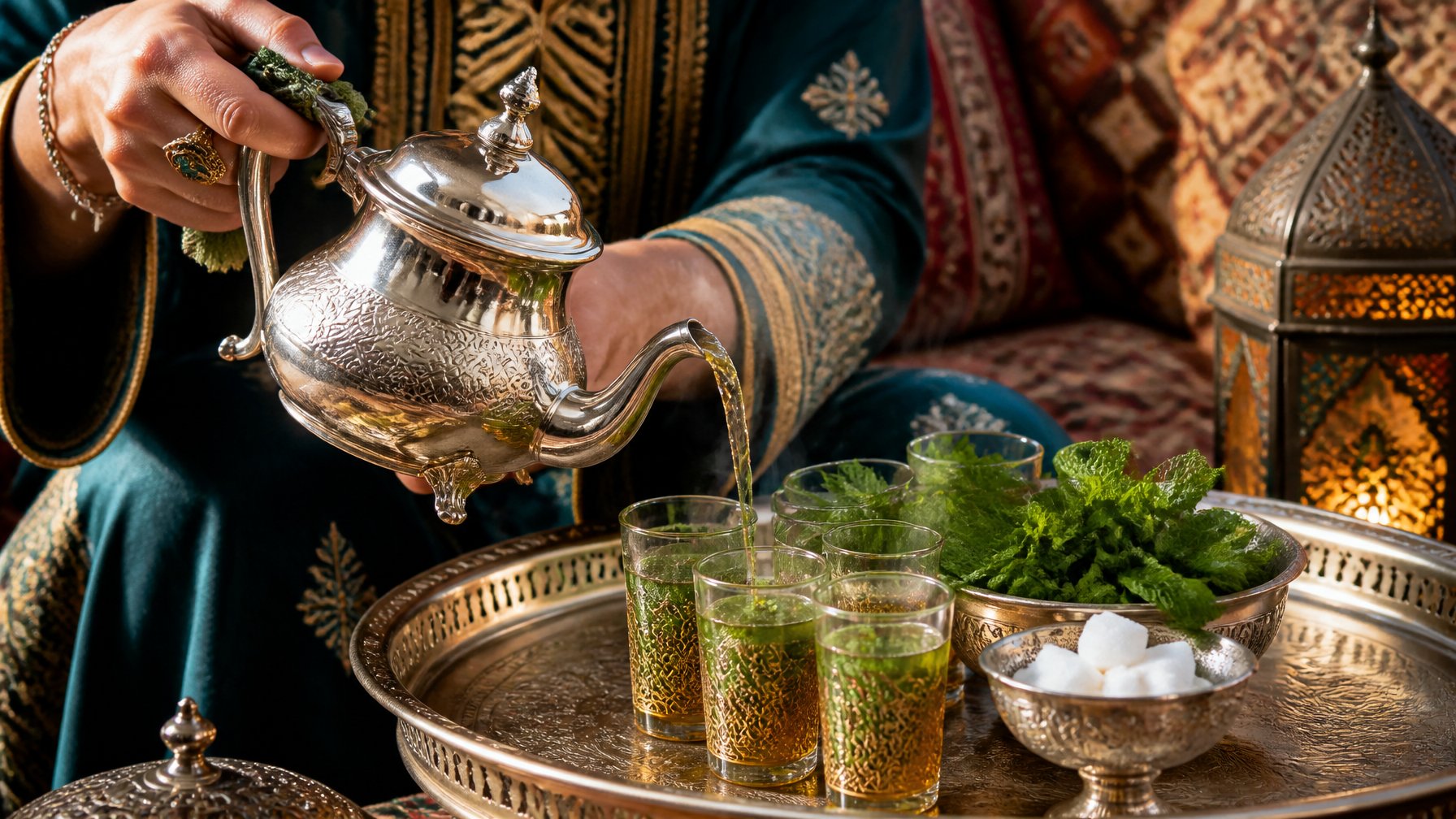
You often place the teapot and glasses on a metal serving tray. The tray keeps everything together and allows you to carry several filled glasses at once.
The High Pour Technique
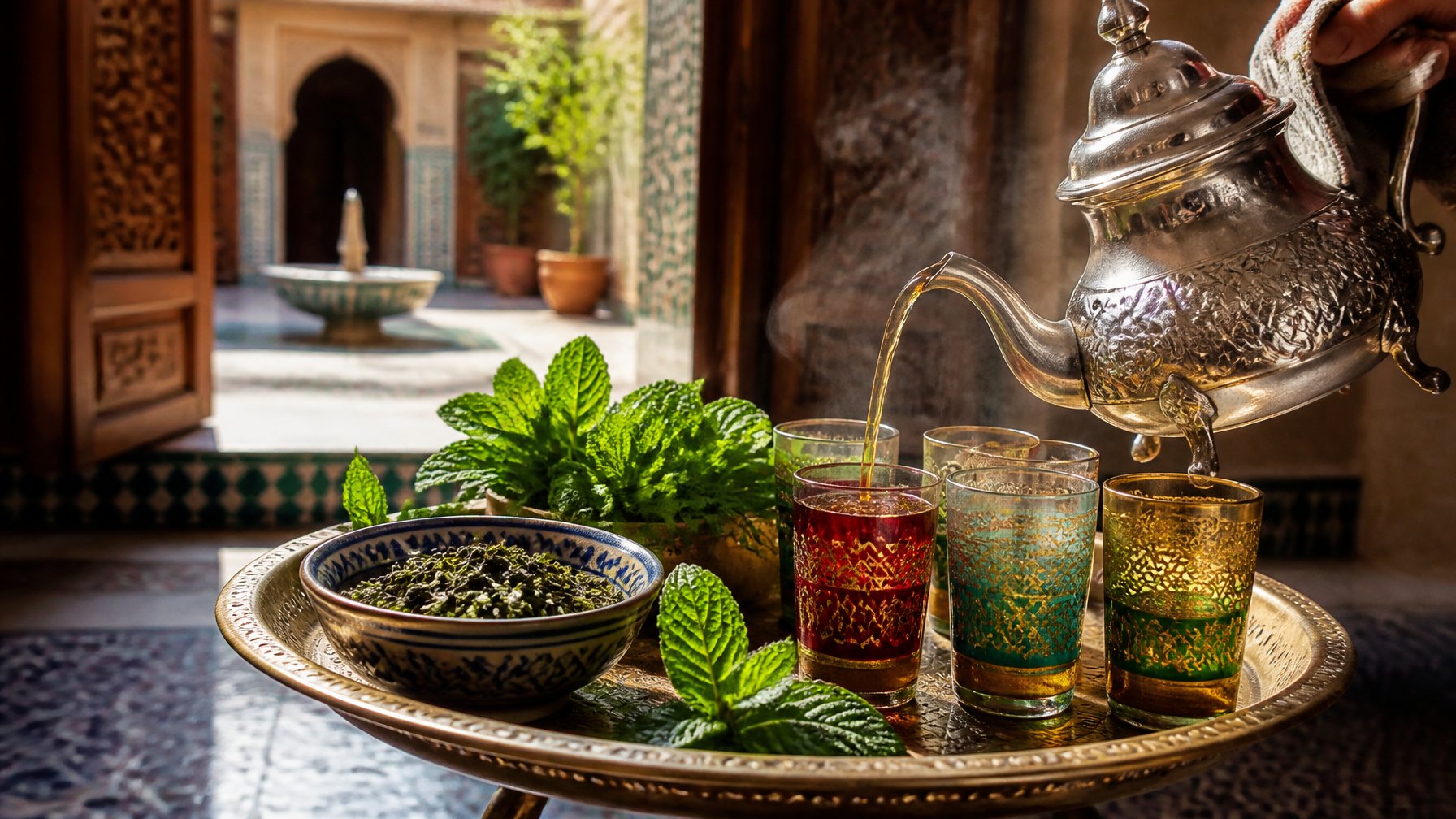
You define traditional Moroccan tea by the high pour. You hold the Moroccan teapot about 12 inches or more above the glass and pour in a steady stream.
This height mixes air into the tea. It cools the liquid slightly and creates a thin layer of foam on top.
You aim for a smooth, unbroken stream. A shaky pour can spill tea or reduce foam.
In many homes, you pour a small amount into each glass first. Then you return to fill them fully. This method keeps the strength and sweetness even in every serving of authentic Moroccan tea.
Mixing, Brewing, and Blending Steps
You start a classic Moroccan mint tea recipe with Chinese gunpowder green tea. Add 1–2 teaspoons per small pot.
First, rinse the leaves with a splash of boiling water and discard it. This step removes dust and softens bitterness.
Next, add a large bunch of fresh mint and several spoonfuls of sugar. Traditional Moroccan mint tea tastes sweet, though you can adjust the amount.
Fill the pot with boiling water and let it steep for 2–3 minutes. Pour a small glass, then return it to the pot. This action blends the sugar that settles at the bottom and balances the flavor.
Key elements of an authentic Moroccan tea blend:
Gunpowder green tea for body
Fresh mint for aroma
Sugar for balance
Ceremonial Aspects and Presentation
You treat serving atay as a social act, not just a drink service. In many homes, the host prepares and pours the tea in front of guests.
Offer the first glass to the eldest or most honored guest. This order shows respect.
You usually serve three rounds from the same pot. Each round becomes slightly stronger as the leaves continue to steep.
Keep the tray neat and the glasses aligned. Serve with simple foods such as dates, nuts, or small pastries.
When you follow these steps with care, you present authentic Moroccan mint tea in a way that respects both taste and tradition.
The Tea Ceremony and Etiquette
In tea culture across the Maghrebi region, the Moroccan tea ceremony centers on respect, timing, and shared space. When you drink atay, you take part in a ritual that shapes daily life and social rules in tea in Morocco.
Hospitality and the Three-Glass Tradition
When you enter a Moroccan home or shop, your host often offers Moroccan mint tea within minutes. This offer is not casual. It signals welcome, safety, and goodwill.
In an authentic Moroccan mint tea service, the host prepares gunpowder green tea with fresh mint and sugar, then pours from a height to create foam. The raised pour shows skill and respect. You usually receive tea in small decorated glasses placed on a metal tray.
You will often drink three glasses from the same pot. A well-known three-glass proverb explains the custom:
The first glass is gentle like life.
The second is strong like love.
The third is bitter like death.
Each round tastes slightly stronger because the leaves continue to steep. By accepting all three, you show patience and appreciation for the full Moroccan tea ceremony.
Social Bonds and Family Gatherings
You do not rush tea in Morocco. The ceremony can last 30 to 60 minutes, especially when guests visit for the first time or during holidays.
Families gather around a low table with sweets such as almond cookies, dates, or sesame pastries. The act of pouring and refilling creates pauses in conversation. These pauses matter. They allow stories, advice, and business talks to unfold at a steady pace.
In many homes, the head of the household prepares the tea, though roles vary today. When you watch the careful rinse of the leaves, the packing of fresh mint, and the high pour, you see pride in tradition. The ceremony turns a simple drink into a shared experience that strengthens family ties and community bonds within Maghrebi tea culture.
Politeness, Refusal, and Cultural Expectations
You should accept the first glass when it is offered. In tea in Morocco, refusing tea can seem like you reject the host’s hospitality.
If you cannot drink more, you can leave a small amount in the glass or politely say you have had enough after the second or third serving. Speak gently and thank your host. Courtesy matters as much as the tea itself.
You should also hold the glass with your right hand when possible. Make eye contact, and offer thanks, such as saying Bismillah before drinking or expressing gratitude after you finish. These small actions show that you respect the customs behind the Moroccan tea ceremony, not just the drink in your hand.
Regional and Seasonal Variations
Moroccan mint tea changes by region, climate, and local taste. You will notice clear differences in herbs, sweetness, and serving style across the country and the wider Maghrebi region.
Atlas Mountains Traditions
In the Atlas Mountains, you often find a stronger and more herbal cup. Winters are cold, and fresh mint can be hard to find. Families may use dried Moroccan spearmint when fresh leaves are scarce.
Mountain households sometimes add warming herbs. Common choices include:
Sage
Thyme
Wormwood (shiba)
Marjoram
These herbs create a sharper and sometimes bitter taste. People value this flavor during cold months because it feels warming and pairs well with hearty Moroccan cuisine such as bread, olives, and slow-cooked tagines.
Sugar levels vary. In remote villages, tea may taste less sweet than tea in Marrakech, where urban guests often expect a richer, sweeter cup.
Desert and Saharan Styles
In desert and Saharan areas, tea plays a strong social role. Among Saharan and Tuareg communities, you may see a slower and more ceremonial preparation.
Tea is often brewed very strong. Hosts pour it from a height to create foam and cool the drink in the hot climate. You may receive three glasses, each poured from the same pot. The taste deepens as the leaves steep longer.
Because fresh mint does not always grow in desert areas, people may rely on:
Dried mint
Stored green tea
Extra sugar for energy
The higher sugar content reflects both taste and the need for quick calories in harsh conditions.
Herbal Infusions and Local Ingredients
Across Morocco and the Maghrebi region, you will also find seasonal changes based on local crops. In spring and summer, fresh mint gives the tea a clean and bright taste.
In cities like Marrakech, some hosts add orange blossom water for a light floral note. This addition links tea to broader Moroccan cuisine, where floral waters often flavor sweets and pastries.
Some families prepare special herb blends during winter. They may combine mint with verbena, oregano, or sage. These blends change the aroma and make the tea feel different from the standard green tea and mint mix.
You may also see ready-made mixtures of green tea and dried mint sold in markets. These blends offer convenience, but fresh ingredients usually produce a fuller flavor.
Moroccan mint tea shapes tea culture far beyond North Africa. You can see its impact in global cafés and in research on green tea and fresh mint.
Moroccan Mint Tea Around the World
You will find Moroccan mint tea in cities from Paris to New York. Many cafés serve it in clear glasses with a strong green tea base and fresh mint on top.
In Europe, North African communities helped spread this style of mint tea. Restaurants that focus on Moroccan cuisine often end meals with sweet, hot tea poured from a metal pot. The high pour and foam have become part of the experience.
Modern tea shops also sell loose blends labeled Moroccan mint. These usually mix Chinese gunpowder green tea with dried spearmint. While they may reduce the sugar, they keep the core flavor profile that defines this part of global tea culture.
You can even see its influence in iced teas and cocktails. Bartenders steep green tea with mint to add depth without heavy syrups.
Wellness and Antioxidant Properties
When you drink Moroccan mint tea, you consume green tea rich in catechins, a type of antioxidant. These compounds help protect cells from damage caused by normal body processes.
Green tea also contains L-theanine. This amino acid can support calm focus without making you sleepy. Many people choose mint tea in the afternoon for this reason.
Fresh mint adds small amounts of vitamin A and plant oils such as menthol. Menthol creates a cooling effect in your mouth and throat.
The table below outlines key compounds:
Ingredient
Key Compounds
Main Effect
Green tea
Catechins
Antioxidant support
Green tea
L-theanine
Calm alertness
Fresh mint
Menthol
Cooling sensation
You should note that added sugar changes the health profile. Traditional recipes use large amounts, but you can adjust sweetness to fit your needs.
Digestive Aid and Refreshment
You may notice that Moroccan mint tea often follows meals in Moroccan cuisine. Hosts serve it after rich dishes like tagine or couscous.
Mint has long been used to ease mild digestive discomfort. Menthol can help relax muscles in the digestive tract, which may reduce bloating or cramps.
Warm liquid also supports digestion by increasing fluid intake. When you sip hot mint tea slowly, you give your body time to settle after eating.
The strong mint aroma plays a role as well. It creates a sense of freshness that balances sweet pastries or savory foods.
If you prefer a lighter option, you can reduce sugar and increase fresh mint. This keeps the flavor bright while lowering calorie intake.
The Tea Culture Of The World Moroccan Mint: A Lasting Moroccan Farewell
Moroccan atay closes the experience the same way it begins—through hospitality, ritual, and connection. From the high pour and shared glasses to regional twists in the mountains and desert, each cup leaves a sweet, memorable imprint of Moroccan life.
Frequently Asked Questions
Moroccan mint tea blends Chinese green tea with fresh mint and a large amount of sugar, then serves it through a clear ritual of brewing and high pouring. You drink it as a daily beverage and as a sign of welcome, not just for flavor but for social meaning.
What makes Moroccan mint tea unique compared with other mint teas?
You brew Moroccan mint tea with Chinese gunpowder green tea, not with herbal mint alone. Many other mint teas use only dried mint leaves and contain no real tea.
You also add a generous amount of sugar directly to the pot. This creates a strong, sweet, and slightly bitter balance that differs from lightly sweetened or unsweetened mint teas.
The pouring method sets it apart. You pour the tea from a height to mix it and create a light foam on top, and you often serve it in small glasses as part of a hospitality ritual.
What ingredients are typically used in traditional Moroccan mint tea?
You use three core ingredients: gunpowder green tea, fresh spearmint (often called nana), and white sugar.
Many households rinse the tea leaves first with a small amount of hot water to reduce bitterness. Then you steep the tea, add a large bunch of mint, and sweeten it to taste.
In colder months, you may replace or combine mint with herbs such as wormwood (chiba) or lemon verbena (louiza). These herbs change the flavor but keep the same brewing style.
Does Moroccan mint tea contain caffeine, and how much is usually in a cup?
Yes, it contains caffeine because it uses green tea leaves.
A small glass usually has about 20 to 40 milligrams of caffeine. The exact amount depends on how much tea you use and how long you steep it.
You will likely consume less caffeine per glass than in a standard cup of coffee, but you may drink several glasses in one sitting.
What are the potential health benefits of drinking Moroccan mint tea?
You get antioxidants from the green tea, which support general health. Green tea also provides a mild energy boost due to caffeine.
Mint may help soothe digestion and reduce feelings of bloating. Many people drink it after meals for this reason.
Keep in mind that traditional recipes use a high amount of sugar. If you want health benefits without excess sugar, you can reduce the amount you add.
When is the best time of day to drink Moroccan mint tea?
You can drink it at almost any time of day. In Morocco, people serve it from late morning until late evening.
Many families offer it after meals or when guests arrive. Shop owners also serve it during business meetings or negotiations.
Because it contains caffeine, you may prefer to avoid large amounts late at night if you are sensitive to stimulants.
What should I look for in a high-quality Moroccan mint tea blend?
Look for tightly rolled gunpowder green tea leaves with a clean, slightly smoky scent. The leaves should appear uniform and not dusty.
Choose fresh mint with bright green leaves and a strong aroma. Avoid wilted or yellowing sprigs.
If you buy a pre-mixed blend, check that it contains real green tea and natural mint rather than artificial flavoring. Fresh ingredients give you a clearer taste and better aroma in the glass.
Black Tea Extract that is rich in natural theaflavins and polyphenols that help protect your body from free radicals, promoting overall immune health and well-being
Contains blended amounts of Fruits and Veggies. All natural, with whole foods, fruit and vegetable supplement.Perfect for everyone looking to live a healthier lifestyle.