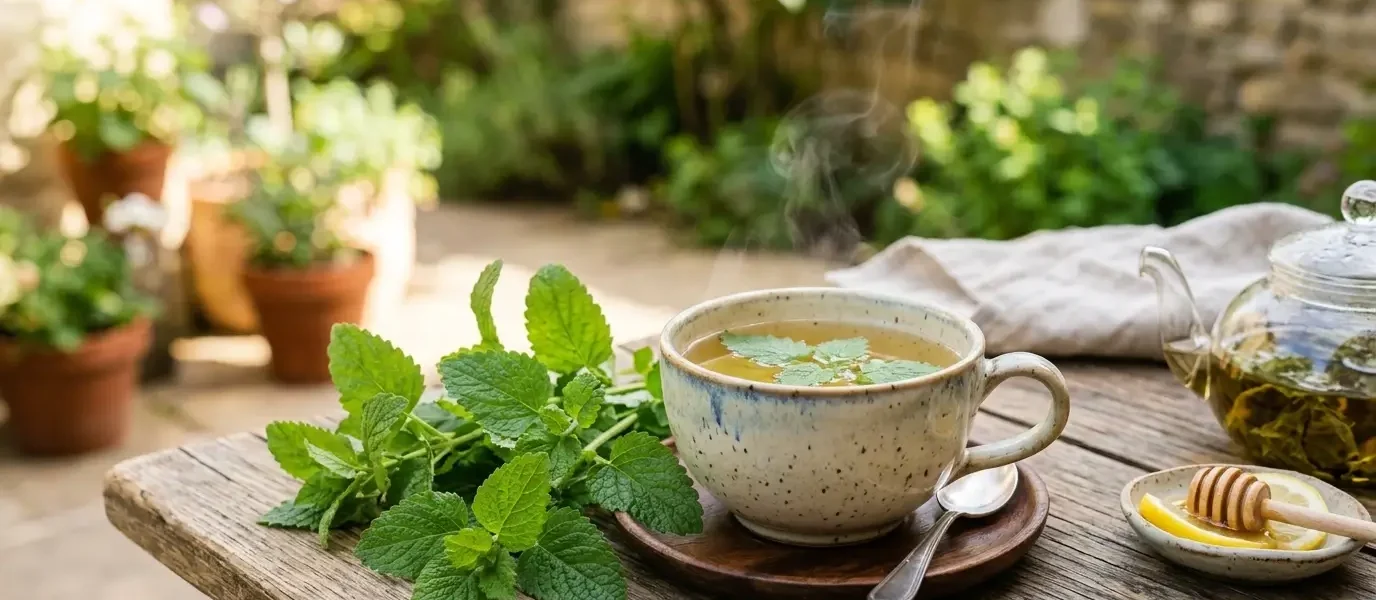
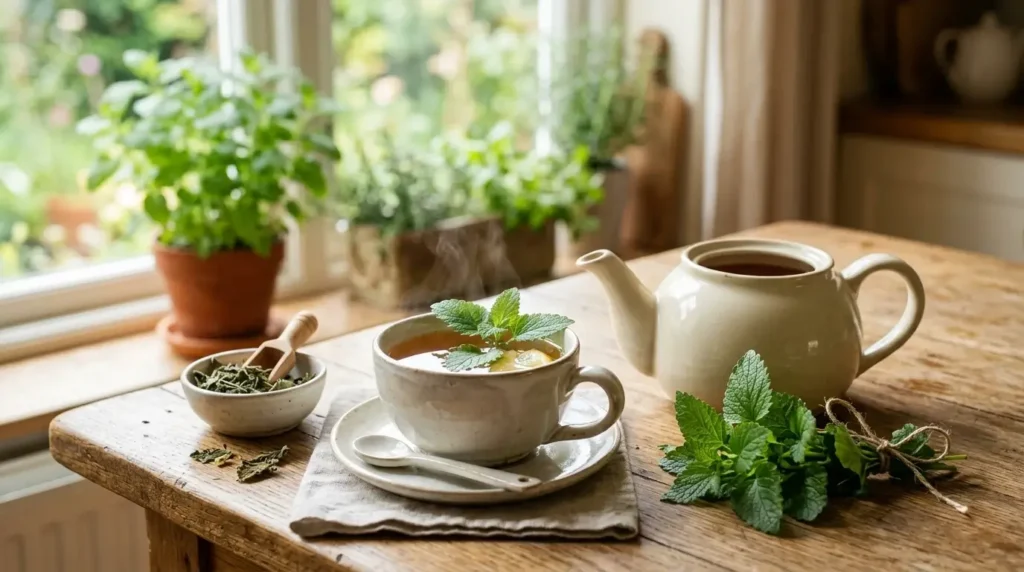
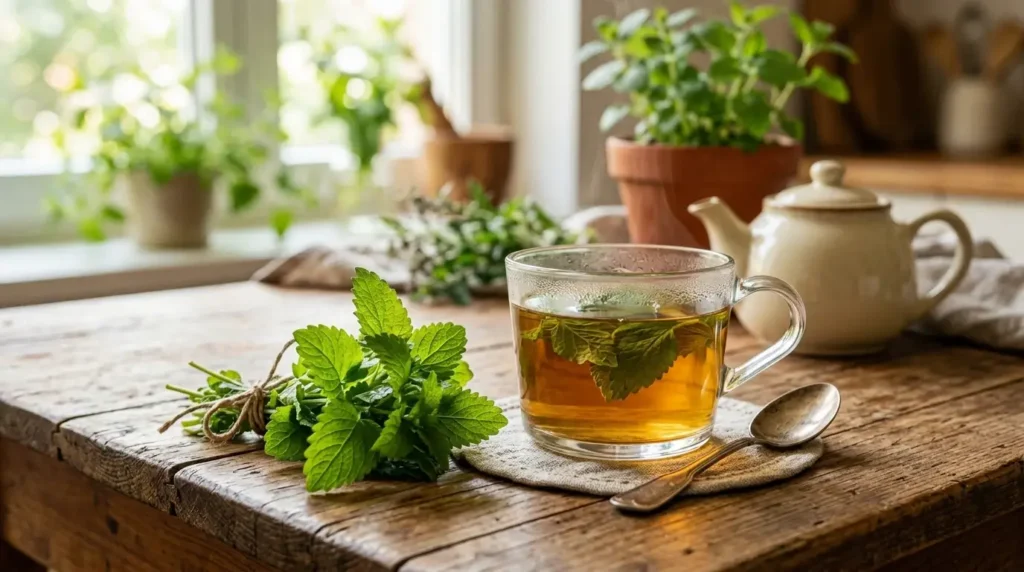
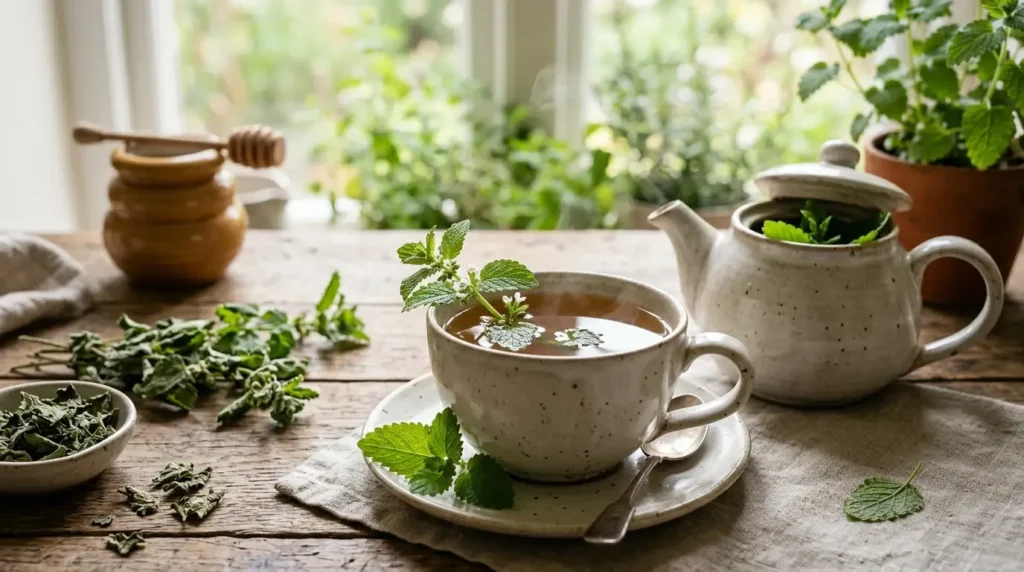
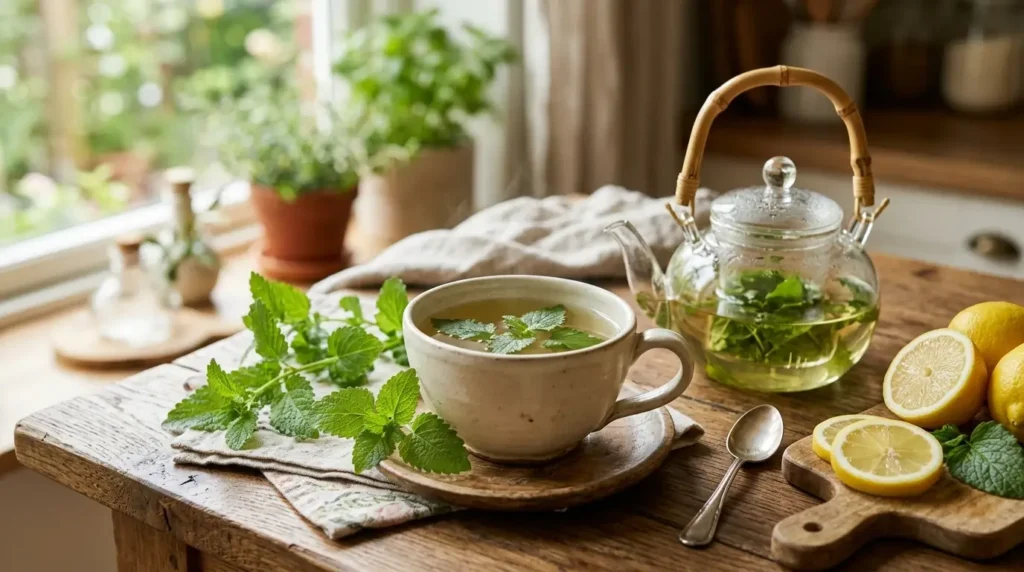
Making lemon balm tea using fresh leaves is easier than you might think, particularly when you discover this herbal tea has been used for centuries as a relaxant and stress reliever. Beyond its calming properties, lemon balm tea has also been used to help treat indigestion and menstrual cramps, making it a versatile addition to your wellness routine.
What makes fresh leaves special? They deliver a brighter, more vibrant lemony flavor compared to dried alternatives, and the process is surprisingly simple.
In this guide, I’ll walk you through everything you need to know: how to harvest and prepare fresh lemon balm leaves, the step-by-step brewing process, and creative variations including iced versions and herbal combinations. Let’s get started!
Key Takeaways
Making lemon balm tea from fresh leaves is a simple, rewarding process that delivers superior flavor and traditional wellness benefits compared to dried alternatives.
• Harvest timing matters: Pick leaves in mid-morning after dew dries but before sun heats them, ideally just before flowering when essential oils peak.
• Fresh beats dried for flavor: Fresh leaves provide 30-40% more volatile oils, creating brighter citrus notes and stronger aroma than dried versions.
• Simple brewing ratio: Use 6 fresh leaves per mug (or 3-5 tablespoons), steep 5-10 minutes in just-boiled water, and cover to preserve aromatic oils.
• Versatile preparation options: Enjoy hot or cold-brewed, sweeten with honey, combine with mint or chamomile, and refrigerate leftovers up to 5 days.
The beauty of fresh lemon balm tea lies in its accessibility—if you can boil water and pick leaves, you can create a soothing, naturally lemony beverage that’s been valued for centuries as a gentle relaxant and digestive aid.
What is Lemon Balm and Why Use Fresh Leaves
Understanding the Lemon Balm Plant
Lemon balm, scientifically known as Melissa officinalis, belongs to the mint family and originated in the Mediterranean region, southern Europe, and Central Asia. The plant thrives as a hardy perennial across zones 3a to 9b, making it accessible for growers in various climates.
The plant grows approximately two feet tall with branching stems. Its bright green, crinkled leaves appear in pairs at each stem joint and emit a fragrant lemony scent when touched or crushed. These oval or heart-shaped leaves have slightly toothed edges. Throughout summer, inconspicuous white flowers bloom in the leaf axils, often displaying a yellowish or pinkish tinge. These blooms attract bees and other pollinators, which explains why the genus name Melissa derives from the Greek word for honeybee.
Benefits of Using Fresh vs Dried Leaves
The choice between fresh and dried lemon balm leaves centers on volatile aromatic oils. Fresh leaves contain more moisture, deliver a stronger citrus aroma, and provide brighter flavor due to higher levels of delicate volatile compounds.
Quality dried organic leaf retains around 60-70% of fresh volatile oil content when properly dried and stored. The characteristic lemon scent comes from natural compounds including citral, citronellal, and geraniol. These volatile oils contribute to both aroma and the traditional relaxation properties associated with the herb.
Fresh lemon balm offers a more vibrant tea experience, whereas dried leaves present a deeper herbal flavor with softer citrus notes and more concentrated earthy tones. The aroma intensity peaks immediately after harvest. When using fresh leaves, you’ll need roughly three times the leaf quantity compared to dried, since fresh leaf consists mostly of water by weight.
Flavor Profile of Fresh Lemon Balm Tea
The aroma hits first: bright, lemony, slightly minty. This citrus lift comes from citral and citronellal concentrated in the fresh leaf. Open fresh lemon balm and it smells almost like lemon sherbet.
The palate delivers a different experience. You get soft, mild lemon on the front, a lightly grassy mid-palate, and a clean finish. When brewed correctly, there’s no bitterness at all. The body remains light and clear, thinner than chamomile and much lighter than any true tea from Camellia sinensis.
Compared to lemon verbena, fresh lemon balm tastes softer and less sharp. Against lemongrass, it presents more floral notes and less citrus punch.
The window for harvesting lemon balm centers on one principle: catch the plant just before it flowers. Morning stands out as the optimal harvest time. After the dew dries but before the sun heats the leaves, volatile oils remain concentrated in the foliage rather than evaporating into the air.
Watch your plant closely during late spring and early summer. When the growing tips start elongating and flower buds begin forming, that’s your signal. The plant reaches peak potency at this pre-flowering stage. Wait too long and the stems become spindly with a more bitter taste.
Mid to late morning works well once surface moisture disappears and leaves warm slightly from sunlight. This timing preserves the essential oils that give fresh lemon balm tea its characteristic flavor.
Selecting the Right Leaves
Aim to harvest about two-thirds of the plant at each cutting. Cut stems approximately two inches above ground level, just above where other leaves have formed. This pruning method encourages branching and fuller regrowth.
Select the youngest, most vibrant leaves when possible. Avoid bruising or crushing the foliage during harvest, as damaged leaves lose their aromatic oils quickly. For established plants at least six to eight inches tall, you can safely remove up to one-third of the growth without stressing the plant.
Handle each stem gently. Use sharp scissors or shears to make clean cuts rather than tearing the plant material.
Cleaning and Preparing Fresh Leaves
Rinse harvested leaves in a bowl with cool running water. Swish them gently to remove any dirt or debris, particularly if your plants grow close to the ground. Remove any blemished or damaged leaves during this process.
Pat the leaves dry using a clean towel, removing as much surface moisture as possible. Water droplets can affect flavor and cause discoloration.
Fresh lemon balm leaves are delicate, so plan to use them straightaway. If you need to store them briefly, place them in a sealed plastic bag in the refrigerator for up to five days.
Step-by-Step Guide: How To Make Lemon Balm Tea Using Fresh Leaves
“Drink your tea slowly and reverently, as if it is the axis on which the world earth revolves – slowly, evenly, without rushing toward the future.” — Thich Nhat Hanh, Zen Master and Author
Step 1: Measure Your Fresh Lemon Balm Leaves
Start with approximately 20 fresh leaves for every 4 cups of water, or about 6 leaves per standard mug. For a single serving, 3 to 5 tablespoons of fresh leaves works well. Roll the leaves between your palms before adding them to your teapot. This gentle bruising releases the essential oils that create the characteristic lemon aroma and flavor.
Step 2: Boil Water to the Right Temperature
Bring water to a full boil at 212°F. While most herbal teas tolerate boiling water, lemon balm retains more of its fresh, lemony taste when treated like green tea with slightly cooler water. If you prefer a more delicate flavor, let the boiled water cool for a minute before pouring.
Step 3: Steep the Leaves
Pour the hot water over your prepared leaves and cover immediately. Covering prevents aromatic oils from escaping with the steam. Steep for 5 to 10 minutes. The longer steeping time extracts stronger flavor. For medicinal purposes, some prefer steeping up to 20 minutes.
Step 4: Strain and Serve Your Tea
Remove the leaves using a fine mesh strainer, tea ball, or by pouring through a standard tea strainer. Serve immediately while warm, or sweeten with honey if desired.
Variations and Serving Suggestions
How to Make Iced Lemon Balm Tea
Refrigerate your freshly brewed tea until cold, then serve over ice. Alternatively, cold brew overnight in the fridge gives the smoothest, most lemon-forward result with no bitterness. Use your fresh leaves with cold or room-temperature water and steep in the refrigerator for 8-12 hours. This method preserves volatile aromatics almost entirely. Hot brew chilled works faster: brew at your normal temperature, let cool to room temperature, then refrigerate for at least 3 hours.
Adding Sweeteners and Flavorings
Sweeten with sugar or honey to taste. Add a small slice of lemon for extra citrus brightness. If using raw honey, add it after the tea cools to preserve beneficial enzymes. Besides traditional sweeteners, try fresh lemon or lime slices, orange slices, or fresh berries for natural sweetness and added flavor.
Combining Lemon Balm with Mint or Other Herbs
Pair lemon balm with fresh mint for a refreshing blend. Use equal amounts or adjust the ratio based on how minty or lemony you prefer your tea. Mix in other herbs like chamomile, lavender, passionflower, oatstraw, nettle leaf, or rose petals for different flavor profiles.
Storage Tips for Leftover Tea
The tea will keep in an airtight container in the refrigerator for up to 5 days. For longer storage, freeze the tea in ice cube trays.
Conclusion
You now have everything you need to brew your own fresh lemon balm tea. The process is straightforward: harvest young leaves in the morning, give them a gentle bruise, and steep for 5-10 minutes. Fresh leaves deliver a brighter citrus flavor that dried versions simply can’t match.
Experiment with iced versions, sweeteners, or herbal combinations until you find your perfect blend. So long as you start with quality fresh leaves, you’ll enjoy a soothing cup every time.
Q1. Can I drink lemon balm tea every day? Yes, you can enjoy lemon balm tea daily as part of your wellness routine. This herbal tea has been used for centuries as a natural relaxant and stress reliever. It’s also traditionally used to help with indigestion and menstrual cramps. Since it’s caffeine-free and gentle, it makes an excellent choice for regular consumption.
Q2. What’s the best way to combine lemon balm with other herbs? Lemon balm pairs beautifully with several herbs. For a refreshing blend, mix it with fresh mint in equal amounts. You can also combine it with chamomile for a more soothing effect, or add lavender, passionflower, or rose petals for different flavor profiles. A popular combination is equal parts lemon balm and lemongrass with a light touch of lavender.
Q3. Should I use fresh or dried lemon balm leaves for tea? Fresh leaves deliver a brighter, more vibrant lemony flavor with stronger citrus aroma due to higher levels of volatile oils. Dried leaves offer a deeper herbal flavor with softer citrus notes. When using fresh leaves, you’ll need about three times the quantity compared to dried since fresh leaves contain more moisture.
Q4. How long should I steep fresh lemon balm tea? Steep fresh lemon balm leaves for 5 to 10 minutes in hot water. Cover your teapot or cup while steeping to prevent aromatic oils from escaping with the steam. For a stronger flavor or medicinal purposes, you can steep up to 20 minutes. Unlike true tea, lemon balm won’t become bitter with longer steeping times.
Q5. Can I make iced lemon balm tea with fresh leaves? Absolutely! You can either brew the tea hot and refrigerate it until cold, or try cold brewing for the smoothest result. For cold brewing, place fresh leaves in cold or room-temperature water and steep in the refrigerator for 8-12 hours. This method preserves the volatile aromatics and produces a lemon-forward flavor with no bitterness.
Black Tea Extract that is rich in natural theaflavins and polyphenols that help protect your body from free radicals, promoting overall immune health and well-being
Contains blended amounts of Fruits and Veggies. All natural, with whole foods, fruit and vegetable supplement.Perfect for everyone looking to live a healthier lifestyle.