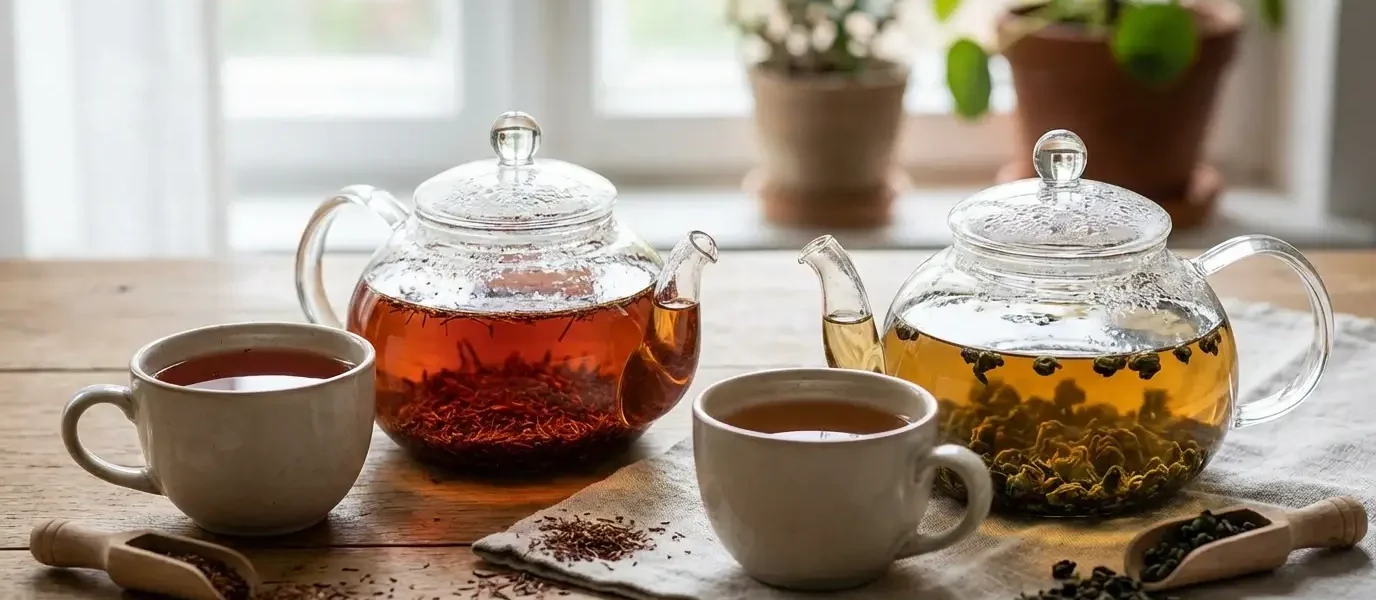
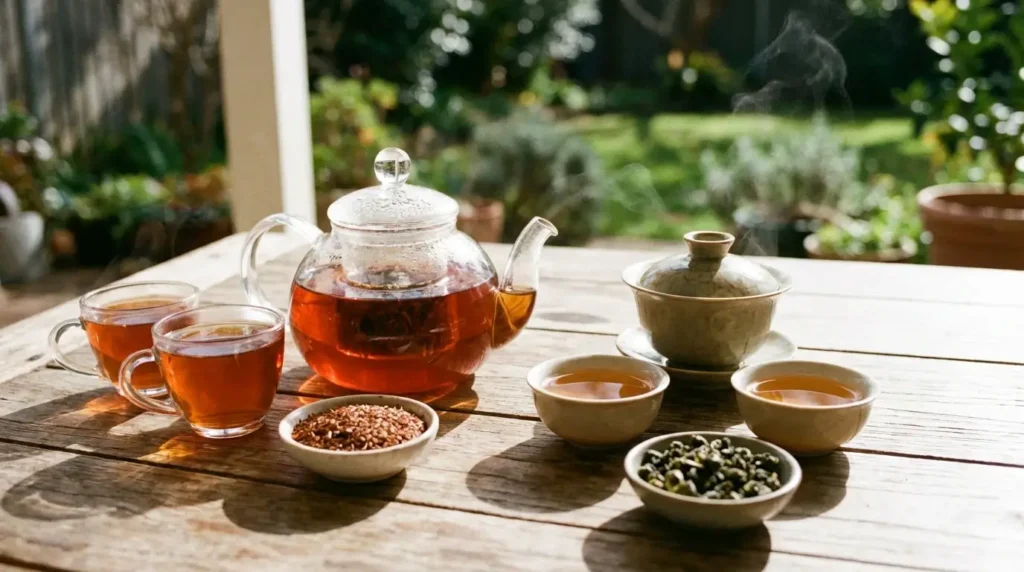
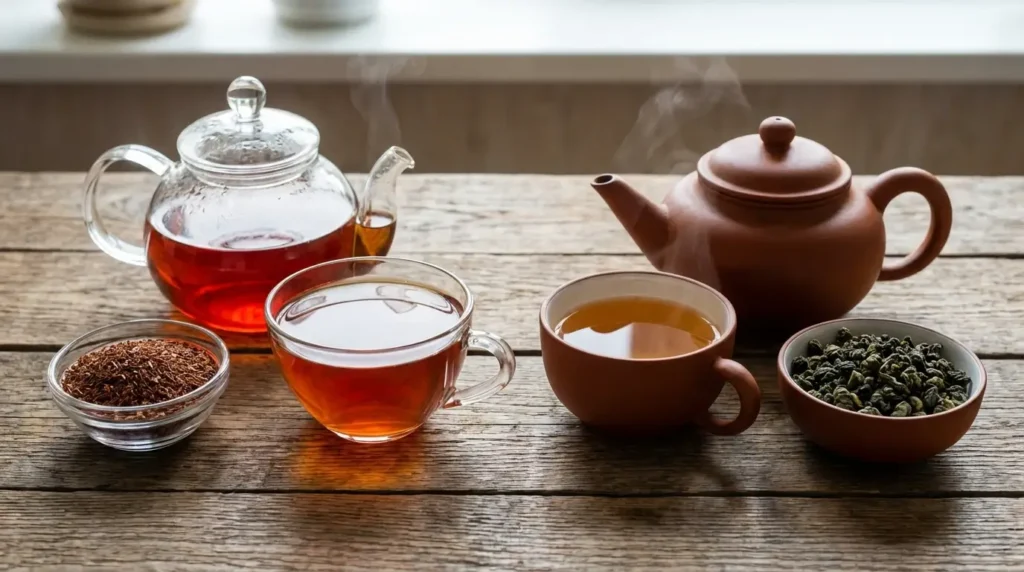
Ever felt lost in your kitchen with so many choices? Finding the perfect drink for your day shouldn’t be hard. You need something that boosts your energy or calms your mind.
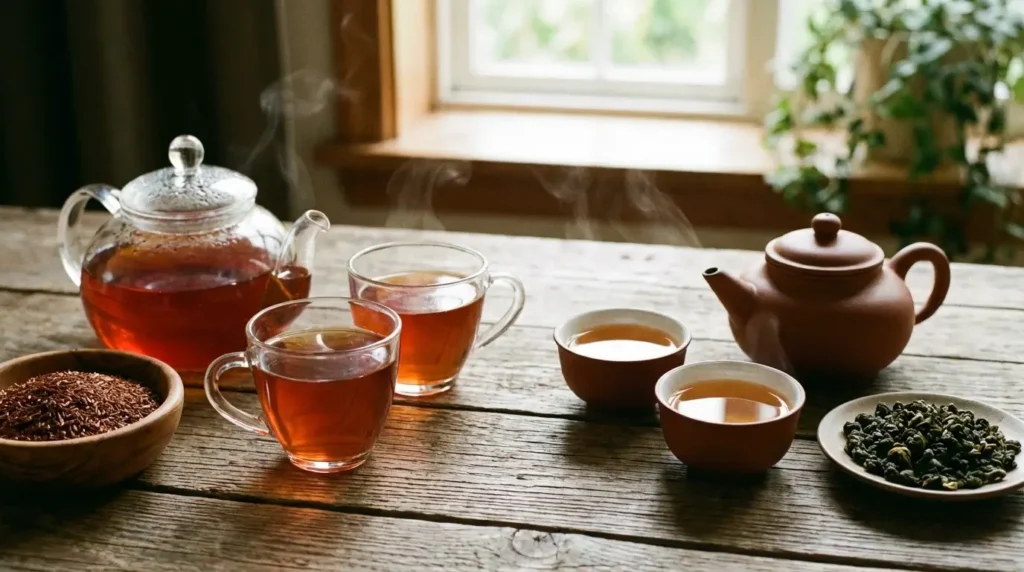
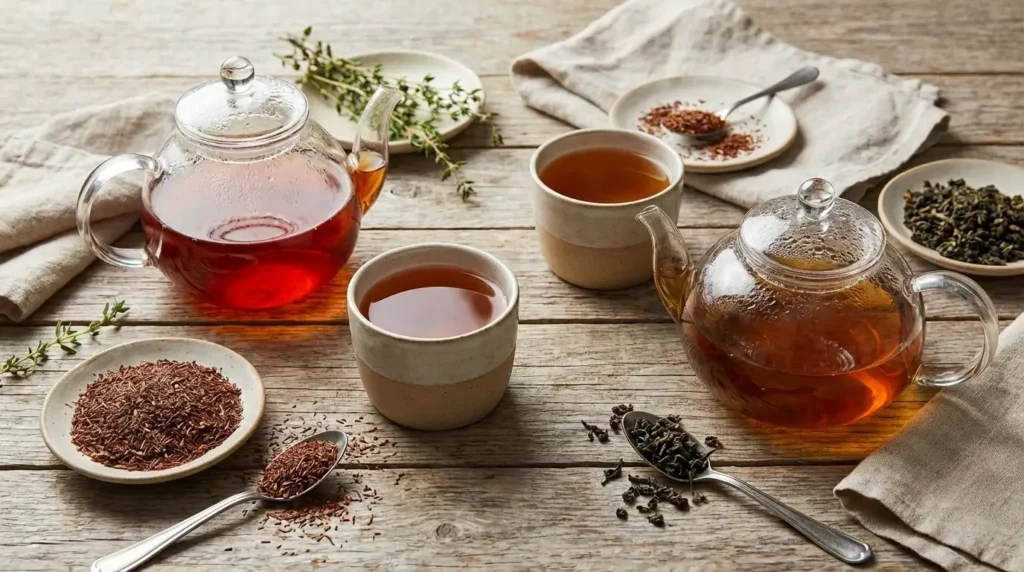
Maybe you’re debating rooibos tea vs oolong tea, wondering which one fits your lifestyle better. One energizes you while the other relaxes you. This tea comparison will help you choose the right match for every mood.
Let’s dive into the world of these teas and find your new favorite drink. By understanding their unique qualities, you can pick one that makes you feel great. The right tea can greatly improve your well-being.
Key Takeaways
Evaluate caffeine levels for improved sleep patterns.
Discover unique health benefits for your body.
Compare rich flavor profiles and aromatic notes.
Understand the different leaf processing methods used.
Identify the ideal time of day for each serving.
Learn how oxidation affects the final brew.
Understanding the Basics: What Sets These Teas Apart
Exploring the world of teas, you’ll find rooibos and oolong as unique choices. Knowing their basic traits is key to picking the right one for you.
What is Rooibos Tea?
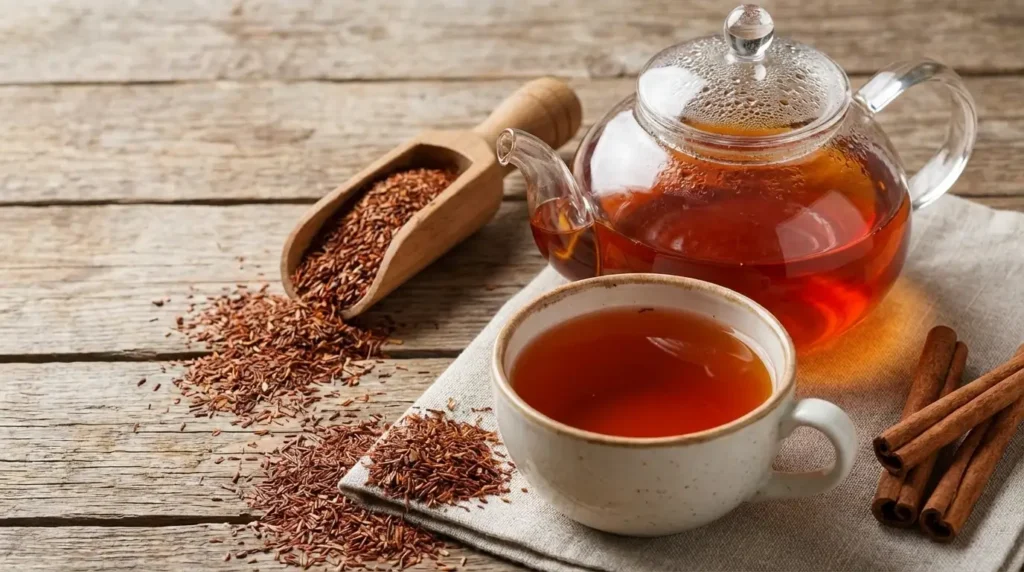
Rooibos tea comes from the leaves of the Aspalathus linearis plant, found in South Africa. It tastes nutty and has no caffeine, perfect for those who can’t handle caffeine.
It’s packed with antioxidants. These help with heart health and digestion, among other benefits.
What is Oolong Tea?
Oolong tea is a mix between green and black tea. It’s from China and has a rich, complex taste. You might taste floral or fruity notes.
It’s also full of antioxidants. Drinking oolong tea can help with weight and keep you alert.
Key Differences at a Glance
The main differences between rooibos and oolong tea are their origins, how they’re made, and what they offer nutritionally.
Origin: Rooibos tea is from South Africa, and oolong tea is from China.
Caffeine Content: Rooibos has no caffeine, while oolong has a bit.
Taste: Rooibos tastes sweet and nutty. Oolong’s taste is more complex, depending on how it’s fermented.
The Origins and Production Process
Rooibos and oolong teas come from different parts of the world. Their origins and making processes are unique. Learning about these can make you appreciate the skill and tradition in each cup.
Where Rooibos Comes From
Rooibos tea comes from South Africa’s Cederberg region. It has been harvested there for centuries.
South African Heritage
Rooibos tea is a big part of South African culture and history. The Aspalathus linearis plant, used to make rooibos, is native to this area. Local people have valued this tea for its health benefits for a long time.
Harvesting and Processing
Harvesting and making rooibos tea involves several steps. The leaves are cut and bruised to start the oxidation process. Then, they are fermented, turned, and dried. This makes rooibos tea special in taste and health benefits.
The Traditional Oolong Tea Production
Oolong tea comes from China and Taiwan. It has been made there for centuries using old methods.
Chinese and Taiwanese Roots
Oolong tea’s making is connected to China and Taiwan’s traditions. The tea plants grow in mountains, where the climate and soil are perfect.
Oxidation and Rolling Techniques
Oolong tea making is complex. It includes withering, rolling, oxidation, and firing. The oxidation level changes the flavor. The rolling method also affects the taste.
Aspect
Rooibos Tea
Oolong Tea
Origin
South Africa
China and Taiwan
Processing
Cutting, bruising, fermentation, drying
Withering, rolling, oxidation, firing
Oxidation Level
Fermented, not oxidized
Partially oxidized
The art of tea making is a mix of tradition and new ideas.Tea Enthuasiast
The unique origins and making ways of rooibos and oolong teas make them special. They have their own tastes and qualities.
Learning about the nutritional content of rooibos and oolong teas helps you choose the right one for your health. Both teas have special nutritional profiles that offer health benefits.
Rooibos Tea Nutritional Breakdown
Rooibos tea is known for its rich nutrients. It’s caffeine-free and packed with minerals and vitamins.
Minerals and Vitamins
Rooibos tea is a great source of minerals like calcium, magnesium, and potassium. It also has vitamins C and P.
Unique Antioxidants: Aspalathin and Nothofagin
Rooibos tea is famous for its antioxidants, aspalathin and nothofagin. These have many health benefits.
Oolong Tea Nutritional Composition
Oolong tea, being partially fermented, has a different nutritional profile than rooibos tea. It’s full of polyphenols and catechins.
Polyphenols and Catechins
Oolong tea is rich in polyphenols, which are antioxidants. Catechins, a type of polyphenol, also add to its health benefits.
Essential Minerals
Oolong tea has essential minerals for health. These include manganese, copper, and selenium.
“The unique combination of antioxidants and minerals in these teas can significantly contribute to a healthy diet.”Dr. Jane Smith, Nutrition Expert
Health Benefits of Rooibos Tea
Rooibos tea is packed with nutrients that boost your health. It’s full of antioxidants and vitamins and minerals. These elements help your body in many ways.
Heart Health and Blood Pressure Support
Rooibos tea is good for your heart. It might lower your blood pressure and cut down heart disease risk. The antioxidants in it, like aspalathin and quercetin, help your heart stay healthy.
A study in the Journal of Human Hypertension showed rooibos tea helps with high blood pressure. It works by controlling the renin-angiotensin system, which is key for heart health.
Bone Health and Mineral Content
Rooibos tea is rich in minerals like calcium, magnesium, and manganese. These are important for strong bones. Drinking it can help meet your daily mineral needs and support bone health.
Mineral
Amount per Cup
% Daily Value
Calcium
1.8 mg
0.18%
Magnesium
3.6 mg
0.9%
Manganese
0.04 mg
2%
Digestive Benefits and Stomach Soothing
Rooibos tea is great for your stomach. It can ease digestive problems and keep your gut healthy. Its anti-inflammatory properties help soothe stomach issues and heal irritated areas.
“Rooibos tea has been traditionally used to soothe digestive issues, and its anti-inflammatory properties make it an excellent natural remedy for stomach problems.”
Skin Health and Anti-Aging Properties
The antioxidants in rooibos tea, like aspalathin, fight aging. They protect your skin from damage, making it look younger and healthier.
Adding rooibos tea to your daily routine can bring many health benefits. It supports your heart, bones, and skin, and helps with digestion.
Health Benefits of Oolong Tea
Oolong tea is a partially fermented tea that offers many health benefits. It’s known for its unique advantages, making it a favorite among those who care about their health.
Weight Management and Metabolism Boost
Oolong tea can help with weight loss by boosting your metabolism. It aids in burning fat and increases your metabolic rate. Here are some ways oolong tea helps with weight management:
Enhancing fat oxidation
Improving metabolic rate
Supporting a healthy diet
Mental Alertness and Cognitive Function
The tea contains caffeine and L-theanine, which improve mental alertness and cognitive function. This mix helps with:
Improved focus and concentration
Better mental clarity
Enhanced overall brain function
Blood Sugar Regulation and Diabetes Management
Oolong tea can help regulate blood sugar levels, which is good for diabetes management. It does this by:
Slow down sugar absorption
Improve insulin sensitivity
Support overall glucose metabolism
Cholesterol Reduction
It also helps reduce cholesterol levels, which is good for heart health. Oolong tea’s cholesterol-reducing benefits include:
Rooibos and Oolong teas differ a lot in caffeine content. This is key for those who are sensitive to caffeine or have certain caffeine preferences.
Why Rooibos is Naturally Caffeine-Free
Rooibos tea is caffeine-free because it comes from the Rooibos plant (Aspalathus linearis) from South Africa. Unlike other teas, it’s not made from the Camellia sinensis plant, so it doesn’t have caffeine.
Benefits for Sensitive Individuals
Rooibos tea is great for those who can’t handle caffeine. It’s calming and doesn’t cause jitters or insomnia. A tea lover said, “Rooibos tea has changed my evening, letting me enjoy a warm drink without affecting my sleep.”
“I’ve switched to Rooibos tea entirely due to its caffeine-free nature, and I feel more relaxed overall.”A satisfied Rooibos tea drinker
Oolong Tea’s Moderate Caffeine Levels
Oolong tea has a moderate amount of caffeine. The amount can change based on the brand, how it’s brewed, and how long it’s steeped.
How It Compares to Coffee and Other Teas
To understand Oolong tea’s caffeine, let’s compare it:
Beverage
Caffeine Content (per 8 oz cup)
Rooibos Tea
0 mg
Oolong Tea
30-50 mg
Black Tea
40-70 mg
Coffee
60-180 mg
Effects on Your Energy Levels
Oolong tea’s caffeine gives a gentle energy boost. It avoids the jitters or crash from coffee. So, it’s perfect for those wanting a balanced energy lift.
Taste, Aroma, and Flavor Profiles
Taste is a personal thing, but knowing about rooibos and oolong teas can make drinking them better. Each tea has its own special qualities that make it stand out.
The taste and smell of these teas come from how they’re made and where they come from. Let’s look at what makes each tea unique.
The Sweet, Nutty Taste of Rooibos
Rooibos tea is famous for its sweet and nutty taste. This South African herbal tea is known for its smooth, comforting taste. It’s a top pick for those who like a milder tea.
Natural Sweetness Without Sugar
Rooibos tea is sweet on its own, without needing sugar. This sweetness comes from its low tannin content and how it’s made.
Earthy and Smooth Notes
Rooibos tea also has earthy and smooth notes. These add to its calming and relaxing qualities. It’s great for unwinding after a long day.
Oolong’s Complex Flavor Spectrum
Oolong tea has a more complex flavor than rooibos. Its taste can go from floral to fruity, depending on how it’s made.
From Floral to Fruity Varieties
Oolong teas come in many flavors, like floral notes or fruity tastes. This variety is great for those who love trying new flavors.
The Role of Oxidation in Flavor
The oxidation level affects oolong tea’s flavor. Teas that are partially oxidized mix the freshness of green tea with the depth of black tea. This creates a rich and complex taste.
How to Brew Each Tea Properly
To enjoy rooibos and oolong teas fully, you need to know how to brew them right. Brewing tea is more than just pouring hot water over leaves. It’s about bringing out the best in the tea.
Brewing the Perfect Cup of Rooibos
Rooibos tea is easy to brew. Focus on the water temperature and steeping time for the perfect cup.
Water Temperature and Steeping Time
Use boiling water for rooibos tea. Steeping time can be 5 to 7 minutes, depending on how strong you like it. Longer steeping means a stronger taste.
Loose Leaf vs Tea Bags
You can use loose leaf or tea bags for rooibos. Loose leaf gives a richer flavor, but tea bags are more convenient. It’s up to you.
Mastering Oolong Tea Preparation
Oolong tea, being partially fermented, needs a special brewing method. The brewing method greatly affects the taste.
Traditional Gongfu Method
The Gongfu method uses a small teapot and short infusions. It lets you enjoy oolong tea’s complex flavors.
Western Brewing Approach
The Western method is simpler. It involves steeping oolong leaves in a big pot for 3 to 5 minutes.
Multiple Infusions for Maximum Value
Oolong tea can be infused many times. Each infusion reveals new flavors, making it a unique experience.
Brewing tea is an art that makes the experience better. By following these tips, you can enjoy rooibos and oolong teas to their fullest.
Thinking about adding rooibos or oolong tea to your daily routine? It’s important to know about their side effects.
Both teas are usually safe. But, there are some things to watch out for to have a good experience.
Rooibos Tea Precautions
Rooibos tea is safe for most people. But, there are a few things to remember.
Possible Interactions with Medications
Some studies show rooibos tea might affect certain medicines, like blood thinners. Always talk to your doctor if you’re on any meds.
Rare Allergic Reactions
Even though it’s rare, some might be allergic to rooibos tea. If you get hives or itch, stop drinking it.
Oolong Tea Warnings
Oolong tea has caffeine and other stuff that might cause issues.
Caffeine Sensitivity Issues
Some people might feel jittery or have trouble sleeping because of oolong tea’s caffeine. Watch how much caffeine you drink.
Iron Absorption Concerns
Drinking too much oolong tea might mess with iron absorption. This is a big deal for people with iron deficiency.
Pregnancy and Breastfeeding Considerations
Women who are pregnant or breastfeeding should be careful with oolong tea because of its caffeine. Drinking it in moderation is best.
Rooibos Tea vs Oolong Tea: Direct Comparison
To figure out which tea is better, we’ll look at rooibos and oolong teas. We’ll compare them based on several important factors. These factors affect their health benefits and how enjoyable they are to drink.
Antioxidant Power Comparison
Both rooibos and oolong teas are full of antioxidants. But, they have different types of antioxidants. Rooibos tea has aspalathin and nothofagin, found only in this tea. Oolong tea, with its partial fermentation, has a wider range of antioxidants.
A study showed oolong tea has more antioxidant power than rooibos tea. But, both are good for you.
Tea Type
Antioxidant Capacity (ORAC Value)
Rooibos Tea
400-500 μmol TE/g
Oolong Tea
800-1200 μmol TE/g
Which is Better for Weight Loss?
Oolong tea is often seen as better for weight loss. It can boost your metabolism and help burn fat. Its partial fermentation might help with weight management.
Rooibos tea supports a healthy diet and overall wellness. It can help with weight management indirectly.
“Oolong tea has been shown to increase energy expenditure and fat oxidation, making it a potentially useful aid in weight loss efforts.”Journal of Nutrition and Metabolism
Best Choice for Sleep and Relaxation
Rooibos tea is great for sleep and relaxation because it’s caffeine-free. Oolong tea, with some caffeine, might not be as good for those sensitive to caffeine, like in the evening.
Cost and Availability Differences
Oolong tea is pricier than rooibos tea. This is because of its complex production and the quality of leaves needed. Rooibos tea is more affordable and easy to find, making it a favorite for daily drinking.
Environmental and Sustainability Factors
Both teas have environmental aspects to consider. Rooibos tea is known for its sustainable farming in South Africa. Oolong tea, mainly from China and Taiwan, has different environmental impacts based on how it’s made.
When picking between rooibos and oolong tea, think about their taste, health benefits, environmental impact, and how they’re made.
Which Tea Should You Choose for Your Needs?
Choosing between Rooibos and Oolong tea depends on your needs. Each tea offers unique benefits. Knowing what you need will help you decide.
Best Tea for Pregnant Women and Children
Pregnant women and children need safe options. Rooibos tea is caffeine-free and full of antioxidants. It’s also calming, which is good during pregnancy.
Ideal Choice for Energy and Focus
For a boost in energy and focus, Oolong tea is best. It has some caffeine to wake you up without making you jittery.
Perfect Option for Evening Consumption
In the evening, Rooibos tea is the best choice. It has no caffeine and helps you relax for a good night’s sleep.
Better for Digestive Issues
Both teas are good for digestion, but Rooibos tea is better. It calms the stomach, great for digestive problems.
Top Pick for Heart Health
Both teas are good for the heart, but Oolong tea is better. It can lower cholesterol, making it heart-healthy.
Conclusion
Exploring rooibos and oolong teas shows they both have tea health benefits. Rooibos tea is great because it has no caffeine and lots of antioxidants. It’s perfect for a calm, relaxing drink. Oolong tea, with its partial fermentation, has a special taste and helps with metabolism.
Choosing between rooibos tea vs oolong tea depends on what you need. Rooibos is good for a calm night’s sleep. Oolong tea is better for weight management and a mental pick-me-up.
Both teas can be a wonderful part of your day. They offer health perks and taste great. Try them out to see which one you like best, or enjoy them both for their unique qualities.
Is Rooibos tea or Oolong tea better if you are sensitive to caffeine?
Rooibos tea is the best choice if you want to avoid caffeine. It’s a herbal tea that doesn’t have any caffeine. Oolong tea, on the other hand, has some caffeine. So, Rooibos is great for drinking in the evening or if you’re sensitive to caffeine.
Which tea should you choose if your goal is weight management?
Oolong tea is good for weight management. It boosts your metabolism and helps burn fat. Rooibos is healthy but doesn’t have the same benefits for weight loss.
What are the unique antioxidants found in Rooibos tea?
Rooibos tea has antioxidants called Aspalathin and Nothofagin. These help control blood sugar and support heart health. Oolong tea has different antioxidants, like theaflavins and catechins, from its oxidation process.
Where do these two teas traditionally come from?
Rooibos tea comes from South Africa’s Cederberg Mountains. Oolong tea has roots in China and Taiwan. Rooibos is fermented to get its red color, while Oolong’s production involves complex steps.
Can you brew Oolong tea leaves more than once?
Yes, you can! Oolong tea leaves can be steeped multiple times. Each steep reveals different flavors, from floral to fruity, thanks to brands like Teavana or Rishi Tea.
Is Rooibos tea safe for pregnant women and children?
Rooibos tea is safe for pregnant women and kids. It’s caffeine-free and low in tannins. Unlike Oolong, Rooibos doesn’t interfere with iron absorption, making it a good choice for everyone.
How does the flavor profile of Rooibos differ from Oolong?
Rooibos tastes sweet, nutty, and earthy, with no bitterness. Oolong tea has a wide range of flavors. Its taste can vary from floral to toasty, depending on oxidation.
Does Oolong tea provide the same energy boost as coffee?
Oolong tea gives a steady energy boost, unlike coffee’s quick spike. It has caffeine and L-theanine, which improve alertness and focus without the crash.
Are there any specific health precautions you should take with these teas?
Both teas are safe, but there are some precautions. Watch your caffeine intake with Oolong if you have heart issues. Rooibos might interact with some medications, so consult a doctor if needed.
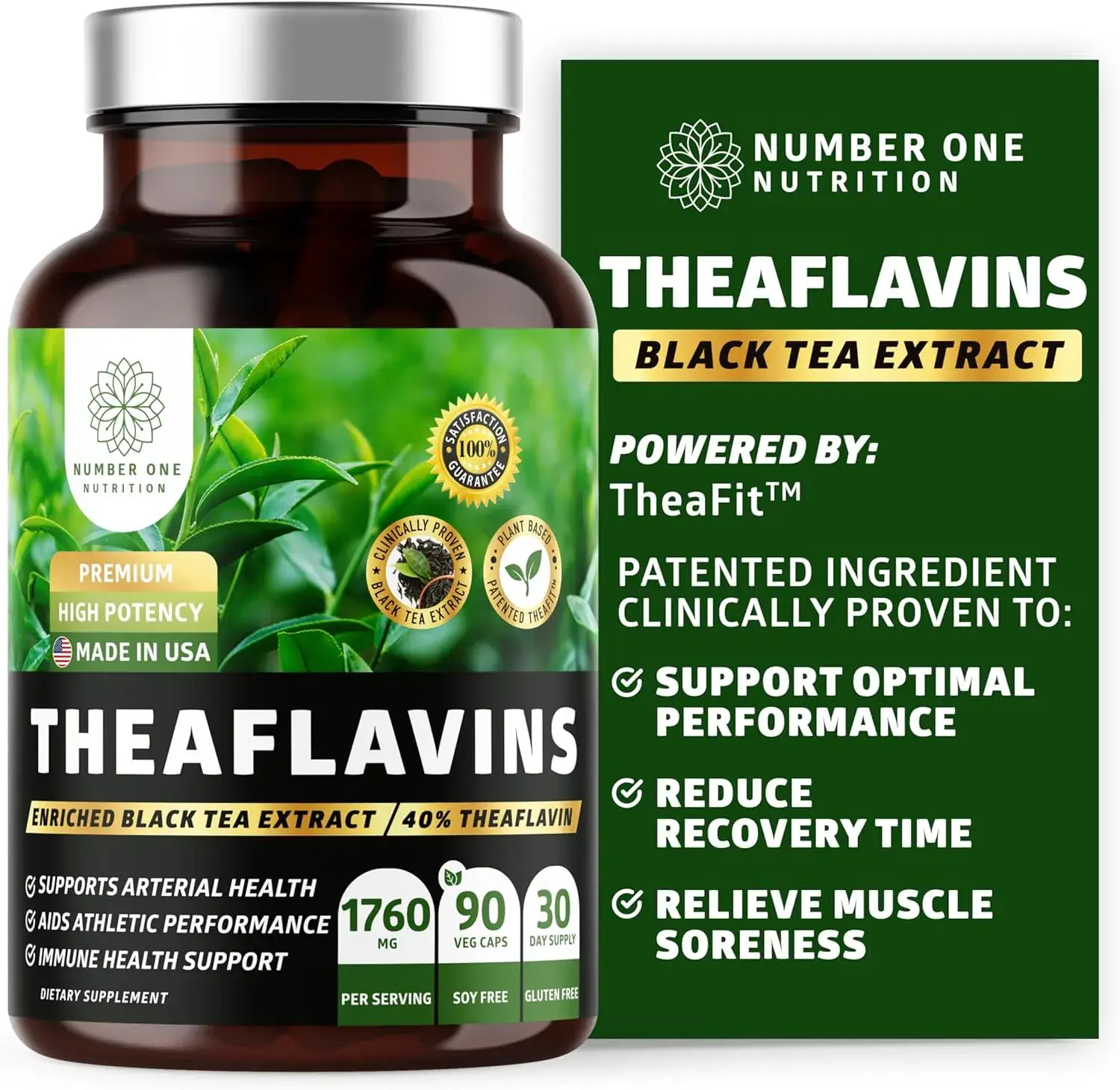
Black Tea Extract that is rich in natural theaflavins and polyphenols that help protect your body from free radicals, promoting overall immune health and well-being
Contains blended amounts of Fruits and Veggies. All natural, with whole foods, fruit and vegetable supplement.Perfect for everyone looking to live a healthier lifestyle.