There’s something magical about wrapping your hands around a warm mug of chai — that deep, spiced aroma hitting you before you even take a sip. The good news? You don’t need a specialty tea shop or a bag of loose-leaf tea to recreate that experience at home. This chai tea recipe with tea bags is everything you want: bold, warming, customizable, and surprisingly simple.
Whether you’re new to making chai or just looking for a faster weeknight method, this guide walks you through every step — from choosing the right tea bags to getting the spice balance exactly right. By the end, you’ll have a foolproof recipe you’ll return to again and again.
What Is Chai Tea? (And Why Tea Bags Work Great)
The Origins of Chai
Chai — or more precisely, masala chai — is a spiced milk tea that originated in India thousands of years ago. The word “chai” simply means “tea” in Hindi, so when we say “chai tea” in Western culture, we’re technically saying “tea tea.” But the name has stuck, and today it refers to that beloved blend of black tea, warming spices, milk, and sweetener.
Traditional Indian chai is brewed on the stovetop by simmering tea and spices directly in milk and water. It’s bold, slightly sweet, and fragrant with ginger, cardamom, cinnamon, and cloves. Different regions in India have their own variations — some more gingery, some sweeter, some with black pepper for an extra kick.
Why Use Tea Bags Instead of Loose Leaf?
Loose-leaf tea is wonderful, but it’s not always on hand — and it requires extra equipment like an infuser or fine strainer. Tea bags, on the other hand, are accessible, affordable, and already portioned. They steep quickly and still deliver a strong, full-bodied base when used correctly.
The key is choosing the right tea bags. Strong black teas like Assam or Irish Breakfast work best because they can hold their own against bold spices and milk. When you use good-quality tea bags and brew them properly, the difference from loose leaf is minimal in the final cup.
What to Expect from This Recipe
This recipe gives you a rich, lightly spiced chai with a creamy finish. It’s designed to be approachable for beginners while still being flavorful enough to impress. You’ll steep black tea bags in a homemade spice-infused liquid, add milk, and sweeten to taste. From start to finish, it takes about 15 minutes.
Ingredients You’ll Need for Chai Tea with Tea Bags
The Essential Tea Bags
Not all tea bags are created equal when it comes to chai. Here’s what to look for:
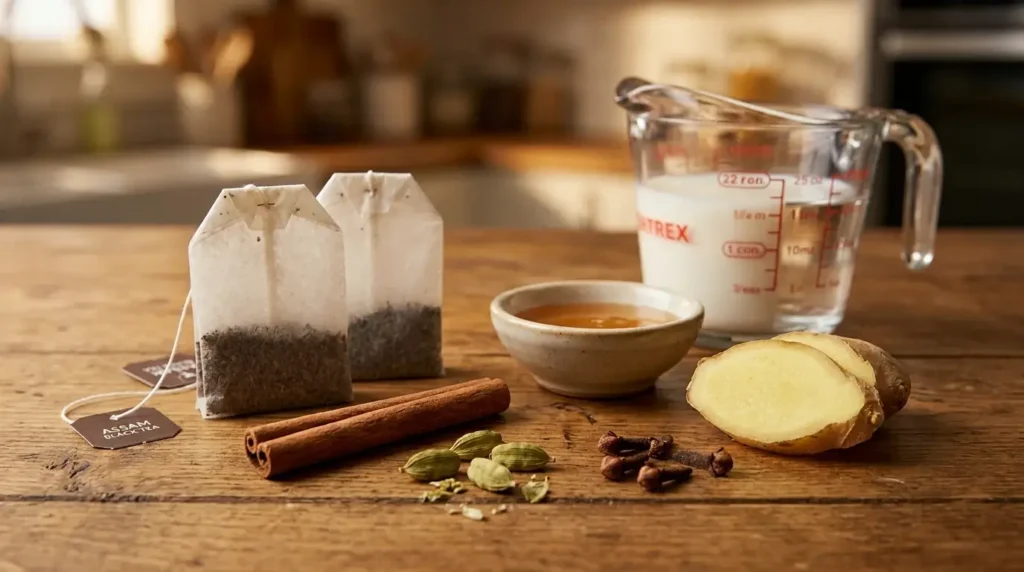
Assam black tea bags — the gold standard for chai. Malty and robust, it stands up beautifully to spices and milk.
Irish Breakfast or English Breakfast tea bags — widely available and strong enough to work well.
Darjeeling — a lighter option if you prefer a more delicate chai.
Chai-spiced tea bags — brands like Bigelow Constant Comment or Tazo Chai can be used as a base, then enhanced with fresh spices.
For this recipe, you’ll use 2–3 black tea bags per 2 cups of liquid, depending on how strong you like your tea.
The Classic Chai Spices
This is where the magic happens. Traditional chai spices include:
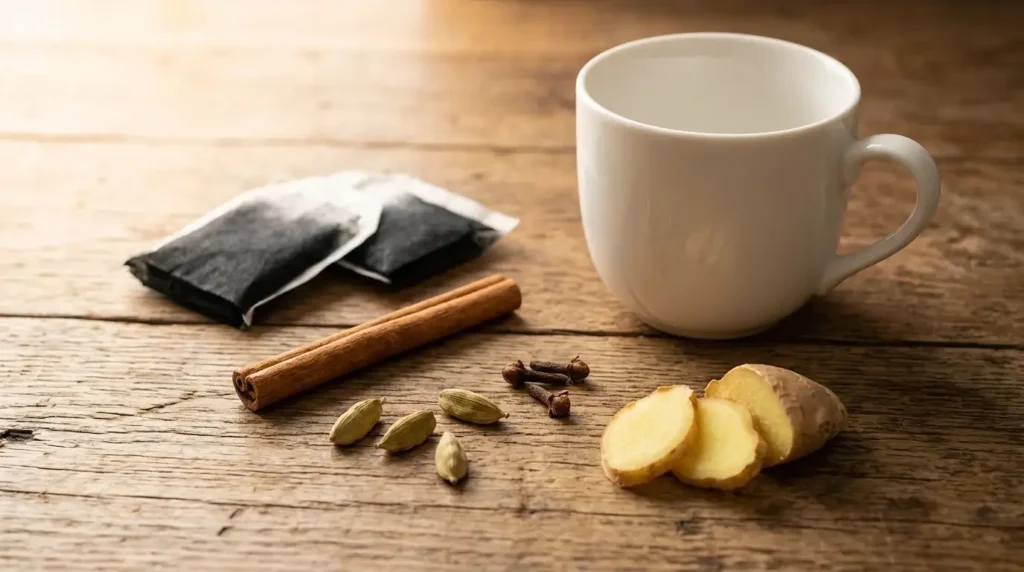
Green cardamom pods (4–6, lightly crushed) — the defining flavor of chai. Floral, slightly citrusy, and aromatic.
Fresh ginger (1-inch piece, sliced or grated) — adds warmth and a pleasant zing.
Cinnamon stick (1 stick) — provides sweetness and depth.
Whole cloves (3–4) — earthy and slightly spicy. Use sparingly — they’re powerful.
Black peppercorns (4–5) — optional but traditional, adds a gentle heat.
Star anise (1 piece) — optional, adds a subtle licorice-like note.
If you only have ground spices, that’s fine. Use about ¼ teaspoon of each ground spice as a substitute for whole.
Milk, Sweetener, and Optional Add-Ins
For milk, whole milk creates the creamiest result, but 2% milk works well too. Non-dairy alternatives like oat milk, coconut milk, or cashew milk are also excellent — more on this in the variations section.
For sweetener, traditional chai uses sugar (often quite generously). Honey, maple syrup, or brown sugar all add their own character. Start with 1–2 teaspoons per cup and adjust from there.
Optional add-ins include a splash of vanilla extract, a pinch of nutmeg, or a drizzle of sweetened condensed milk for extra richness.
This recipe makes 2 generous servings. Scale up as needed — chai is almost always better in bigger batches.
What You’ll Need:
2 black tea bags (Assam or English/Irish Breakfast)
1½ cups water
1 cup whole milk (or milk of choice)
4–5 cardamom pods, lightly crushed
1 cinnamon stick
1-inch piece of fresh ginger, thinly sliced
3–4 whole cloves
4–5 black peppercorns
2–3 teaspoons sugar (or to taste)
Step 1 – Toast Your Spices (Optional but Recommended)
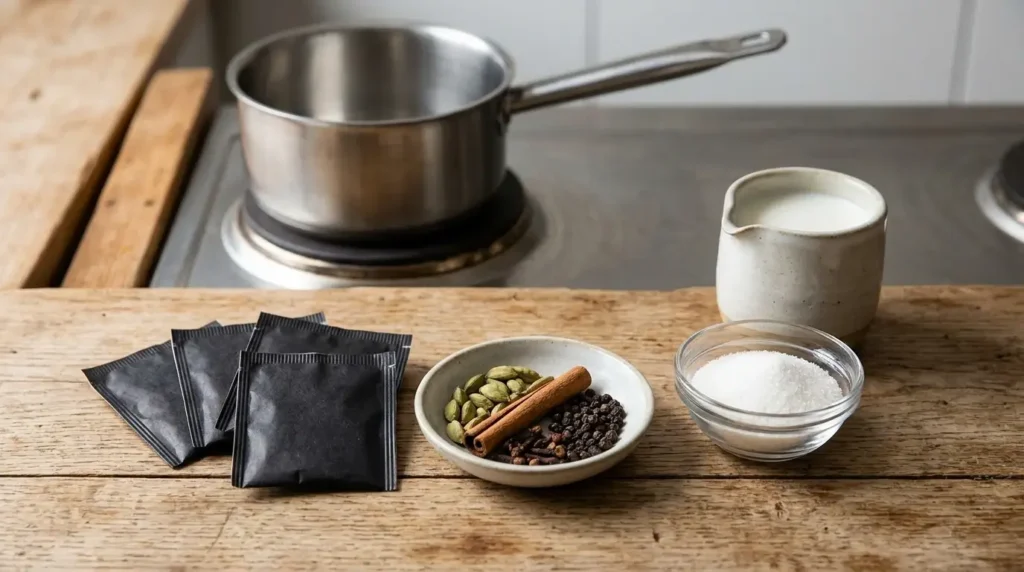
Add the cardamom pods, cinnamon stick, cloves, and peppercorns to a dry saucepan over medium heat. Toast them for 30–60 seconds, stirring occasionally, until they become fragrant. This quick step wakes up the essential oils in the spices and noticeably deepens the flavor of your chai.
If you’re short on time, you can skip toasting and go straight to simmering — your chai will still taste great.
Step 2 – Simmer the Spice Base
Add 1½ cups of cold water to the pan with the toasted spices. Add the sliced ginger. Bring the mixture to a boil over medium-high heat, then reduce the heat and let it simmer for 5 minutes. The water will turn a light golden color and smell incredible.
The longer you simmer, the more intense the spice flavor. Five minutes gives a balanced result, but if you love bold spice, go up to 8 minutes.
Step 3 – Brew the Tea Bags
After your spice base has simmered, increase the heat slightly and bring the liquid back to a gentle boil. Add the 2 black tea bags and let them steep for 3–4 minutes. Don’t over-steep — black tea can turn bitter if left too long, especially under heat.
Squeeze the tea bags gently before removing them to extract the last bit of flavor without getting bitterness from the tannic solids. Discard the bags.
Step 4 – Add Milk and Sweeten
Pour in the cup of milk and add your sweetener. Stir to combine, then bring the whole mixture back up to a gentle simmer — not a full boil. Let it heat through for 2–3 minutes, stirring occasionally. This step is important: simmering the milk and tea together (rather than just adding warm milk) creates that characteristic depth that makes homemade chai taste so much better than a tea bag dunked in a mug.
Taste your chai at this point and adjust the sweetness or add a pinch more spice if desired.
Step 5 – Strain and Serve
Pour the chai through a fine-mesh strainer into your mugs, catching all the whole spices and ginger pieces. Serve immediately. Top with a light dusting of cinnamon or a cinnamon stick for presentation if you like.
Your homemade chai tea with tea bags is ready. Enjoy it as-is, or explore the variations below for new takes on this classic.
Tips for the Best Homemade Chai Tea
Choosing the Right Tea Bags
Brand matters more than you’d think. Tetley, PG Tips, Brooke Bond Red Label, and Tazo Chai are all excellent options. Avoid herbal or flavored tea bags — they won’t provide the strong black tea base chai needs. The tea should be assertive enough to taste through a full cup of spiced milk.
For a shortcut, chai-specific tea bags (like Bigelow Constant Comment or Harney & Sons Hot Cinnamon Spice) are pre-spiced and can serve as your base. Just add fresh ginger and cardamom to elevate them further.
How to Control Spice Intensity
The spice level is entirely in your hands:
For mild chai: Reduce cardamom to 2 pods, skip the peppercorns, and halve the ginger.
For standard chai: Follow the recipe as written.
For bold, intense chai: Increase ginger to a 2-inch piece, add an extra cardamom pod, and simmer the spices for 8–10 minutes before adding tea.
Ginger is the easiest dial to turn. Fresh ginger gives brightness and warmth; more of it will make your chai feel almost medicinal in the best possible way.
Getting the Perfect Milk Ratio
Traditional Indian chai is often closer to 50% milk, 50% spiced tea water. Western versions tend to lean toward 30–40% milk. Experiment with ratios until you find your sweet spot.
For a creamier, richer chai, try replacing some of the regular milk with a splash of heavy cream or half-and-half. For a more tea-forward cup, use less milk and more spiced water.
Common Mistakes to Avoid
Boiling the milk too aggressively — this can cause it to scorch on the bottom of the pan. Keep the heat at a gentle simmer after adding milk.
Over-steeping the tea bags — more than 5 minutes under heat makes tea bitter and astringent. Stick to 3–4 minutes.
Skipping the spice simmer — dry spices need time to release their flavor into water. Don’t just throw everything in together.
Using stale spices — whole spices lose potency over time. If your cardamom doesn’t smell strongly when you crush it, it’s time to replace your supply.
Follow the recipe as written, but double the concentration by using 3 tea bags in 1 cup of water (instead of 1½ cups). Let the chai cool to room temperature, then refrigerate until cold. Serve over a glass full of ice cubes. The ice will dilute it slightly, so the stronger brew compensates perfectly.
Add a splash of sweetened condensed milk over the ice before pouring for an indulgent Thai-style iced chai experience.
Chai Latte Version
To make a chai latte, brew the spiced tea concentrate (without milk) and froth your milk separately using a milk frother, steam wand, or even a Mason jar shaken vigorously. Pour the chai concentrate into your mug, then spoon the frothed milk on top. Dust with cinnamon or cardamom powder. It looks stunning and tastes like something from your favorite coffee shop.
Vegan and Dairy-Free Options
Chai is wonderfully adaptable to plant-based milks. Here are the best options:
Oat milk — the most popular alternative. Creamy, slightly sweet, and froths well for lattes.
Full-fat coconut milk — gives a rich, tropical note that pairs especially well with cardamom and cinnamon.
Cashew milk — very creamy with a neutral flavor, excellent for letting spices shine.
Almond milk — works fine but can be thinner; choose barista-style versions for better texture.
Use these milks in exactly the same quantities as dairy milk in the recipe above.
Spicy Chai for Heat Lovers
If you love a fiery kick, add a small dried red chili or increase the black peppercorns to 8–10. You can also add a tiny pinch of cayenne along with the other spices. This spicier style pairs wonderfully with a bit of honey for a sweet-heat contrast. It also has a longer warming effect in the body, making it a favorite for cold mornings.
How to Store and Reheat Chai Tea
Storing Leftover Chai
Leftover brewed chai can be stored in an airtight container in the refrigerator for up to 3 days. Keep in mind that the spices will continue to infuse while stored, so the longer it sits, the bolder and more intense the flavor becomes — which some people actually prefer.
Do not freeze already-prepared chai with milk, as the milk can separate and become grainy after thawing.
Making a Chai Concentrate
A chai concentrate is a game-changer if you drink chai regularly. Here’s the idea: brew a batch of very strong spiced tea (using double the spices and tea bags, with no milk), let it cool, and refrigerate it. When you want chai, just heat 1 part concentrate with 1 part milk. This gives you fresh-tasting chai in under 3 minutes any time of day.
Chai concentrate keeps in the fridge for up to 5–7 days. You can also freeze it in ice cube trays and pop a few cubes into a mug of warm milk whenever the craving hits.
Reheating Without Losing Flavor
Reheat leftover chai in a small saucepan over low-to-medium heat, stirring frequently. Avoid the microwave if possible — it heats unevenly and can make the milk taste slightly “cooked.” If the chai has thickened in the fridge, add a splash of milk while reheating to bring it back to the right consistency.
A gentle reheat (not a rolling boil) will preserve the flavor beautifully, making your day-old chai taste almost as fresh as when it was first made.
Frequently Asked Questions About Chai Tea with Tea Bags
Can I use chai tea bags instead of plain black tea bags?
Yes, absolutely. Pre-spiced chai tea bags (like Tazo Chai, Bigelow Constant Comment, or Celestial Seasonings Bengal Spice) already contain a spice blend, so you can skip the whole spices in the recipe. For extra depth, still add fresh ginger and a cardamom pod or two. These bags give you a great result with even less prep.
How many tea bags should I use for chai?
For 2 cups of chai (2 servings), use 2–3 standard black tea bags. Chai is traditionally stronger than a regular cup of tea because the spices and milk can mute the tea flavor. If you’re using a more delicate tea like Darjeeling, lean toward 3 bags. For a bold Assam, 2 bags is plenty.
Can I make chai tea without boiling the milk?
You can, but the result won’t be as good. Simply adding warm milk to brewed spiced tea (without simmering them together) produces a weaker, less unified flavor. The magic of stovetop chai comes from the milk and tea mingling over heat, which creates that characteristic richness. If you must avoid boiling, at least warm your milk separately and combine it with the hot spiced tea for a few minutes before serving.
Why does my chai taste bitter?
Bitterness in chai usually comes from over-steeped tea. Black tea becomes bitter when steeped too long, especially at high temperatures. Keep your tea bag steeping time to 3–4 minutes, and remove the bags promptly. Also check your cloves — too many cloves can add a medicinal bitterness. Start with 3–4 and increase only if you enjoy that flavor.
Is chai tea healthy?
Chai tea contains several ingredients with well-documented health benefits. Ginger has anti-inflammatory and digestive properties. Cardamom supports digestive health and freshens breath. Cinnamon is associated with blood sugar regulation. Black tea provides antioxidants and a moderate caffeine boost. The main variable is the sweetener — to keep chai on the healthier side, use honey or a modest amount of sugar rather than a heavy hand of syrup.
Can I make chai tea with just spices and no tea bag?
That would be a spiced milk drink, not technically chai — but it’s still delicious and caffeine-free. Simply simmer your spices in water and milk, sweeten, strain, and serve. This version is great before bed or for people who are caffeine-sensitive but still want the warm, spiced experience.
Final Thoughts
Making a chai tea recipe with tea bags at home is one of those small skills that quickly becomes a ritual. Once you’ve nailed the basics — toast the spices, simmer patiently, steep carefully, and always taste before serving — you’ll find yourself adjusting it to perfectly suit your preferences. More ginger on a cold morning. Less sweetener when you want something more nuanced. Coconut milk on the weekends for a luxurious treat.
The beauty of chai is its flexibility. There’s no single “correct” version, because chai has always been a personal drink shaped by whoever is making it. This recipe gives you a solid, flavor-forward foundation — the rest is yours to explore.
So heat up that saucepan, grab your favorite tea bags, and let your kitchen fill up with the warm, spiced fragrance of homemade chai. You deserve it.
Black Tea Extract that is rich in natural theaflavins and polyphenols that help protect your body from free radicals, promoting overall immune health and well-being
Contains blended amounts of Fruits and Veggies. All natural, with whole foods, fruit and vegetable supplement.Perfect for everyone looking to live a healthier lifestyle.