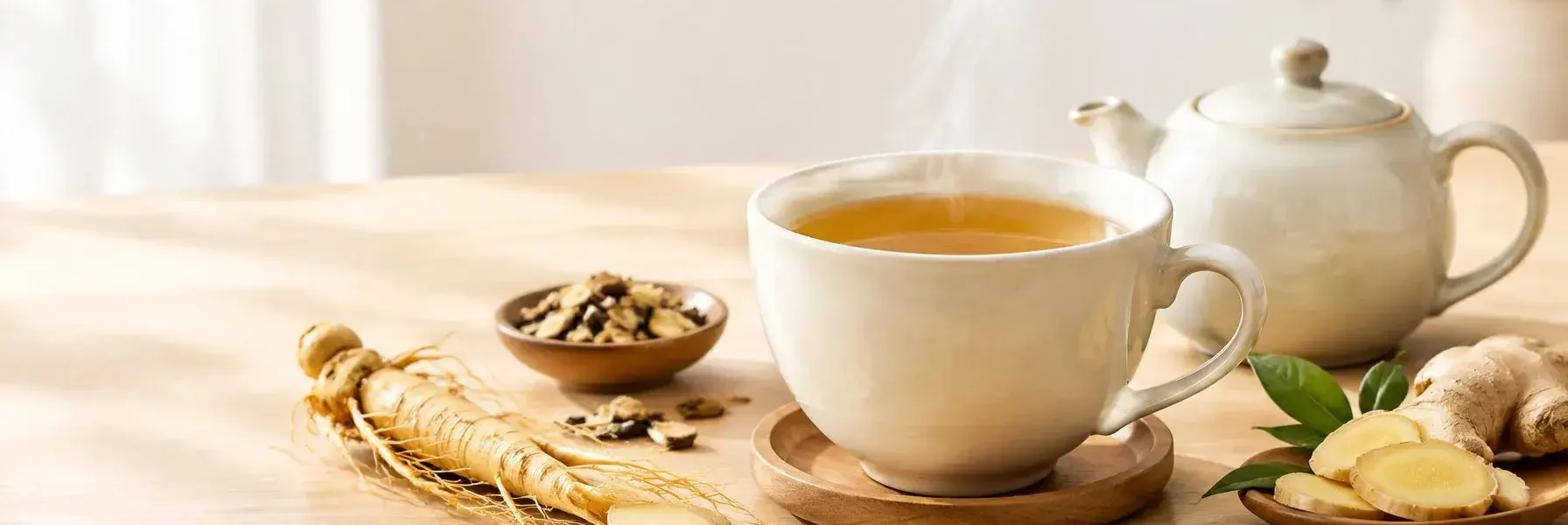
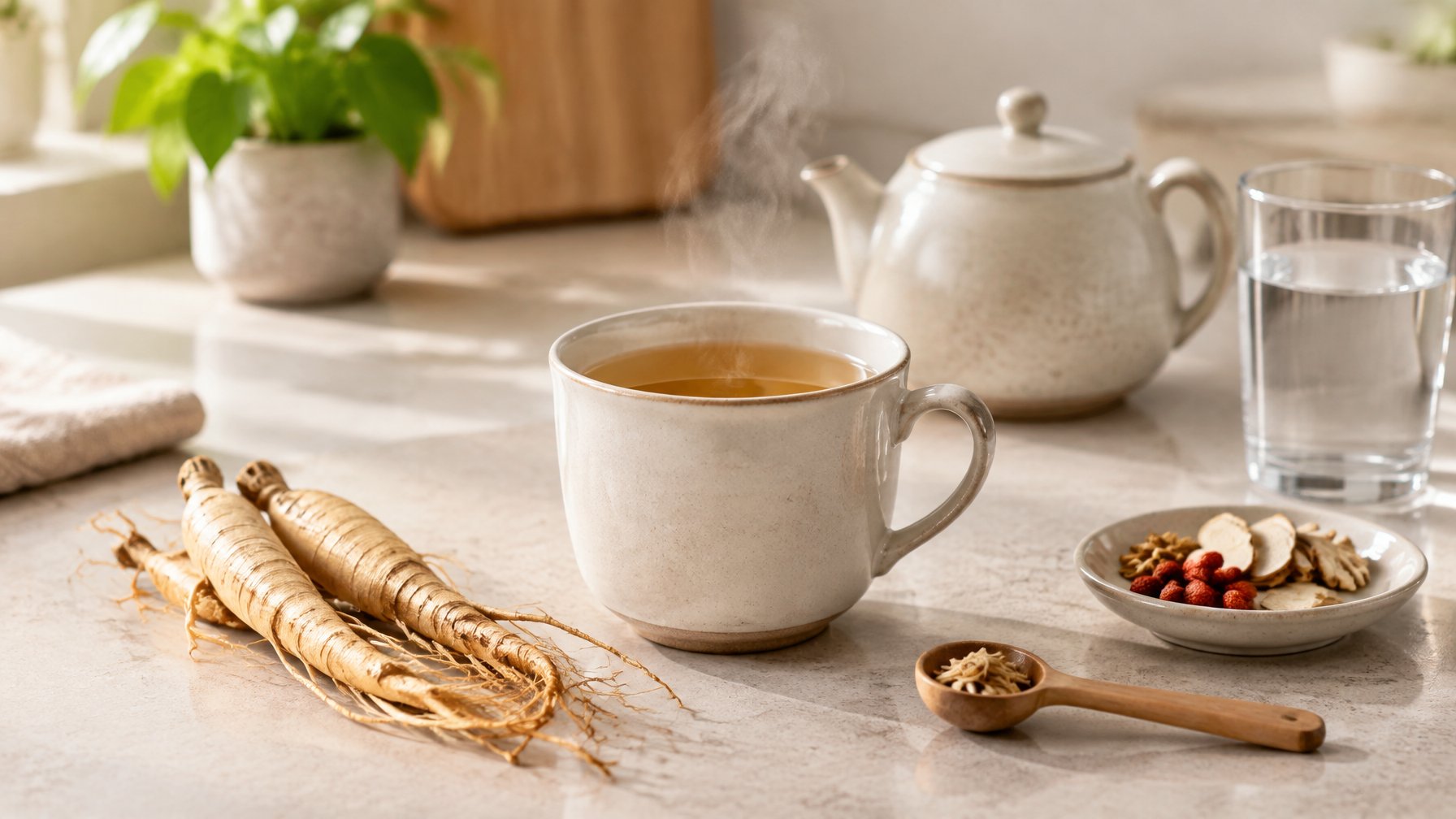
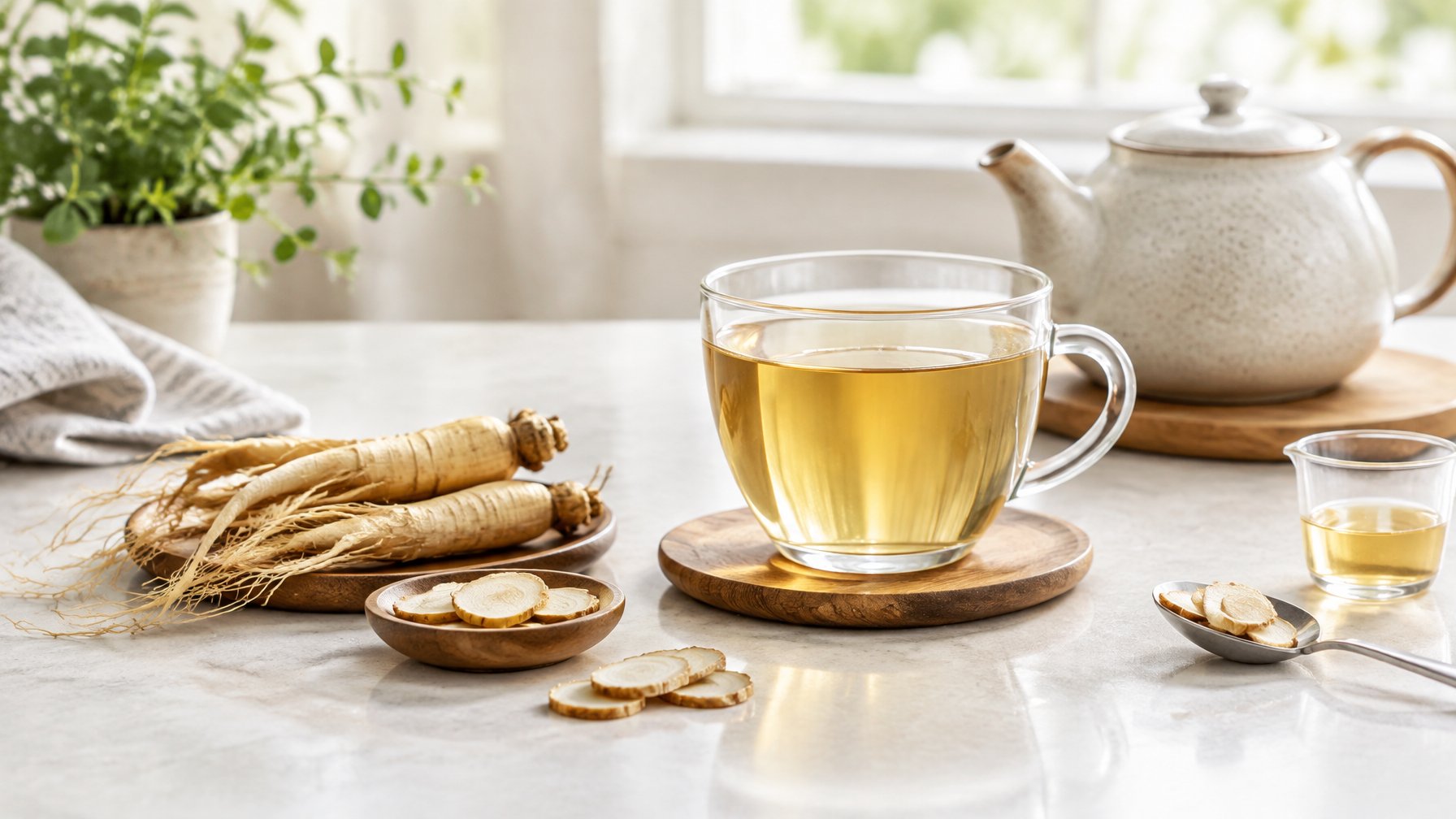
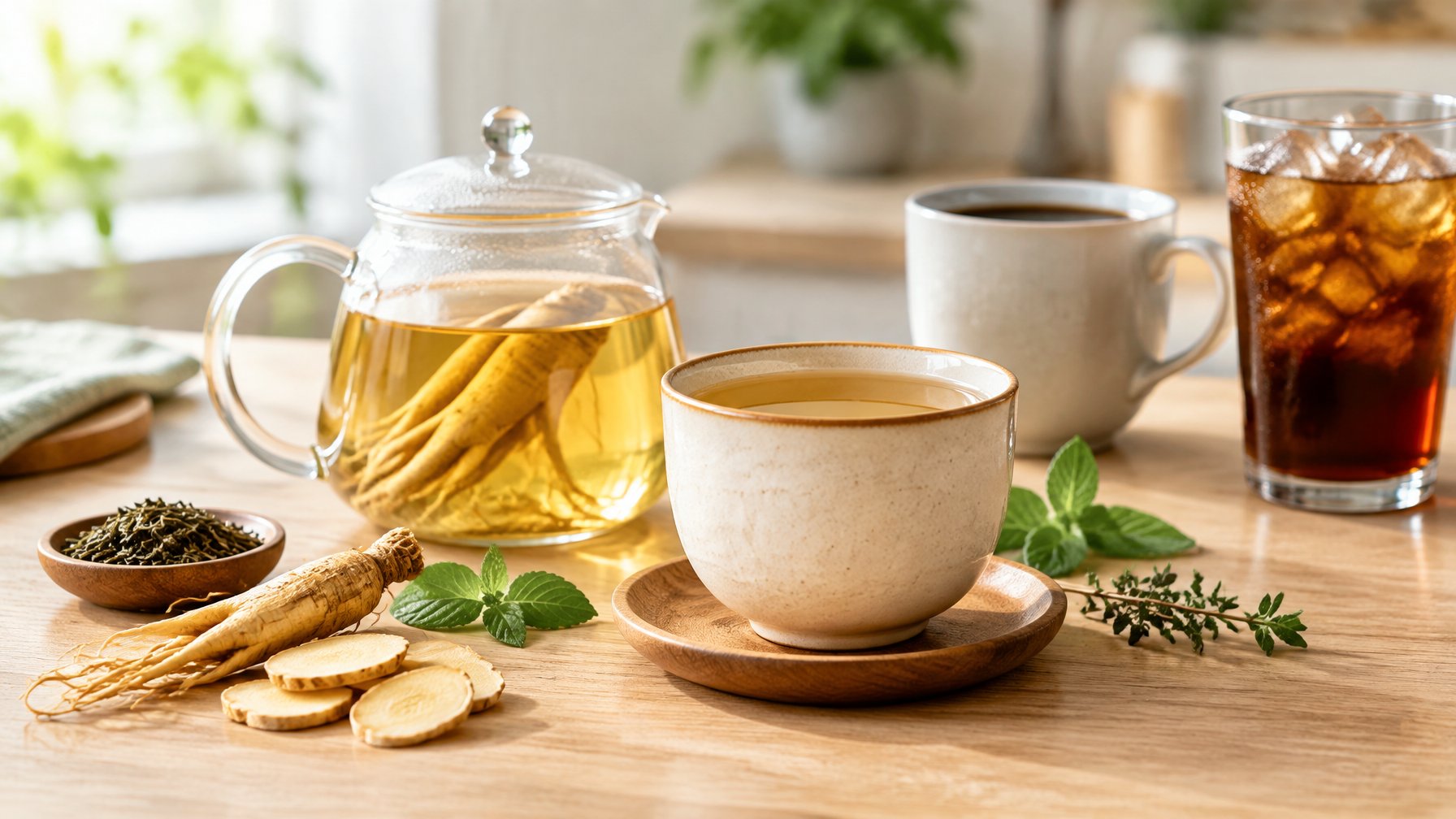
Ginseng tea has a long history in traditional medicine, and many people drink it today for general wellness. If you are new to it, you may be wondering how much ginseng tea per day is safe to drink. Most healthy adults can safely drink 1 to 2 cups of ginseng tea per day, though this depends on the type of ginseng and how it is prepared.
Your body responds differently to ginseng than it does to coffee or other caffeinated drinks, so your daily habits matter. Ginseng dosage also changes based on whether you use raw root, extract, or a tea bag blend. Knowing these details helps you get the most out of your cup without overdoing it.
This article walks you through how to pick a ginseng type, when to drink it for the best results, and what side effects or medication interactions you should watch for. You will also see how ginseng tea stacks up against your usual caffeinated drinks.
Key Takeaways
You can typically drink a moderate daily amount of ginseng tea without issues, but the right amount depends on your body and the ginseng type you choose.
Your choice of ginseng and preparation method, along with your timing around energy needs and sleep, can shape how well the tea works for you.
You should stay aware of possible side effects and medication interactions, especially when comparing ginseng tea to your regular caffeinated drinks.
Daily Starting Point and Sensible Limits
Most guides agree on a simple starting point: one cup a day, made with a small, measured amount of root. From there, the right amount for you depends on the strength of your tea and how your body responds over time.
A Cautious First Serving for New Drinkers
If you have never had ginseng tea before, start small. Use about 1 gram of dried ginseng root for your first cup, then wait and see how you feel.
Your body needs time to adjust to ginsenosides, the active compounds in the root that affect energy levels and alertness. A single cup in the morning is enough to test your reaction.
Avoid drinking it late in the day at first, since it can affect sleep in some people. Give it three to four days before deciding whether to increase your amount, and keep notes on how you feel.
Why Root Strength Matters More Than Cup Count
Two cups of weak ginseng tea can affect you less than one strong cup. This is why ginseng dosage should be measured by root weight or extract strength, not just by how many cups you drink.
Dried ginseng root, ginseng powder, and ginseng extract all carry different concentrations of ginsenosides. A concentrated extract needs a much smaller amount than loose dried root steeped in hot water.
Form
Typical Starting Amount
Dried ginseng root
1-2 grams per cup
Ginseng powder
0.5-1 gram per cup
Ginseng extract
Follow product label; often less than 1 gram
Ginseng capsules
Follow manufacturer dose, usually 200-400 mg
Many sources suggest that a safe daily total for ginseng root tea stays within 1 to 3 grams of root, simmered rather than boiled, to control strength.
When to Reduce Intake or Take a Break
Watch for signs that your intake is too high. These include trouble sleeping, headaches, stomach upset, or feeling jittery instead of steady energy.
If any of these show up, cut your amount in half or skip a day. Some guides recommend cycling ginseng use in blocks, such as a few weeks on followed by a short break, rather than drinking it every day without pause.
This approach may help keep the tea working well over time. If you take medication, check with a doctor first, since ginseng can interact with certain drugs.
Choose the Ginseng and Preparation Method
Ginseng comes in a few main types, and each one has its own strength and flavor. Picking the right root and brewing it the right way makes a real difference in how your tea tastes and works.
Panax Ginseng, Korean Ginseng, and Red Ginseng
Panax ginseng is the plant most people mean when they say “ginseng.” It is also called Asian ginseng or Korean ginseng, and it grows mainly in Korea and China.
Red ginseng is just Panax ginseng that has been steamed and dried. This process changes its color and can make it slightly stronger than the raw white version.
Panax ginseng tends to have a warming effect on the body. Many people brew it in the morning or early afternoon rather than at night.
You can find it as dried ginseng root, sliced root, or ginseng powder. Sliced root works well for slow simmering, while powder dissolves faster for a quick cup.
American Ginseng and Panax Quinquefolius
American ginseng, known by its scientific name Panax quinquefolius, grows in the United States and Canada. Wisconsin is one of the largest producers of this root.
It has a milder, slightly sweet taste compared to Asian varieties. Some people describe it as gentler and less stimulating.
American ginseng root tea is a common choice for those who want a lighter option. You can prepare American ginseng using the same basic methods, which covers timing and storage tips.
Both American and Panax ginseng can be used interchangeably in most recipes. The main difference comes down to taste and how your body responds to each type.
Brewing a Balanced Herbal Infusion
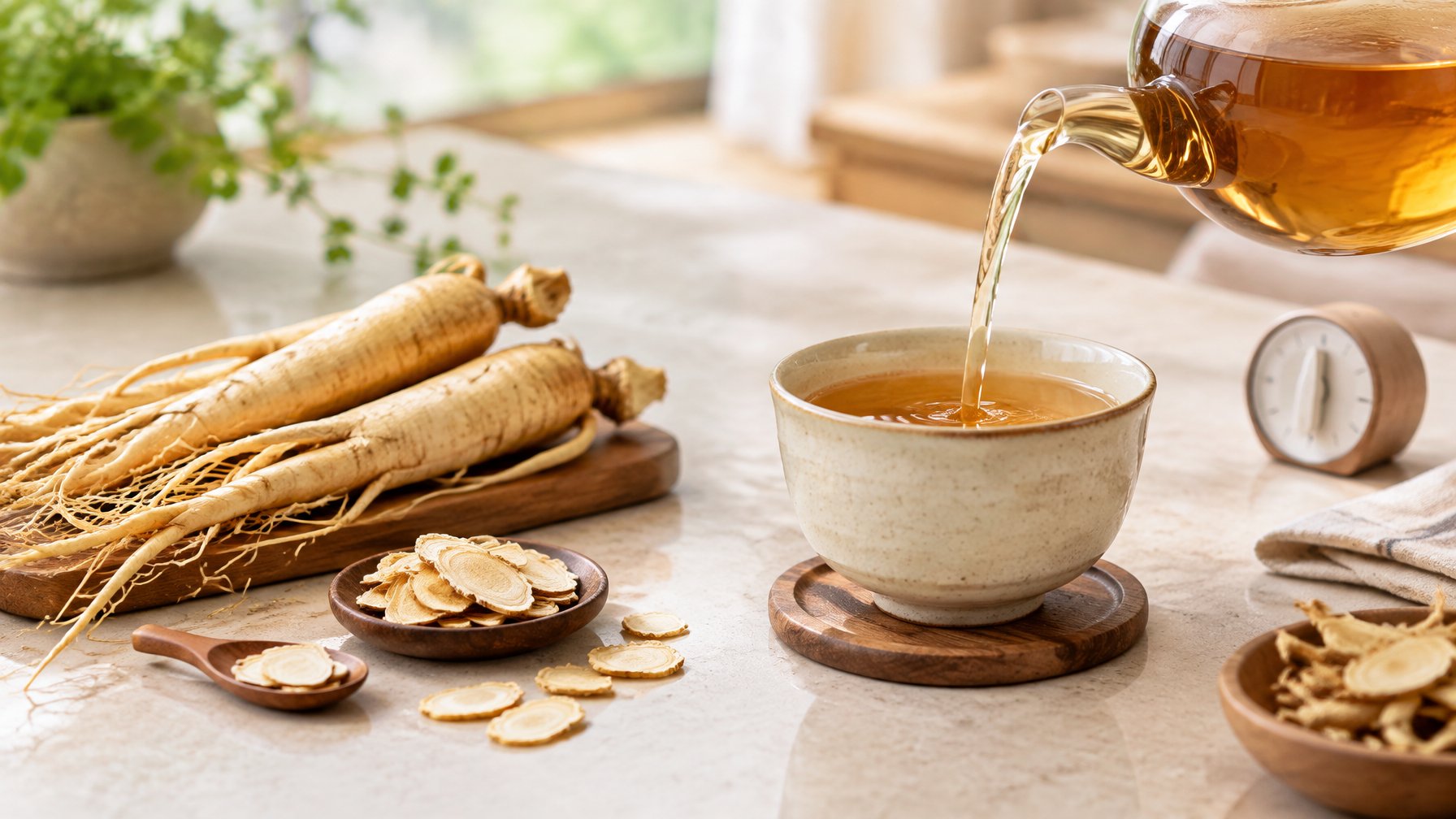
Start with a small amount of dried ginseng root or a spoonful of ginseng powder per cup of water. Simmer sliced root for 15 to 20 minutes to draw out the flavor and active compounds.
You can turn plain ginseng tea into a fuller herbal infusion by adding other ingredients. Common additions include:
Ginger – adds warmth and a bit of spice
Lemon – brightens the flavor and adds a citrus note
Honey – softens the natural bitterness of the root
Adjust the strength by using more or less root, depending on how bold you want the final cup to taste.
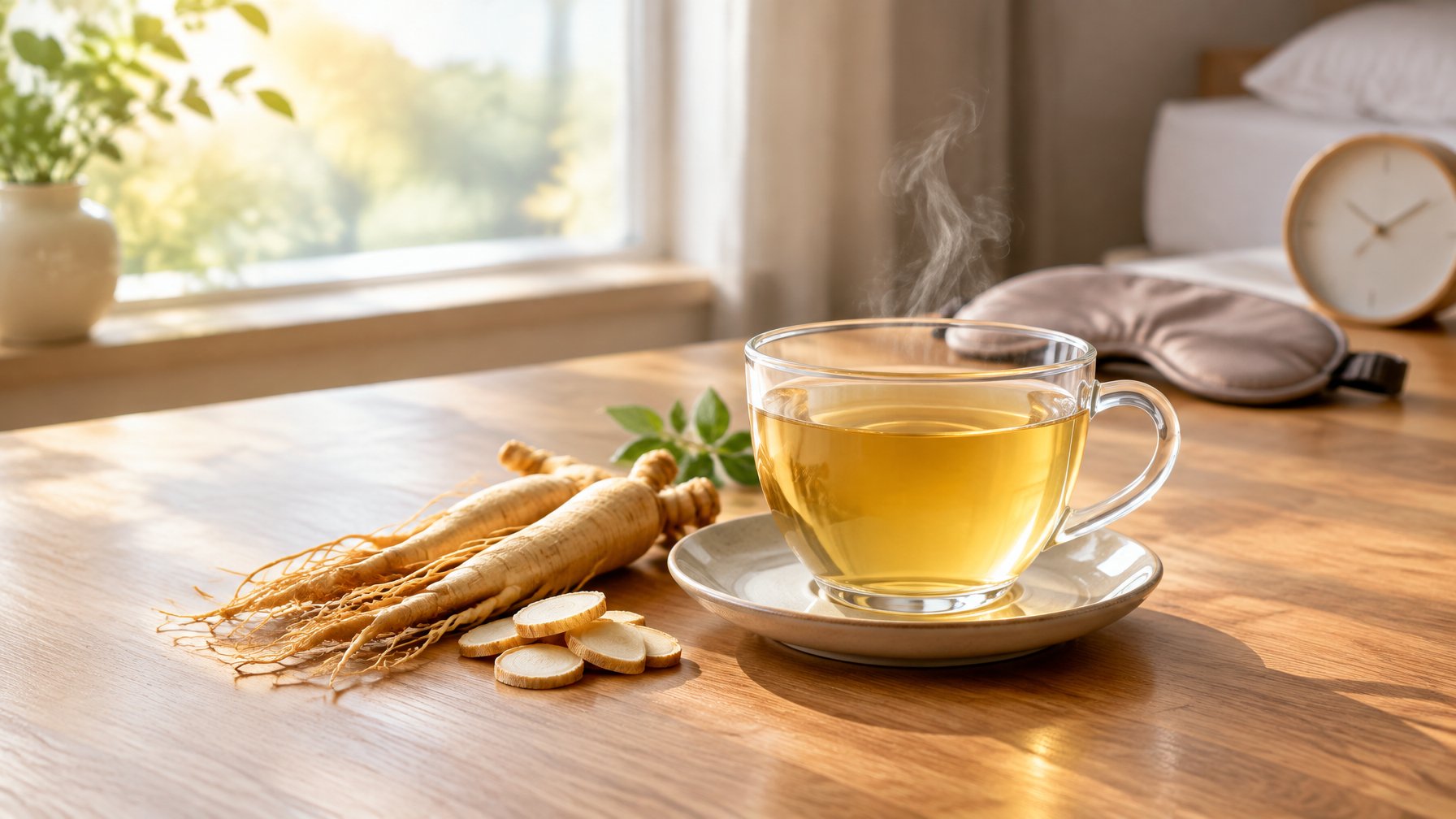
When you drink ginseng tea affects how it works in your body. Good timing can boost your energy and focus, while bad timing can lead to insomnia and other sleep disturbances.
Why Morning or Early Afternoon Often Works Best
Ginseng has a mild stimulating effect on your body. This is why the best time to drink ginseng tea is usually earlier in the day.
Your body naturally has more energy in the morning. Drinking ginseng tea during this window can support that energy instead of working against it.
Many people also notice better mental clarity and concentration when they drink it before noon. This makes it a good choice if you need focus for work or school.
Early afternoon is also a safe window for most people. Just be sure to leave several hours between your last cup and bedtime.
Adjusting Use for Energy, Focus, and Physical Activity
Your timing can shift a bit based on what you need ginseng for. If you want an energy boost for exercise, drink it about 30 to 60 minutes before you start moving.
This can support stamina and physical performance during your workout. Some people also report better vitality throughout the day when they drink it before activity.
If your main goal is energy and focus for mental tasks, try drinking it earlier in the morning. This timing may support cognitive function and memory during the hours you need to concentrate most.
Drinking ginseng tea too late in the day is the most common timing mistake. Because it has a stimulating effect, it can interfere with your ability to fall asleep.
This is especially true if you already have trouble sleeping. Even one cup in the late afternoon or evening may be enough to cause problems for sensitive people.
A simple rule is to stop drinking ginseng tea by early afternoon. This gives your body enough time to process it before bedtime.
If you notice trouble sleeping after starting ginseng tea, try moving your cup earlier in the day. Taking ginseng in the morning helps maintain energy and lowers the risk of sleep trouble, which makes it easier to build a routine that supports both your day and your night.
Understand Benefits Without Overpromising
Ginseng tea has real research behind it, but the science is still developing. You should know what the evidence actually shows before you build expectations around daily use.
Adaptogenic Compounds and Stress Resilience
Ginseng is classified as an adaptogen. This means it may help your body adjust to physical and mental stress rather than acting like a fast-acting drug.
The active compounds behind this are ginsenosides and gintonin, both found in the root. Researchers believe these compounds interact with your hormone and nervous systems to support stress resilience over time.
Some studies suggest ginseng may ease symptoms tied to anxiety, though results are mixed and not conclusive. You shouldn’t expect immediate calm from one cup.
Instead, think of it as a slow-building support rather than a quick fix. Consistency matters more than quantity here.
Evidence for Cognitive and Immune Support
Ginseng tea contains antioxidants, and its antioxidant properties are one reason researchers link it to general wellness. Antioxidants help protect your cells from everyday damage caused by oxidative stress.
Some research points to modest cognitive benefits, including sharper focus and steadier energy levels. These effects tend to be small and vary by person.
There’s also interest in ginseng’s role in immune support. A few studies suggest it may help your immune system respond more efficiently, though this isn’t the same as preventing illness.
You should treat these as supportive benefits, not guaranteed outcomes. The evidence for ginseng tea benefits is promising but still limited in scope.
Blood Sugar, Inflammation, and Metabolism Considerations
Ginseng may also influence your blood sugar levels. Some research shows it can help regulate glucose, which matters if you’re managing metabolism-related concerns.
If you take medication for blood sugar, this effect is worth watching closely. Combining ginseng with certain drugs could lower your levels more than expected.
There’s also early evidence tied to inflammation. A few studies suggest ginseng may help reduce markers of inflammation, which ties into broader metabolic health.
You shouldn’t rely on ginseng tea alone to manage blood sugar or inflammation. It works best as one part of a balanced routine, not a replacement for medical care.
Ginseng tea is generally safe, but your body may still react to it. Some people notice mild side effects, while others need to be careful if they take certain medicines.
Common Signs That the Tea May Be Too Strong
Your body will usually tell you if you’re drinking too much ginseng tea. Watch for these signs:
Headaches or a feeling of pressure in your head
Dizziness or feeling lightheaded
Stomach upset, diarrhea, or other digestive issues
Increased heart rate or palpitations
Itching or skin irritation
Allergic reactions, such as a rash or swelling
If you notice any of these symptoms, cut back on your daily amount. You can also try switching to a weaker cup or drinking it less often. Side effects are more likely at higher doses, so starting small helps you find your limit.
Diabetes, Blood Pressure, and Blood-Thinning Medicines
Ginseng can change how well some medicines work. If you take diabetes medication, ginseng may lower your blood sugar too much when combined with your regular dose. This can lead to symptoms like shakiness or confusion.
Ginseng can also affect blood pressure. It may raise or lower it, depending on your body and the type of ginseng you use. This makes it risky to mix with high blood pressure drugs without talking to your doctor first.
Blood thinners are another concern. Ginseng may increase your risk of bleeding when taken with these medicines. Ginseng tea may interact with blood thinners, antiplatelet drugs, and certain antidepressants, so caution is important.
You should also be careful mixing ginseng with stimulants or too much caffeine. Both can raise your heart rate, and combining them may make palpitations more likely.
When to Seek Personalized Medical Advice
Talk to your doctor before adding ginseng tea to your routine if you take prescription medicine. This is especially true if you manage diabetes medicines, blood pressure drugs, or blood thinners.
Your doctor can check for interactions based on your health history. They may also suggest a lower dose or a different time of day to drink it.
If side effects don’t go away after cutting back, stop drinking the tea and call your doctor. Sudden symptoms like chest pain, severe dizziness, or an allergic reaction need immediate medical attention.
Compare Ginseng Tea With Caffeinated Drinks
Ginseng tea and coffee affect your body in different ways, and knowing the difference helps you pick the right drink for the right time. The main factors to check are the plant behind the drink, what else is mixed into your cup, and how each option fits your daily schedule.
Why Plain Root Tea Is Naturally Caffeine-Free
Ginseng root itself has no caffeine. It comes from a different plant family than tea leaves, so it does not carry the natural stimulants found in true tea.
Coffee, black tea, and green tea all come from the coffee plant or Camellia sinensis, which naturally contains caffeine. Ginseng does not share this trait.
This is why plain ginseng root tea is often called a caffeine-free herbal infusion. Any energy you feel from it comes from the root’s other compounds, not from a stimulant. This makes ginseng tea a caffeine-free option compared to coffee for people who want to avoid the jittery feeling caffeine can cause.
Checking Coffee Blends, Tea Bags, and Added Ingredients
Not every product labeled “ginseng tea” is free of caffeine. Many brands mix ginseng root with green tea, black tea, or even coffee to create a blended drink.
Always check the ingredient list before you assume your cup is caffeine-free. A few things to look for:
Tea bag blends that combine ginseng with green or black tea leaves
Bottled drinks that list “ginseng extract” alongside coffee or tea extract
Energy drink versions that add ginseng to a caffeinated base
If you compare ginseng tea against other energy drinks, you will notice many energy drinks use ginseng as an add-on to caffeine rather than as the main ingredient. Reading labels helps you know exactly what you are drinking.
Choosing a Gentle Alternative for Evening Relaxation
If you want a warm drink at night without disrupting your sleep, plain ginseng root tea is a reasonable choice since it has no caffeine to keep you awake. Some people also turn to chamomile for a similar calming effect, though chamomile and ginseng work through different compounds.
Ginseng tea benefits may include steady energy support during the day, but at night, a milder cup with less root or a shorter steep time is a common approach. Since ginseng can act as a mild stimulant on its own, some people still prefer to drink it earlier in the day and save chamomile or another calming herbal infusion for closer to bedtime.
These are common questions people ask about drinking ginseng tea safely and getting the most out of it.
Can I drink ginseng tea every day?
Yes, you can drink ginseng tea daily for many routines, but a few things need to line up first. The dose matters, the quality of the product matters, and any medicines or supplements you take matter too.
Many people take breaks from ginseng after a few weeks of daily use. This is often called cycling, and it gives your body a rest before you start again.
What is the recommended daily serving of ginseng tea?
Most guides suggest sticking to 1-2 cups of ginseng tea per day. This amount is seen as a reasonable starting point for most healthy adults.
If you use a branded or packaged product, check the label first. Manufacturers often test their specific blend and give dosing guidance based on that product.
Keep in mind that not all ginseng teas are the same strength. The amount of root used, the type of ginseng, and how it’s prepared all change how much you’re actually consuming in one cup.
What are the side effects of drinking too much ginseng tea?
Drinking too much ginseng tea can cause problems like trouble sleeping, headaches, or an upset stomach. Some people also report feeling jittery or unusually anxious after having too much.
Blood pressure changes are another concern. Ginseng can affect blood pressure in some people, so drinking large amounts regularly may cause noticeable shifts.
Women may notice hormone-related effects with heavy or long-term use. If you notice any unusual symptoms after drinking ginseng tea, it’s worth cutting back or stopping.
When is the best time of day to drink ginseng tea?
Morning or early afternoon is generally the best time to drink ginseng tea. This is because ginseng can have a mild energizing effect, similar to a light stimulant.
Drinking it too close to bedtime may make it harder to fall asleep. If you’re sensitive to caffeine or other stimulants, treat ginseng tea the same way and avoid it in the evening.
What medications or supplements should not be combined with ginseng?
Ginseng can interact with several types of medication. Blood thinners are one major concern, since ginseng may affect how blood clots.
Diabetes medications are another area of concern. Ginseng may lower blood sugar, so combining it with diabetes drugs could cause your levels to drop too low.
People taking antidepressants, especially MAOIs, should also be cautious. Mixing ginseng with certain psychiatric medications can lead to unwanted interactions.
Always talk to a doctor or pharmacist before adding ginseng tea to your routine if you take prescription medication regularly.
How long does it take to feel the effects of ginseng tea?
Some people notice a mild energy boost within 30 minutes to an hour of drinking ginseng tea. This effect is often subtle rather than dramatic.
Other benefits, like support for focus or general well-being, tend to build up over time. These effects are usually tied to regular, consistent use rather than a single cup.
Everyone responds differently based on body size, sensitivity, and the strength of the tea itself. Paying attention to how you personally feel after drinking it is the best way to know what to expect.
How Much Ginseng Tea Per Day: Final Takeaway
For most healthy adults, 1 to 2 cups per day is a sensible starting point, but the right amount depends on the type of ginseng, preparation strength, timing, and your individual response. Watch for side effects, avoid late-day use if it affects your sleep, and take extra care if you use medications for blood sugar, blood pressure, or blood thinning.
Black Tea Extract that is rich in natural theaflavins and polyphenols that help protect your body from free radicals, promoting overall immune health and well-being
Contains blended amounts of Fruits and Veggies. All natural, with whole foods, fruit and vegetable supplement.Perfect for everyone looking to live a healthier lifestyle.