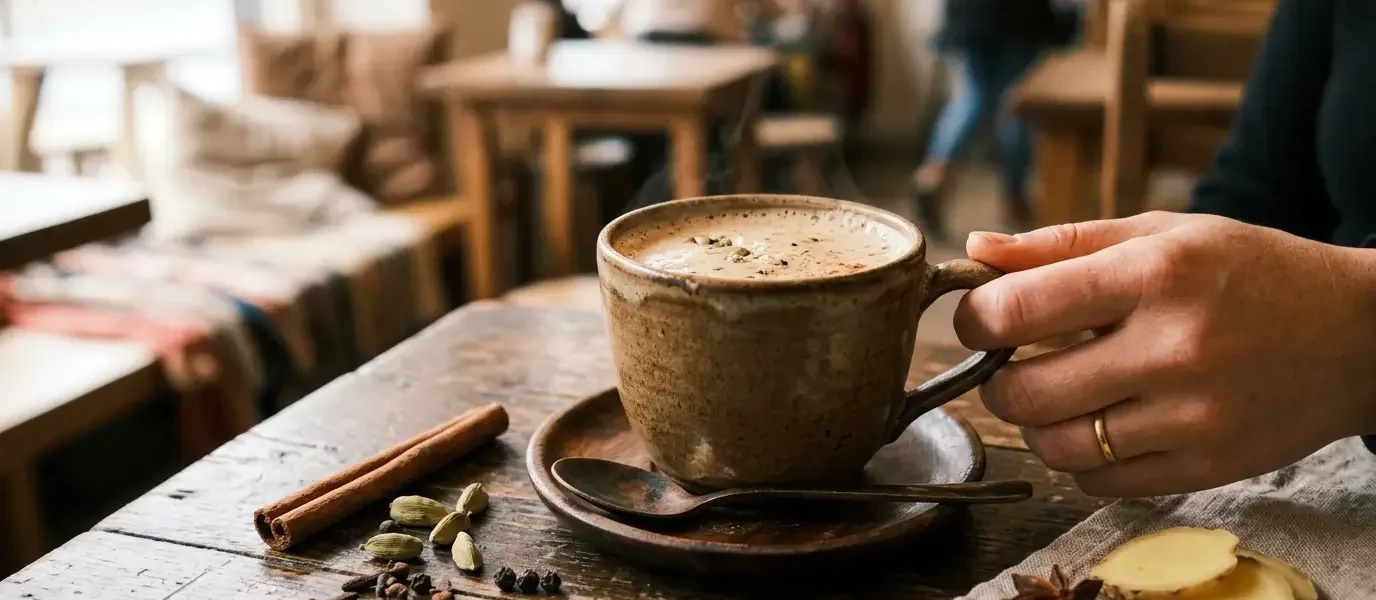
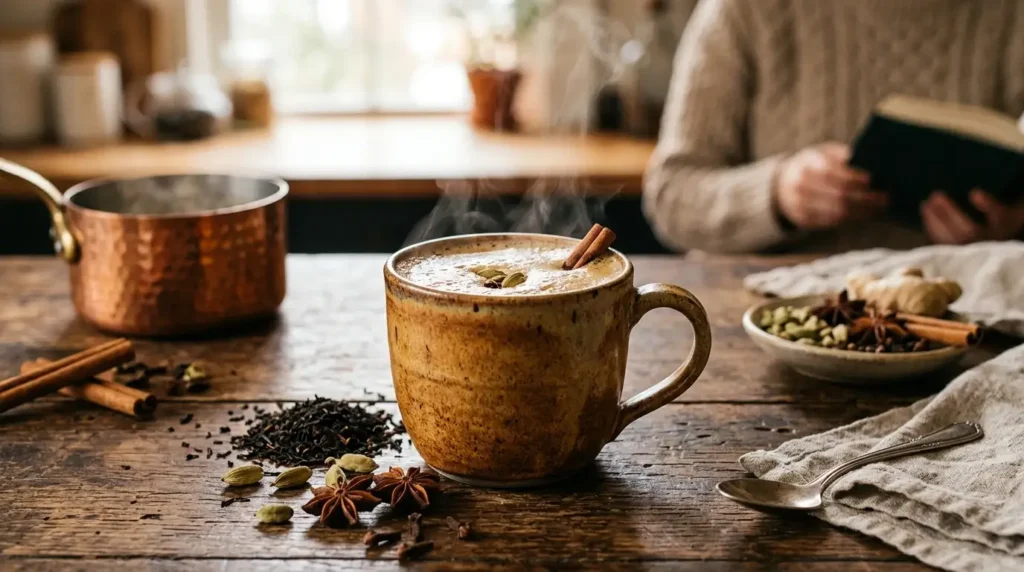
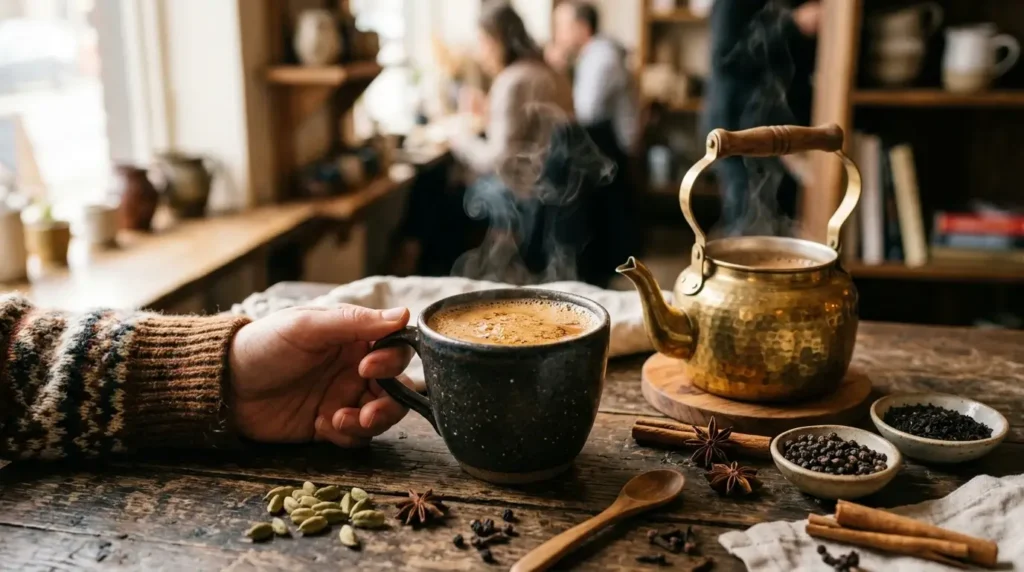
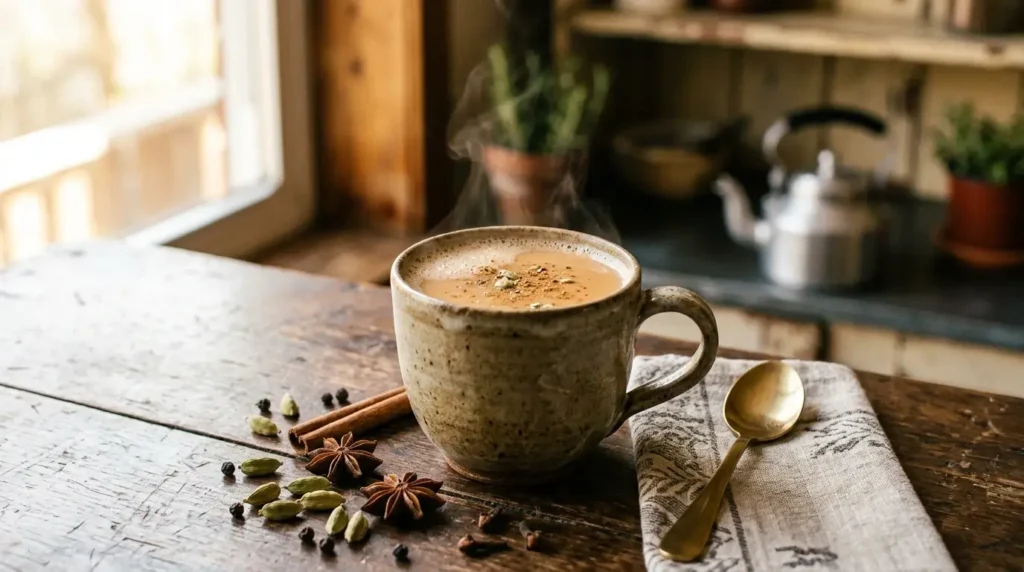
Learning how to prepare a chai tea starts with a charming fact: asking for “chai tea” in India means you’re saying “tea tea”. Authentic Indian chai is undeniably more than just a beverage. It’s rich, milky, deeply colored, and boldly flavorful, a drink that unites all Indians despite regional differences.
Masala chai takes this further by simmering tea with spices and cooking down the milk for a creamier, more complex taste. We’ll show you how to make authentic masala chai using traditional grandmother’s techniques, from selecting the right chai ingredients to mastering the double boil method that creates that perfect cup.
Key Takeaways
Master the art of authentic Indian chai with these essential techniques that transform simple ingredients into the perfect cup of masala chai.
Use fresh whole spices and crush them lightly before brewing to release maximum flavor and aroma
Follow the proper sequence: boil water with spices first, add tea leaves, then milk and sugar
Master the double boil technique by bringing chai to a rolling boil twice to create signature creaminess
Simmer patiently for 5-10 minutes to allow spices to infuse and milk to concentrate properly
Strain and serve immediately while hot for the most authentic taste experience
The secret lies in patience and proper technique. Unlike Western chai lattes, authentic masala chai requires cooking all ingredients together, allowing the milk to simmer with the tea decoction and spices for that rich, complex flavor that concentrated syrups cannot replicate. Remember, chai is more than a beverage—it’s a gesture of hospitality and connection in Indian culture.
What is Authentic Indian Chai Tea
Understanding Chai vs Masala Chai
The roots of authentic Indian chai stretch back around 5,000 years to ancient India, where it was first brewed as an Ayurvedic beverage designed to heal and energize. The word “chai” derives from the Chinese word “cha” and simply means tea in Hindi. When you order regular chai in India, you receive black tea brewed with milk and sugar, nothing more.
Masala chai translates to “spiced tea” because masala means spices in Hindi. This distinction matters. Regular chai contains only black tea, milk, and sugar, while masala chai includes an array of aromatic spices such as cardamom, cinnamon, ginger, cloves, and black pepper. The spiced version emerged gradually after British colonization introduced tea plantations to India in 1835. Back then, tea prices remained too high for average Indians, so vendors stretched their supply by adding spices, milk, and sugar. By the 1960s, black tea became more affordable, and Indians combined it with their traditional spice blends to create what we recognize as masala chai.
What makes this beverage authentic is how the milk simmers together with the tea decoction and spices, allowing full infusion of flavors. Chai lattes served at Western coffee shops differ significantly because they simply pour tea concentrate over steamed milk rather than cooking everything together. That simmering process creates a richer, creamier, more complex taste that concentrated syrups cannot replicate.
The Cultural Significance of Chai in Indian Homes
Masala chai functions as more than refreshment in Indian culture. Offering chai to guests represents a gesture of hospitality and goodwill. If you visit someone’s house in India and they fail to serve you chai, it comes across as offensive. The question “Chai piyoge?” (Will you have some tea?) extends beyond a simple drink invitation to become an act of mutual respect and an opening for conversation.
Chai appears woven into daily rituals that mark the rhythm of Indian life. Morning chai signals the start of a new day, while evening chai marks the transition from work to rest. Families gather over steaming cups to discuss events, celebrate good news, or simply enjoy each other’s company. This domestic ceremony reveals how chai functions as a tool for connection and nurturing relationships.
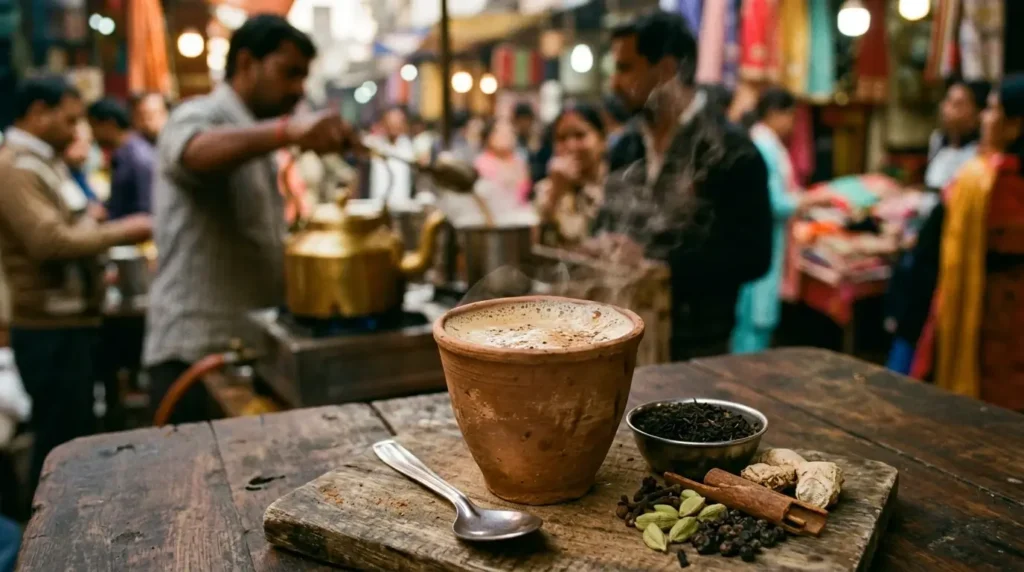
The beverage holds a central place in Indian rituals and celebrations. During festivals like Diwali and Holi, serving chai to guests symbolizes warmth and friendship. Weddings, family gatherings, and religious ceremonies all integrate chai seamlessly into their proceedings. No ceremony feels complete without a good chai. Meanwhile, chaiwallas (tea vendors) transform street corners into community gathering spots where strangers share a brew from the same pot, taking a moment to breathe and be present.
Why Grandmother’s Method Makes the Best Chai
Every Indian family develops their own chai recipe, and the combination of spices, milk quantity, water ratio, and tea type becomes a personal signature. Grandmothers perfect their methods through years of daily practice, understanding that patience produces the deepest flavors. Their approach differs from simply throwing all ingredients into a pot before boiling.
The traditional method requires a specific order of operations. You boil water first, then add spices to release their aromatic oils, followed by tea leaves, and finally milk. This sequence extracts maximum flavor from each component without allowing the tea to become bitter from overstepping. Grandmothers also master the simmering technique, cooking the milk down with the tea decoction to create that characteristic creamy richness. They know exactly when to stop the boil to prevent burnt milk while achieving the perfect deep color and strength. Fresh whole spices always triumph over dusty pre-ground blends, another principle grandmothers follow instinctively. Their chai tastes unforgettable because they treat preparation as an art form rather than a rushed task.
Essential Chai Tea Ingredients
Building authentic masala chai requires four ingredient categories: black tea, whole spices, the right milk-to-water balance, and sweetener. Each component affects the final taste, color, and strength of your chai.
Choosing the Right Black Tea
Black tea forms the foundation of masala chai. Assam and Darjeeling teas stand as traditional choices because they grow in India. Assam tea delivers deep color and strong flavor, perfect for kadak chai (strong tea). Darjeeling tea brings fruity flavor notes. Nilgiri tea combines the fruity character of Darjeeling with bold flavors like Assam, but contains very little tannins, which means it won’t leave an astringent taste even after long simmering.
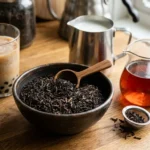
Indian families typically use CTC (Crush, Tear, Curl) tea rather than loose leaf for chai. CTC processing creates granular or pellet-form tea that imparts bolder, more robust flavors along with deep brown color. Tea dust, which comes in almost powder form, also works well. The granular texture of CTC tea overextracts quickly when boiled with spices and milk, creating the intense flavor and slight bitterness that balances perfectly against milk, sugar, and spices.
Popular brands include Tata Tea, Wagh Bakri, Society Tea, and Kannan Devan. If you don’t live in India, any strong black tea works.
Selecting Fresh Whole Spices for Masala
Whole spices always deliver superior flavor compared to pre-ground alternatives. Crushing or grinding whole spices fresh for each batch releases volatile oils that create that intoxicating chai aroma.
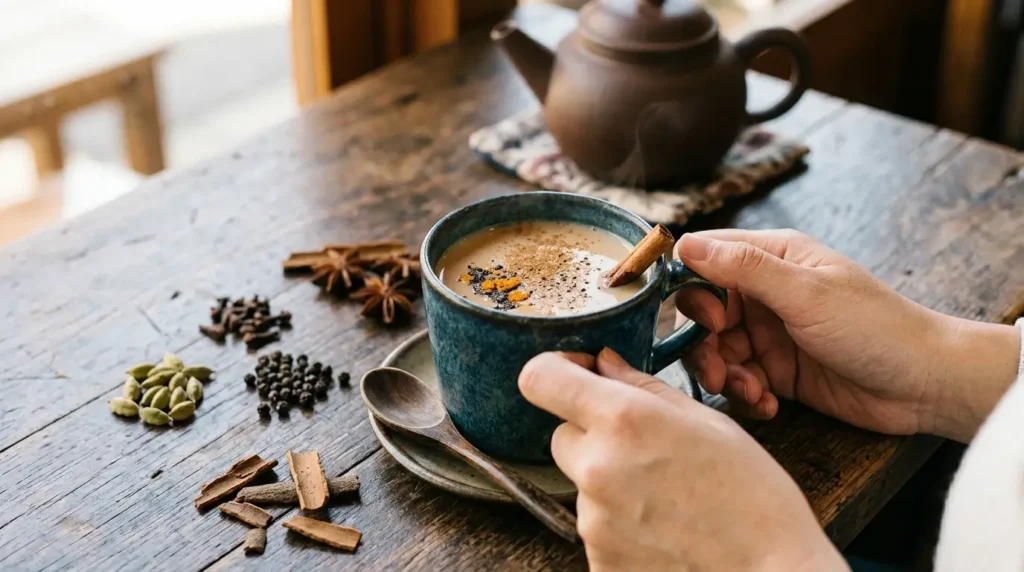
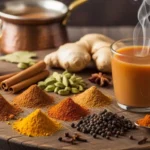
Stock these foundation spices: green cardamom pods (the queen of spices and main ingredient), fresh ginger root, cinnamon sticks, whole cloves, and black peppercorns. Optional additions include fennel seeds for brightness, nutmeg for depth, and star anise for sweetness. Cardamom provides fragrance, black pepper adds zing and fruitiness, ginger brings heat and healing properties, cinnamon contributes spice and sweetness, while cloves offer warming bitterness that counteracts sweet spices.
Fresh ginger gets ground using a mortar and pestle. The juices from freshly ground ginger mix beautifully with boiling tea and water.
Milk and Water Ratio Explained
The milk-to-water ratio varies based on personal taste and milk type. An ideal ratio ranges from 1:1 to 3:1 (water to milk) depending on whether you use homogenized, non-homogenized, toned, or raw milk. Raw water buffalo milk, which is thicker than cow milk, typically uses a 3:1 ratio. For standard whole milk, use about 2/3 water to 1/3 milk, or more specifically, 3/4 cup water with 1/4 cup milk per serving.
Whole milk produces the richest, most traditional result. Plant-based alternatives like oat milk and cashew milk work beautifully, creating naturally sweet, creamy chai without dairy.
Sweeteners That Work Best
White granulated sugar remains the traditional sweetener. Jaggery (gud), an unrefined sweetener made from sugarcane or date palm sap, adds unique, rich, caramel-like flavor with notes of molasses. Brown sugar brings deep, toffee-like sweetness that pairs especially well with cinnamon and cloves. Coconut sugar offers a gentle, nutty flavor, while maple syrup provides smooth, earthy sweetness with warmth and complexity. Honey works when added after removing chai from heat.
Add sweetener after straining so it dissolves evenly. Start with one teaspoon and adjust to taste.
The process of making authentic masala chai follows a specific sequence that extracts maximum flavor from each ingredient. Rushing through or changing the order produces inferior results.
Step 1: Gather and Prepare Your Ingredients
Begin by crushing your whole spices using a mortar and pestle. Lightly crushing cardamom pods, peppercorns, cloves, and cinnamon sticks releases their essential oils without turning them into powder. Slice fresh ginger into thin rounds. Measure out your black tea, milk, water, and sweetener. Use a deep saucepan with a spout for easier pouring and a fine-mesh strainer for serving.
Step 2: Boil Water with Spices
Place your saucepan over medium-high heat and add 1 to 1.25 cups of water. If using a larger pan, add an extra 1/4 cup to account for evaporation. Add your crushed spices and ginger while the water comes to a boil. Once boiling, reduce heat and simmer the spices for 5 to 10 minutes. This extended simmering allows whole spices to release their flavors slowly, building warmth and complexity without harshness.
Step 3: Add Tea Leaves and Steep Properly
Add your black tea leaves or bags to the simmering spice water. Reduce heat to medium-low immediately. Simmer gently for 3 to 5 minutes, depending on desired strength. The liquid turns a deep burgundy color and reduces slightly. Avoid boiling tea vigorously at this stage because excessive heat releases too many tannins, creating bitter compounds that make your mouth feel dry.
Step 4: Pour in Milk and Sugar
Add milk equal to or slightly less than your water amount. Stir well and raise the heat back to high. Adding milk halts the boiling temporarily. Once the mixture returns to a simmer, reduce heat to medium and continue simmering for another 5 minutes.
Step 5: Master the Double Boil Technique
Raise heat to high and allow the chai to come to a rolling boil. Watch carefully as the milk simmers up the sides of the pan. Remove from heat just before it boils over, then stir. Return to heat and repeat this process 2 to 3 more times. This double boiling slightly evaporates the milk, concentrating proteins and creating the signature creaminess of well-crafted chai.
Step 6: Strain and Serve Hot
Pour the finished chai through a fine-mesh strainer into cups, discarding the tea leaves and whole spices. Add extra sweetener if desired. Serve immediately while piping hot.
Traditional Techniques Grandmothers Use
Grandmothers instinctively understand that the magic of authentic masala chai happens during specific handling techniques. These methods transform ordinary ingredients into extraordinary chai.
The Art of Aerating Chai
Two primary methods exist for aerating chai to develop deeper flavor. The notorious double boil brings chai to a full boil on high heat until the level rises almost to the pot’s rim, then you quickly lift the pot off heat or immediately lower the flame before it spills over. This represents the first boil. Repeat for the second boil while watching closely. A wooden spoon placed over the pot’s top prevents boil-overs, as the rising chai hits the spoon and settles back down.
This technique works because the vigorous bubbling action incorporates air into the liquid, creating a creamier texture. After the double boil, lower heat and simmer for 5-7 minutes. The chai becomes smooth and creamy as approximately one cup of liquid evaporates, resulting in concentrated flavor without overpowering spices.
Pulling Chai for Extra Creaminess
Chaiwallahs (chai vendors) across India use a different approach called pulling. Use a small handled cup or ladle to scoop chai and pour it back into the pot from a height of 1 to 1.5 feet, creating bubbles. Repeat this 4 to 5 times. The process breaks down the cream layer that forms on top and disperses milk fats throughout the liquid.
Pulling achieves multiple goals simultaneously. The height generates natural frothy bubbles. Narrow glasses produce more froth than wide ones, identically to how Turkish coffee requires a narrow ibrik for proper foam. For those lacking chaiwallah coordination, a milk frother creates a similar effect.
Getting the Perfect Color and Strength
Watch for a cream layer forming on the surface, which signals the chai nears completion. The milk flavor disappears and gets replaced by a harmonious blend of all ingredients. If your chai appears pale or lacks strength, add more tea leaves and continue simmering until satisfied. Chai forgives mistakes and adjustments. Simmering concentrates the brew as liquid evaporates, deepening both color and flavor without bitterness.
Avoiding Bitter or Burnt Milk
Tea leaves boiled too long in plain water release excess tannins that taste bitter. Limit tea steeping to about 2 minutes in water before adding milk. Once milk enters the pot, proteins and fats mellow the tannins, allowing extended simmering without bitterness. In fact, that gentle simmer deepens flavor and creates creaminess.
Fresh ginger contains enzymes that curdle milk. Boil water with spices, including ginger, before adding milk to neutralize these enzymes. Stir frequently while milk simmers to prevent scorching on the pot’s bottom. Boiling milk too long makes chai heavy with an overly cooked flavor.
Sweetener plays a critical role in drawing out and balancing the spices. Traditional masala chai gets prepared very sweet, with recipes calling for 1 tablespoon of sugar per cup. For daily drinking, 1.5 to 2 teaspoons in a coffee mug creates sweetness similar to hot cocoa. Add your sweetener while brewing so it dissolves into the chai instead of settling at the bottom of your cup. If using honey or maple syrup, add them after removing the pot from heat.
Adjusting Spice Levels to Your Taste
Whole spices deliver sufficient flavor when simmered long enough. For stronger intensity, roughly crush them using a mortar and pestle. Grinding spices in a spice grinder creates even sharper, more pronounced flavor without changing the balance. You can reduce or increase any spice quantity to suit your preference. Add extra ginger for warmth or more cardamom for fragrance.
Best Pots and Strainers to Use
Use thick-bottom stainless steel pots to prevent milk from scorching. Add 1 to 2 tablespoons of water at the pot’s bottom before pouring milk as a guaranteed method to prevent burning. Fine mesh strainers work perfectly for removing tea leaves and whole spices.
Serving Chai the Traditional Way
Inhale the fragrance before taking your first sip. Drink while still hot, making a gentle slurping sound to manage the temperature.
Conclusion
You now have everything needed to prepare authentic masala chai exactly like an Indian grandmother. The techniques we’ve shared require patience and practice, but each cup brings you closer to that perfect brew.
Start with fresh whole spices, follow the double boil method, and don’t rush the simmering process. Your first attempts might not taste perfect, but chai forgives mistakes and rewards experimentation. Adjust the spices, sweetness, and strength until you discover your signature blend.
Above all, remember that chai represents more than just a beverage. Brew a pot, invite someone over, and create those meaningful connections that make chai truly special. Your perfect cup awaits.
FAQs
Q1. What’s the difference between chai and masala chai? Chai simply means “tea” in Hindi and refers to black tea brewed with milk and sugar. Masala chai, on the other hand, is “spiced tea” that includes aromatic spices like cardamom, cinnamon, ginger, cloves, and black pepper along with the tea, milk, and sugar. The key distinction is that regular chai has no spices, while masala chai gets its complex flavor from simmering these spices together with the tea.
Q2. What type of black tea works best for making Indian chai? Assam, Darjeeling, and Nilgiri are the three most common types of black tea used in chai in India. Assam tea delivers deep color and strong flavor, making it ideal for robust chai. CTC (Crush, Tear, Curl) tea is particularly popular because its granular form releases bold flavors and creates the intense taste that balances perfectly with milk, sugar, and spices.
Q3. Do I need to add spices to make authentic chai? No, authentic chai doesn’t require spices. While spiced masala chai is popular, traditional chai is simply black tea brewed with milk and sugar. The Western notion that chai must be heavily spiced is actually a misconception. You can enjoy a perfectly authentic cup of plain chai, and many Indians drink it this way daily. Spices are an optional enhancement, not a requirement.
Q4. Why is it important to boil the milk when making chai? Boiling the milk is crucial because it significantly changes the flavor and creates the characteristic creaminess of authentic chai. Adding cold milk to hot tea produces a completely different taste. The boiling process, especially the double boil technique where you bring the chai to a rolling boil multiple times, concentrates the milk proteins and creates that rich, creamy texture that defines well-made chai.
Q5. What’s the proper ratio of water to milk for chai? The ideal water-to-milk ratio varies based on personal preference and milk type, typically ranging from 1:1 to 3:1. A common ratio is about 3/4 cup water to 1/4 cup milk per serving when using whole milk. Some prefer it milkier with a 1:1 ratio, while others use less milk for a stronger tea flavor. Experiment to find your preferred balance.
Black Tea Extract that is rich in natural theaflavins and polyphenols that help protect your body from free radicals, promoting overall immune health and well-being
Contains blended amounts of Fruits and Veggies. All natural, with whole foods, fruit and vegetable supplement.Perfect for everyone looking to live a healthier lifestyle.