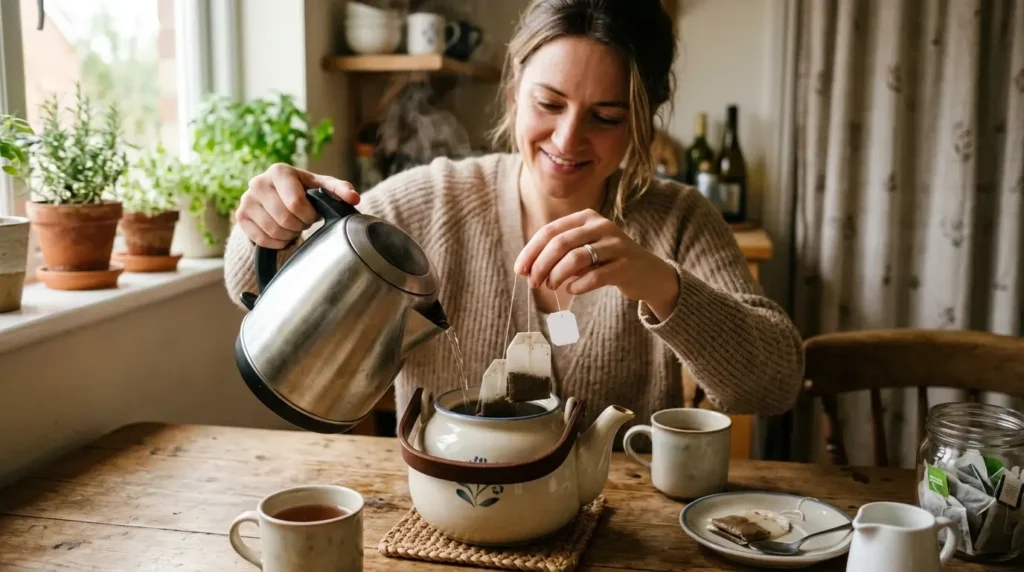
Teapots often get filed away as “for loose leaf only,” which leaves a lot of people pouring hot water over a single bag in a mug and never using the pot sitting in their cupboard. The truth is, a teapot works just as well with tea bags, and it’s actually the better choice any time you’re brewing for more than one person or just want a full pot to enjoy over an hour instead of one fast cup.
This guide walks through exactly how to use a teapot with tea bags, from warming the pot to knowing how many bags to use and how long to let them steep, so you end up with a pot of tea that tastes as good as the last cup as it did the first.
Can You Use Tea Bags in a Teapot?
Yes — a teapot is just a vessel for hot water and tea, and it doesn’t care whether the tea is loose or bagged. The only teapots that are actually built specifically for loose leaf are the ones with a built-in infuser basket, and even those work fine with tea bags; you simply skip the basket and drop the bags straight into the water.
Using a teapot with tea bags actually solves a problem that mugs don’t: brewing for a group. Instead of steeping four separate mugs and timing each one, you steep once in the pot and pour cups as needed. It also keeps the tea hot for longer, since a full teapot holds heat better than a single cup, and it means everyone at the table is drinking tea that steeped for the same amount of time, rather than some cups sitting and oversteeping while others are still weak.
Choosing the Right Teapot for Tea Bags
Any teapot will technically work with tea bags, but a few features make the process easier day to day. None of these are strict requirements — they’re just details worth knowing if you’re picking a teapot with tea bags specifically in mind.
Ceramic and porcelain teapots hold heat well and are the most common choice for everyday brewing. They’re a safe default for both black and herbal teas.
Glass teapots let you see the color of the tea as it steeps, which is useful for lighter teas like green or white where color is a good visual cue for strength.
Cast iron teapots retain heat longer than almost any other material, which is a plus if you’re serving tea slowly over an hour, though they take longer to warm up initially.
Teapots with a built-in infuser basket aren’t necessary for bags, but they’re not a problem either — just lift the basket out or push it aside and let the bags sit directly in the water instead.
Wide-mouthed lids make it noticeably easier to add and remove tea bags without having to fish around near the spout.
If you’re buying a teapot specifically for tea bags rather than loose leaf, there’s no need to pay extra for one with a fine mesh infuser — that feature is built for loose leaf and adds nothing when you’re brewing with bags.
What You’ll Need
A teapot (any material — ceramic, glass, cast iron, or stainless steel all work)
Tea bags (enough for the number of cups you’re brewing)
Freshly boiled or heated water, ideally filtered
A timer or clock
A spoon or small tongs for removing the bags
Cups for serving
Optional: a tea cozy, to keep the pot warm longer
How to Use a Teapot With Tea Bags (Step-by-Step)
Step 1 — Warm the Teapot
Before adding anything else, pour a small amount of hot water into the empty teapot, swirl it around for a few seconds, and pour it out. This warms the ceramic or glass so it doesn’t pull heat away from your tea the moment you add the bags and water. It’s a small step, but it noticeably improves how long the pot stays hot.
Step 2 — Add Your Tea Bags
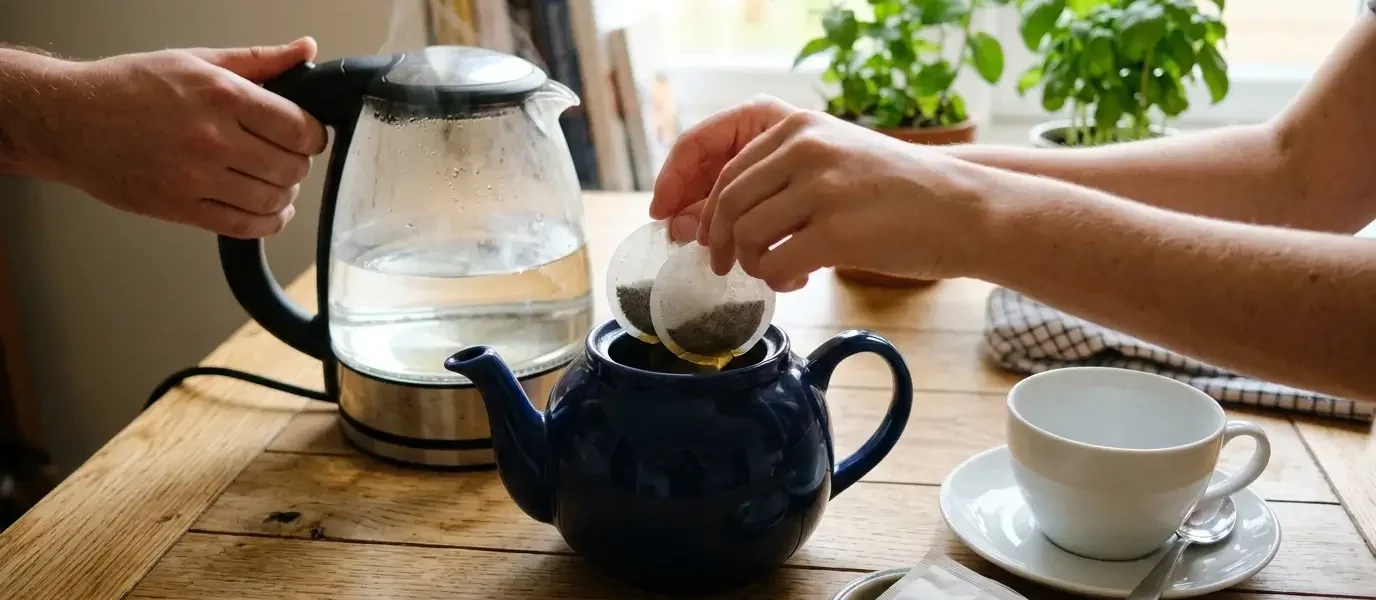
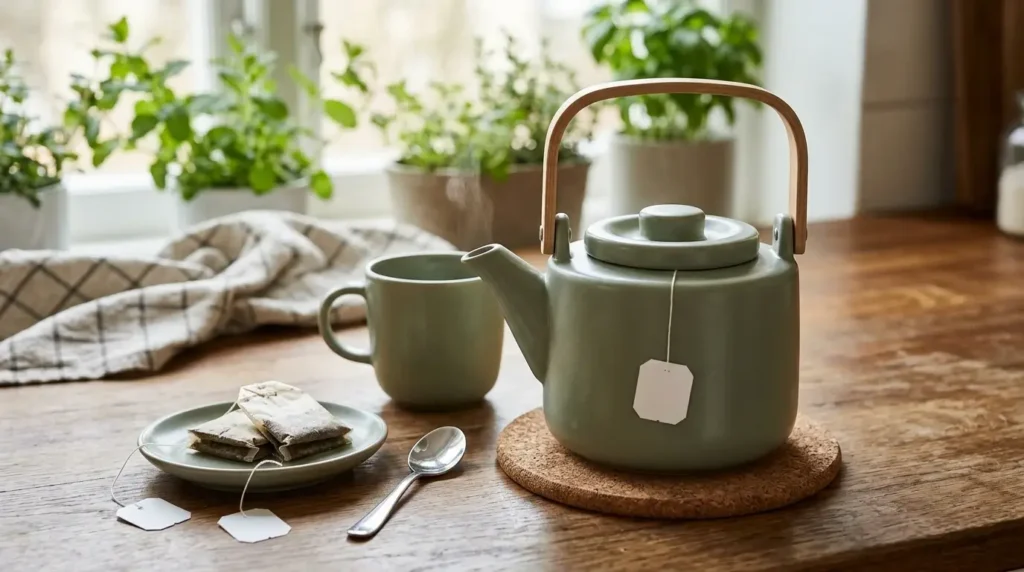
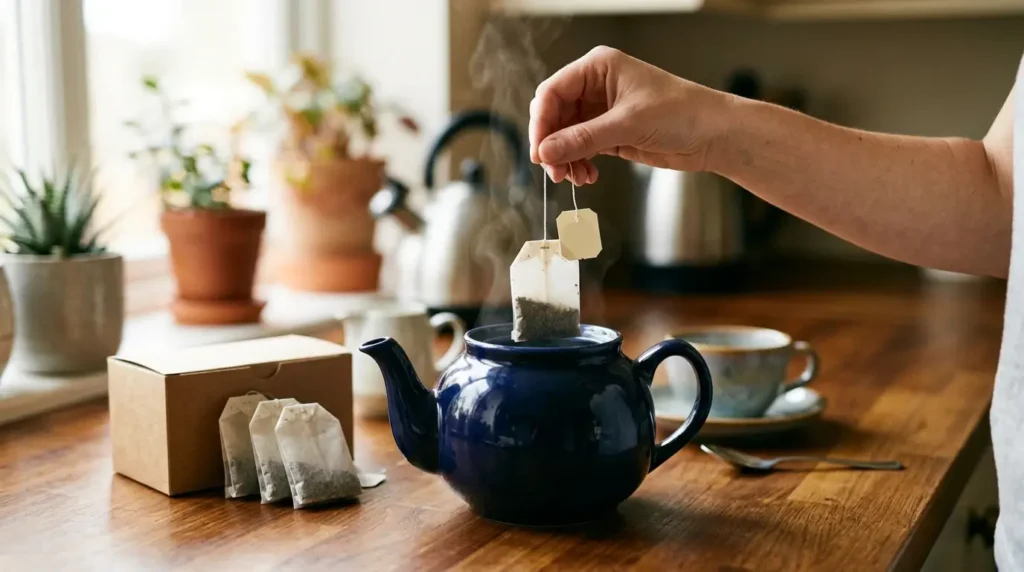
Place your tea bags directly into the empty, pre-warmed pot. Let the paper tags hang over the spout side or the lid opening if your teapot allows it — this makes them much easier to grab later without digging a spoon into hot water.
Step 3 — Add Hot Water at the Right Temperature
Pour hot water over the bags. The ideal temperature depends on the tea:
If you don’t have a thermometer, a rough guide works too: let boiling water sit for a minute or two before pouring it over green or white tea bags, since fully boiling water tends to scald the more delicate leaves and bring out a bitter, flat taste.
Step 4 — Steep for the Right Amount of Time
Cover the pot with its lid and let the bags steep. Steeping time varies by tea type:
Tea Type
Steep Time
Black tea
3–5 minutes
Green tea
2–3 minutes
Oolong tea
3–5 minutes
Herbal tea
5–7 minutes
White tea
4–5 minutes
Step 5 — Remove the Tea Bags
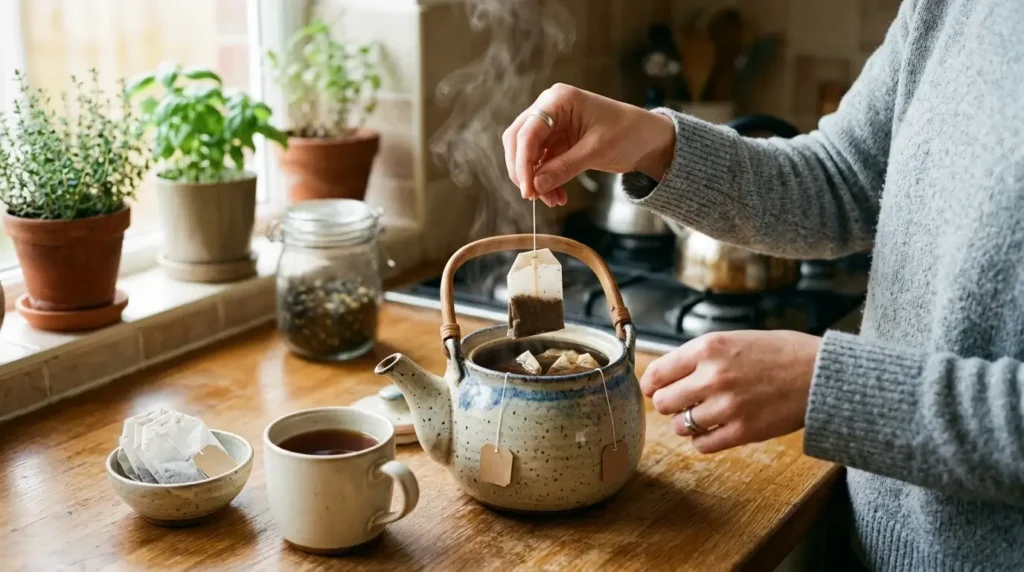
Once the steep time is up, take the bags out. This is the step people skip most often, and it’s the one that matters most — leaving bags in the pot after they’re done keeps releasing tannins, which turns the tea bitter and cloudy the longer it sits. Lift the bags out by their strings if they’re hanging over the rim, or use a spoon to scoop them out and set them on a small saucer.
Step 6 — Serve
Pour the tea into cups through the spout. If you’re using loose-leaf-style bags that occasionally leak fine particles, pouring through a small tea strainer keeps cups clear. Add milk, sugar, honey, or lemon at this point, whatever suits the tea and your taste.
The standard ratio is one tea bag per 8 ounces (roughly one cup) of water, then adjusted slightly for teapot size and personal taste:
Teapot Size
Approx. Volume
Tea Bags
Small (2-cup)
16 oz
2 bags
Medium (4-cup)
32 oz
3–4 bags
Large (6-cup)
48 oz
5–6 bags
If you prefer a lighter cup, go with one fewer bag than the table suggests. If you like your tea strong, add one more — just keep steep time the same and let the extra bag do the work, rather than steeping longer, which mostly adds bitterness rather than flavor.
Tips for Getting the Best Flavor
Use filtered water if your tap water has a strong mineral or chlorine taste — it comes through more in a full pot than in a single cup.
Don’t squeeze the bags when removing them. Squeezing forces out extra tannins and makes the tea taste bitter, even if the steep time was correct.
Match bag count to steep time, not the other way around. If you want stronger tea, add a bag rather than extending the steep.
Preheat the pot every time, even if it feels unnecessary. Cold ceramic pulls a surprising amount of heat out of the water in the first minute.
Use a tea cozy or trivet if you’re serving over a longer stretch of time, to keep the pot at a good temperature without oversteeping the tea inside it.
Store tea bags in an airtight container away from light and strong odors — they absorb smells easily, which affects the flavor before you’ve even brewed them.
Stir gently before pouring the first cup if the pot has been sitting for a minute after you removed the bags. This evens out the strength, since the tea nearest the bags tends to be slightly more concentrated than the tea near the surface.
Warm your cups too, not just the pot, if you’re serving on a cold day. A cold cup pulls heat out of the tea the moment it’s poured, which is easy to overlook when the pot itself was warmed correctly.
Common Mistakes to Avoid
Leaving bags in too long. This is the single most common issue and the main reason people say teapot tea “always turns bitter.”
Using fully boiling water for delicate teas. Green and white teas scald easily, producing a flat, grassy, bitter taste instead of a smooth one.
Overcrowding the pot. Too many bags for the water volume makes tea overly strong and often bitter, even with a short steep.
Skipping the preheat step. A cold pot cools the water faster, which can under-extract the tea and leave it weak.
Squeezing the bags on the way out. It feels like it’s “getting the last bit of flavor,” but it mostly adds bitterness.
Reusing the same water temperature for every tea. A single kettle setting works fine for black tea and herbal blends, but applying that same near-boiling water to green or white tea bags every time is one of the most common reasons people find those varieties “too bitter” and give up on them.
Forgetting to time the steep. A minute or two of guessing rarely lines up with the actual steep time a tea needs, and it’s easy to lose track of how long a pot has been sitting once you’re chatting or doing something else. A visible timer solves this more reliably than judging by color or smell.
FAQ
Can I use tea bags in any teapot, including ones with a built-in infuser basket? Yes. Just skip the infuser basket and drop the bags directly into the water — the basket is only needed for loose leaf, which needs room to expand and space for water to flow through it.
How many tea bags do I need for a 4-cup teapot? Generally 3 to 4 standard tea bags, adjusted up or down depending on how strong you like your tea.
Should I remove the tea bags before serving, or can I leave them in the pot? Always remove them once steeping is done. Leaving them in continues to extract tannins and will make the tea increasingly bitter the longer it sits, even after you’ve poured the first cup.
Can I reuse tea bags for a second pot? Most standard tea bags are designed for a single steep and lose most of their flavor after that. A few high-quality or specialty bags can handle a lighter second steep, but the results are usually noticeably weaker.
What’s the difference between using a teapot and a mug for tea bags? A teapot lets you brew and serve multiple cups at once with a single, consistent steep, and it holds heat longer than an individual mug — useful for sharing tea over a longer conversation or meal.
Do I need a tea strainer if I’m using bags instead of loose leaf? Not usually. Tea bags are sealed, so there’s little to no loose leaf debris. A strainer is optional and mainly useful if a bag happens to tear.
Can I use a teapot with tea bags to make iced tea? Yes, and it’s one of the easiest ways to batch-brew iced tea. Use roughly double the usual number of bags for the pot’s size, steep as normal in hot water, then pour the concentrated tea over a pitcher of ice — the melting ice dilutes it back down to normal strength while cooling it quickly.
Final Thoughts
Using a teapot with tea bags isn’t a compromise or a workaround — it’s simply a faster, more convenient way to brew the same pot of tea you’d get from loose leaf, with less cleanup. Warm the pot, use the right ratio for its size, steep for the right amount of time, and pull the bags out promptly, and you’ll get a full pot of tea that tastes just as good in the last cup as it did in the first.
Next time you reach for a single mug and a tea bag, consider pulling out the teapot instead — it takes the same amount of effort and gives you enough for the whole table.
Black Tea Extract that is rich in natural theaflavins and polyphenols that help protect your body from free radicals, promoting overall immune health and well-being
Contains blended amounts of Fruits and Veggies. All natural, with whole foods, fruit and vegetable supplement.Perfect for everyone looking to live a healthier lifestyle.