Ever wondered why your oolong tea tastes bitter or flat? Mastering the right oolong tea temp and time is the key to unlocking vibrant, aromatic flavors.
I’ll show you how to improve your daily tea ritual at home. This professional brewing guide will boost your confidence. You’ll make sure every cup is aromatic, balanced, and just right for you.
Key Takeaways
Learn the precise heat settings for optimal extraction.
Discover how duration impacts the final flavor profile.
Master simple techniques to avoid common bitterness.
Enhance your daily ritual with expert preparation methods.
Gain confidence in selecting the right equipment for your leaves.
Understanding the Complexity of Oolong Tea
Oolong tea is special because it falls between green and black tea in processing. This unique spot lets it offer a wide range of tastes. Even those who drink a lot of tea can be surprised by its flavors.
The Spectrum of Oxidation
Looking at oolong tea oxidation levels, I see a wide range of possibilities. Some leaves are lightly oxidized, giving a bright, floral taste. Others are more oxidized, leading to deep, woody flavors.
This oxidation level is key to the tea’s final taste. Tea makers control how much oxygen the leaves get. This artistry makes every batch unique.
Why Temperature and Time Matter
Knowing about oolong tea oxidation levels is just the start. You also need to get the brewing right. Temperature and time are critical to bring out the tea’s complex flavors.
Too hot water or too long steeping can make the tea taste harsh. Too cool water might make it taste thin. Precision is essential to get the perfect balance in every cup.
Essential Equipment for the Perfect Brew
The right tea brewing equipment makes a big difference. It turns a simple act into a professional experience. Using the right tools lets you control the flavor better.
Choosing the Right Teaware
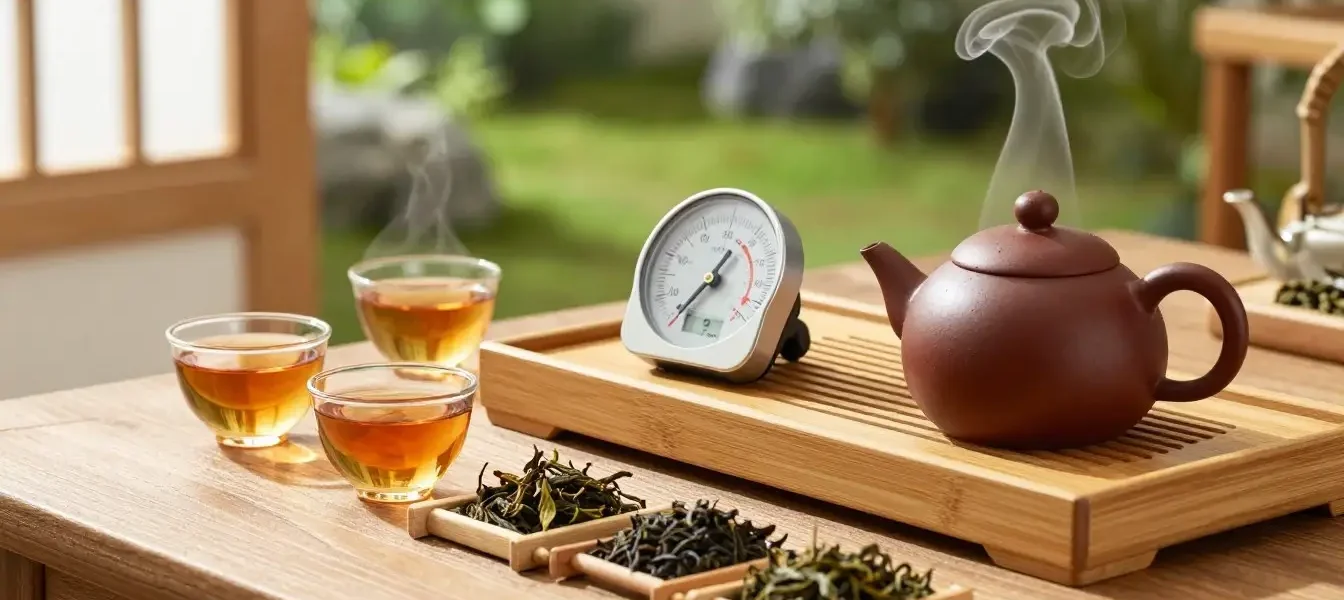
Choosing the right vessel is key. A gaiwan is often my top pick. Its porcelain doesn’t absorb flavors, so you can really taste the tea.
For roasted oolongs, a clay teapot is great. The clay absorbs tea oils, making future brews more aromatic. The right vessel lets tea leaves unfurl and release their flavors.
The Importance of Water Quality
Many overlook the most important ingredient: water. The water quality for tea is as critical as the tea itself.
Tap water can hide the tea’s delicate flavors. I recommend filtered or spring water for a clean taste. This simple change makes your tea taste crisp and clear, showing off the tea maker’s skill.
Determining the Ideal Oolong Tea Temp and Time
Finding the perfect cup of tea starts with the right water temperature. Oolong teas vary widely, so knowing the oolong tea temp and time is key. Understanding how heat impacts the leaves lets you control the flavor in your cup.
Lightly Oxidized Oolongs
Lightly oxidized teas are delicate, like green teas. They need water between 175°F and 185°F to keep their bright, floral, and grassy notes. Too hot water can scald the leaves, making the tea bitter and losing its sweetness.
Choosing the best water temperature for oolong brings out the tea’s subtle aromas. Moderate heat keeps the infusion smooth and refreshing. This method showcases the complex, garden-like qualities of high-mountain teas.
Darkly Oxidized and Roasted Oolongs
Darker, roasted oolongs need higher heat. I suggest water near 195°F to 205°F to bring out their deep, toasted, and stone-fruit characteristics.
Higher heat is essential for these teas. It helps to extract the rich, honey-like depth from the tightly rolled or heavily oxidized leaves. Getting the oolong tea temp and time right for these teas elevates your daily tea time to a sophisticated experience.
Your journey to a top-notch tea experience begins with preparing your leaves. The right loose leaf oolong preparation starts with picking and measuring your tea carefully.
By taking these early steps, you make sure each brew is balanced. A bit of patience here can greatly improve your tea.
Measuring the Correct Amount
Finding the perfect leaf-to-water ratio is key for a great brew. Start with a standard ratio and adjust to your liking.
For a stronger flavor, add more leaves. For a lighter taste, use fewer leaves. This helps you find the perfect balance.
Vessel Type
Water Volume
Tea Amount
Gaiwan
100 ml
5-7 grams
Small Teapot
200 ml
8-10 grams
Large Teapot
400 ml
12-15 grams
The Role of Leaf Expansion
Knowing about tea leaf expansion is key. Oolong leaves expand a lot while steeping. They need room to release their full flavor.
Too many leaves in a small infuser won’t unfurl well. Make sure leaves have enough space to expand properly. This is a key step in loose leaf oolong preparation that many miss.
With enough space, leaves unfurl fully, giving a more complex and nuanced aroma. Always pick a vessel that lets leaves expand naturally for the best infusion.
Step One: Heating Your Water to the Right Temperature
Getting the water temperature just right is key to bringing out the flavors in oolong tea. When you learn how to brew oolong tea, you find out that water temperature is very important. If the water is too hot, it can burn the leaves and make the tea taste bitter.
Using a Variable Temperature Kettle
A variable temperature kettle is a must-have for tea lovers. It lets you pick the perfect temperature for your tea with just a button press. This keeps the leaves from getting damaged and losing their subtle aromatic notes.
Having this kettle makes your tea-making routine easier. It ensures you always use the best water temperature for oolong. This consistency makes your tea taste better every time.
Manual Temperature Control Techniques
Even without a special kettle, you can make great tea. A simple trick is to let boiling water cool down a bit before using it. Patience is key here, as the water cools down slowly after being removed from the heat.
You can also mix a bit of cool water with boiling water to lower the temperature quickly. This method is great for those who are short on time. Always check with a thermometer if you’re not sure, as it helps you get it right next time.
Method
Precision Level
Ease of Use
Best For
Variable Kettle
High
Very Easy
Daily Brewing
Manual Cooling
Medium
Moderate
Occasional Use
Thermometer
High
Moderate
Precision Testing
Step Two: Warming Your Teaware
Warming your teaware is a key step for a great cup of tea. Many beginners skip this, but it’s essential for tea lovers. It helps your tea reach its best flavor.
Why Pre-Warming Matters
Hot water poured into a cold teapot quickly lowers the water’s temperature. This can stop your tea leaves from steeping right. Warming teaware prevents this, keeping the water at the right temperature.
This simple step improves the taste of your tea. A warm vessel lets the leaves steep more evenly. This is key for delicate teas like oolongs.
The Impact on Heat Retention
Keeping the water at a steady temperature is key for a perfect tea. Warming teaware helps maintain this temperature. This lets the tea’s flavors release slowly and fully.
Without warming, the temperature can drop too much. This can make your tea taste flat. Always pour hot water into your teaware, let it sit, and then discard it before adding tea. This keeps your brewing environment perfect.
The first infusion is where the magic begins. It’s the moment when water meets leaf, revealing the tea’s true character. This step needs your full attention for the best start.
Timing the Initial Steep
The first steep is often shorter, as per a oolong tea steeping guide. This short time prevents too much bitterness. It lets the tea’s floral or roasted notes shine through.
For a perfect oolong tea infusion time, remember these tips:
Use a timer for consistent steeping.
Start with 30 to 60 seconds for most teas.
Adjust time based on leaf tightness.
Observing the Leaf Unfurling
Watch the leaves unfurl as they open. This shows quality and processing. You’ll see them expand and color the water.
Quick unfurling means high-quality leaves. Mindful observation lets you connect with the tea before tasting. This makes the experience richer and more rewarding.
Step Four: Mastering Multiple Infusions
Learning to do multiple infusions oolong lets you see how your tea changes. High-quality leaves can be steeped many times. Each time, they show new flavors and smells.
Adjusting Time for Subsequent Steeps
As you steep your tea more times, the leaves give up more of their flavor. You need to gradually increase your oolong tea infusion time for each steep.
Start with thirty seconds for the first steep. Then, add five to ten seconds for the second. This keeps your tea strong and full, not weak or watery.
“Tea is a journey, not a destination; it requires patience to reveal its true heart.”
Maintaining Flavor Consistency
Keeping the flavor the same in each infusion takes practice. Watch the color of the tea and smell the leaves. This helps you know when it’s ready.
If the tea looks too light, steep it a bit longer. Paying attention to these details lets you enjoy the tea’s changing flavors. Learning multiple infusions oolong shows the skill in making your tea.
Common Brewing Mistakes to Avoid
Many beginners face the same issues when brewing tea. Even with top-quality leaves, small mistakes can spoil the taste. By following these oolong tea brewing tips, you can make every cup perfect.
Preventing Over-Steeping Bitterness
Leaving leaves in the water too long is a common mistake. This makes the tea taste sharp and unpleasant. To avoid bitter oolong tea, use a timer to steep correctly.
If your tea is too strong, try steeping for thirty seconds less next time. Patience is key. Learning to pull the leaves out at the right time makes your tea smoother.
Avoiding Water That Is Too Hot
Using boiling water for delicate teas is another mistake. High heat can make the tea taste burnt. It’s important to avoid bitter oolong tea by using the right water temperature.
If you don’t have a variable temperature kettle, let boiling water sit for a few minutes. This helps keep the tea’s delicate oils and aromas. Mastering these oolong tea brewing tips will improve your tea experience and let you enjoy the tea’s complexity.
Fixing your oolong tea issues is a fun part of the journey. Every cup that’s not perfect is a chance to learn more about your taste. By noticing how small changes affect the taste, you get better at making tea.
Adjusting for Personal Preference
If your tea is too weak or lacks body, you can make changes. Try adding half a gram more leaf to thicken the flavor. Or, steep it for ten to fifteen seconds longer to bring out deeper flavors.
If the tea is too strong or astringent, try lowering the water temperature. Shortening the steep time can also make it smoother and more delicate. Personalizing your brew ensures every cup is enjoyable.
Identifying Quality Issues
Sometimes, the problem is not how you brew it but the tea itself. If adjusting your brewing doesn’t help, the tea might be of poor quality. Freshness is key, as old or poorly stored tea loses its aroma and flavor.
It takes patience to tell if it’s a brewing mistake or a quality problem. If the leaves look dull or smell stale before brewing, the tea is likely old. Here’s a guide to help you troubleshoot your oolong tea.
Symptom
Potential Cause
Recommended Fix
Bitter Taste
Water too hot
Lower temperature
Weak Flavor
Too few leaves
Increase leaf amount
Flat Aroma
Stale leaves
Check storage/freshness
Astringency
Steeped too long
Reduce infusion time
Storing Your Oolong Tea for Freshness
After finding your favorite oolong tea, keeping it fresh is key. Proper oolong tea storage ensures every cup tastes as good as the first. This is the secret to enjoying your tea at its best.
Protecting Leaves from Light and Air
Light and air harm your tea. Sunlight’s UV rays can damage the essential oils that give tea its aroma. This results in a dull, flat taste.
Oxygen also causes problems. It makes the leaves oxidize and lose their flavor. To keep fresh oolong tea leaves fresh, keep them away from air. Make sure your storage is airtight to stop moisture and smells from getting in.
Ideal Storage Conditions
The perfect spot for your tea is cool, dark, and dry. Store your containers in a cupboard or pantry, away from heat. Consistency is key for keeping your tea quality high.
Don’t store your tea near strong-smelling items like spices or coffee. These smells can easily get absorbed by the leaves. By following these tips for oolong tea storage, you’ll keep your fresh oolong tea leaves in top shape for months.
Conclusion
Making the perfect cup of oolong is a mix of science and personal touch. You now know how to turn simple leaves into a rich experience.
Explore the small details in each steep. Your path to the perfect oolong is all about your taste and likes.
Try different water temperatures and steep times with your favorite teaware. Even small changes can reveal new flavors and scents.
I want you to feel confident every time you make tea. Share your favorite finds with friends or enjoy it alone.
Keep discovering the world of tea with excitement. Every time you steep, you get to improve and enjoy the beauty in your cup.
What is the ideal water temperature for brewing different types of oolong?
The temperature depends on the leaves’ oxidation level. For lightly oxidized oolongs, like Tie Guan Yin, use water between 180°F and 190°F. Darker oolongs, like Da Hong Pao, need hotter water, 200°F to 212°F, for their deep flavors. A variable temperature kettle from Fellow or Breville makes it easy to get it right.
How long should I let my oolong tea steep to avoid bitterness?
Start with a short steep, 45 to 90 seconds for Western-style brewing, or 15 to 20 seconds with a gaiwan. You can increase the time for later infusions to keep the flavor consistent.
Why does the quality of water matter so much for the final taste?
Tap water can hide the tea’s flavors with minerals or chlorine. Using filtered water, like from a Brita pitcher or Fiji spring water, makes the tea taste cleaner and sweeter.
Do I really need a special teapot to brew oolong correctly?
While a standard infuser works, the right teaware makes a big difference. A Yixing pot retains heat well and can enhance flavors over time. For a clear view of the leaves, a glass vessel or ceramic gaiwan is ideal.
How many times can I reuse the same oolong tea leaves?
High-quality oolong can be steeped 5 to 8 times. Each steep reveals different flavors, from bright top notes to a sweet finish.
What is the best way to store my oolong tea to maintain its freshness?
Keep your tea away from light and air to prevent flavor loss. Use an airtight container or tea tin and store it in a cool, dark place. This way, your tea will stay fresh from the day it was packaged.
Why is leaf expansion important during the brewing process?
Oolong leaves need room to expand during brewing. This allows them to unfurl and release their oils and flavors. If they’re cramped, the infusion won’t be even and won’t reach its full aroma.
Black Tea Extract that is rich in natural theaflavins and polyphenols that help protect your body from free radicals, promoting overall immune health and well-being
Contains blended amounts of Fruits and Veggies. All natural, with whole foods, fruit and vegetable supplement.Perfect for everyone looking to live a healthier lifestyle.