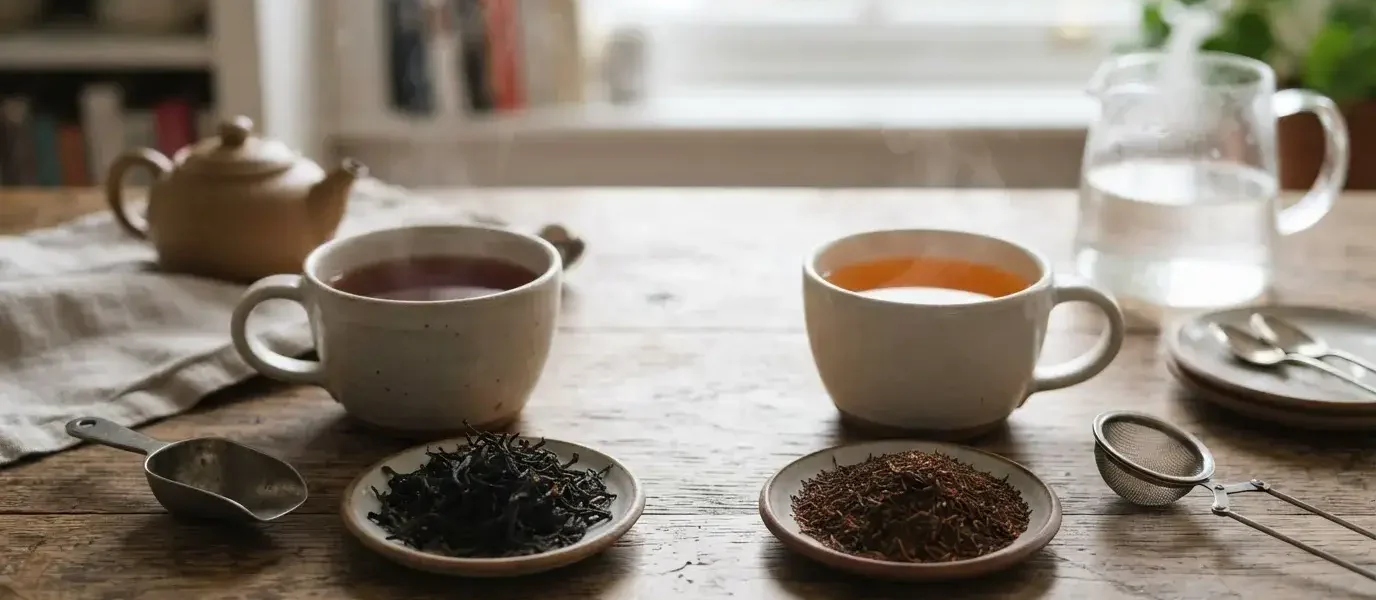
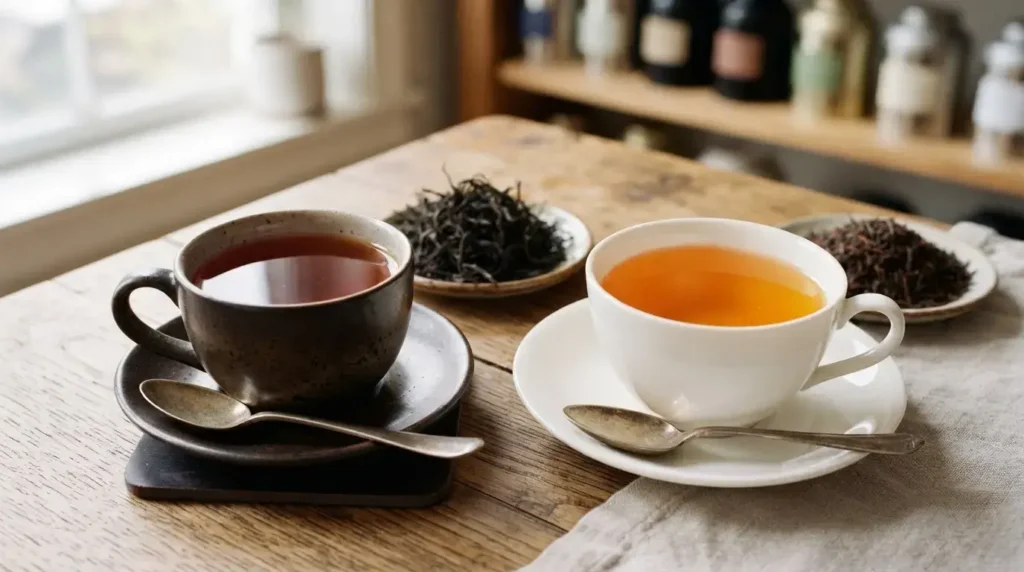
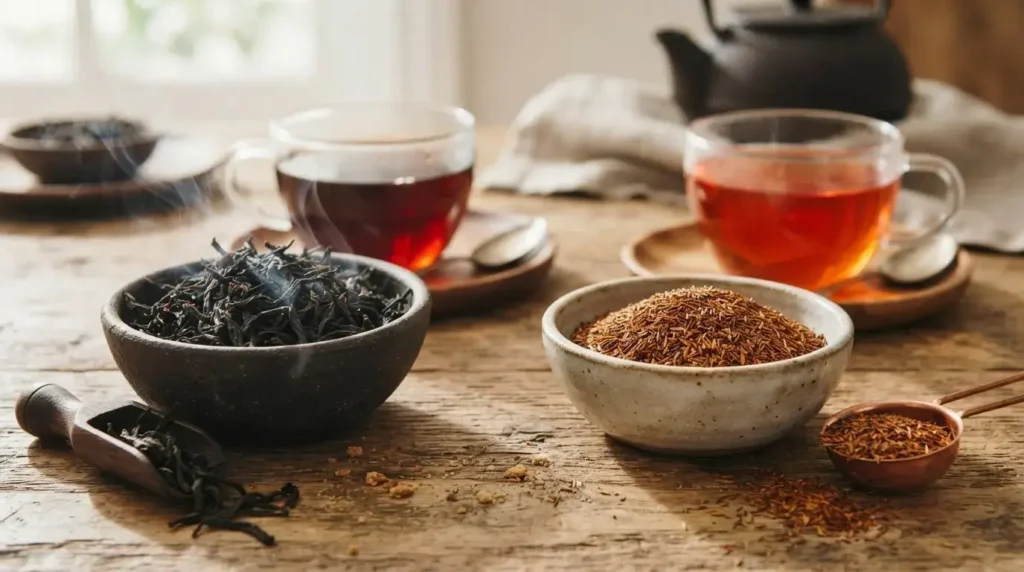
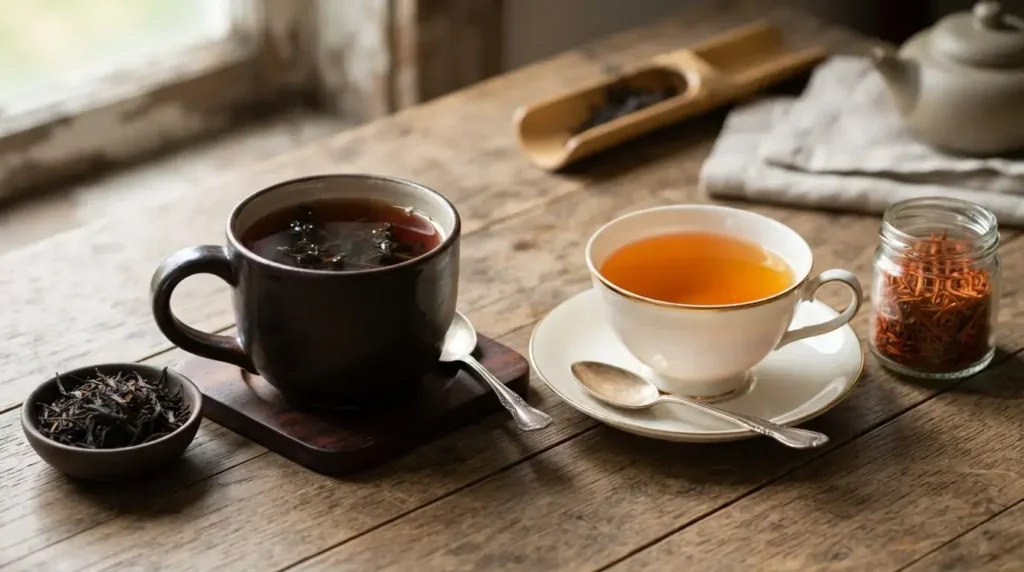
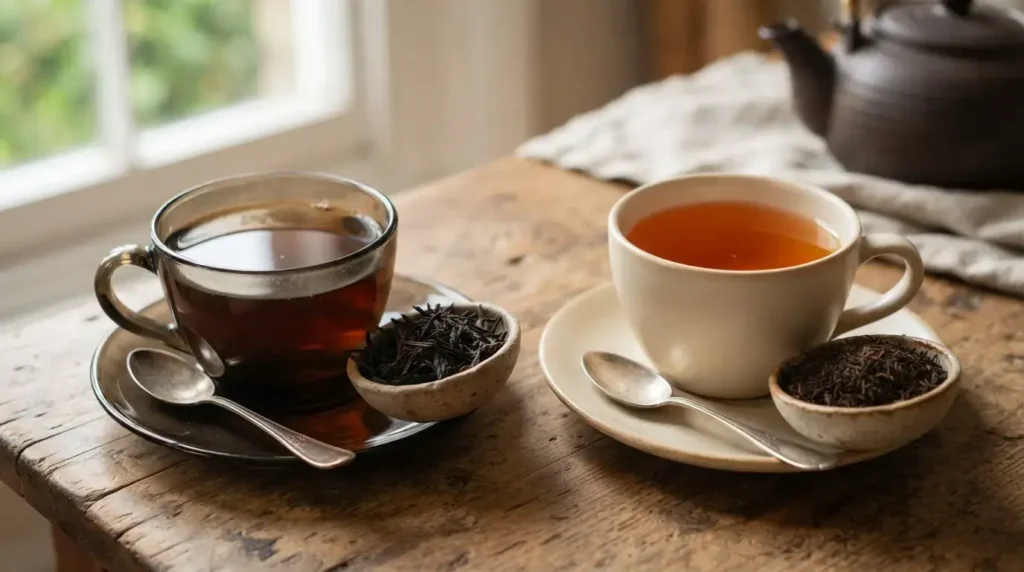
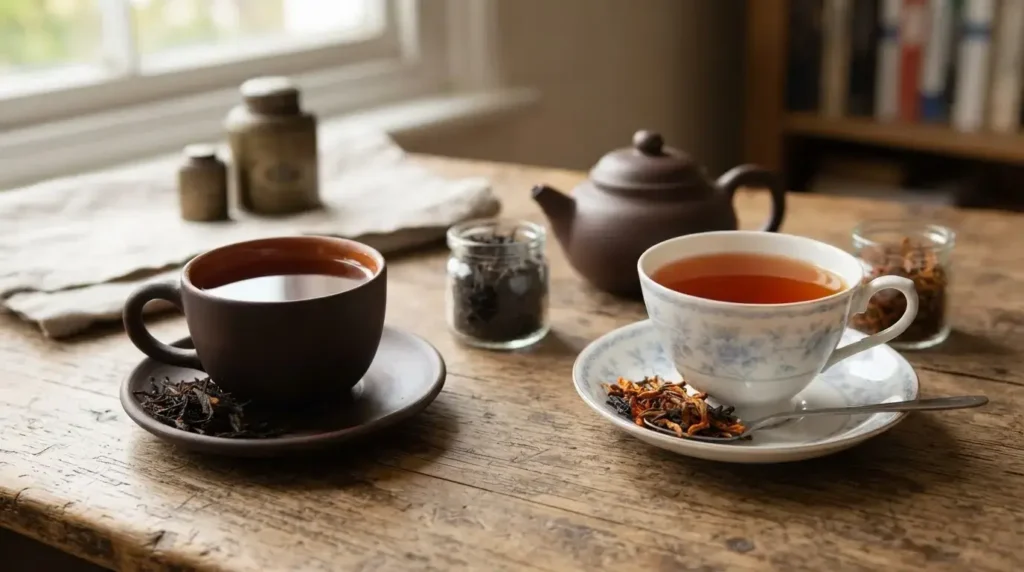
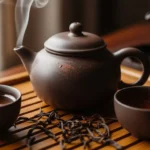
Brew a cup of lapsang souchong and your kitchen smells like a campfire on a cold night. Brew a cup of Ceylon and it smells like a bright, citrusy morning. Both are black teas, yet they could hardly feel more different in the cup.
If you have ever stood in front of a tea shelf wondering which one to try, this guide to lapsang souchong vs ceylon tea is for you. We will compare where each tea comes from, how it is made, what it tastes like, and how to brew it well. By the end, you will know exactly which one belongs in your cup (or why you might want both).
Meet the Contenders
Before we get into the details, let us introduce each tea on its own terms.
Lapsang Souchong in Brief
Lapsang souchong is a Chinese black tea from the Wuyi Mountains of Fujian province. Its calling card is smoke. The leaves are dried over burning pinewood, which gives the tea its famous aroma of campfire, resin, and sometimes a hint of dried longan fruit.
It is a polarizing tea in the best way. Some people fall in love at the first sip, while others need a few cups to get used to it.
Ceylon Tea in Brief
“Ceylon” is the trade name for tea grown in Sri Lanka, even though the country dropped the old colonial name decades ago. It is a broad category rather than a single tea, covering everything from delicate, floral high-mountain teas to bold, dark lowland ones.
Most Ceylon black tea is known for being brisk, bright, and citrusy, with a clean finish. It is a classic breakfast tea and a staple of iced tea pitchers around the world.
The Quick Verdict
If you want something bold, smoky, and conversation-starting, lapsang souchong is your tea. If you want something crisp, versatile, and easy to drink every day, Ceylon wins. The rest of this article explains why, and how to get the best out of each.
Origins and How Each Tea Is Made
The difference between these teas starts long before they reach your kettle. Geography, climate, and processing methods shape almost everything you taste.
Wuyi Mountains and Pine Smoke
Lapsang souchong is traditionally linked to the Tongmu area of the Wuyi Mountains, and the tea is often called Zhengshan Xiaozhong in China. It is generally credited as one of the earliest black teas ever made, with origins that go back several centuries.
A popular legend says the smoky style was born by accident. Soldiers occupied a tea factory and delayed the work, so the farmers sped up the drying by placing the leaves over pine fires. The result was a smoky tea that happened to delight buyers, especially in Europe.
Today, the leaves are withered, rolled, oxidized, and then dried or smoked over pinewood. Producers also make unsmoked versions of this tea, which taste sweet and malty rather than smoky. When you see “smoked” or “traditional” on the label, you can expect the campfire character.
Sri Lanka’s Growing Regions
Ceylon tea has a much younger history. Commercial tea planting took off in the 1860s, when a coffee disease devastated plantations across the island and growers turned to tea instead. Today, Sri Lanka’s tea is typically grouped by elevation:
High-grown (such as Nuwara Eliya and Dimbula): lighter, more aromatic, often floral or citrusy.
Mid-grown (such as Kandy): a balanced, rounded cup with good body.
Low-grown (such as Ruhuna): darker, stronger, and more robust, often with a slightly sweet, earthy depth.
This range is why two cups of “Ceylon” can taste noticeably different. When you shop, check the region or elevation to find the style you like.
Tea in Culture
Lapsang souchong helped introduce Europe to black tea. Its bold, long-lasting flavor traveled well on long sea voyages, and it became a fashionable drink in Britain and beyond. Today it also shows up in kitchens and bars, where chefs and bartenders use it to add a smoky note to sauces, syrups, and cocktails.
Ceylon, meanwhile, became synonymous with the British cup of tea. Sri Lanka grew into one of the world’s major tea exporters, and Ceylon black tea is still the backbone of many classic breakfast and afternoon blends. Both teas carry a long story, just from opposite sides of the map.
Why Processing Matters
Both teas are fully oxidized black teas, so they share a basic backbone of malty, rich flavor. The big divider is the smoke. Lapsang souchong picks up its aroma from wood fire, while Ceylon gets its character from terroir and careful oxidation.
Put simply, one tea tastes of the fire, and the other tastes of the hills.
This is the heart of the lapsang souchong vs ceylon tea debate. Let us walk through what you will actually notice in the cup.
Aroma
Lapsang souchong announces itself before you take a sip. Expect pine smoke, a touch of resin, and sometimes a sweet, dried-fruit note underneath. Some drinkers compare it to a campfire, a leather armchair, or smoked meat.
Ceylon smells fresher and lighter. Depending on the region, you may notice citrus peel, honey, malt, or a faint floral note.
Taste
The first sip of lapsang souchong is smoky, but a good one is not harsh. Behind the smoke, you will often find sweetness, a gentle woodiness, and a smooth, mellow finish.
Ceylon tastes brisk and clean. High-grown teas lean bright and delicate, while low-grown ones lean bold and malty. There is rarely anything confusing about a Ceylon, which is part of its charm.
Body and Finish
Lapsang souchong usually has a smooth, rounded body with low astringency, and the smoky flavor lingers on the palate. Ceylon tends to be crisper and more astringent, finishing quickly and leaving your mouth refreshed.
Many readers want to know how these teas compare beyond flavor. Here is what matters, kept honest and simple.
Caffeine
Both teas are black teas, so their caffeine levels sit in a similar range. An 8-ounce cup typically has roughly 40 to 70 mg, which is less than a typical cup of coffee. The exact number depends on leaf amount, water temperature, and steeping time.
That means neither tea is dramatically “stronger” in caffeine. If a lapsang feels stronger, that is the smoky flavor talking.
Antioxidants
Black teas, including both of these, contain polyphenols such as theaflavins and thearubigins. These plant compounds are a major reason tea is studied in nutrition research. Still, tea is a pleasant part of a balanced routine, not a treatment for any condition.
A Note on Smoked Tea
Lapsang souchong is smoked, and as with other smoked foods, moderation is a sensible approach. Most people enjoy a cup or two a day without any issue. If you have a health concern or are unsure whether it suits you, ask your doctor.
Brewing and Pairing Guide
Good brewing makes a big difference with both teas. The basics are nearly identical, with a few tweaks that bring out each tea’s best side.
Brewing Lapsang Souchong
Use about 2 to 3 grams of leaf (roughly one heaping teaspoon) per 8 ounces of water.
Heat water to just under boiling, around 95°C (203°F).
Steep for 3 to 4 minutes, then taste and adjust.
If you find it too smoky, shorten the steep or use slightly less leaf next time.
Lapsang souchong also handles multiple infusions well. For a gongfu-style session, use more leaf in a small pot with short steeps of 10 to 20 seconds, and the smoke will gradually soften and reveal sweeter notes.
Brewing Ceylon
Use about 2 to 3 grams of leaf per 8 ounces of water.
Heat water to a full boil, around 95 to 100°C (203 to 212°F).
Steep for 3 to 5 minutes. High-grown teas prefer the shorter end, while low-grown teas can handle more.
Remove the leaves promptly to avoid bitterness.
Milk, Ice and Lemon
Ceylon is the more flexible player here. It takes milk and sugar well, makes a bright iced tea, and welcomes a slice of lemon. Low-grown Ceylon is especially good with milk because its bold flavor stands up to it.
Lapsang souchong can take a splash of milk, and some people love it that way. Others prefer it plain so the smoke stays front and center. Try it both ways to see where you land.
Food Pairings
Pairing is where these two teas really diverge.
Lapsang souchong: smoked salmon, aged cheddar, blue cheese, grilled meats, dark chocolate, and dried fruit. It is also used in cooking, from tea-smoked chicken to marinades and savory sauces.
Ceylon: scones with jam, shortbread, lemon cake, cucumber sandwiches, spiced biscuits, and a full English breakfast.
A fun experiment is to serve both at a tasting, with a savory snack for the lapsang and something sweet for the Ceylon, and let your guests argue about which they prefer.
There is no wrong answer in the lapsang souchong vs ceylon tea matchup. The right pick depends on your mood, your meal, and your taste buds.
Choose lapsang souchong if you enjoy smoky flavors (think smoked paprika, peaty whisky, or barbecue), want a tea for savory food, or love trying unusual things.
Choose Ceylon if you want a dependable everyday black tea, enjoy milk or lemon in your cup, or plan to make iced tea.
Choose both if you like variety. Ceylon for the morning, lapsang for a cozy evening.
If you are still unsure, buy a small amount of each rather than a big tin. Tasting them back to back, in the same cups with the same water, is the quickest way to find your favorite.
Buying Tips: What to Look For
Quality varies widely with both teas, so a few quick checks will save you money and disappointment.
For lapsang souchong, look for whole, dark, twisted leaves and a rich, sweet smoke rather than a sharp, acrid smell. Some cheaper versions are heavily smoked to hide weak leaf, which can taste harsh or tarry. Labels such as “Tongmu” or “Zhengshan Xiaozhong” often point to a more traditional product, and a smaller tin from a specialist seller is a good way to test it.
For Ceylon, check the region or elevation, the grade (such as OP or BOP), and the harvest date if it is listed. Whole-leaf grades generally give a smoother, more nuanced cup, while broken-leaf grades brew faster and stronger, which suits tea bags and milk tea. Store either tea in an airtight tin away from light, heat, and strong smells so the flavor stays fresh.
Frequently Asked Questions
Is lapsang souchong stronger than Ceylon tea?
Lapsang souchong tastes stronger because of its smoky aroma, but caffeine levels are similar for both teas. Ceylon can actually feel stronger in a different way, since low-grown varieties are bold and brisk. Strength in the cup mostly depends on how much leaf you use and how long you steep.
Can you add milk to lapsang souchong?
Yes, you can. A small splash of milk softens the smoke and rounds out the flavor, though it is a matter of taste. Ceylon is the more traditional choice for milk tea.
Which tea is better for beginners?
Ceylon is the easier starting point because its flavor is familiar and approachable. Lapsang souchong is an acquired taste, so start with a light steep and consider a milder or lightly smoked version first.
Why does lapsang souchong taste like smoke?
The leaves are dried over burning pinewood, and they absorb the aroma of the smoke. This is a deliberate step in the traditional process, not a flaw. Unsmoked versions of the same tea style exist if you prefer a sweeter cup.
Can I make iced tea with lapsang souchong or Ceylon?
Both work. Ceylon is the classic choice for iced tea because it stays clear and bright when chilled. Cold-brewed lapsang souchong is surprisingly refreshing, with a gentler, subtler smokiness.
Can I blend lapsang souchong with Ceylon?
Absolutely. A little lapsang goes a long way, so try one part lapsang to three or four parts Ceylon. Many “Russian Caravan” style blends add a touch of lapsang souchong to a black tea base for that same effect.
Conclusion
The lapsang souchong vs ceylon tea showdown comes down to personality. Lapsang souchong is smoky, bold, and full of character, perfect for savory meals and cozy evenings. Ceylon is bright, brisk, and endlessly versatile, ideal for everyday sipping, milk tea, and iced tea.
Neither tea is better than the other, and both reward good brewing and fresh leaf. The best way to settle the debate is to taste them yourself. Pick up a small tin of each, brew them side by side, and see which one makes you reach for a second cup.
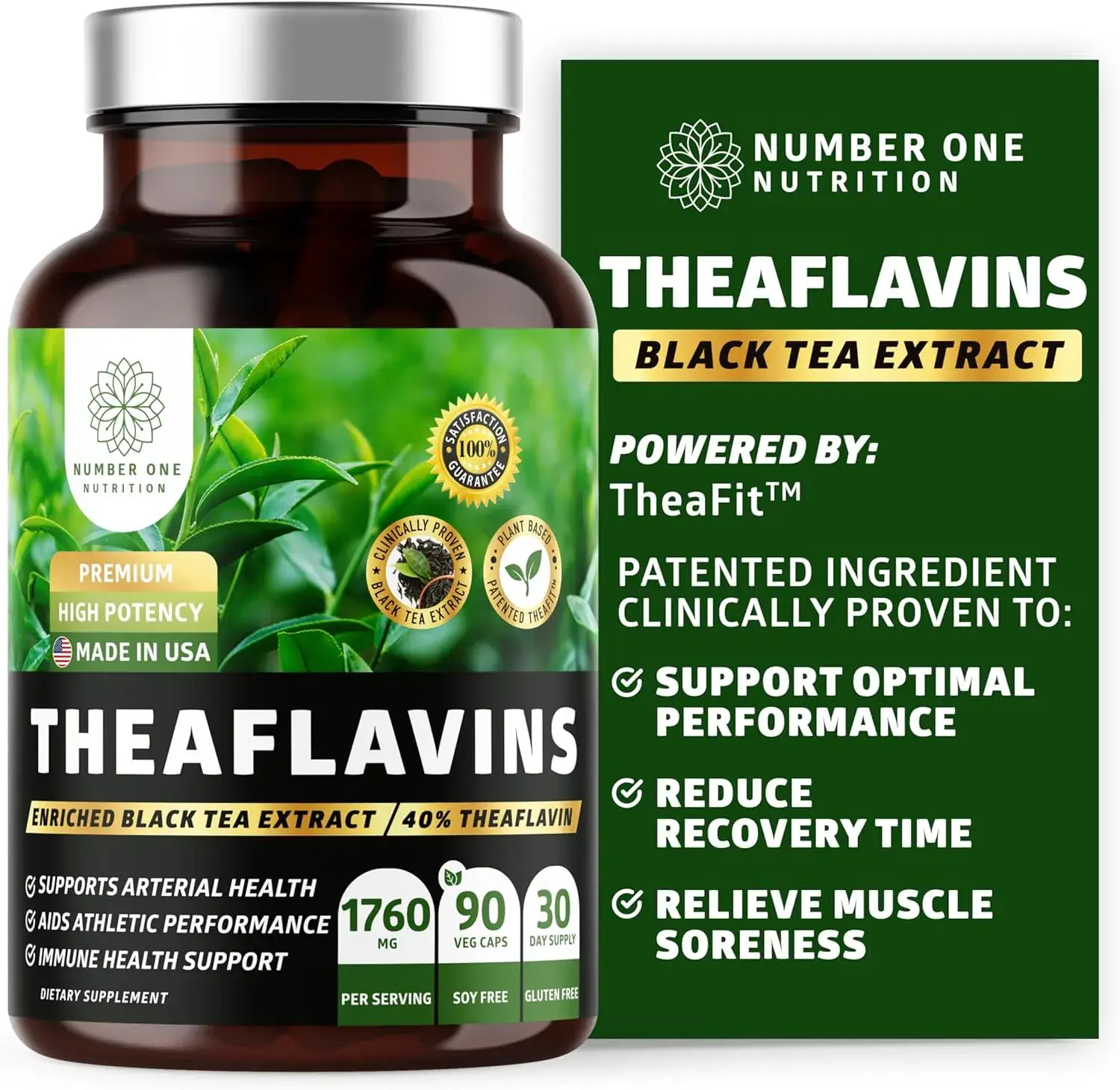
Black Tea Extract that is rich in natural theaflavins and polyphenols that help protect your body from free radicals, promoting overall immune health and well-being
Contains blended amounts of Fruits and Veggies. All natural, with whole foods, fruit and vegetable supplement.Perfect for everyone looking to live a healthier lifestyle.