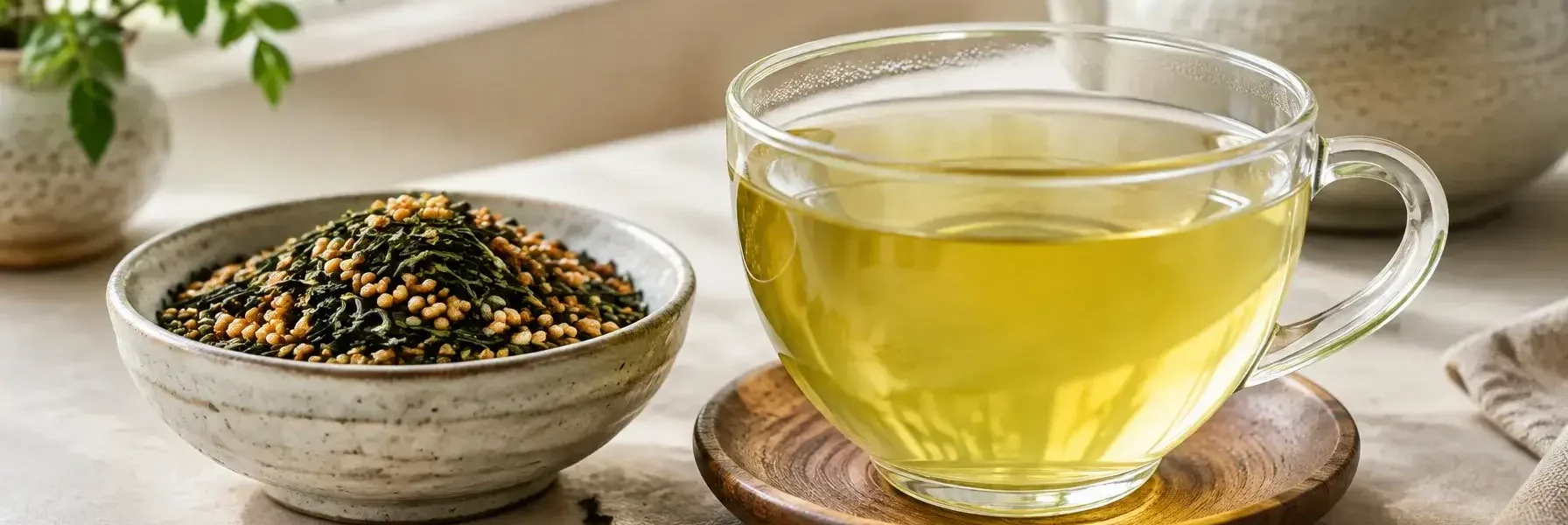
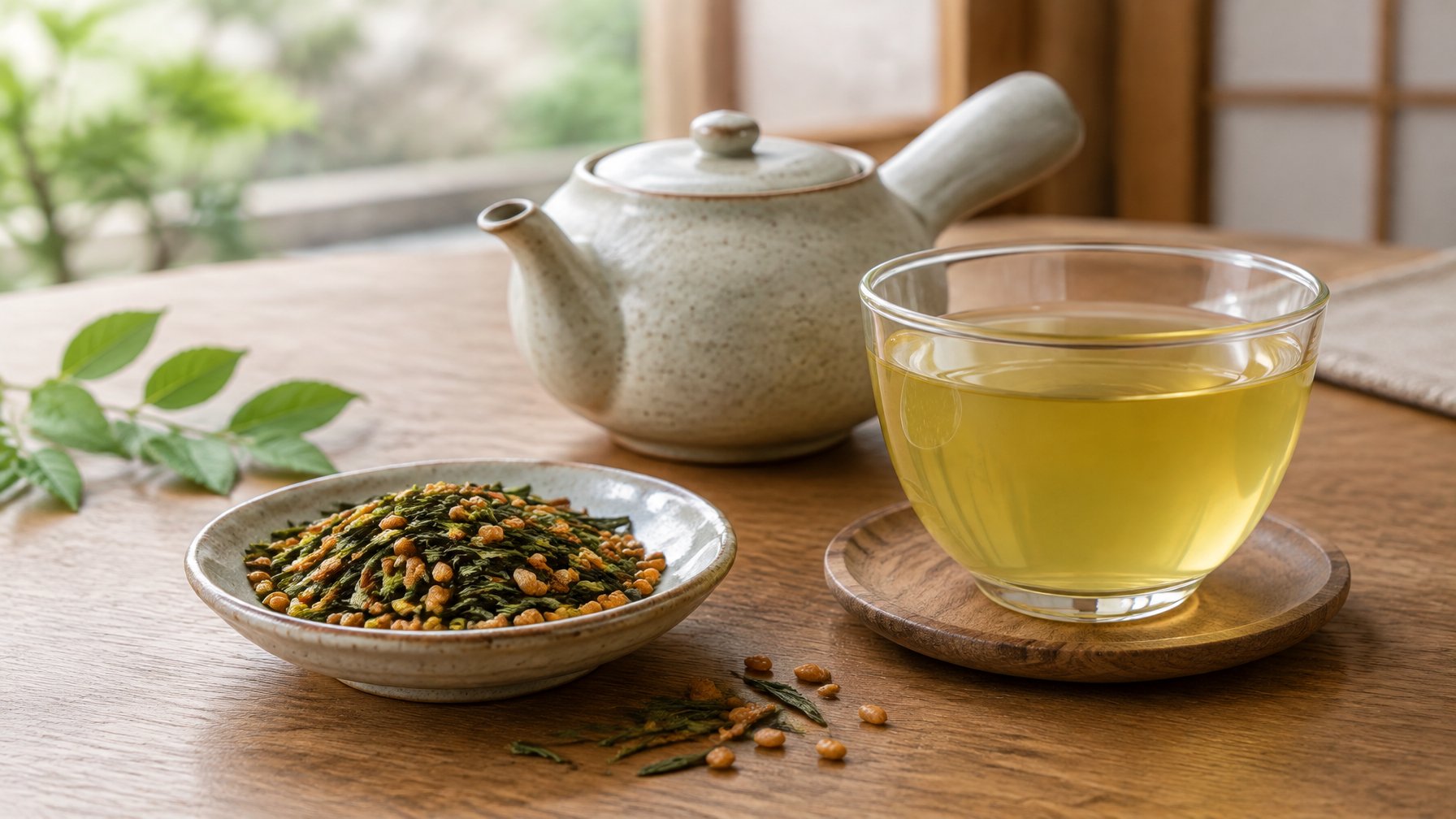
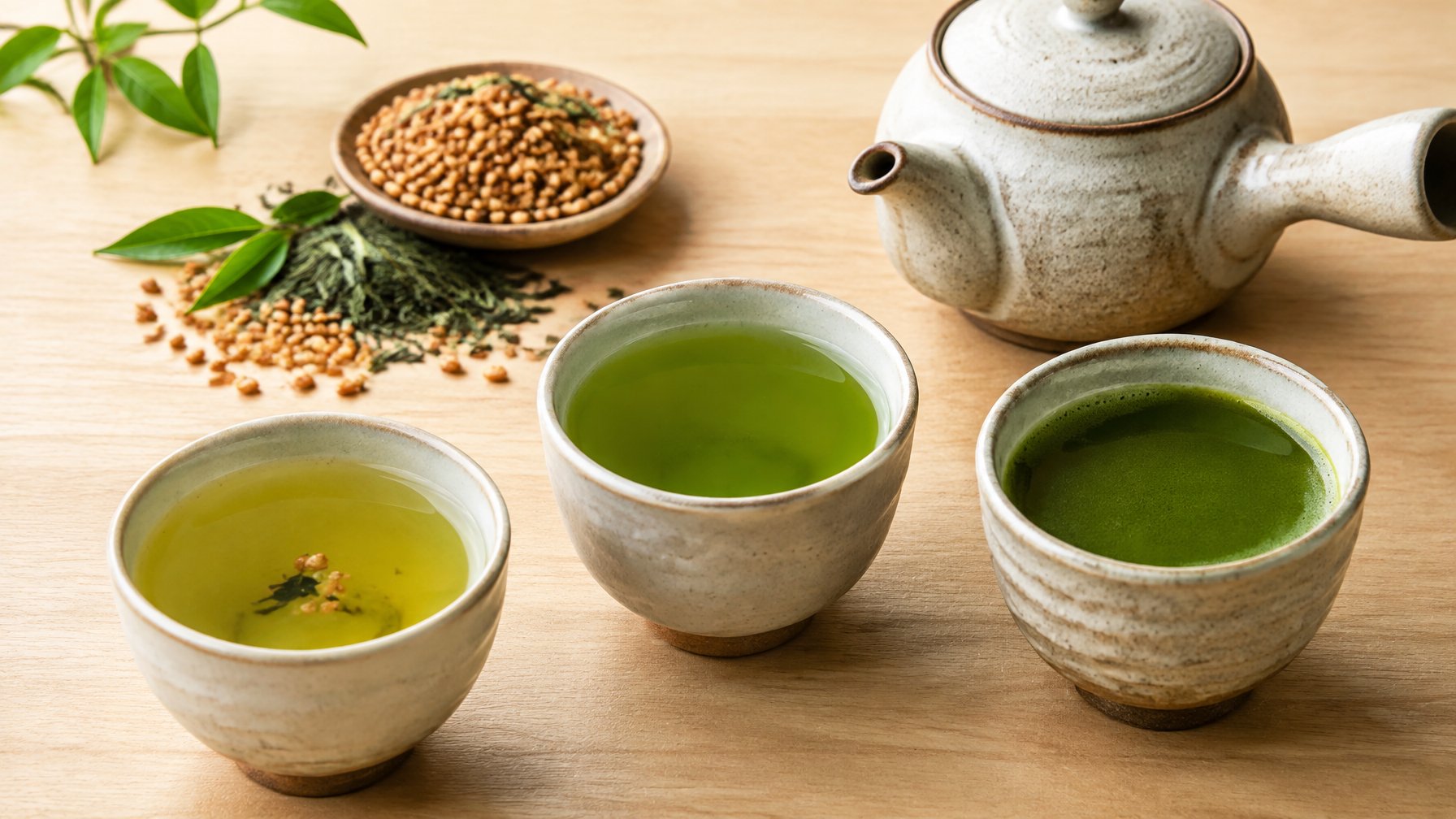
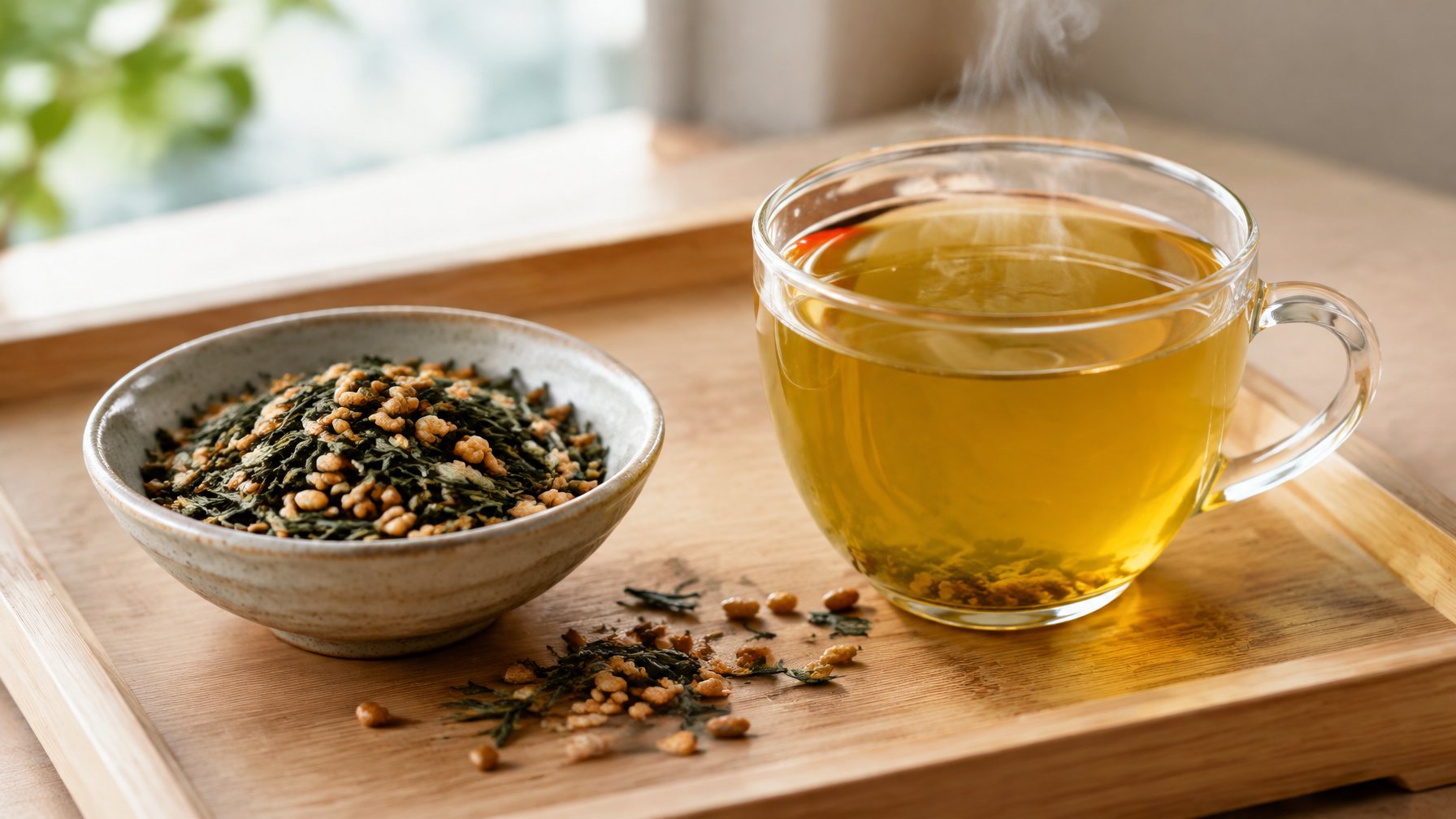
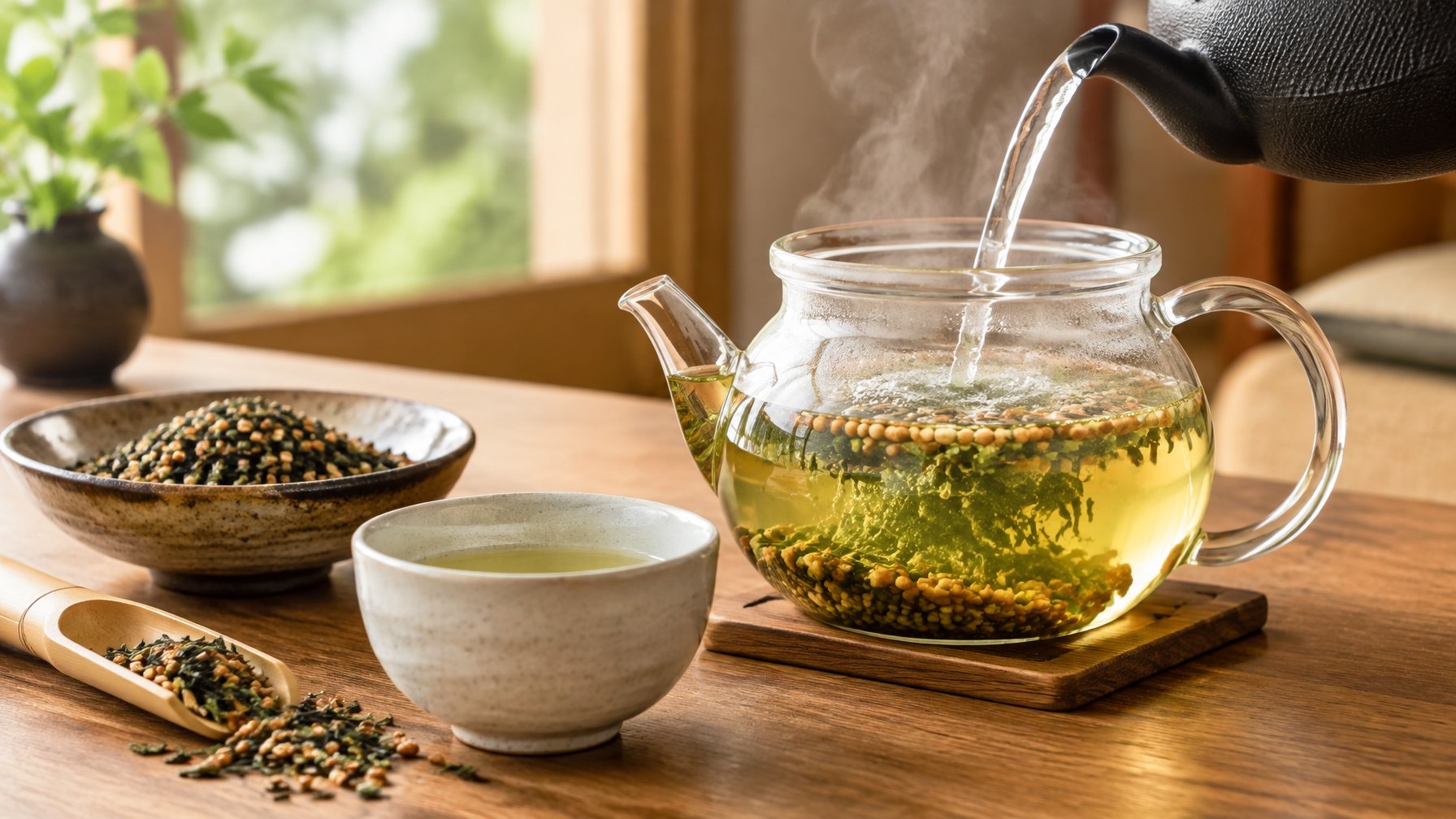
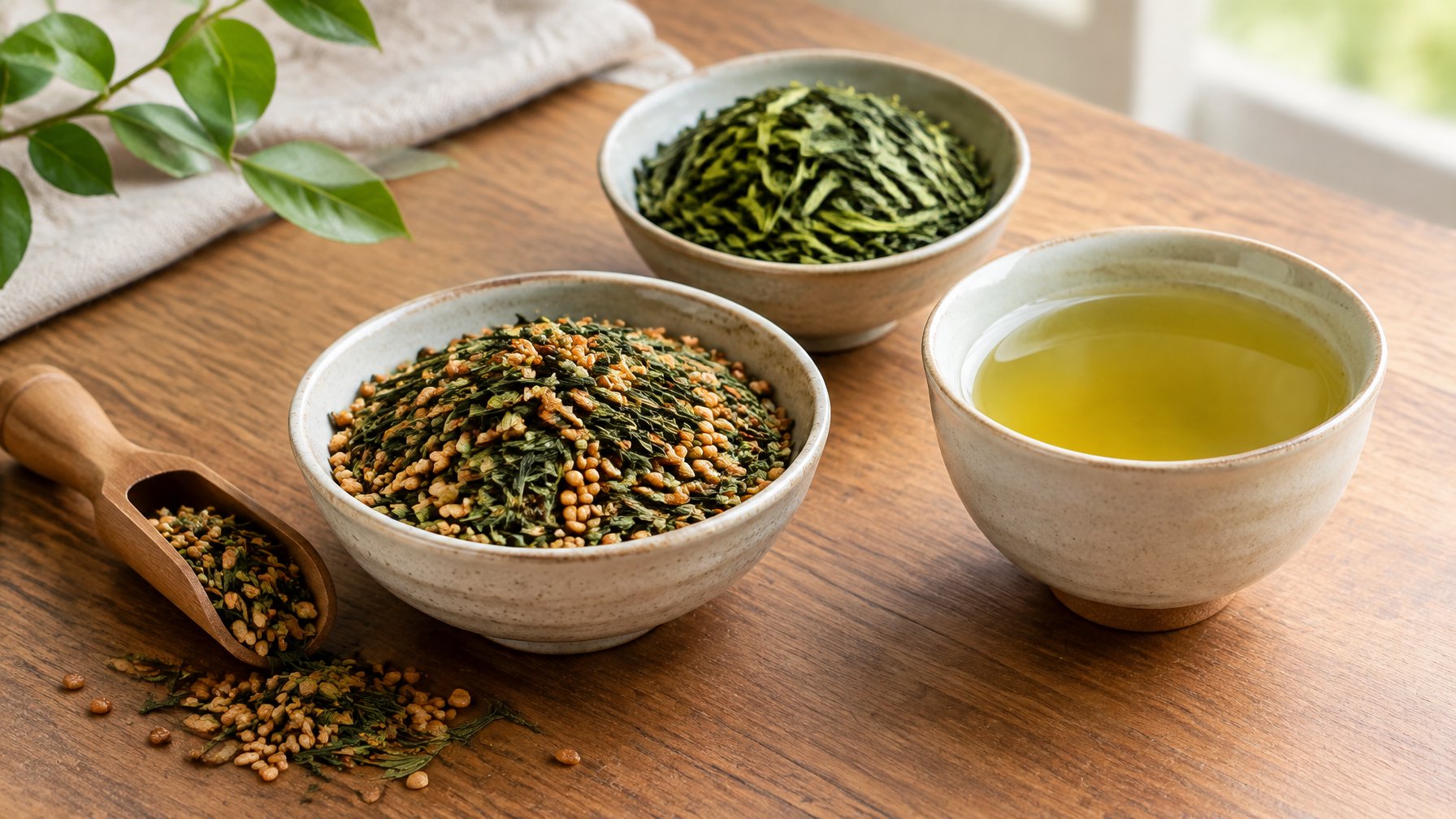
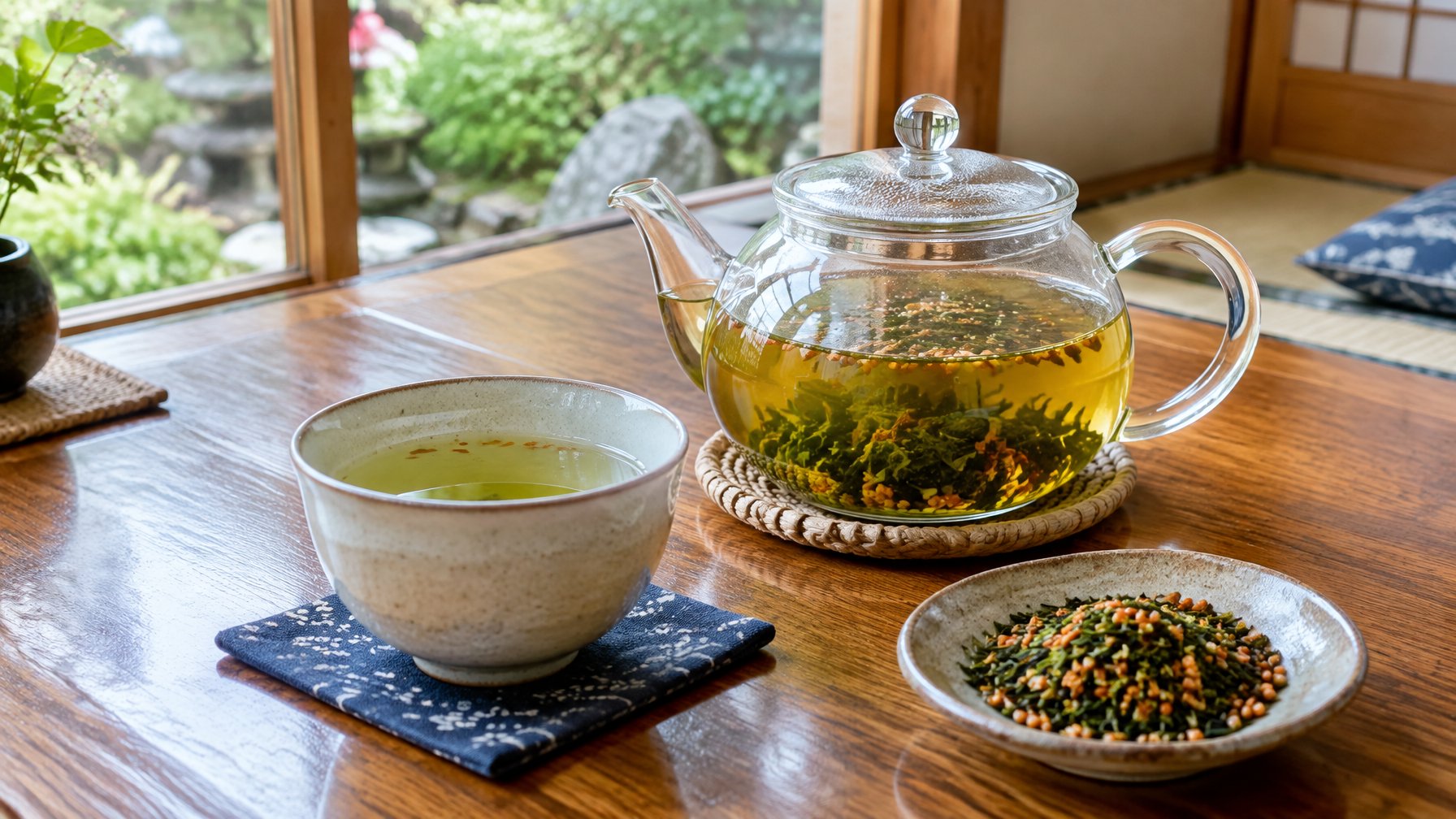
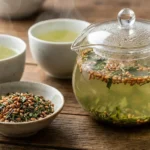
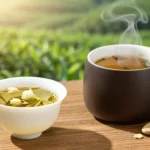
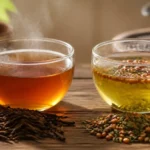
So, what kind of tea is genmaicha? Genmaicha is a Japanese green tea that is mixed with roasted brown rice. The name means “brown rice tea” in Japanese. Some people call it “popcorn tea” because a few rice grains pop while they roast and look like tiny pieces of popcorn.
The tea leaves are often bancha or sencha. In the past, many blends used about half tea leaves and half rice by weight. The rice gives the tea a warm, nutty taste that you won’t find in plain green tea.
If you want a gentle tea, genmaicha is worth a try. It often has less caffeine than straight green teas like sencha or gyokuro. This article covers how it tastes, how to brew it, and how to pick a good blend.
Key Takeaways
Genmaicha is Japanese green tea blended with roasted brown rice.
It has a toasty, nutty flavor and usually less caffeine than plain green tea.
You should brew it with hot water that is not boiling to avoid bitterness.
What Kind of Tea Is Genmaicha? A Japanese Green Tea Blended With Rice
Genmaicha is made from green tea leaves from the Camellia sinensis plant, mixed with roasted rice. The rice is often white mochi rice, not brown rice, and a few grains pop open during roasting.
Why It Is a Green Tea, Not a Rice-Only Infusion
Genmaicha is a true tea because it contains real tea leaves. Those leaves come from Camellia sinensis, the same plant used for black, oolong, and white tea. A cup of only roasted rice steeped in water would be a grain drink, not a tea.
Because the leaves are green tea, your cup still has some caffeine. The rice takes up part of the blend, so genmaicha often has less caffeine than plain green tea of the same weight.
What Genmai Means—and Why the Rice Is Not Always Brown
The name has two parts. Genmai means brown or unpolished rice, and cha means tea. This is why you may see genmaicha sold as “brown rice tea” or “brown rice green tea.”
Despite the name, many makers use roasted white rice instead of brown rice. A common choice is glutinous mochi rice, the sticky rice used to make mochi. It roasts to a golden color and gives a strong toasty smell.
Rice Type
Common Use
Effect on Flavor
Roasted brown rice
Some blends
Earthy, nutty
Roasted white rice
Many blends
Clean, toasty
Mochi rice
Common in Japan
Sweet, rich roast
You can learn more about what goes into genmaicha and how it tastes from tea sellers who list their rice type.
How the Tea Leaves and Rice Are Prepared
The tea leaves and the rice are made separately, then mixed. The green tea leaves are steamed soon after picking. This stops them from oxidizing and keeps them green. The leaves are then rolled and dried.
The rice goes through its own steps:
Soaking in water
Steaming until soft
Drying
Roasting at high heat until golden brown
Makers then combine the two, often in about equal parts. Some add matcha powder to make matcha-iri genmaicha, which brews a brighter green cup.
Why Some Grains Look Like Popcorn
When rice is roasted at high heat, the water inside some grains turns to steam. The pressure makes those grains burst open into small, white puffs. This popped rice looks a lot like tiny popcorn.
That look gave genmaicha the nickname “popcorn tea.” You will usually see only a few popped grains in a bag of tea. Most of the rice stays whole and brown.
The popped grains are mainly for looks. They add little flavor of their own. The roasted whole grains give the tea its nutty, popcorn-like aroma, and YUNOMI explains why some grains pop during roasting.
Flavor and How It Compares With Other Japanese Teas
Genmaicha tastes toasty and nutty because of its roasted rice, with a light grassy note from the green tea. Next to other Japanese teas, it is milder than sencha, lighter than hojicha, and far less sweet and rich than gyokuro.
The Toasty, Nutty Taste of a Typical Cup
The main genmaicha taste comes from the rice. When the rice is roasted, a process called the Maillard reaction takes place. This is the same browning that happens when you toast bread.
The Maillard reaction creates aroma compounds called pyrazines. These give the tea its nutty, toasty smell. Many people say the genmaicha flavor reminds them of popcorn or oatmeal.
The tea leaves add a fresh, slightly grassy layer. The contrast between grassy tea and pan-fired rice is what makes the flavor stand out.
In a typical cup, you will notice:
Aroma: roasted grain, light popcorn
Taste: mild, a little savory, low bitterness
Color: pale yellow-green
Finish: soft and clean
Genmaicha Versus Sencha, Bancha, Hojicha, and Gyokuro
Genmaicha is usually bancha or sencha blended with roasted rice, so it shares some traits with those teas. The rice makes it gentler.
Tea
Main Flavor
Bitterness
Key Trait
Genmaicha
Toasty, nutty, mildly grassy
Low
Green tea mixed with roasted rice
Sencha
Fresh, grassy, a bit sharp
Medium
Steamed leaves, Japan’s most common tea
Bancha
Plain, woody, light
Low to medium
Made from later-harvest, larger leaves
Hojicha
Roasted, caramel-like, smoky
Very low
The tea leaves themselves are roasted
Gyokuro
Sweet, rich, savory (umami)
Low when brewed cool
Shaded before harvest
Hojicha and genmaicha both taste roasted. The difference is that hojicha roasts the leaves, while genmaicha roasts the rice, so genmaicha keeps more green tea flavor.
If you are new to Japanese tea, genmaicha is a good first choice. It is easier to brew than sencha and less likely to turn bitter.
A cup of genmaicha usually has much less caffeine than coffee, but the exact amount depends on the blend and how you brew it. The green tea leaves also carry L-theanine, EGCG, and other antioxidants, though in smaller amounts than pure green tea.
Why Caffeine Content Varies by Blend and Brewing Method
Most genmaicha is about half tea leaves and half roasted rice. Rice has no caffeine, so genmaicha has less caffeine per cup than pure sencha.
Reported amounts vary. One tea seller lists genmaicha at around 15 to 30 mg of caffeine a cup. Another puts it closer to about 10 mg per cup. A typical cup of brewed coffee has about 95 mg.
Several factors change how much caffeine ends up in your cup:
Factor
Effect on Caffeine
More tea leaves
More caffeine
Hotter water
Pulls out more caffeine
Longer steeping
Pulls out more caffeine
Matcha added
More caffeine, since you drink the powder
A blend with matcha-iri (matcha added) can give you more caffeine than a plain leaf-and-rice blend. That is because the matcha powder stays in the cup instead of being strained out.
What to Know About L-Theanine, EGCG, and Antioxidants
The tea leaves in genmaicha contain the same main compounds found in other green tea. The rice adds flavor but very few of these compounds.
L-theanine is an amino acid found in tea. It may help you feel calm and alert when paired with caffeine.
EGCG (epigallocatechin gallate) is the main catechin in green tea. It is studied for its possible effects on heart health and cell damage.
Antioxidants such as catechins help protect cells from damage caused by unstable molecules called free radicals.
Many drinkers say the pairing of caffeine and L-theanine gives gentle alertness without the jitters. Research on this effect is still limited.
Because genmaicha is part rice, each cup has fewer catechins than a cup of sencha or matcha. If you want more of these compounds, a matcha-added genmaicha is a good choice.
How to Brew Genmaicha
Genmaicha brews best with hot water around 80–95°C, about 1 tablespoon of leaves per cup, and a short steep of 30 seconds to 1 minute. Small changes to heat, time, and leaf amount let you shift the cup between soft and grassy or bold and nutty.
Water Temperature, Tea Quantity, and Steep Time
Genmaicha can take hotter water than most Japanese green teas. The roasted rice holds up well to heat, and many brewers suggest 90°C to 95°C for hot genmaicha. Some tea shops go further and use water that is boiling vigorously to bring out the full aroma.
Use this as a starting point:
Step
Amount
Leaves
About 5 g (1 tablespoon)
Water
200–250 ml
Temperature
80–95°C
Steep time
30 seconds to 1 minute
You can re-steep the same leaves one or two more times. Use slightly hotter water and a shorter steep for the second cup. If you don’t have a teapot, you can brew genmaicha in a French press with the same ratio. Pour out all of the tea so it does not sit on the leaves.
Adjusting the Brew for a Milder or More Toasty Cup
Your nose is a useful guide. A well-brewed cup should smell toasty and warm with a clean green tea edge underneath.
For a milder, greener cup:
Lower the water to about 80°C.
Steep for 30 seconds.
Use a little less tea, around 3–4 g.
For a more toasty, nutty cup:
Use water close to boiling.
Steep for up to 1 minute.
Add a bit more tea, or choose a blend with more roasted rice.
Avoid steeping for several minutes. The green tea leaves will turn bitter, and the rice flavor will get covered up. If your cup tastes harsh, cut the time before you lower the heat. Change only one thing at a time so you can tell what made the difference.
Genmaicha changes based on the green tea used as its base and whether matcha powder is added. When buying genmaicha, the most useful clues are the leaf type, the amount of roasted brown rice, the origin, and the production date.
Bancha-Based and Sencha-Based Blends
Most genmaicha uses bancha, a later-harvest green tea with larger leaves. Bancha has a stronger flavor that holds up well against the rice. It is also an inexpensive tea that keeps genmaicha affordable.
Sencha is made from earlier, more tender leaves. It gives a fresher, grassier cup with a little more sweetness. It usually costs more.
Base
Flavor
Color
Price
Bancha
Mild, toasty, rice-forward
Light yellow
Lower
Sencha
Grassy, brighter, balanced
Pale green
Higher
You can compare these styles side by side in this bancha vs sencha genmaicha guide.
What Matcha-Iri Genmaicha Adds
Matcha-iri genmaicha, also called matcha genmaicha, is genmaicha with fine matcha powder mixed in. The powder coats the leaves and rice. When brewed, it turns the tea a cloudy, bright green.
The matcha adds:
A deeper, smoother green tea flavor
A thicker feel in the mouth
A bit more caffeine, though the blend is still lower in caffeine than straight sencha
Many matcha iri genmaicha blends use matcha from Uji, a region near Kyoto known for high-grade tea. Kyoto tea shops such as Ippodo, which has sold tea for over 300 years, offer genmaicha you can buy online. Brew matcha-iri blends a little cooler or shorter, since the powder can turn bitter.
How to Read Ingredients and Choose a Fresh Blend
Good genmaicha has a simple label. Look for short ingredient lists and named origins, such as “green tea, roasted brown rice” with a prefecture listed.
Check these points before you buy:
Visible rice: You should see clear grains of rice. A few may be popped, which is why it is sometimes called “popcorn tea”.
No added flavors: Real roasted rice does not need extra flavoring.
Production date: Fresher is better. Use opened tea within about one to two months.
Packaging: Choose sealed, opaque bags that block light and air.
As for where to buy genmaicha, Japanese tea shops and specialty sellers often list dates and origins. Stale tea smells mostly of dry rice with no green note.
Origins and Everyday Use in Japan
Genmaicha began as a way to stretch costly green tea with cheap roasted rice, and it is still a common daily drink in Japanese homes and restaurants. Its exact starting point is unclear, though several stories place it in Kyoto.
Affordability, Rice, and the Idea of Mottainai
Green tea once cost more than many families could easily spend. Adding roasted rice made each batch of tea leaves last longer. This is why genmaicha is sometimes called “people’s tea,” since the rice worked as a filler that lowered the price.
The tea also connects to mottainai, a Japanese idea about not wasting useful things. Using leftover rice instead of throwing it out fits this way of thinking.
The tea base often matches this practical history. Producers traditionally used bancha, an everyday tea made from later-picked leaves, rather than more costly grades.
Today, genmaicha in Japan is drunk by people of all income levels. You will often find it served with meals and brewed at home.
Kyoto Origin Stories and What Remains Uncertain
No single record proves who first made genmaicha. Instead, you will find a few competing stories.
One common account places the tea in Kyoto before World War II. In this version, tea merchants saw leftover rice crumbs from mochitsuki, or rice cake pounding, as wasteful. They roasted the crumbs and mixed them with tea leaves.
Other stories say families made it at home long before it was sold in shops. These tales are hard to check.
Story
Main idea
How certain
Kyoto merchants
Roasted mochi crumbs mixed with tea
Widely told, not fully proven
Home blending
Families stretched tea with grain
Plausible, few records
Writers on Japanese tea history suggest you treat these origin myths with care. The practical reasons for the blend are clear, but the exact date and place are still uncertain.
Genmaicha is Japanese green tea mixed with roasted brown rice, and it has a nutty, toasty flavor. It usually has less caffeine than plain green tea, which makes it an easy choice for daily drinking.
Is genmaicha made with green tea and roasted rice?
Yes. Genmaicha is a Japanese green tea combined with roasted popped brown rice. Some rice grains pop during roasting and look like small pieces of popcorn. This is why people sometimes call it “popcorn tea.”
The name means brown rice tea in Japanese. The tea base is most often bancha or sencha. Some blends also add matcha powder, which gives the tea a brighter green color.
What does genmaicha taste like?
Genmaicha has a warm, nutty, and toasty flavor with a light savory note. The roasted rice softens the grassy taste that plain green tea can have.
If you find regular green tea too sharp or bitter, you may like genmaicha better. The flavor is mild and easy to drink, both hot and cold.
How much caffeine does genmaicha contain?
Genmaicha does contain caffeine, but it has a lower caffeine content than straight green teas like sencha or gyokuro. The roasted rice takes up part of the blend, so each cup has fewer tea leaves.
The exact amount depends on a few things:
Tea base: Bancha usually has less caffeine than sencha.
Added matcha: Blends with matcha have more caffeine.
Brewing time: Steeping longer pulls out more caffeine.
What are the potential health benefits of genmaicha?
Because genmaicha is made with green tea, it contains some of the same compounds. These include catechins, which act as antioxidants, and L-theanine, an amino acid linked to a calm, focused feeling. You can read more about genmaicha caffeine content and health benefits in tea guides.
Keep in mind that genmaicha has fewer tea leaves per cup than plain green tea. This means it may have smaller amounts of these compounds. Tea can be part of a healthy diet, but it does not treat or cure disease.
Can you drink genmaicha every day?
Most healthy adults can drink genmaicha every day. In Japan, it has long been a common tea served with meals. Its lower caffeine level makes it a good fit for the afternoon.
If you are sensitive to caffeine, pregnant, or taking certain medicines, talk to your doctor about how much tea is right for you. For the best flavor, brew genmaicha at the right temperature, usually around 175°F to 185°F (80°C to 85°C).
How does genmaicha differ from regular green tea?
The main difference is the roasted rice. Plain green tea is made only from tea leaves, while genmaicha is a blend of leaves and rice. There are several other differences between genmaicha and green tea as well.
Black Tea Extract that is rich in natural theaflavins and polyphenols that help protect your body from free radicals, promoting overall immune health and well-being
Contains blended amounts of Fruits and Veggies. All natural, with whole foods, fruit and vegetable supplement.Perfect for everyone looking to live a healthier lifestyle.