If you’ve been searching for whether yellow tea good for liver health is more than just an online claim, you’ve probably noticed the internet is full of confident promises and very few clear explanations. Yellow tea is often described as a gentler, more “balanced” cousin of green tea — and while that may mean a smoother cup and a similar antioxidant profile, it doesn’t automatically make it a liver “detox” fix. The real question is what the evidence actually supports when it comes to liver function.
This guide breaks down what yellow tea actually is, what the science on tea and liver health does and doesn’t say, and how to think about adding it to your routine without falling for exaggerated “detox” marketing.
By the end, you’ll know exactly how yellow tea compares to green and black tea, which claims are backed by real research versus wellness-industry hype, and who should check with a doctor before making it a daily habit.
What Is Yellow Tea, Exactly?
Yellow tea is one of the rarest of the six major tea categories, alongside green, white, oolong, black, and dark (fermented) tea. It comes from the same Camellia sinensis plant as green tea, but an extra processing step sets it apart.
How It’s Processed Differently From Green Tea
Green tea is pan-fired or steamed quickly to stop oxidation almost immediately. Yellow tea goes through an additional slow, low-temperature “smothering” or “yellowing” step, where the warm leaves are wrapped and allowed to sit before drying.
This gentle, humid resting period softens the grassy, slightly bitter edge common in green tea.
It creates a mellower, sweeter flavor with less astringency.
It slightly changes the leaf’s chemical profile compared to green tea, though the two remain closely related.
Flavor Profile and Popular Varieties
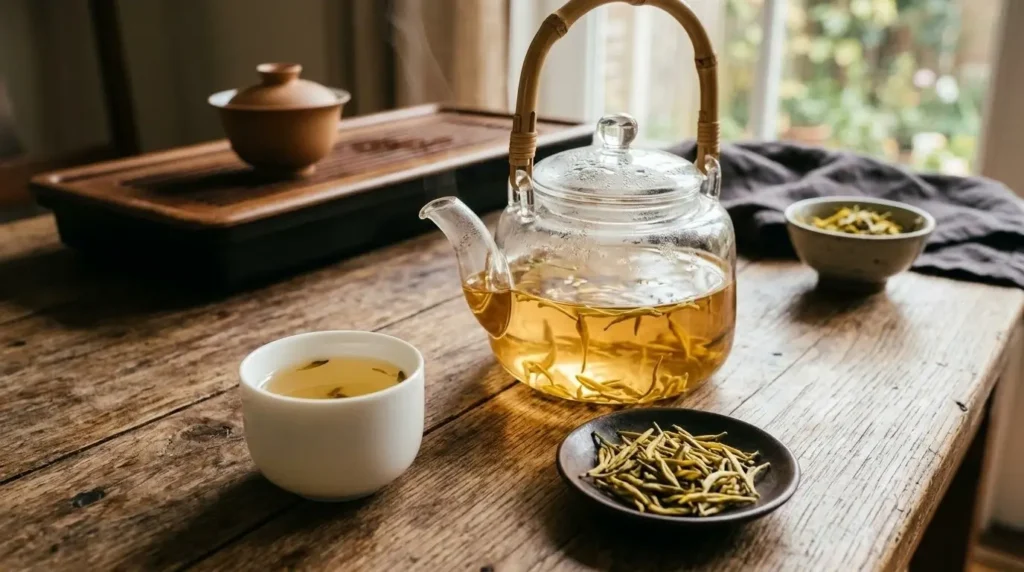
Yellow tea is typically smooth, sweet, and mellow, with a pale golden liquor. Well-known varieties include Junshan Yinzhen and Huoshan Huangya, both from China, where yellow tea has been produced for centuries but never scaled up to mass production the way green and black tea have.
Historically, yellow tea was reserved for Chinese imperial courts, which is part of why it remains rare and relatively expensive today. Small-batch production, hand-processing, and the extra time required for the yellowing step all keep supply limited compared to green or black tea, which are produced on an industrial scale worldwide.
Why People Ask Whether Yellow Tea Supports the Liver
The liver is the body’s main filtering and metabolic organ. It processes nutrients, clears waste products and toxins from the blood, and produces bile for digestion — which is exactly why “liver support” and “detox” language sells so well in the wellness space.
The Liver’s Role in Detoxification
Your liver already detoxifies your body around the clock using its own enzyme systems. No food or beverage, including yellow tea, “detoxes” the liver in the way that phrase gets used in marketing — but certain compounds in tea may support the liver’s existing processes.
The Rise of “Liver Cleanse” Beverage Trends
Tea, coffee, and various herbal blends have all been swept into the broader liver-health and detox wellness trend. Yellow tea benefits from being seen as an antioxidant-rich, less-processed beverage, which naturally raises the question of whether it deserves a place in that conversation.
The Science Behind Tea and Liver Health
Most of what’s known about tea and liver health comes from research on tea polyphenols broadly, especially in green tea, rather than yellow tea specifically.
Catechins and Antioxidant Activity
Tea leaves are rich in catechins, a family of plant compounds with strong antioxidant activity. Because yellow tea undergoes only light processing, it retains a good share of the catechins found in green tea, though the yellowing step does reduce some of them compared to unprocessed green tea.
Antioxidants help neutralize oxidative stress, a process linked to cellular damage throughout the body, including in liver tissue. This is the main mechanism researchers point to when discussing tea’s potential relevance to liver health.
What Studies on Tea Polyphenols Have Found
Research on green tea catechins has explored links to liver enzyme levels, fat accumulation in the liver, and markers of oxidative stress, with some studies suggesting a possible supportive role as part of an overall healthy diet. However, this research is mixed, often involves animal models or small human trials, and doesn’t establish tea as a treatment for any liver condition.
It’s also worth noting an important caution from this same body of research: concentrated green tea extract supplements — not brewed tea — have in rare cases been linked to liver injury, particularly at high doses. This distinction between whole brewed tea and concentrated extracts matters a lot, and we’ll come back to it.
Where Yellow Tea Specifically Fits In
Because yellow tea is a niche, low-volume product, it hasn’t been the subject of dedicated clinical research the way green tea has. What can be said honestly is this: yellow tea shares a similar catechin and polyphenol profile to lightly processed green tea, so it’s reasonable to expect broadly similar effects — not that yellow tea has its own proven liver benefit separate from green tea’s research base.
This is a common pattern with rarer teas: the underlying plant compounds are well understood in general, but funding for dedicated studies tends to follow the products with the largest global market, which is green and black tea. Until that changes, claims specific to yellow tea should be treated as reasonable extrapolation rather than established fact.
Yellow Tea vs. Green Tea vs. Black Tea for Liver Support
Here’s how the three compare on the factors most relevant to liver health discussions:
Factor
Yellow Tea
Green Tea
Black Tea
Oxidation level
Minimal, plus light “yellowing”
Minimal
Fully oxidized
Catechin content
Moderate-high
High
Lower (converted to theaflavins/thearubigins)
Caffeine (approx.)
Moderate
Moderate
Higher
Taste profile
Mellow, sweet, low bitterness
Grassy, can be astringent
Bold, robust
Research volume on liver health
Very limited
Substantial
Moderate
The practical takeaway: yellow tea is a reasonable middle-ground choice if you want green tea’s general antioxidant profile with a gentler taste, but green tea remains the better-studied option if research depth matters to you.
Potential Benefits of Yellow Tea That May Support Liver Health
None of the following claims mean yellow tea treats or prevents liver disease. They describe plausible, general-wellness contributions based on its composition.
Antioxidant and Anti-Inflammatory Support
The catechins and polyphenols in yellow tea may help reduce oxidative stress and low-grade inflammation, two processes involved in many chronic conditions, including liver strain over time.
Gentler on Digestion Than Green Tea
The yellowing process reduces some of the harsher, more astringent compounds found in green tea. For people who find green tea upsets their stomach, yellow tea can be an easier way to get a similar antioxidant profile without the digestive discomfort.
Lower Oxidative Stress Load, Potentially
As part of a broader pattern of eating that’s low in ultra-processed food and alcohol, swapping sugary drinks for unsweetened yellow tea is a small, sensible change that supports overall metabolic and liver health indirectly — through what it replaces as much as what it adds.
Who Should Be Cautious About Yellow Tea
People With Existing Liver Conditions
If you have a diagnosed liver condition — fatty liver disease, hepatitis, cirrhosis, or any other liver issue — talk to your doctor before making tea a regular “supportive” habit. What’s safe for a healthy liver isn’t automatically safe for a compromised one, and your care team can advise based on your specific labs and medications.
Concentrated Extracts vs. Brewed Tea
This is the single most important distinction in this entire topic. Brewed yellow tea, consumed in normal beverage amounts, is very different from concentrated green or yellow tea extract capsules, which deliver a much higher, fast-absorbed dose of catechins.
Case reports of tea-related liver injury in the medical literature almost always involve concentrated extract supplements, not brewed cups of tea.
If you’re considering a tea extract supplement rather than simply drinking the tea, that’s a different risk profile and worth a conversation with a healthcare provider first.
Caffeine and Medication Interactions
Yellow tea contains a moderate amount of caffeine. If you’re sensitive to caffeine, pregnant, or taking medications that interact with caffeine or with tea tannins (some iron supplements and certain prescription drugs), check with a pharmacist or doctor about timing your tea intake.
Start with one cup a day and see how you feel before adding more.
Most healthy adults tolerate 2–3 cups of yellow tea daily without issue, similar to typical green tea intake.
Avoid pairing tea with iron-rich meals if you’re managing iron levels, since tea tannins can reduce iron absorption.
Choose brewed loose-leaf or bagged yellow tea over concentrated extract supplements.
Brewing Tips for Maximum Benefit
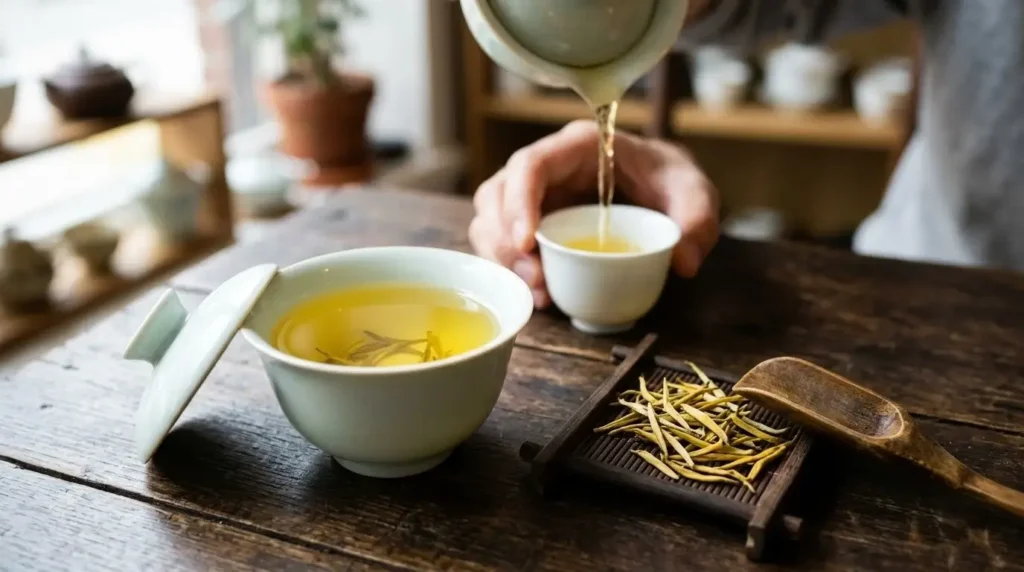
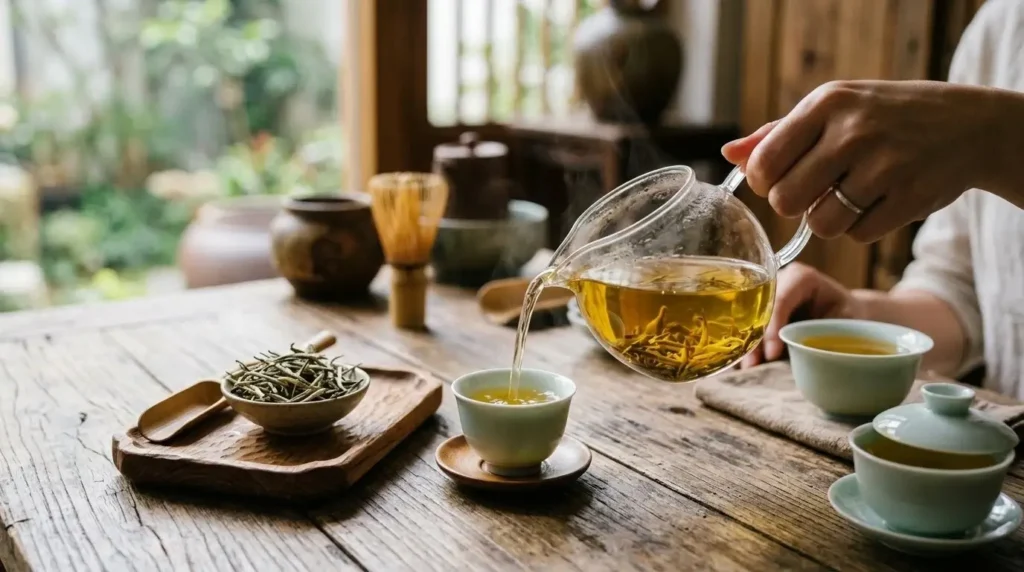
Use water around 175–185°F (80–85°C) — boiling water can scorch the delicate leaves and increase bitterness.
Steep for 2–3 minutes; oversteeping pulls out more tannins than catechins.
Skip the sugar and cream where possible, since added sugar undercuts most of the wellness rationale for switching to tea in the first place.
If you’re building a liver-friendly lifestyle, yellow tea can be one small, pleasant piece of it — alongside the fundamentals that actually move the needle: limiting alcohol, maintaining a healthy weight, eating a fiber-rich diet, and getting regular checkups.
It’s also worth being a realistic shopper. Because “yellow tea” is less regulated as a category than green or black tea, quality and authenticity vary a lot between sellers. Buying from a reputable tea supplier and checking for clear sourcing information will get you a better cup — and likely a more accurate catechin content — than a vague, unlabeled blend.
FAQ
Is yellow tea good for liver function specifically, more than other teas?
There’s no strong evidence that yellow tea is uniquely better for the liver than green tea. It shares a similar catechin and antioxidant profile to lightly processed green tea, but it hasn’t been studied on its own to the same extent.
Can yellow tea reduce liver enzyme levels?
Some research on tea catechins generally has looked at liver enzyme markers, with mixed results. Brewed tea is not a treatment for elevated liver enzymes, and anyone with abnormal labs should follow up with a doctor rather than relying on tea alone.
Is yellow tea safe if I have fatty liver disease?
Moderate, unsweetened tea consumption is generally considered low-risk for most people, but if you have a diagnosed liver condition, check with your doctor first, since individual circumstances and medications vary.
How much yellow tea can I safely drink per day?
Most healthy adults can comfortably drink 2–3 cups a day. If you’re sensitive to caffeine or have a medical condition, start with less and check with a healthcare provider.
Does yellow tea have more antioxidants than green tea?
Generally, no — green tea tends to retain a slightly higher catechin content since it skips the extra yellowing step. Yellow tea still offers a solid antioxidant profile with a milder taste.
Are yellow tea supplements the same as drinking the tea?
No. Concentrated extract supplements deliver much higher doses of catechins than a brewed cup and carry a different risk profile, including rare reports of liver strain at high doses. Brewed tea in normal amounts is the safer, better-understood choice.
Final Thoughts
So, is yellow tea good for liver health? The honest answer is: it’s a reasonable, antioxidant-rich beverage that shares much of green tea’s general wellness profile, but it isn’t a proven liver treatment, and it hasn’t been researched on its own nearly as much as green tea has.
Used sensibly — brewed, unsweetened, and in normal amounts — yellow tea can be a pleasant part of a liver-conscious lifestyle. It’s not a substitute for medical care, and anyone with an existing liver condition should loop in their doctor before making it a daily habit.
If you’re curious to try it, start with a light, properly brewed cup and see how it fits into your routine — your liver will benefit far more from the overall pattern of what you eat and drink than from any single “superfood” beverage.
Black Tea Extract that is rich in natural theaflavins and polyphenols that help protect your body from free radicals, promoting overall immune health and well-being
Contains blended amounts of Fruits and Veggies. All natural, with whole foods, fruit and vegetable supplement.Perfect for everyone looking to live a healthier lifestyle.