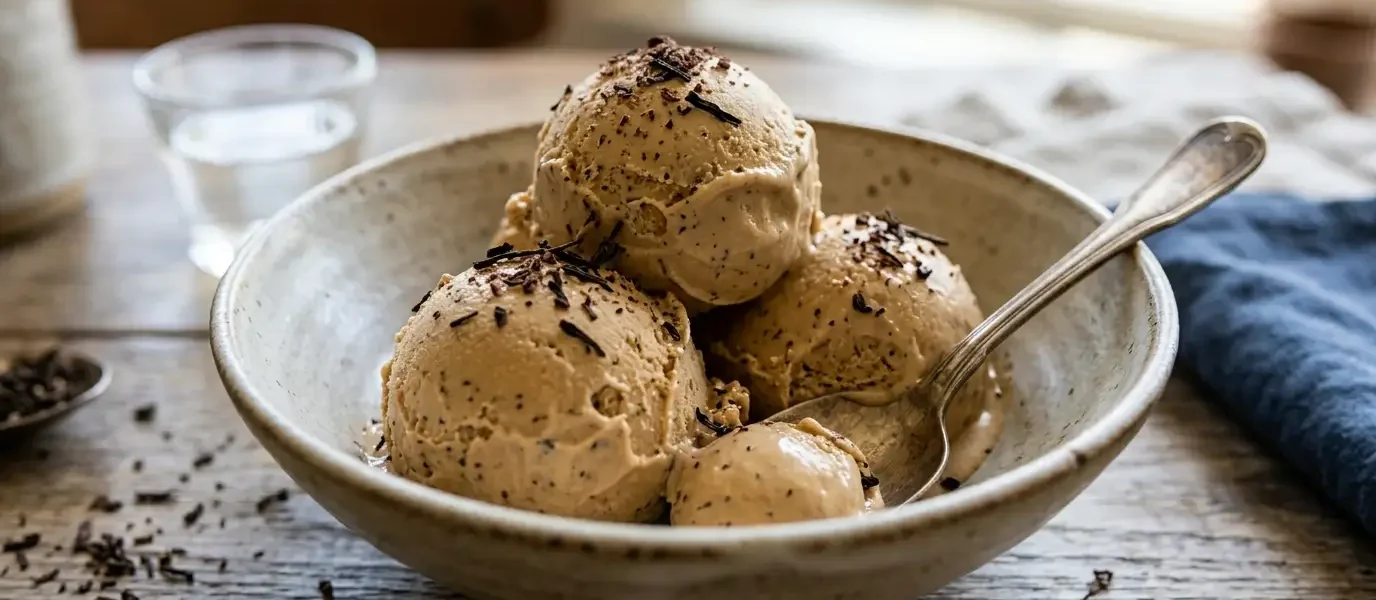
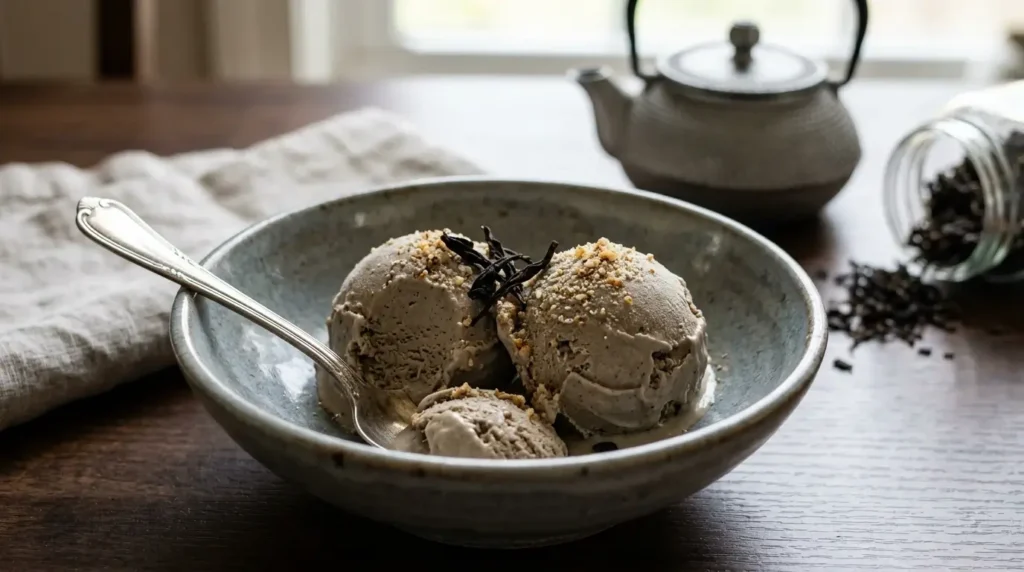
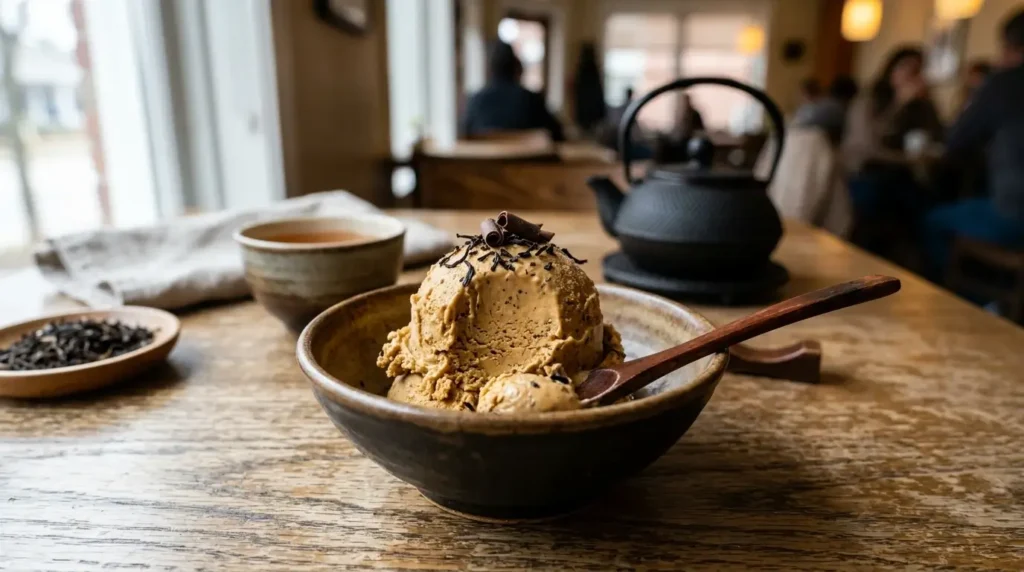
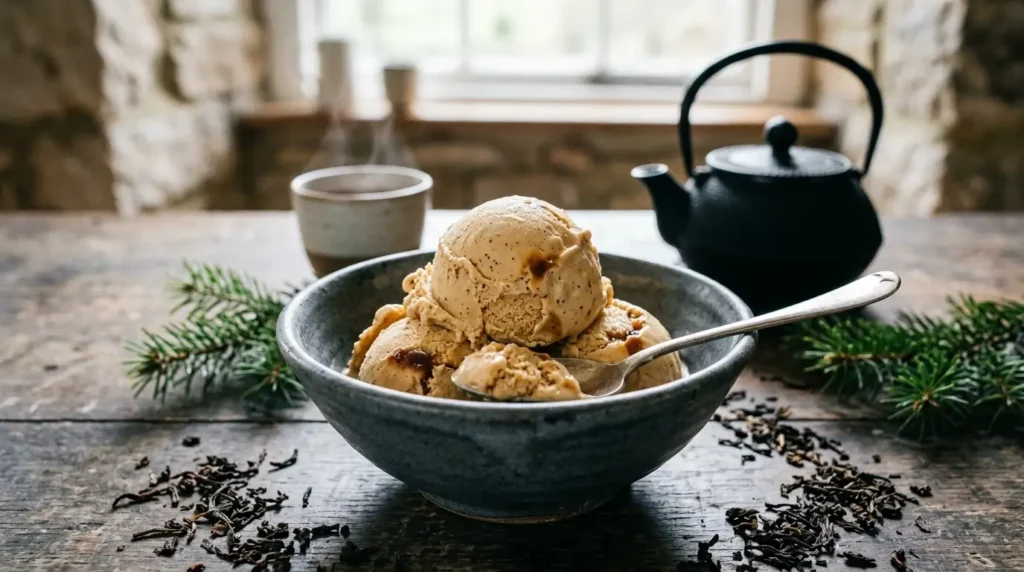
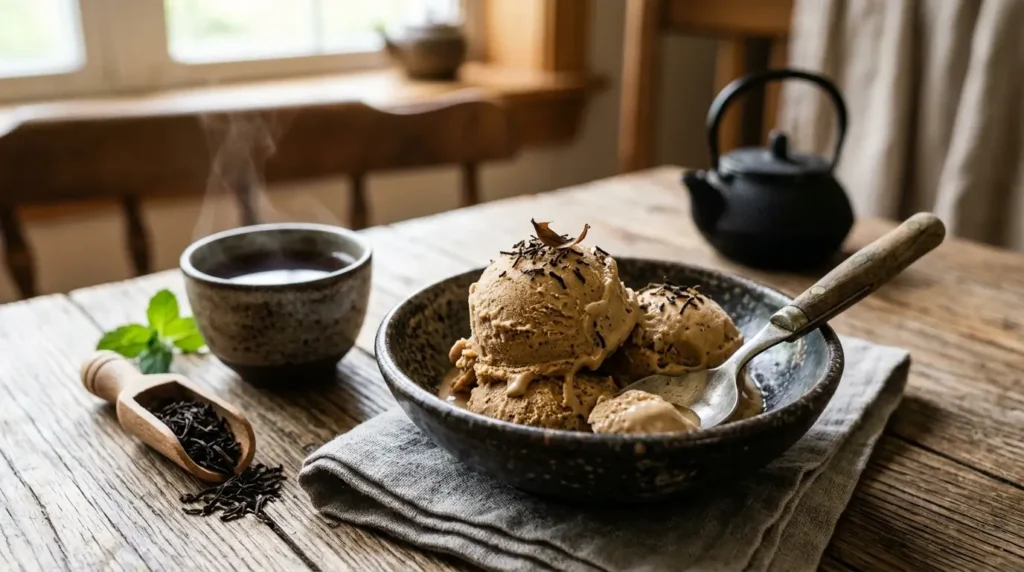
Looking for a more adventurous dessert experience? Lapsang souchong tea ice cream offers an elegant twist on traditional black tea ice cream, with its distinctively smoky flavor profile that stands out from ordinary recipes.
This strongly flavored black tea, crafted from leaves smoked over pine wood, creates an unexpectedly sophisticated frozen treat. Consequently, it has become a favorite among those seeking bold, unique flavors. The smoky essence pairs beautifully with additions like orange zest and star anise, or even fresh mint for a cooling contrast.
In this guide, I’ll walk you through everything you need to know about making lapsang souchong recipes at home, from selecting quality tea to churning your final masterpiece.
Key Takeaways
Master the art of creating sophisticated lapsang souchong tea ice cream with these essential techniques and insights:
Steep loose lapsang souchong tea for 45 minutes in heated milk and sugar to extract full smoky flavor without bitterness
Cook custard base to 170-180°F while constantly stirring to achieve proper consistency and food safety
Chill the mixture overnight before churning to improve texture and allow flavors to develop fully
Enhance the smoky profile with complementary flavors like orange zest, star anise, or fresh mint
Pair finished ice cream with grilled foods, dark chocolate, or stone fruits to highlight the tea’s unique character
This recipe transforms an ordinary dessert into an elegant treat by harnessing lapsang souchong‘s distinctive pine-smoked character. The key lies in proper steeping time and temperature control during custard preparation.
What Is Lapsang Souchong Tea
Lapsang souchong comes from the Wuyi Mountains of Fujian Province, China, where this distinctive black tea has been produced for over 400 years. Understanding what type of tea is lapsang souchong helps you appreciate why it creates such a unique ice cream flavor.
Origins and Production Method
Originally crafted in the mountainous Tongmu Guan region, lapsang souchong emerged from necessity during the Qing Dynasty. According to legend, soldiers passing through a village lodged overnight in a tea factory, disrupting the normal drying process. To get their tea to market on time, workers lit fires of pine wood to speed things along, accidentally infusing the leaves with smokiness.
The name “souchong” refers to the fourth and fifth leaves from the tea plant, positioned farther from the prized bud at the tip. Traditional production takes place in multi-story smokehouses with slotted bamboo floors, where smoke rises from a pine wood fire pit through withering, oxidation, and drying rooms. This smoking process distinguishes lapsang souchong from other black teas, which typically undergo natural air drying.
The leaves wither on raised beds until pliant, then get rolled to break down cell walls and trigger oxidation. After resting several hours, they’re pan-fired in a wok to halt oxidation, then dried in ovens while absorbing the resinous pine smoke. The pine species used, typically Pinus massoniana, lends its sweet, resinous character to the final product.
Flavor Profile and Characteristics
Once steeped, lapsang souchong reveals a beguilingly smoky aroma leading to flavors of floral notes, sweetness, clove, orange-vanilla, and sometimes birch-beer working in harmony with rich, savory smoke. Quality versions boast a mineral backbone characteristic of Wuyi teas, with notes of cranberry, dried longan, and burnt sugar.
The brew produces a red to amber-brown liquor with a campfire-like quality. Many compare its bold profile to scotch whisky or fine cigars. Whereas traditional versions offer subtle smokiness complementing fruit and floral notes, Western-style preparations often emphasize heavier smoke.
Caffeine Content in Lapsang Souchong
How much caffeine in lapsang souchong tea matters when making ice cream, particularly if serving after dinner. Since lapsang souchong leaves are larger and more mature than many black teas, they contain less caffeine than younger leaves, resulting in approximately 60 mg per serving. Other sources report ranges of 30-60 mg or 40-70 mg per 8-ounce cup. In fact, this provides about half the caffeine of coffee, making lapsang souchong recipes suitable for those seeking moderate energy without jitters.
Making lapsang souchong tea ice cream requires standard ice cream ingredients with one bold addition: the tea itself. The base follows custard-style preparations used in most premium ice cream recipes.
Essential Ingredients for Black Tea Ice Cream
For one quart of lapsang souchong ice cream, gather these components:
Lapsang souchong tea: 1/4 cup loose leaves or 10 standard tea bags
Vanilla extract: 2 teaspoons
Salt: A pinch
Heavy cream provides structure and mouthfeel, while milk adds protein for a stronger scaffolding to trap water during freezing. Sugar sweetens and softens the final texture. Egg yolks create custard richness, though some recipes skip eggs for clearer tea flavor.
Choosing Your Tea Quality
Tea bags work conveniently, but loose leaves circulate better during steeping, producing superior flavor. Quality matters particularly with lapsang souchong, given its role as the primary flavor component. Several tablespoons distinguish homemade versions from less tea-forward commercial products.
Seek high-quality loose tea from specialty shops rather than common commercial brands made from inferior leaf bits. For this recipe, plan to steep the tea for 45 minutes to extract full smoky character without bitterness developing during long infusion times.
Kitchen Equipment Required
An instant-read thermometer ranks as one of the most helpful tools for custard-based ice cream, removing guesswork from cooking egg and dairy to 175°F. In addition, you need a heavy-bottomed medium saucepan to distribute heat evenly and prevent scorching.
Beyond basic kitchen gear, gather a silicone spatula, whisk, and heatproof strainer. Metal bowls work best for ice baths to chill custard quickly. An ice cream maker is essential for churning. The basic Cuisinart model with removable freezer bucket offers excellent value, though compressor models eliminate pre-freezing requirements.
Step-by-Step Instructions for Making Lapsang Souchong Ice Cream
With your equipment assembled and ingredients measured, the actual process moves through five distinct stages that transform tea and dairy into a sophisticated frozen dessert.
Step 1: Prepare and Steep the Tea
Combine milk and sugar in your heavy saucepan, stirring over medium heat until sugar dissolves completely, about 5-6 minutes. Add the lapsang souchong loose tea leaves, stir well, then remove from heat. Cover and allow to steep for 45 minutes. This extended steeping extracts the full smoky character without developing bitterness. Strain the mixture through a fine-mesh sieve, pressing the tea leaves to capture all retained liquid, then discard the spent leaves.
Step 2: Make the Custard Base
Return the strained tea-infused milk to your clean saucepan and add the cream and vanilla. In a separate bowl, whisk the egg yolks until smooth. Once the tea mixture begins steaming, slowly ladle about one cup into the yolks while whisking constantly to temper them. Pour this tempered mixture back into the saucepan. Cook over medium heat, stirring constantly with your spatula, until the custard reaches 170°F to 180°F. The mixture should coat the back of a spoon. Immediately strain into a bowl to remove any cooked egg bits.
Step 3: Chill the Ice Cream Mixture
Cover the custard with plastic wrap pressed directly against the surface to prevent skin formation. Refrigerate until thoroughly chilled, at least 6 hours but preferably overnight. Aging the base overnight improves texture and allows flavors to develop more fully.
Step 4: Churn the Ice Cream
Pour the chilled mixture into your frozen ice cream maker and churn according to manufacturer’s instructions, typically 20-25 minutes. The ice cream will resemble soft serve when ready.
Step 5: Freeze Until Firm
Transfer to a lidded container and freeze until firm enough to scoop, at least 6 hours.
Customizing your lapsang souchong tea ice cream opens possibilities for unique flavor combinations that complement its smoky character.
Adding Orange Zest and Star Anise
Orange zest and star anise create an exotic variation on the base recipe. Add 2 whole star anise pods to the milk during initial heating, steeping them alongside the tea. The star anise contributes licorice-like sweetness that balances smoke intensity. For a milder version, increase to 4 star anise pods and double the orange zest. Star anise pairs naturally with robust black teas, providing warmth that works with the malty body. Zest from one orange stirred into the custard after straining adds citrus brightness without competing with the tea.
Mint and Lapsang Souchong Combination
Fresh mint offers a cooling counterpoint to lapsang souchong’s warmth. Add a handful of fresh mint leaves during the tea steeping stage, or garnish finished scoops with mint sprigs. This pairing works particularly well when serving the ice cream alongside grilled foods or barbecue.
Serving Suggestions and Pairings
Serve this ice cream alongside juicy-ripe fresh pears, peaches, or nectarines. The smoky profile pairs with smoked meats, barbecue dishes, hard cheeses like Gouda, dark chocolate, or roasted nuts. For added flair, poach fruit in syrup infused with star anise and orange.
Conclusion
You now have everything needed to create this sophisticated frozen dessert right in your kitchen. The smoky character of lapsang souchong transforms ordinary ice cream into something truly memorable. Equally important, don’t hesitate to experiment with the flavor variations I’ve shared, from star anise to fresh mint.
With this purpose in mind, gather your ingredients and start brewing. Your first batch might surprise you with how beautifully tea and cream come together.
Q1. What flavor does Lapsang Souchong tea bring to ice cream? Lapsang Souchong creates a distinctively smoky flavor profile in ice cream, with notes of wood smoke, pine resin, and subtle sweetness. The tea’s empyreumatic character adds depth and sophistication, transforming ordinary ice cream into an elegant dessert with bold, unique taste that pairs beautifully with chocolate, citrus, and spices.
Q2. How long should you steep Lapsang Souchong tea when making ice cream?For optimal flavor extraction, steep Lapsang Souchong tea in the heated milk mixture for approximately 45 minutes. This extended steeping time allows the full smoky character to infuse into the base without developing bitterness, ensuring a well-balanced and flavorful ice cream.
Q3. Can you use tea bags instead of loose leaf Lapsang Souchong for ice cream? Yes, tea bags work conveniently for making Lapsang Souchong ice cream, though loose leaves typically produce superior flavor. You’ll need about 1/4 cup of loose tea leaves or approximately 10 standard tea bags for one quart of ice cream. Loose leaves circulate better during steeping, resulting in more robust flavor extraction.
Q4. What ingredients pair well with Lapsang Souchong in ice cream? Lapsang Souchong pairs exceptionally well with orange zest and star anise, which add citrus brightness and licorice-like sweetness. Fresh mint provides a cooling contrast to the tea’s warmth, while dark chocolate, black cardamom, and amaretto create deeper, more complex flavor profiles that complement the smoky notes.
Q5. How much caffeine is in Lapsang Souchong ice cream? Lapsang Souchong tea contains approximately 40-70 mg of caffeine per 8-ounce cup, which is about half the amount found in coffee. Since the ice cream uses steeped tea in a diluted dairy base, the final caffeine content per serving is relatively moderate, making it suitable for after-dinner desserts without causing significant sleep disruption.
Black Tea Extract that is rich in natural theaflavins and polyphenols that help protect your body from free radicals, promoting overall immune health and well-being
Contains blended amounts of Fruits and Veggies. All natural, with whole foods, fruit and vegetable supplement.Perfect for everyone looking to live a healthier lifestyle.