Sencha is Japan’s most beloved tea — fresh, grassy, and alive with umami — yet so many people searching for sencha tea how to make still brew it incorrectly and end up with a bitter, harsh cup they never want to repeat. The good news? Getting it right doesn’t require expensive equipment or years of practice. It simply requires understanding a few key principles.
In this guide, you’ll learn exactly how to make sencha tea the way the Japanese have perfected it: the right water temperature, the ideal steeping time, the proper leaf ratio, and the small tricks that separate a forgettable cup from one that stops you mid-sip. Whether you’re a complete beginner or someone who’s been brewing green tea casually for years, this step-by-step tutorial will transform your daily cup.
What Is Sencha Tea? A Quick Introduction
Origins and History of Sencha
Sencha (煎茶) literally translates to “simmered tea” in Japanese, though the name refers more to its preparation style than any actual simmering. It accounts for roughly 70–80% of all tea produced in Japan, making it the country’s defining everyday tea.
The modern style of sencha was pioneered by tea merchant Nagatani Soen in the 18th century, who developed a rolling and drying technique that preserved the leaves’ vivid green color and fresh flavor. Regions like Uji (Kyoto), Shizuoka, and Kagoshima remain the most celebrated growing areas today, each producing leaves with distinct flavor profiles.
How Sencha Differs from Other Green Teas
All green teas start with the same plant — Camellia sinensis — but processing and growing conditions create dramatically different results.
Sencha vs. Matcha: Both are Japanese green teas, but matcha is shade-grown and stone-ground into a powder; sencha is grown in full sunlight and brewed as loose leaves. Matcha is richer and creamier; sencha is lighter, grassier, and more refreshing.
Sencha vs. Gyokuro: Gyokuro is shade-grown like matcha, giving it a deeper umami and sweetness. Sencha is brighter and more astringent — and significantly more affordable.
Sencha vs. Bancha: Bancha is made from older, coarser leaves harvested later in the season. It’s milder and cheaper, but lacks sencha’s complexity and vibrant green character.
Why Brewing Technique Matters So Much
Sencha contains a delicate balance of compounds: amino acids (especially L-theanine, which produces sweetness and umami), catechins (antioxidants responsible for astringency), and caffeine. These compounds extract at different rates depending on water temperature and time.
High heat extracts catechins and caffeine very rapidly, which is why boiling water produces a bitter, astringent cup. Lower temperatures extract amino acids first, giving you the sweet, smooth, umami-forward flavor that makes high-quality sencha so special. Get the technique right, and your sencha will taste like liquid spring. Get it wrong, and it tastes like lawn clippings.
What You’ll Need to Brew Sencha at Home
Essential Equipment
You don’t need to invest in a full Japanese tea ceremony set to brew excellent sencha. Here’s what actually matters:
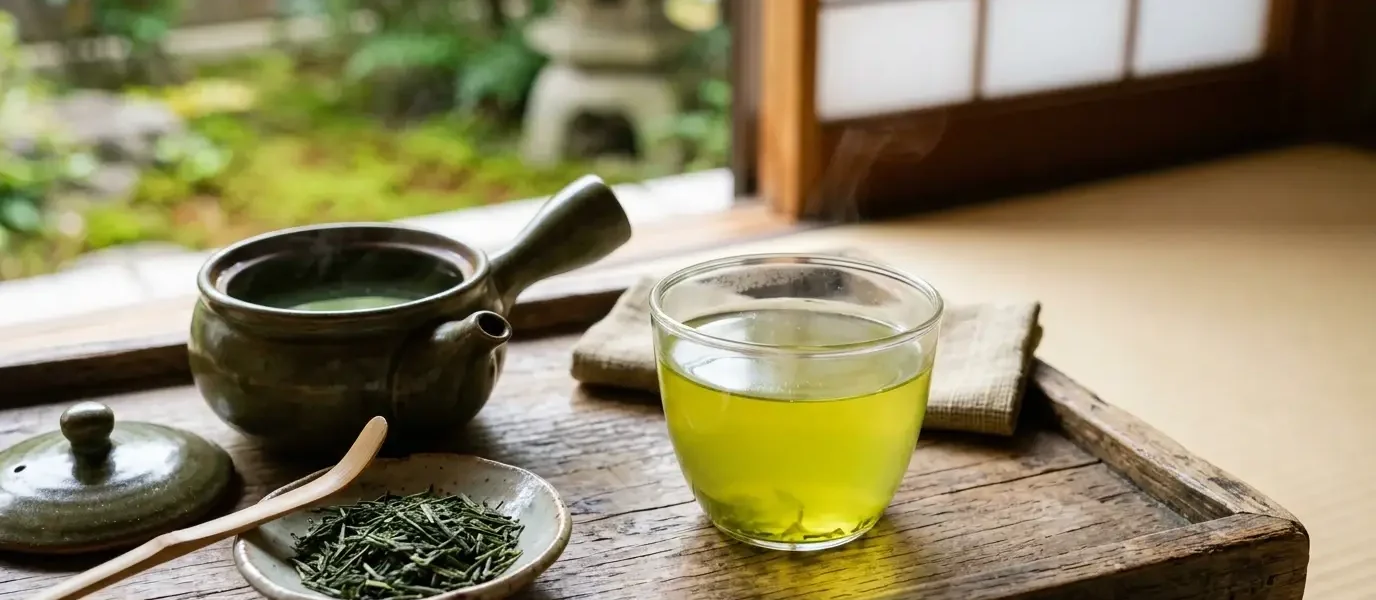
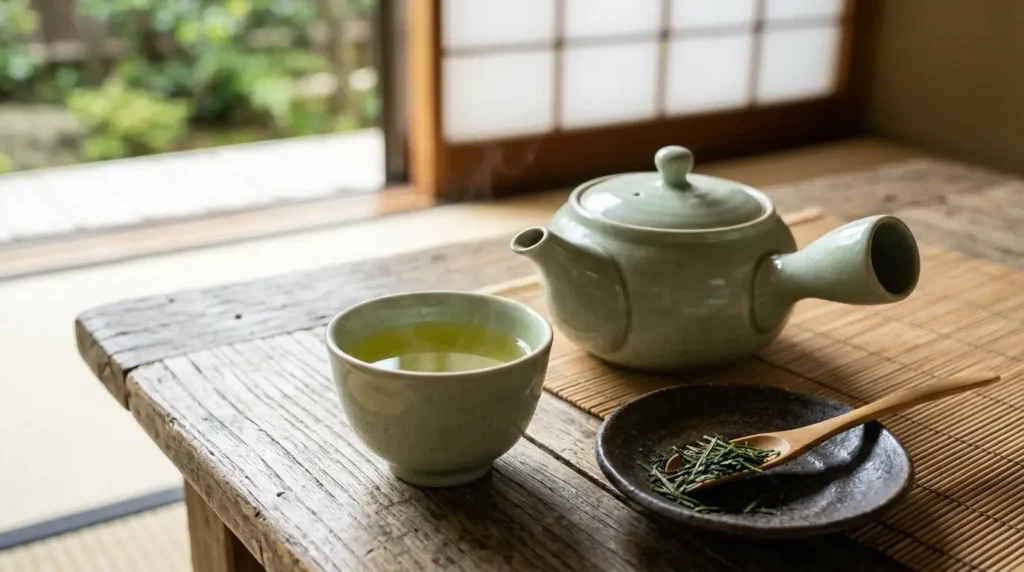
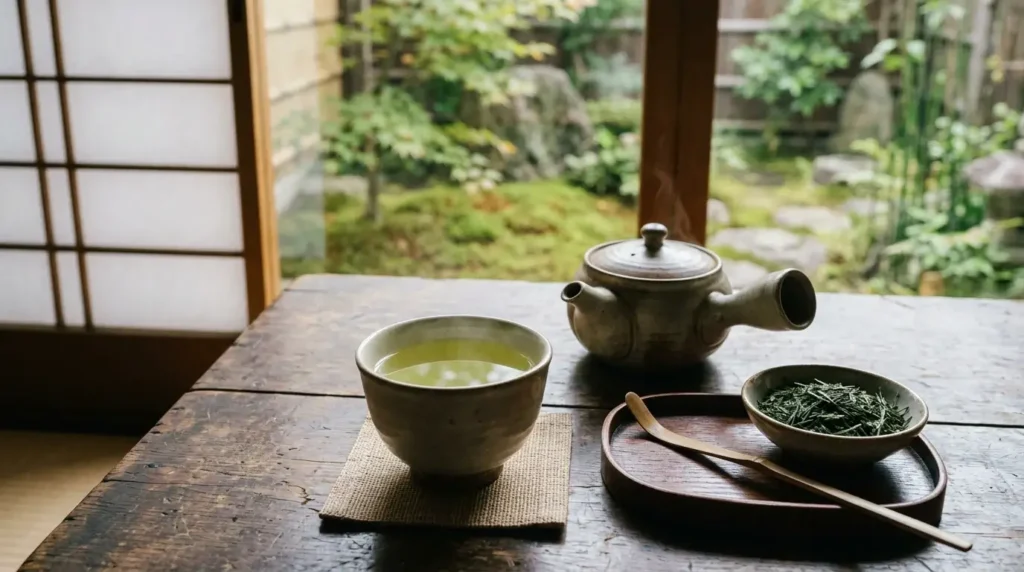
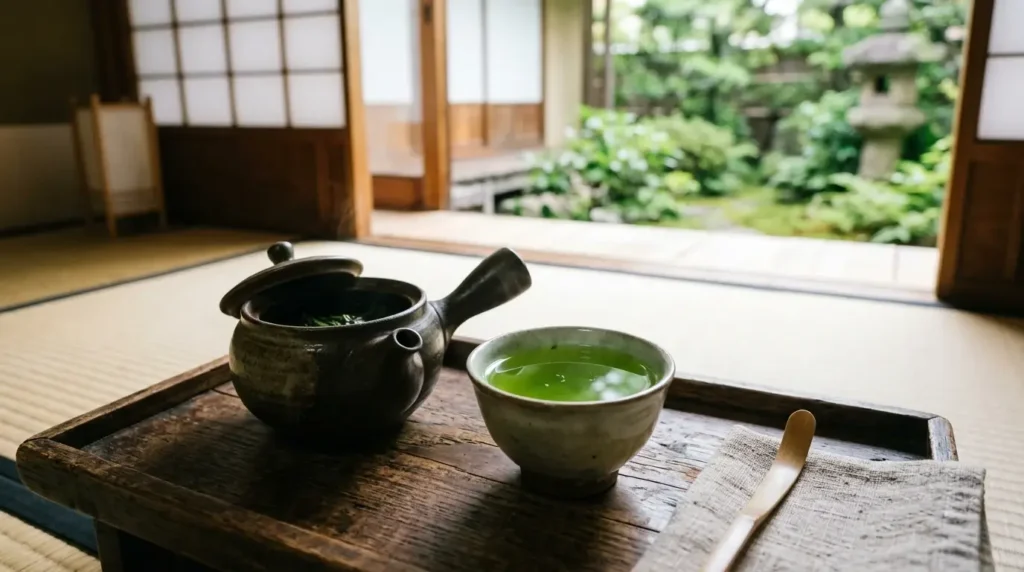
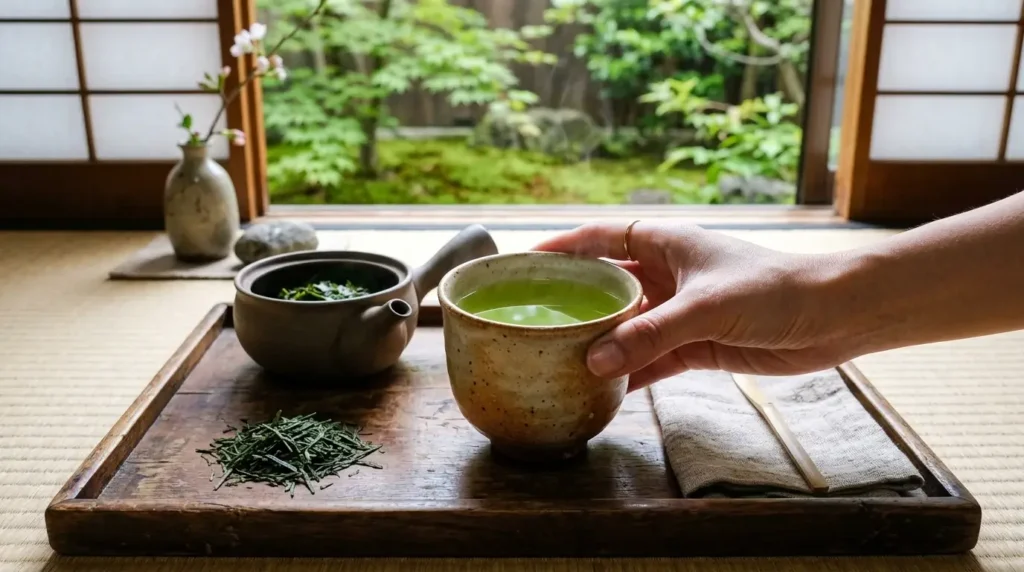
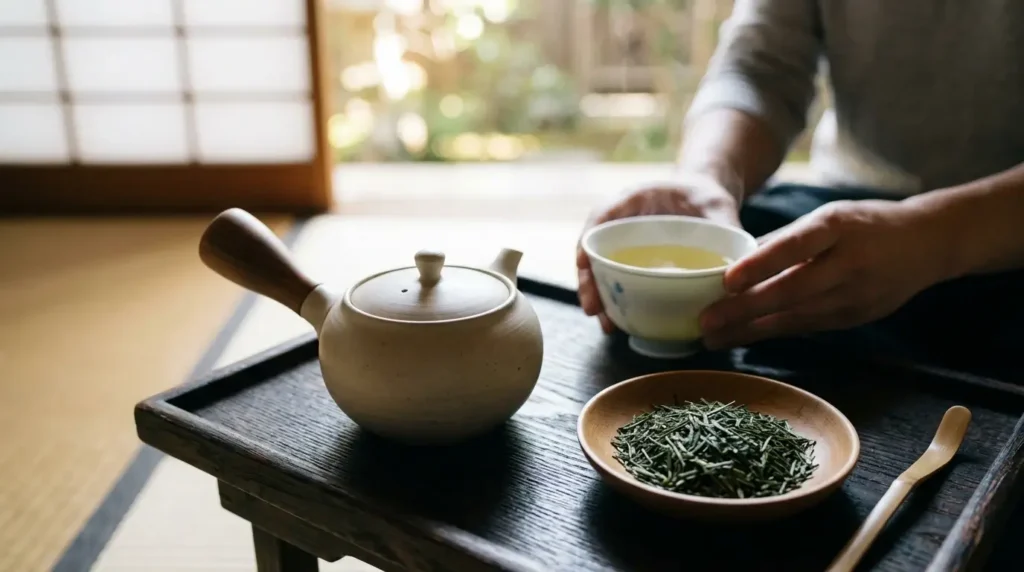
A kyusu teapot (急須): This traditional Japanese side-handled teapot is the gold standard for sencha. It typically holds 200–400ml and has a built-in ceramic strainer. If you don’t have one, a small Western teapot with a fine infuser works fine.
Yunomi cups (湯呑み): Small, handleless Japanese cups (around 80–120ml) designed for the concentrated pours of sencha. Regular small cups or espresso cups work as substitutes.
A thermometer or variable-temperature kettle: This is the single most important tool for sencha. Water temperature is everything. A cheap instant-read thermometer costs under $10 and will transform your tea.
A kitchen scale or measuring spoon: Consistency matters — weighing your leaves or using a standardized spoon removes guesswork.
Optional but useful: a small pitcher (called a yuzamashi) for cooling water before pouring it over the leaves.
Choosing Quality Sencha Leaves
The quality of your leaves sets the ceiling for everything that follows. Look for:
Vibrant deep green color: Quality sencha should be a rich, dark forest green — not yellowish, brownish, or faded. Color degradation usually means the tea is old or was poorly stored.
Tightly rolled, needle-like leaves: Japanese sencha leaves are steamed and rolled into thin needles. They should feel slightly springy, not crumbly.
A fresh, grassy aroma: Open the bag and smell it. Good sencha should smell like fresh-cut grass, ocean breeze, or seaweed — clean, green, and alive. A flat or musty smell means the tea is stale.
Single-origin sourcing: Look for teas that list their prefecture (e.g., Shizuoka, Uji, Yame). Reputable vendors provide harvest dates; freshness is critical with sencha.
For beginners, a mid-grade Shizuoka sencha (around $15–$30 per 100g) offers excellent quality without the premium price of high-grade Uji or first-flush teas.
Water Quality and Its Impact on Flavor
Water makes up over 99% of your cup — it’s not background noise, it’s the medium. Soft or filtered water is strongly preferred. High mineral content (hard water) can dull the delicate flavors of sencha and increase bitterness.
Ideally, use filtered tap water or low-mineral spring water. Avoid distilled water (it tastes flat and lifeless) and heavily chlorinated water. In many parts of the world, a basic carbon filter (like a Brita pitcher) is all you need to get excellent results.
Before walking through the steps, let’s establish the core parameters. These numbers are your compass — every decision you make should orbit around them.
Water Temperature
This is the most critical variable in brewing sencha.
Sencha Grade
Recommended Temperature
Flavor Profile
High-grade / Fukamushi sencha
60–70°C (140–158°F)
Sweet, umami-rich, minimal astringency
Standard / Mid-grade sencha
70–80°C (158–176°F)
Balanced, grassy, light astringency
Lower-grade / Bancha blend
80–90°C (176–194°F)
Bolder, more astringent, less sweet
A good default if you’re unsure: 75°C (167°F). This temperature is forgiving across a wide range of sencha grades and extracts a pleasing balance of sweetness and freshness.
Tea-to-Water Ratio
The standard ratio for sencha is 2 grams of leaves per 100ml of water — or roughly 1 teaspoon per small cup. This is a starting point, not a law. If you prefer a stronger, more concentrated brew (common in Japan for first infusions), you can increase to 3 grams per 100ml. If you prefer something lighter, scale back to 1.5 grams.
Steeping Time
Sencha should steep for 60–90 seconds for the first infusion. That’s it. Many people over-steep by 3–4 minutes because they’re used to Western-style teas; the result is a bitter, unpleasant cup that gives sencha an unfair reputation.
As a rule: the lower the temperature, the slightly longer you can steep. At 70°C, 90 seconds works well. At 80°C, pull it closer to 60 seconds.
Step-by-Step Guide — Sencha Tea How To Make for the Best Flavor
With your equipment ready and parameters understood, here’s the full brewing process from start to finish.
Step 1 — Warm Your Teaware
Fill your kyusu (or teapot) and cups with hot water from the kettle. Swirl it around for 30 seconds, then discard. This serves two purposes: it removes any residual odors from the vessel, and it prevents the cold ceramic from dropping your brew temperature the moment water hits the leaves.
Warming your cups also means your tea stays hot longer after pouring — a small detail that makes a real difference.
Step 2 — Measure Your Leaves
Add your sencha leaves to the warmed, empty teapot. For a standard 200ml kyusu serving two small cups, use 4 grams of leaves (about 2 level teaspoons). For a single-cup 150ml brew, use 3 grams.
Take a moment to smell the dry leaves in the teapot. This primes your palate and also lets you check the quality of your tea before brewing.
Step 3 — Cool the Water to the Right Temperature
Bring your kettle to a boil, then let it cool — or if you have a variable-temperature kettle, set it directly to 75°C. Without a thermometer, a useful rule of thumb is: boiling water cools approximately 10°C per minute when left in a regular kettle. So 3–4 minutes off the boil gets you into the right range.
Alternatively, pour the boiling water into your warmed pitcher or empty cup first, then into the teapot. Each transfer drops the temperature by roughly 10–15°C and also aerates the water slightly, improving flavor.
Step 4 — Steep and Pour
Pour the cooled water over the leaves in a circular motion to ensure even saturation. Place the lid on the teapot. Start your timer.
For a first infusion: steep for 60–90 seconds. Do not lift the lid, agitate, or stir during this time.
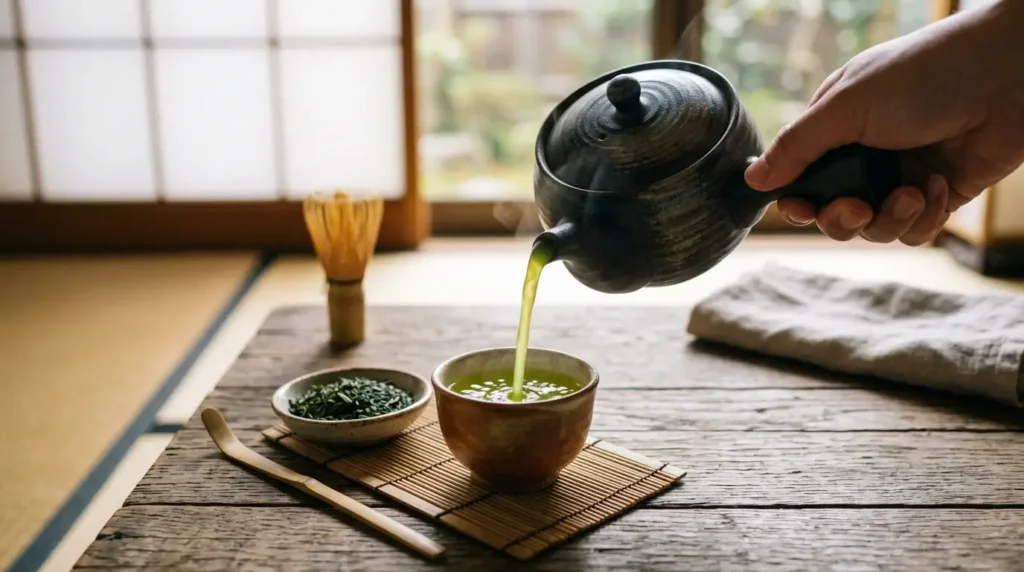
When time is up, pour the tea completely into the cups in a back-and-forth motion — a little into each cup, then return for a second pass, alternating until every last drop is out. This technique (called mawashitsugi) ensures even concentration across all cups and, critically, removes all liquid from the leaves so they don’t continue to over-steep.
The last few drops are the most concentrated — don’t leave them in the teapot.
Step 5 — Second and Third Infusions
One of sencha’s underappreciated qualities is that the same leaves can yield two or three excellent infusions, each with a slightly different character.
Second infusion: Use water at the same temperature, steep for only 30–40 seconds. The leaves are already open and will release flavor more quickly. The flavor is often brighter and lighter than the first steep.
Third infusion: Increase the temperature slightly (by 5–10°C) and steep for 60 seconds. This final infusion tends to be lighter and more astringent, but still pleasant.
After the third infusion, most of the flavor compounds have been extracted. You can compost the spent leaves — they make excellent garden fertilizer — or press them into salad dressings and rice dishes, a practice common in Japan.
Common Mistakes That Ruin Sencha (And How to Fix Them)
Even experienced tea drinkers make these errors. Identifying them is the fastest way to level up your brew.
Using Boiling Water
This is the number one mistake. Boiling water (100°C) aggressively extracts catechins and caffeine before the amino acids have a chance to balance them out. The result is a sharp, bitter, unpleasantly astringent cup.
Fix: Always cool your water before pouring. Even if you don’t have a thermometer, 3–5 minutes off the boil makes a dramatic difference. Once you taste the difference between properly and incorrectly tempered water, you’ll never forget it.
Steeping Too Long
Unlike a black tea bag that you can leave in a mug for 5 minutes without catastrophe, sencha is unforgiving. Every extra minute at the wrong temperature is extracting bitter compounds that overpower the delicate sweetness.
Fix: Use a timer. 60–90 seconds sounds short, but it’s sufficient. If you find your brew too weak, the answer is not longer steeping — it’s more leaves or slightly lower temperature.
Using Poor-Quality Water
Hard water with high mineral content — particularly calcium and magnesium — interferes with the delicate flavor compounds in sencha, making the tea taste dull, flat, or excessively astringent.
Fix: Use filtered tap water or low-mineral bottled water. In areas with very hard water (above 150mg/L TDS), filtering makes a noticeable improvement.
Not Pouring Out All the Liquid
Leaving any liquid in the teapot means your leaves sit in warm water and continue releasing bitter compounds — ruining both the current cup and any future infusions.
Fix: Always empty the teapot completely after each infusion. Shake it gently over the cups to release the last drops.
Storing Leaves Incorrectly
Sencha is sensitive to oxygen, light, heat, and moisture. An opened bag left on a sunny kitchen shelf will degrade within days.
Fix: Store opened sencha in an airtight, opaque container away from heat and light. Consume within 2–4 weeks of opening for peak flavor. Unopened, properly sealed pouches can last 6–12 months.
Flavor Variations — How to Customize Your Sencha
Once you’ve mastered the classic hot brew, there’s a world of variation to explore.
Cold Brew Sencha
Cold brewing extracts almost entirely the amino acids from sencha — virtually no catechins — producing a shockingly sweet, smooth, umami-rich tea with essentially zero bitterness. It’s like discovering a different tea entirely.
How to do it: Add 6–8 grams of sencha per 500ml of cold, filtered water. Stir gently, cover, and refrigerate for 4–8 hours (overnight works perfectly). Strain and serve over ice. The result is jewel-clear, vivid green, and hauntingly sweet.
Iced Sencha (Flash Chill Method)
For a faster cold option, brew a concentrated hot sencha using double the leaf quantity and half the water at 70°C for 60 seconds, then pour directly over a cup or glass full of ice. The ice immediately chills and dilutes the brew to the correct concentration.
This method is faster than cold brew and produces a slightly bolder flavor. It’s popular in Japanese cafés as mizudashi-style iced tea.
Sencha with Citrus
A thin slice of yuzu or a small squeeze of lemon brightens sencha beautifully, adding a citrus counterpoint to the grassy umami. Add it to your cup after pouring — never in the teapot, as the acid can affect subsequent infusions.
Houjicha-Style Roasted Sencha
You can create a roasted sencha at home by gently heating dry sencha leaves in a dry pan over medium heat for 2–3 minutes until they turn golden-brown and smell toasty. Brew these roasted leaves at 90°C for 90 seconds. The result is something like a lighter houjicha — warm, roasted, low in caffeine, and deeply comforting.
Frequently Asked Questions About Making Sencha Tea
What temperature should I use for sencha tea?
The ideal water temperature for sencha is between 70°C and 80°C (158–176°F) for standard grades. High-grade or fukamushi sencha benefits from even lower temperatures — 60–70°C — to preserve delicate sweetness and minimize astringency. Never use boiling water for sencha.
How long should I steep sencha tea?
The first infusion should steep for 60–90 seconds. This might sound short compared to other teas, but sencha releases its flavors quickly at the correct temperature. Over-steeping is the leading cause of bitter sencha. For second infusions, reduce to 30–40 seconds.
How much sencha tea per cup should I use?
Use approximately 2 grams of sencha per 100ml of water as a baseline — about 1 teaspoon per small Japanese cup. Adjust to taste: more leaves for a bolder, more umami-rich brew; fewer for something lighter. In Japan, a slightly higher ratio of 3g/100ml is common for the rich first infusion.
Why does my sencha taste bitter?
Bitterness in sencha almost always comes from one of three causes: water that is too hot, steeping time that is too long, or poor-quality water. Fix the temperature first (aim for 70–75°C), then reduce your steep time to under 90 seconds, and switch to filtered water if you’re on hard tap water.
Can I reuse sencha tea leaves?
Yes — sencha handles two to three infusions well. The second infusion is often bright and clean; the third is lighter and more astringent. After that, the leaves have given what they have. Spent leaves can be eaten (they’re nutritious and slightly savory) or composted.
Is sencha good for you?
Sencha is rich in catechins (powerful antioxidants), L-theanine (an amino acid that promotes calm focus), vitamin C, and minerals. Studies have linked regular green tea consumption to improved cardiovascular health, cognitive function, and metabolic markers. It contains moderate caffeine — roughly 30–40mg per cup, compared to 80–100mg in coffee.
Learning how to make sencha tea properly is one of the most rewarding skills in the world of beverages. It doesn’t require expensive equipment or exotic ingredients — just a little attention and the willingness to slow down for 90 seconds while your tea steeps.
The core principles are simple: cool your water to 70–80°C, use 2 grams of leaves per 100ml, steep for 60–90 seconds, and pour every last drop out of the teapot. Do those four things consistently, and you’ll produce a cup that rivals what you’d find in a Japanese tea house.
From there, the exploration opens up — cold brews, flash-chilled iced teas, different regional varieties, multiple infusions. Each cup is a small experiment in a living craft that has been refined over centuries. The more you pay attention, the more you taste.
Start with a good mid-grade Shizuoka sencha, a simple thermometer, and the steps in this guide. Once you’ve tasted what properly brewed sencha can be, you’ll never go back to the boiling-water method again.
Ready to brew? Pick up a quality loose-leaf sencha, warm your teapot, and let the leaves do the rest.
Black Tea Extract that is rich in natural theaflavins and polyphenols that help protect your body from free radicals, promoting overall immune health and well-being
Contains blended amounts of Fruits and Veggies. All natural, with whole foods, fruit and vegetable supplement.Perfect for everyone looking to live a healthier lifestyle.