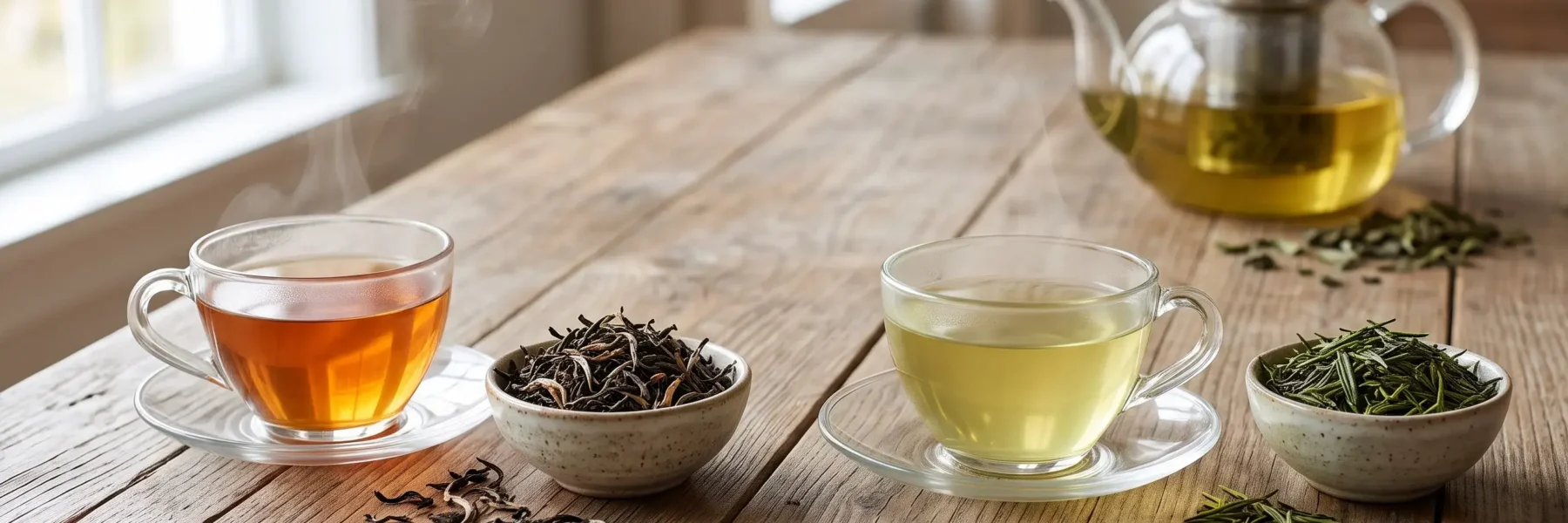
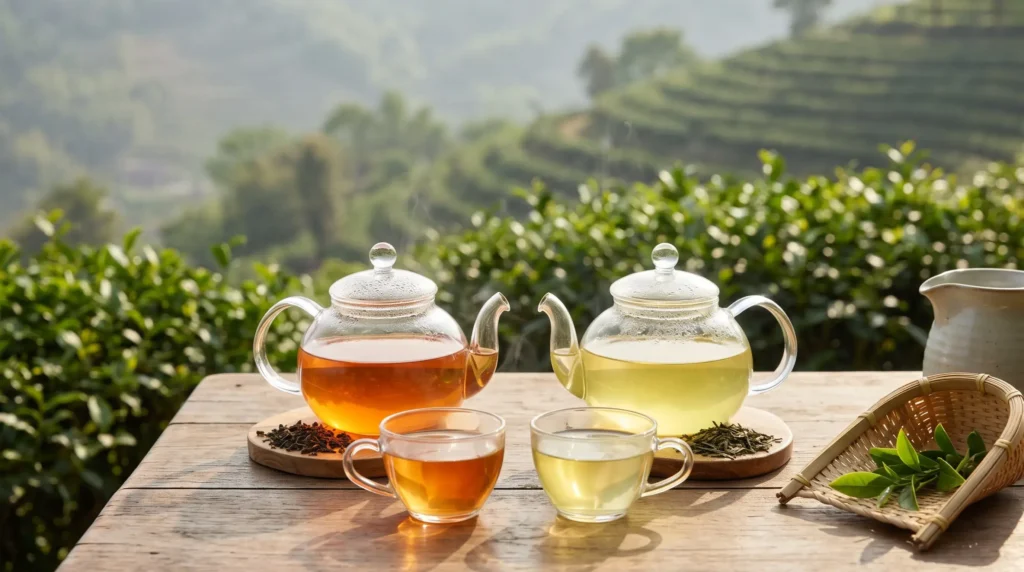
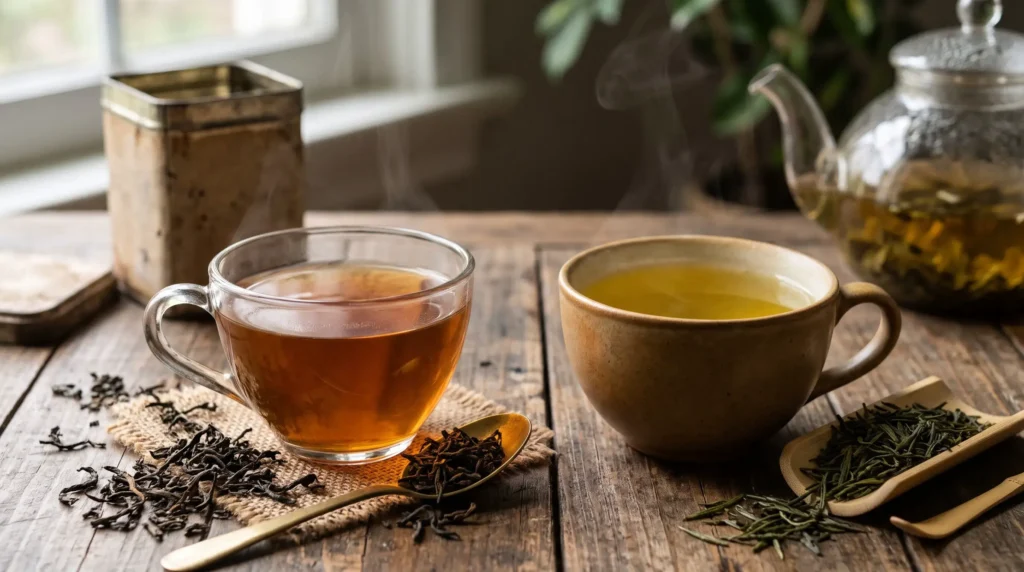
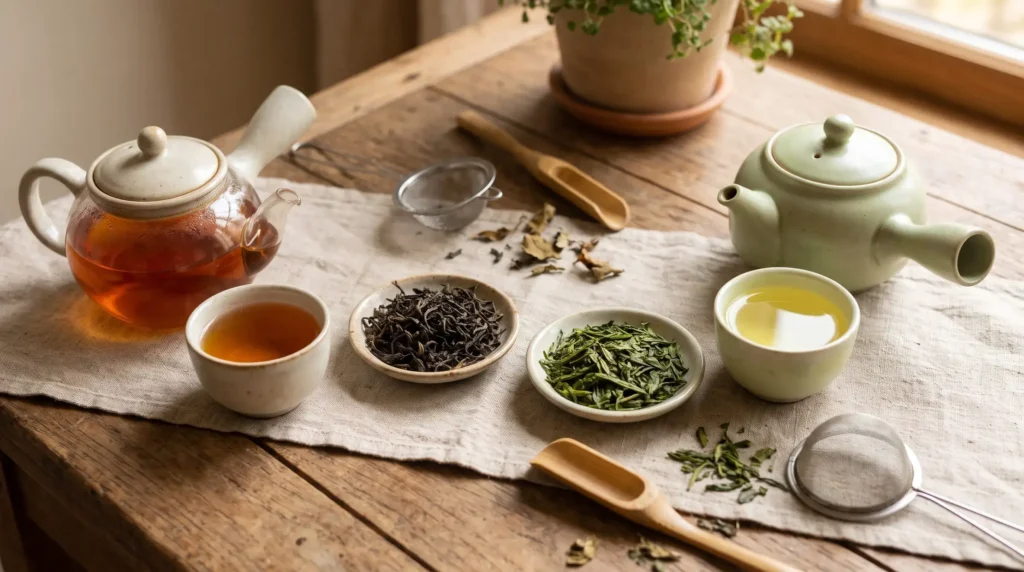
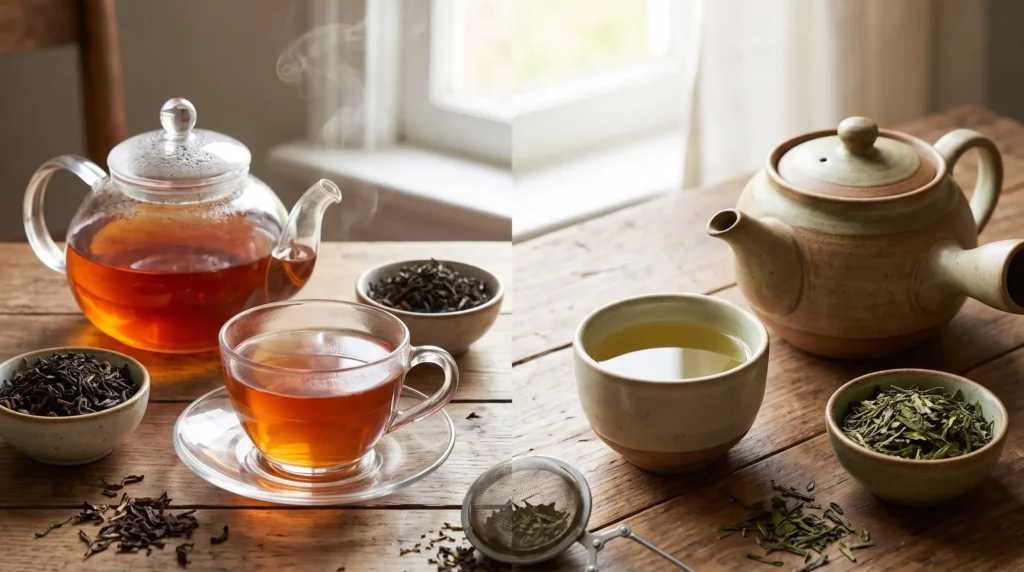
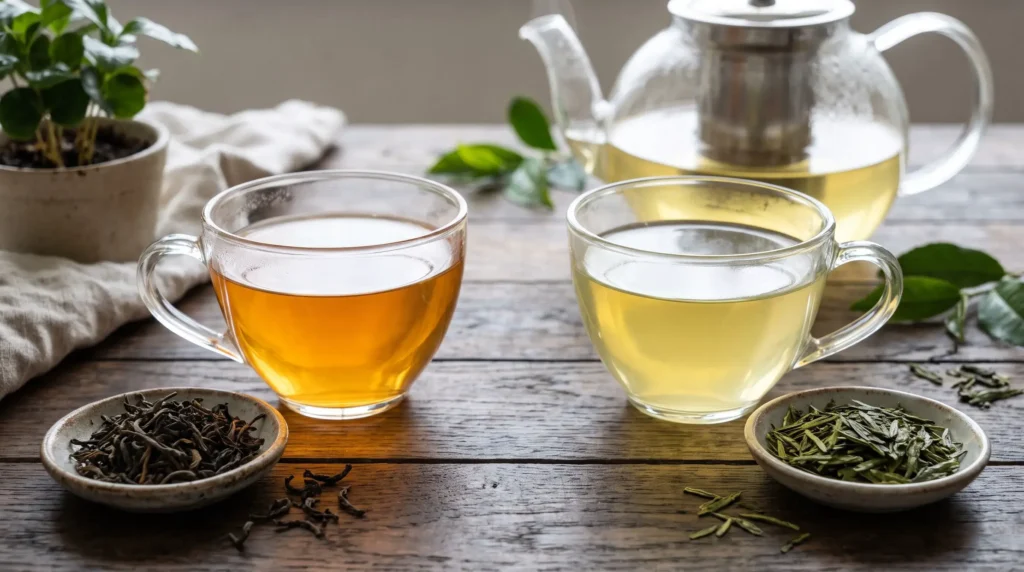
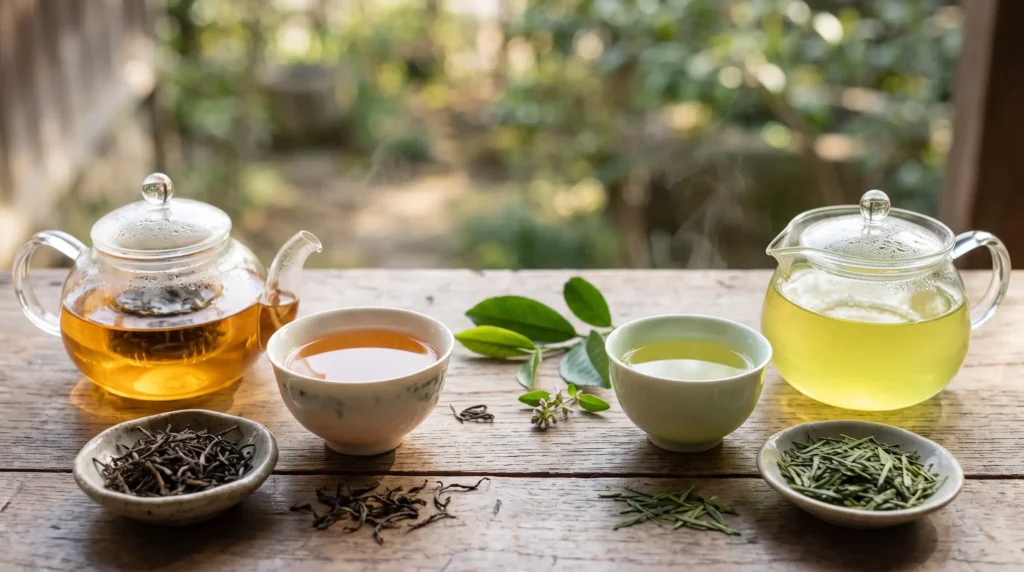
Walk into any tea shop and you will find two shelves that seem to belong to different worlds. On one side sits delicate, grassy green tea, praised as a wellness superstar. On the other sits Darjeeling, the fragrant “champagne of teas” from the Himalayan foothills, loved for its floral, muscatel character. If you are weighing Darjeeling tea vs green tea for your health, you have probably wondered whether the famous name on the Darjeeling tin actually translates into better nutrition.
The short answer is that green tea usually has the edge in certain antioxidants, while Darjeeling offers its own set of beneficial compounds and a gentler learning curve for many drinkers. But the full picture is more interesting, and more useful, than a simple winner-takes-all verdict.
In this guide, you will learn how the two teas are made, how their antioxidants differ, what the research says about their health effects, who should be careful, and how to brew each one properly so you get the most from every cup.
What Sets Darjeeling Tea and Green Tea Apart?
Before comparing health benefits, it helps to understand that these two teas are not as different as they look. Almost all true tea comes from a single plant, Camellia sinensis. What changes the flavor, color, and chemistry is where the plant is grown and how the leaves are processed.
What Is Darjeeling Tea?
Darjeeling is a tea-growing region in the Indian state of West Bengal, set in the foothills of the Himalayas at high altitude. The cool climate, steep slopes, and frequent mist slow the growth of the plants, which produces leaves with a light, aromatic profile that is quite different from the bold teas of Assam or Kenya.
Darjeeling is named for a place, not a processing method. That is an important detail. Most people picture Darjeeling as a black tea, and the majority of it is sold that way. However, estates in the region also produce green, white, and oolong teas.
Darjeeling black tea is traditionally sold by harvest season, known as a “flush”:
First flush (spring): Light, bright, and floral. These leaves are only lightly oxidized, so first flush teas often taste closer to a green tea than to a typical black tea.
Second flush (early summer): Fuller and more rounded, with the muscatel grape-like note Darjeeling is famous for.
Monsoon and autumn flushes: Generally darker and bolder, and often used in blends.
What Is Green Tea?
Green tea is made from leaves that are heated soon after harvest, by steaming (the Japanese approach) or pan-firing (common in China). This step stops oxidation before it starts, which keeps the leaves green and preserves a high level of natural compounds called catechins.
The flavor ranges widely. A Japanese sencha can taste vegetal and savory, a Chinese Dragon Well is toasty and sweet, and matcha is rich and creamy because you consume the powdered leaf itself.
The Real Difference: Oxidation
When tea leaves are bruised and exposed to air, enzymes convert catechins into larger compounds called theaflavins and thearubigins. This is oxidation, and it is what turns leaves dark and gives black tea its depth. Green tea is essentially unoxidized. Darjeeling black tea is oxidized, though often less than other black teas, especially in the first flush.
Darjeeling Tea vs Green Tea at a Glance
Here is a quick side-by-side look at how the two compare. Figures such as caffeine are approximate, because they shift with the leaf, the brewing time, and the water temperature.
Feature
Darjeeling Tea (Black)
Green Tea
Processing
Partially to fully oxidized
Unoxidized (steamed or pan-fired)
Main antioxidants
Theaflavins, thearubigins, some catechins
Catechins, especially EGCG
Caffeine per 8 oz cup
Roughly 40 to 60 mg
Roughly 25 to 45 mg
L-theanine
Present
Present, often higher in shade-grown teas
Flavor
Floral, fruity, muscatel
Grassy, vegetal, sweet or toasty
Brewing temperature
About 85 to 95°C (185 to 203°F)
About 70 to 80°C (158 to 176°F)
Can be bitter if over-brewed?
Yes, but fairly forgiving
Yes, and less forgiving
As you can see, the two teas overlap more than they diverge. The biggest nutritional contrast comes down to which antioxidants dominate.
Antioxidants: Where the Real Difference Lies
Antioxidants are the main reason tea has a health halo. These plant compounds help neutralize unstable molecules called free radicals, which are linked to cellular damage and inflammation over time. Both teas supply antioxidants, but they supply different ones.
Green Tea and Catechins
Because green tea skips oxidation, it retains a high concentration of catechins. The most studied of these is epigallocatechin gallate, better known as EGCG. Most of the research behind green tea’s reputation focuses on EGCG and related catechins.
If your goal is to maximize catechin intake from brewed tea, green tea is the stronger choice. Matcha, where you drink the whole ground leaf, tends to deliver even more.
Darjeeling Tea and Theaflavins
As Darjeeling leaves oxidize, a portion of their catechins transforms into theaflavins and thearubigins. These compounds are antioxidants in their own right, and they are the focus of research on black tea and heart health. Darjeeling does not match green tea on EGCG, but it is far from empty. It simply offers a different mix.
The degree of oxidation matters here. A lightly oxidized first flush Darjeeling retains more catechins than a dark, fully oxidized black tea. If you want something that sits between the two worlds, a first flush Darjeeling is a sensible compromise.
Does a Higher Antioxidant Count Mean Better Health?
Not necessarily. Laboratory antioxidant measurements do not map neatly onto what happens in the human body. Absorption, metabolism, and how you drink the tea all play a role. So while green tea wins on raw catechin content, that does not automatically make it healthier for every person in every situation.
Research on tea is promising but mostly observational, and the effects seen in studies are modest. Neither tea is a medicine. With that in mind, here is what the evidence generally suggests.
Heart Health
Regular tea drinking, both green and black, has been associated in large observational studies with a lower risk of cardiovascular problems. Reviews of clinical trials suggest green tea may produce small improvements in LDL cholesterol and blood pressure. Black tea has also been linked to modest reductions in blood pressure in some trials.
On this front, the two teas look more like teammates than rivals. Choosing either one, instead of a sugary drink, is a heart-friendly swap.
Weight Management
Green tea is often marketed as a fat burner. The reality is more modest: studies show that green tea, particularly combined with its caffeine content, may slightly increase energy expenditure, but the real-world effect on body weight is small. No tea will replace nutrition and movement. Darjeeling has even less weight-loss research behind it, but as a zero-calorie drink it serves the same purpose when unsweetened.
Brain Function and Calm Focus
Both teas contain caffeine and L-theanine, an amino acid associated with relaxed alertness. The combination may support focus and attention better than caffeine alone. Shade-grown green teas such as matcha and gyokuro are especially rich in L-theanine, while Darjeeling gives a slightly stronger caffeine lift, which some people prefer in the morning.
Blood Sugar
Some research suggests that tea polyphenols may support healthier blood sugar responses, and green tea has the larger body of evidence. The results are inconsistent, so tea should be considered a complement to, not a replacement for, medical care if you have diabetes or prediabetes.
Digestion and Oral Health
Tea polyphenols may influence gut bacteria in a favorable way, and tea naturally contains fluoride, which can support teeth. Both areas need more research, and neither tea clearly outperforms the other.
Caffeine, Side Effects and Who Should Be Careful
Tea is safe for most people in moderate amounts, but “natural” does not mean “risk-free.” Here are the points worth knowing.
Caffeine Content
Darjeeling generally contains somewhat more caffeine than green tea per cup, though the ranges overlap, and brewing time and temperature matter as much as the tea type. A cup of either is considerably lighter in caffeine than a typical cup of coffee.
If you are sensitive to caffeine, have trouble sleeping, or experience anxiety or palpitations, you may prefer green tea, a shorter steep, or an afternoon cutoff. Pregnant individuals are commonly advised to limit total caffeine to about 200 mg per day, so it is worth counting tea toward that total and checking with a healthcare provider.
Iron Absorption
Tannins and catechins in tea can reduce the absorption of non-heme iron, the form found in plant foods. This applies to both teas. If you are prone to low iron, or follow a vegetarian or vegan diet, drink your tea between meals instead of with them, and consider adding vitamin C-rich foods to your meals.
Green Tea Extracts Are Different From Brewed Tea
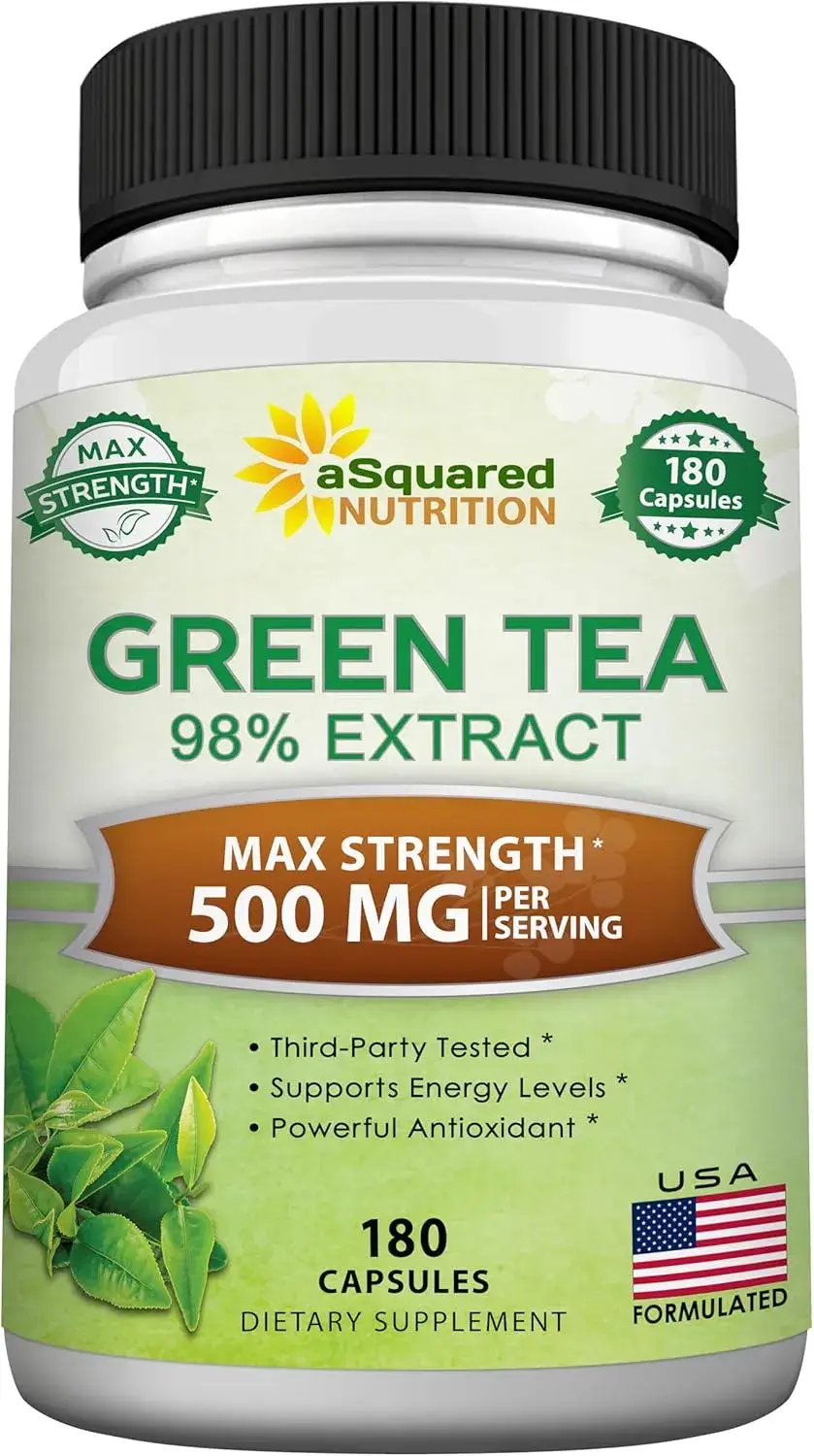
One important distinction: concentrated green tea extract supplements have been linked to rare cases of liver injury. That risk is associated with high-dose extracts, not with a few cups of brewed tea. If you are tempted by an EGCG capsule, speak to a healthcare professional first. Brewing the leaves yourself is the gentler path.
Medication Interactions
Tea can interact with some medications, including certain blood thinners, stimulants, and some heart and cancer drugs. If you take prescription medication, ask your doctor or pharmacist whether regular tea consumption is a concern.
Added Sugar and Milk
What you add matters. Several spoonfuls of sugar can cancel out the advantages of an otherwise healthy drink. Milk is a traditional addition to Darjeeling in some places, and research on whether it reduces the availability of polyphenols is mixed. If you want the most from your cup, drinking it plain or with a slice of lemon is the simplest option.
How to Brew and Choose Between Darjeeling and Green Tea
The healthiest tea is the one you enjoy enough to drink regularly, and brewing it well makes that far more likely. Over-brewed or scorched tea turns bitter, and bitterness is often why people give up on a tea altogether.
How to Brew Darjeeling Tea
Use about 1 teaspoon of loose leaves per cup (roughly 2 to 3 grams).
Heat fresh water to about 85 to 90°C (185 to 195°F) for first flush, and closer to 95°C (203°F) for second flush.
Steep for 3 to 4 minutes, and taste before you go longer.
Strain the leaves promptly. Darjeeling can turn astringent quickly.
How to Brew Green Tea
Use about 1 teaspoon of leaves per cup.
Let boiled water cool to about 70 to 80°C (158 to 176°F). Water that is too hot is the most common reason green tea tastes bitter.
Steep for 1 to 3 minutes, depending on the variety.
Many quality green teas can be re-steeped two or three times.
Which Should You Choose?
Choose green tea if you want the highest catechin intake, prefer a lower caffeine drink, or enjoy fresh, vegetal flavors.
Choose Darjeeling if you like floral, fruity flavors, want a bit more caffeine, or find green tea too grassy or bitter.
Try a Darjeeling green tea or first flush if you want something in between. Darjeeling estates make green teas that combine the region’s signature aroma with the chemistry of an unoxidized leaf.
Enjoy both if you like variety. Rotating teas is perfectly reasonable, and it keeps your routine interesting.
Whichever you pick, buy good-quality loose leaf tea from a reputable source when you can. Fresher leaves taste better and give you a more enjoyable daily ritual.
Frequently Asked Questions About Darjeeling Tea vs Green Tea
Is Darjeeling tea healthier than green tea?
Neither is definitively healthier. Green tea contains more catechins such as EGCG, which is why it tends to dominate wellness headlines. Darjeeling provides theaflavins and other polyphenols, and large studies link regular consumption of both green and black tea to better heart health. Your best choice depends on your caffeine tolerance, taste, and health needs.
Is Darjeeling tea a green tea?
Usually not. Most Darjeeling sold is black tea, although first flush Darjeeling is only lightly oxidized and can taste similar to green tea. Darjeeling estates also produce true green tea, so check the label to see which one you are buying.
Which has more caffeine, Darjeeling tea or green tea?
Darjeeling tends to have a bit more caffeine than green tea, but the ranges overlap. Brewing time, water temperature, and leaf size all change the result. Both generally have less caffeine than a cup of coffee.
Can I drink Darjeeling tea or green tea every day?
For most healthy adults, a few cups a day is considered reasonable. Pay attention to your total caffeine intake, avoid drinking tea with iron-rich meals if you are prone to low iron, and speak to your doctor if you are pregnant, take medications, or have a medical condition.
Is Darjeeling tea or green tea better for weight loss?
Green tea has more research behind it, but the effect on weight is small. The most helpful thing either tea can do is replace sugary drinks as part of an overall healthy diet and active lifestyle.
Is it better to drink tea in the morning or at night?
Because both contain caffeine, most people do best with tea in the morning or early afternoon. If you want a warm drink in the evening, consider a caffeine-free herbal tea instead.
Conclusion: So, Which Tea Wins?
When it comes to Darjeeling tea vs green tea, there is no single champion. Green tea leads in catechin content and has the larger research base, while Darjeeling offers a different antioxidant profile, a bit more caffeine, and a flavor that many people find easier to love. Both are low-calorie drinks associated with good heart health when enjoyed plain and in moderation.
If you want to maximize antioxidants, lean toward green tea. If you want a floral, comforting cup that still delivers real benefits, Darjeeling is an excellent choice. And if you cannot decide, there is no rule against keeping both in your kitchen cabinet.
Start with one cup a day, brew it carefully, and notice how you feel. The best tea for your health is the one you enjoy consistently. As always, if you have a medical condition, are pregnant, or take medication, check with a healthcare professional before making tea a big part of your routine.
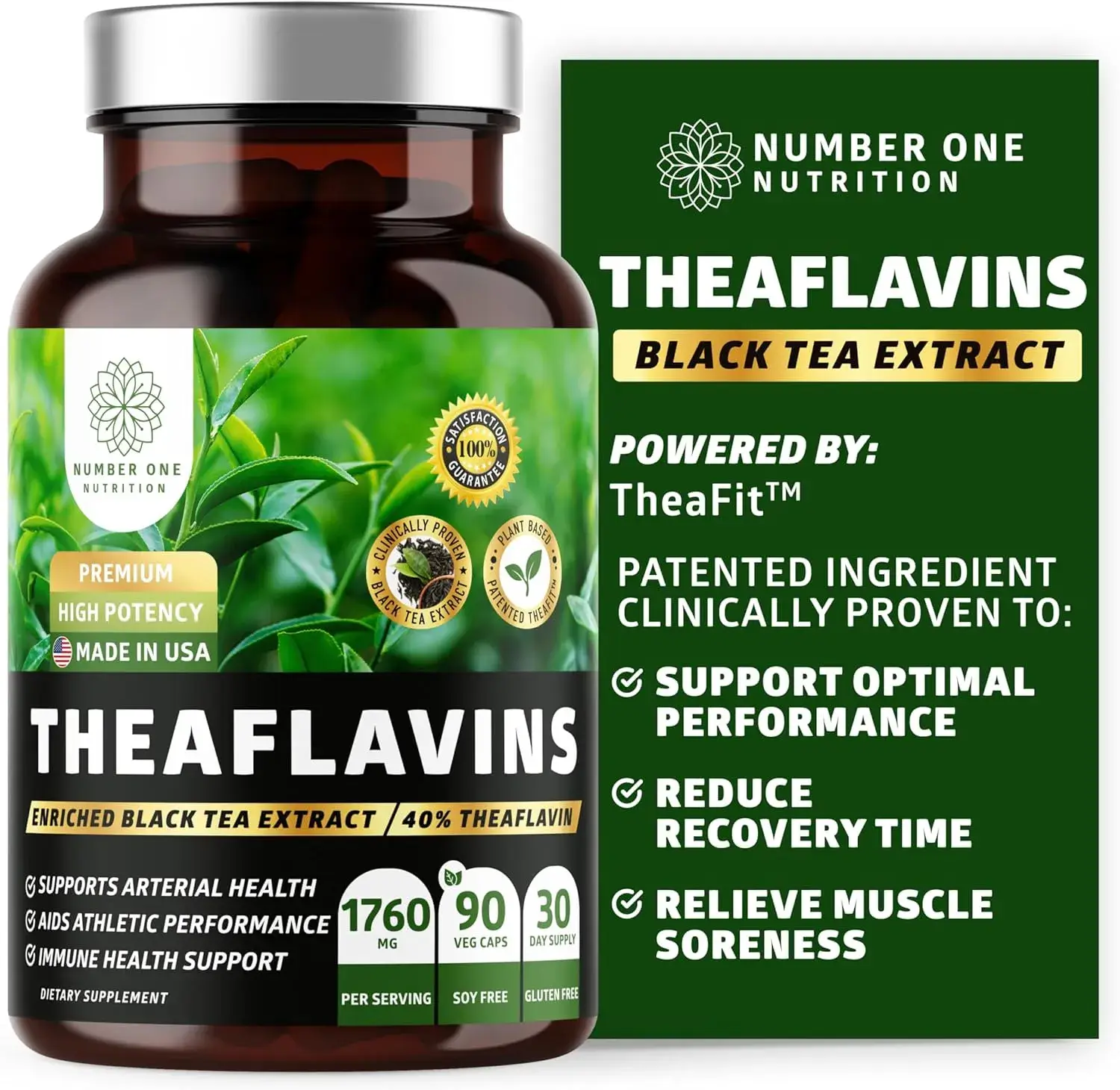
Black Tea Extract that is rich in natural theaflavins and polyphenols that help protect your body from free radicals, promoting overall immune health and well-being
Contains blended amounts of Fruits and Veggies. All natural, with whole foods, fruit and vegetable supplement.Perfect for everyone looking to live a healthier lifestyle.