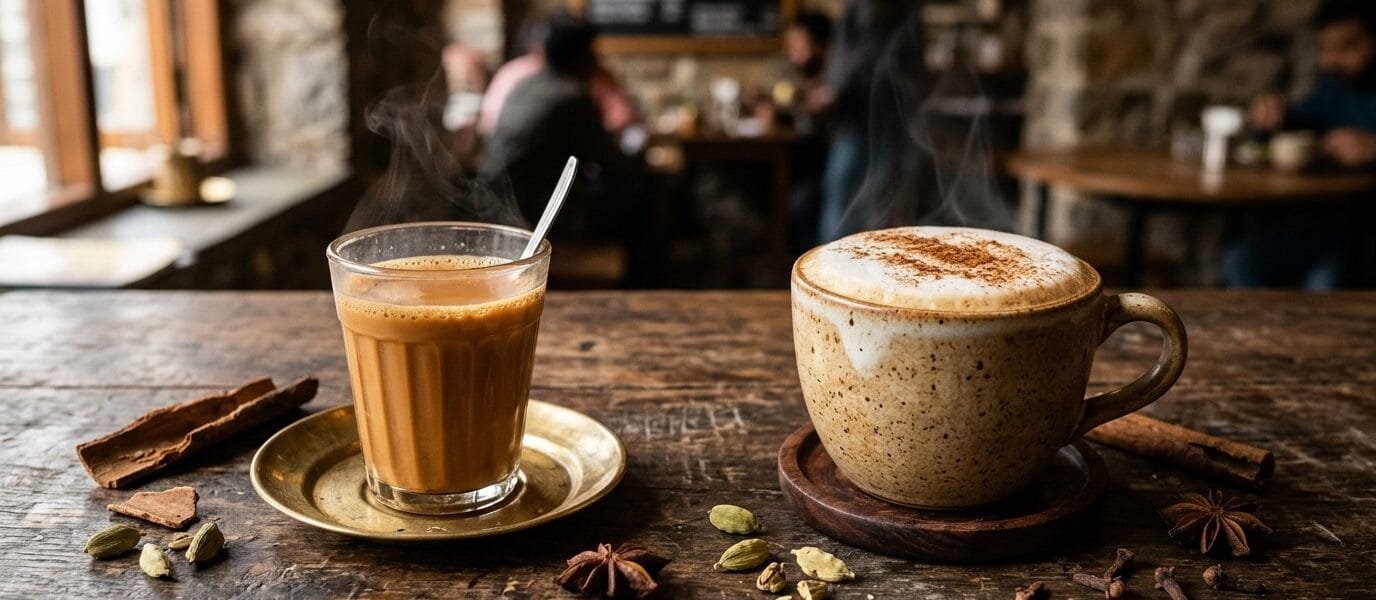
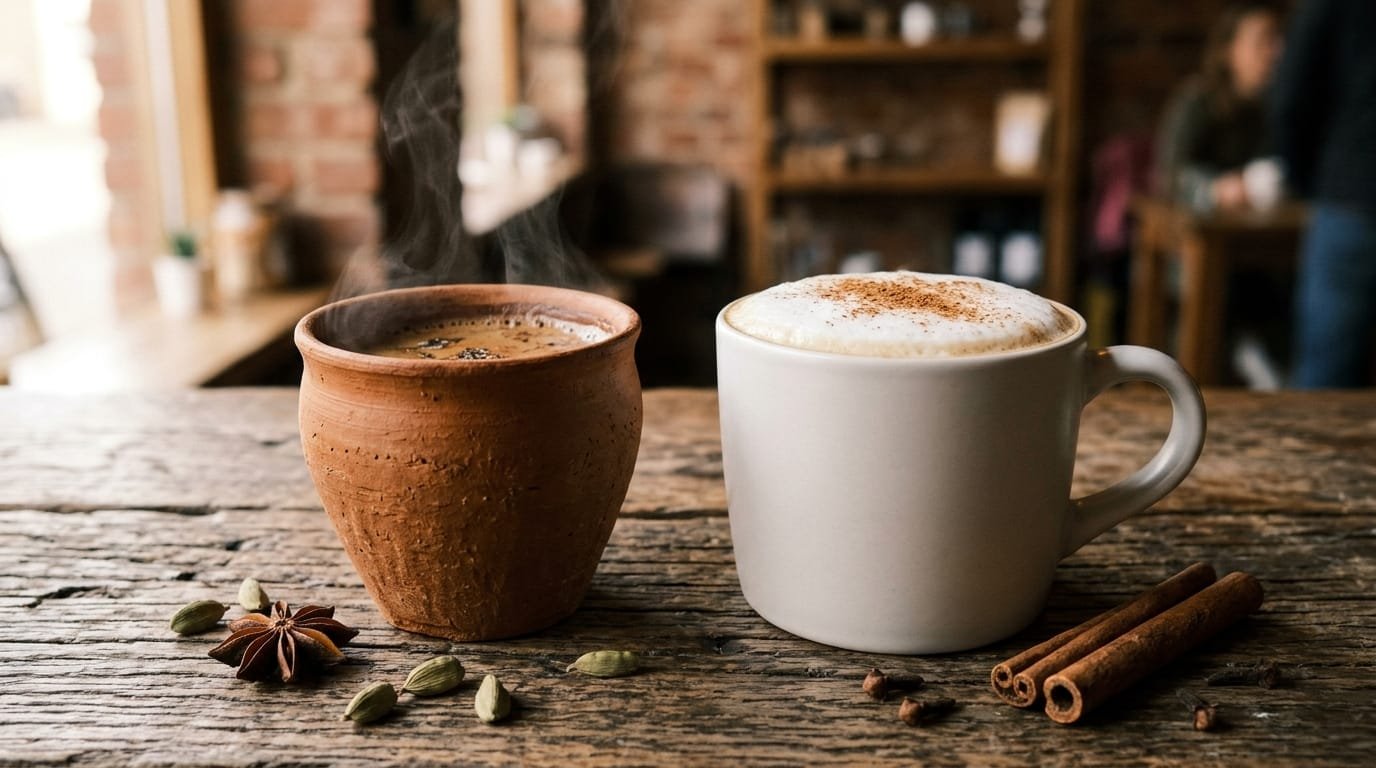
Step into almost any coffee shop, and you will hear customers ordering a “chai tea latte” without a second thought. To anyone familiar with South Asian tea traditions, the phrase sounds amusingly redundant. In Hindi and northern Indian languages, chai simply means tea. Saying “chai tea” literally translates to ordering “tea tea.”
Beyond this linguistic quirk lies the genuine question of chai tea vs chai latte. Is a chai latte merely regular chai tea with an extra splash of warm milk, or are they entirely separate drinks with different ingredients, brewing methods, and nutritional values?
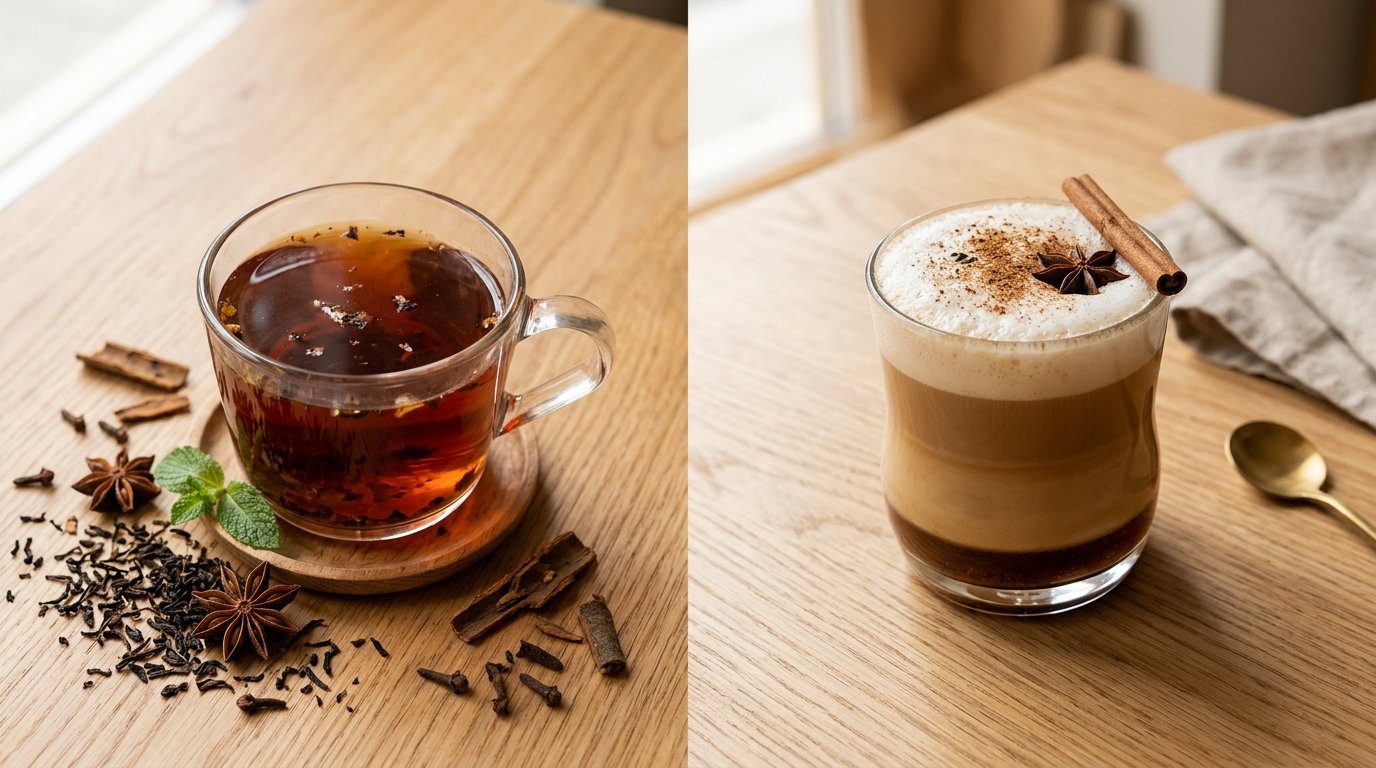
While both drinks share roots in black tea and fragrant spices, they have evolved into two fundamentally different beverages. Traditional chai tea is an ancient stovetop brewing ritual centered on whole spices, loose tea leaves, and digestive wellness. A modern chai latte is a sweet café specialty built around steamed milk and concentrated syrups. Here is how they compare in ingredients, health impact, caffeine, and brewing methods.
What Is the Difference Between Chai Tea vs Chai Latte?
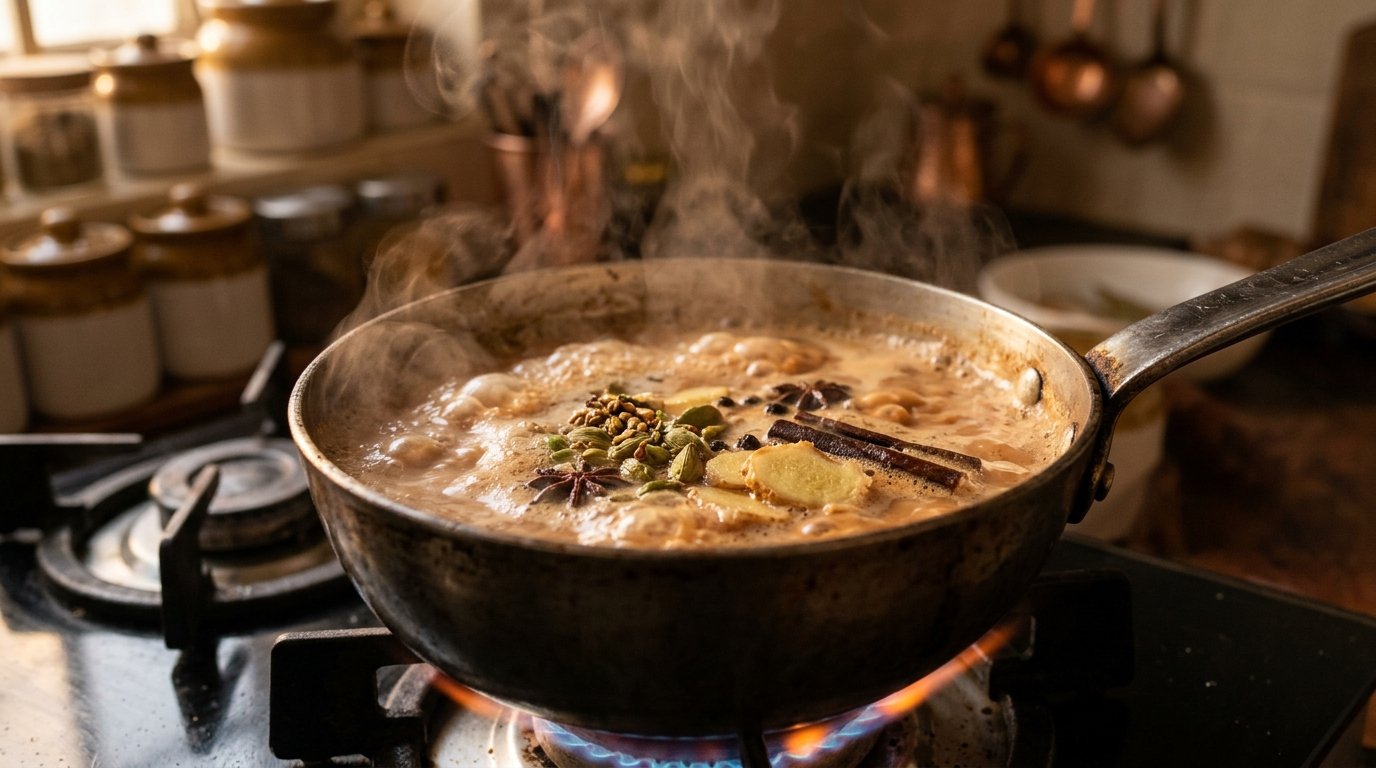
Direct Answer: Chai tea (masala chai) is a stovetop beverage made by simmering whole crushed spices, robust black tea leaves, water, and milk in a pot. A chai latte is a café-style beverage created by mixing pre-sweetened liquid tea concentrate or powder with a generous volume of steamed, frothed milk.
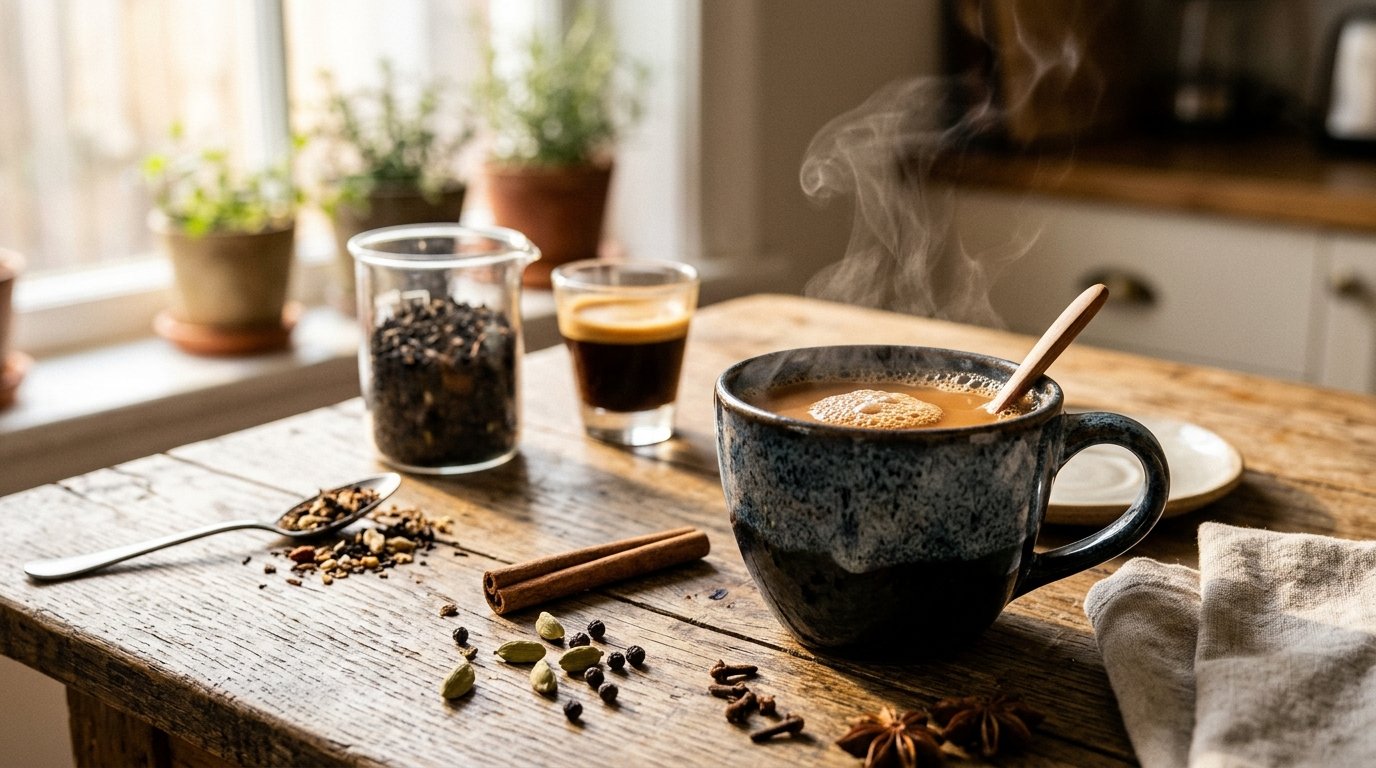
The primary distinction lies in the ratio of liquid to tea. Traditional chai tea is tea-forward. Water makes up a substantial portion of the brewing base, allowing the essential oils from cracked spices and brisk tannins of black tea leaves to infuse deeply before milk softens the edges.
In contrast, a chai latte is milk-forward. Much like an espresso latte where a single shot of coffee flavors twelve ounces of steamed milk, a chai latte uses steamed dairy or plant milk as its foundation. The chai component enters as an intensely sweetened concentrate designed to cut through thick dairy proteins quickly.
The Linguistic Redundancy of “Chai Tea”
The term chai derives from the northern Chinese word chá. As tea traveled westward along the Silk Road through Central Asia and Persia, the pronunciation shifted to chay in Persian, Turkish, and Urdu, eventually becoming chai across northern India. When Western brands popularized spiced tea in North America and Europe, marketers attached the word “tea” to ensure Western shoppers understood what they were buying.
In India, ordering masala chai gets you a hot spiced brew with ginger and cardamom. In Western coffee shops, the term chai tea caught on, creating lasting confusion between stovetop tea and commercial café drinks.
How Western Coffee Shops Redefined the Drink
The chai latte emerged in American coffee houses during the 1990s. Baristas needed a fast way to serve spiced tea without keeping customers waiting ten minutes for a stovetop simmer.
Liquid concentrates solved this speed issue. By pumping sweetened syrup into a cup and topping it with steamed milk from an espresso wand, baristas could serve a spiced drink in under a minute.
Side-by-Side Comparison: Quick Reference Table
To help you see how these two beverages stack up at a glance, here is a detailed breakdown of their key characteristics, preparation methods, and nutritional markers.
Key Characteristics at a Glance
Feature
Traditional Chai Tea (Masala Chai)
Commercial Chai Latte
Liquid Base
Filtered water and milk simmered together (1:1 ratio)
Steamed milk (dairy or plant-based) making up 70% to 80%
Tea Component
Loose-leaf CTC black tea (Assam or Ceylon)
Liquid tea concentrate, syrup, or soluble instant powder
Spicing Method
Whole, freshly crushed raw spices
Liquid spice extracts, artificial flavoring, or pre-ground spices
Sweet, milky, dessert-like, with mild background cinnamon notes
Texture and Mouthfeel Contrasts
When sipping traditional masala chai, the first sensation is aromatic warmth. Heat coaxes out the pungent gingerols from fresh ginger and the spicy warmth of black peppercorns. The tea has a clear presence on the tongue, balanced by the creaminess of milk, leaving a clean, tingling sensation across the palate rather than a sugary film.
A chai latte delivers an entirely different sensory experience. The drink hits your lips with thick milk microfoam, followed by a sweet, silky wave of hot milk. The spice notes are smooth and rounded because milk fats coat the taste receptors, dampening the sharper edges of ginger and black pepper.
The Origins: Traditional Masala Chai vs Modern Coffee Shop Creation
Direct Answer: Masala chai originated thousands of years ago in ancient India as an Ayurvedic medicinal infusion before black tea leaves were added during the nineteenth century. The chai latte was invented in the United States during the early 1990s as a commercial café adaptation that blended espresso-bar milk steaming techniques with pre-made tea concentrates.
The Ayurvedic Heritage of Indian Masala Chai
Long before tea leaves became a staple across India, traditional healers brewed an herbal decoction known as kadha. Rooted in Ayurvedic medicine, this elixir combined hot water with healing botanical ingredients: fresh ginger for digestion, green cardamom for respiratory support, cinnamon for steady circulation, and cloves for antimicrobial properties.
Tea leaves joined this mixture in the 1830s when the British East India Company established plantations in Assam. While premium whole-leaf tea was exported, local markets embraced affordable CTC (Crush, Tear, Curl) black tea. Street vendors, known as chaiwallahs, brewed these robust black tea leaves directly with milk, water, and Ayurvedic spices to create an energizing beverage for workers and travelers. For a detailed breakdown of its restorative properties, read our guide on the benefits and side effects of chai tea.
The 1990s Specialty Coffee Boom and the Birth of the Chai Latte
The chai latte arrived much later. In 1994, Oregon Chai introduced a packaged concentrate of tea extract, honey, vanilla, and spices. Cafés adopted it rapidly because it fit right into their steamed-milk drink routine.
Starbucks acquired Tazo in 1999, taking the chai latte global. That expansion popularized the drink while shifting its flavor profile heavily toward sweet vanilla and cinnamon syrup.
Ingredients Breakdown: Fresh Spices vs Commercial Syrups
A look at the ingredient labels shows the clear contrast between kitchen spices and industrial sweeteners.
What Goes Into Authentic Chai Tea?
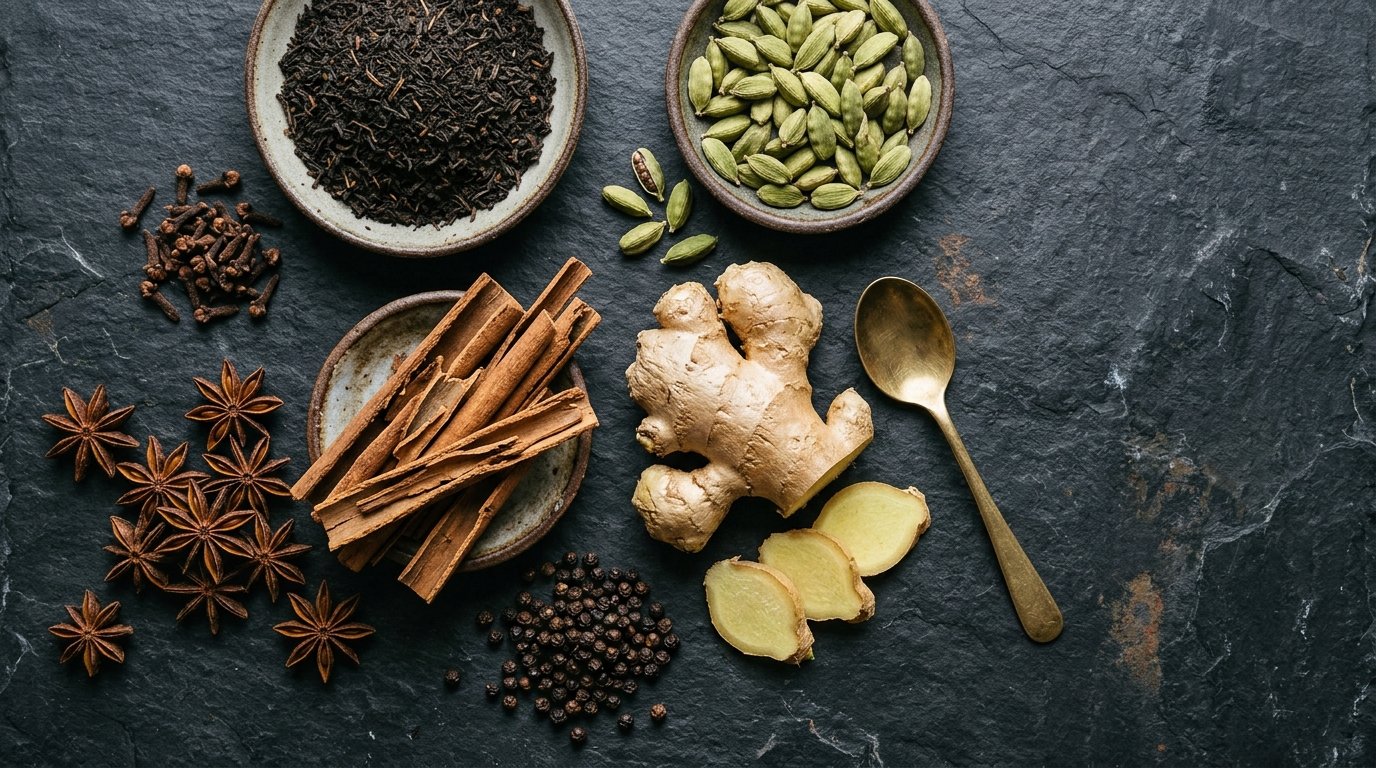
Authentic masala chai uses four primary elements: water, tea leaves, milk, and whole spices:
Loose-Leaf CTC Black Tea: Assam CTC black tea gives the drink its deep amber color and bold flavor that easily cuts through rich milk.
Green Cardamom Pods: The aromatic soul of masala chai, releasing sweet, herbal floral notes.
Fresh Ginger Root: Pounded before brewing, fresh ginger brings juicy pungency that warms the throat.
Cinnamon Bark: Adds natural sweetness and woody warmth, with Ceylon cinnamon preferred for subtle citrus notes.
Whole Cloves and Black Peppercorns: Cloves impart deep warmth through eugenol, while black peppercorns provide a sharp, lingering finish.
Unrefined Sweeteners (Optional): If sweetened, authentic chai uses modest amounts of jaggery, raw turbinado sugar, or pure honey.
What Is Actually Inside a Commercial Chai Latte?
Commercial coffee chains rely on bottled syrups or powders containing:
Sugar and Liquid Sweeteners: Often the first or second ingredient listed, including cane sugar, honey, and high-fructose corn syrup to provide body.
Black Tea Extract: A spray-dried powder or concentrated liquid reduction derived from black tea leaves, often lacking the tannins of freshly steeped leaves.
Natural and Artificial Flavors: Lab-isolated flavor chemicals designed to mimic the aroma of cinnamon, nutmeg, and vanilla.
Citric Acid and Potassium Sorbate: Food-grade preservatives added to prevent bacterial growth in room-temperature syrup bottles.
Commercial Steamed Milk: Steamed whole milk, 2% dairy milk, or barista plant milks containing added dipotassium phosphate and vegetable oils for stable foam.
Calories and Sugar: Which One Is Healthier?
Direct Answer: Traditional homemade chai tea is vastly healthier than a commercial chai latte. A standard cup of homemade masala chai contains between 35 and 70 calories with fewer than 5 grams of sugar. A 16-ounce coffee-shop chai latte averages 240 to 280 calories and packs 35 to 45 grams of sugar, equivalent to eating an entire candy bar.
For anyone watching calories or sugar intake, the nutritional gap between these drinks is dramatic.
Understanding the Calorie and Sugar Gap
The nutritional disparity comes down to portion size, milk volume, and sweetener concentrations. When you prepare an eight-ounce cup of traditional chai at home with half a cup of water, half a cup of milk, and half a teaspoon of sugar, it yields roughly 50 calories and 4 grams of sugar. Using unsweetened almond milk drops the calorie count below 25.
In contrast, a standard 16-ounce Starbucks Chai Tea Latte made with 2% milk contains 240 calories, 4.5 grams of total fat, and 42 grams of sugar. With 42 grams of sugar in one 16-ounce cup, a coffee shop chai latte exceeds the daily recommended added sugar limit before lunch. If you are looking to support healthy body composition through herbal brews, read our article on drinking chai tea for weight loss.
Blood Sugar and Metabolic Impact
The difference between these drinks extends beyond calorie counts to how your body processes them. Authentic masala chai contains active botanical compounds that support healthy glucose metabolism. Cinnamaldehyde in cinnamon helps steady insulin response, while gingerols in ginger support digestion.
A commercial chai latte does the opposite. Drinking over 40 grams of liquid sugar causes an insulin spike followed by energy dips. Traditional chai delivers steady warmth without the blood sugar crash.
Caffeine Content: How Do They Stack Up?
Both beverages contain caffeine because true black tea serves as their base, but their total stimulant delivery varies based on cup size and formulation.
Caffeine Levels in Traditional Brewed Chai
An eight-ounce cup of traditional masala chai brewed with loose CTC black tea contains approximately 40 to 60 milligrams of caffeine, compared to 95 to 165 milligrams in an eight-ounce cup of drip coffee.
Tea caffeine is uniquely balanced by L-theanine, an amino acid that stimulates alpha brain waves, promoting relaxed alertness. When combined with caffeine, L-theanine moderates the stimulant absorption rate, delivering a calm, sustained lift in mental focus without sudden mid-morning crashes or jitters.
Caffeine in a Commercial Chai Latte
A standard 16-ounce coffee-shop chai latte contains roughly 70 to 95 milligrams of caffeine, primarily due to the larger serving volume. Because commercial concentrates rely heavily on processed tea extracts, the ratio of natural L-theanine to caffeine may be slightly lower than in freshly steeped loose leaves, though it still provides a gentler experience than coffee.
What Is a “Dirty Chai” and How Does It Change the Equation?
If you enjoy the warm spice profile of chai but need the intense caffeine kick of an espresso shot, coffee shops offer a popular hybrid known as the Dirty Chai, which adds a single shot of espresso to a standard chai latte. A “double dirty chai” includes two shots.
A single shot of espresso adds approximately 64 milligrams of caffeine, pushing total caffeine to 135 to 160 milligrams, while two shots push it beyond 200 milligrams. The espresso introduces roasted, smoky notes that pair well with sweet spices, transforming the drink into a potent coffee-tea hybrid.
You do not need coffee shop syrups to make great spiced tea at home. Here are two simple kitchen recipes.
Authentic Stovetop Masala Chai Recipe
Ingredients (Makes 2 Cups):
1 cup filtered water and 1 cup whole milk or oat milk
2 tablespoons CTC Assam loose black tea
4 whole green cardamom pods, lightly cracked
1-inch piece of fresh ginger root, crushed
1 small cinnamon stick, 2 cloves, and 3 black peppercorns
1 to 2 teaspoons raw sugar or jaggery (optional)
Step-by-Step Instructions:
Crush the Spices: Bruise the cracked cardamom pods, ginger, cinnamon, cloves, and peppercorns in a mortar and pestle to release their aromatic oils.
Boil the Spices: In a small saucepan, bring the water and crushed spices to a boil over medium-high heat. Simmer for two minutes until fragrant.
Add the Black Tea: Add loose black tea leaves and simmer for two minutes to decoct flavor.
Incorporate Milk: Pour in milk and sweetener. Bring to a gentle boil, lifting the pot off the heat as the foam rises to prevent boiling over. Repeat this rising process two to three times over three minutes for a rich mouthfeel.
Strain and Serve: Pour the hot tea through a fine-mesh strainer into mugs and enjoy warm.
Brew an Intense Concentrate: Boil 1/2 cup of water with spices and tea leaves for four minutes. Remove from heat and stir in maple syrup and vanilla extract.
Strain the Concentrate: Strain the spiced tea liquid into a large latte mug.
Heat and Froth the Milk: Heat milk to roughly 150°F (65°C) and froth with a handheld frother for 25 seconds until velvety microfoam forms.
Assemble: Pour the warm frothed milk into the mug, spooning thick foam over the top. Dust lightly with ground cinnamon.
Frequently Asked Questions About Chai Tea and Chai Lattes
Can I Order an Unsweetened Chai Latte at Starbucks?
No, you cannot order a standard Starbucks Chai Latte completely unsweetened because the base concentrate comes pre-sweetened with sugar and honey. Asking for fewer pumps reduces sugar but also dilutes the spice flavor. To get an unsweetened version, ask for a Custom Tea Latte made with Teavana Chai tea bags steeped in hot water and topped with steamed milk.
Is Chai Tea Effective for Weight Loss Compared to a Chai Latte?
Yes. Traditional chai tea contains under 40 calories and zero refined sugar, while spices like ginger and black pepper support digestion and thermogenesis. A commercial chai latte contains over 240 calories and 42 grams of sugar, which can trigger insulin spikes and fat storage if consumed regularly.
Can You Make a Chai Latte Using Regular Chai Tea Bags?
Yes. The key is brewing a concentrated tea base first. Steep two chai tea bags in just 1/3 cup of boiling water for five minutes, discard the bags, and stir in warm frothed milk.
Does a Chai Latte Contain Real Tea?
Most commercial chai concentrates contain real black tea in the form of tea extract or soluble powder, though it lacks the fresh antioxidant potency and crisp flavor of freshly brewed loose-leaf black tea.
Is Traditional Chai Naturally Vegan?
Authentic masala chai is traditionally prepared with dairy milk, but it adapts seamlessly to plant-based milks. Oat milk and soy milk are the best vegan substitutes because their natural protein and fat content allow them to simmer and froth into stable microfoam without curdling.
Conclusion: Which One Should You Choose?
Deciding between chai tea and a chai latte comes down to what you want from your cup. Both offer comfort and warm aromatic spices, but they serve different roles in a healthy lifestyle.
When to Pick Traditional Chai Tea
Choose traditional brewed chai tea if you value authentic cultural traditions, rich spice complexity, and clean daily wellness. It is the ideal companion for quiet morning rituals, digestive support, and steady mental clarity without the metabolic drag of 40 grams of liquid sugar.
When to Enjoy a Chai Latte
Choose a chai latte when you are on the go, catching up with friends at a café, or craving a sweet, velvety treat. Treat a commercial chai latte as an occasional indulgence, and whenever you have time at home, froth your own milk over a fresh spice reduction for the best of both worlds.
Black Tea Extract that is rich in natural theaflavins and polyphenols that help protect your body from free radicals, promoting overall immune health and well-being
Contains blended amounts of Fruits and Veggies. All natural, with whole foods, fruit and vegetable supplement.Perfect for everyone looking to live a healthier lifestyle.