If you have ever wondered, matcha tea does it have caffeine — or whether your morning bowl packs a punch, the answer is straightforward. Yes, matcha has caffeine, and a typical serving contains roughly 38 to 176 mg, depending on how much powder you use.
That range is wide for a reason. Matcha is made from ground-up tea leaves, so you drink the whole leaf instead of steeping it and tossing it out. That’s why matcha contains more caffeine than most regular green teas.
But the numbers only tell part of the story. The way matcha’s caffeine feels is often described as different from coffee, and several factors change how much you actually get in your cup. Here’s what you need to know before your next whisk.
Key Takeaways
Matcha does contain caffeine because it comes from the same plant as green and black tea.
A single serving can range from about 38 to 176 mg, which may land below or above a cup of coffee.
Powder amount, leaf quality, and preparation all affect how much caffeine ends up in your drink.
Matcha Tea Does It Have Caffeine? The Short Answer
Yes, matcha has caffeine. It comes from the same plant that gives you green tea and black tea, and because you drink the whole leaf as a powder, you take in more caffeine than you would from a steeped cup.
Matcha’s Camellia Sinensis Origin
Matcha green tea is made from Camellia sinensis, the same plant behind green tea, black tea, oolong, and white tea. Every true tea from this plant naturally contains caffeine.
The plant makes caffeine in its leaves, so no processing step removes it unless a tea is specifically decaffeinated.
Matcha does have one growing difference. Farmers shade the plants for a few weeks before harvest, which pushes the leaves to produce more chlorophyll and more of the amino acid L-theanine.
That shading also affects caffeine levels in the young leaves picked for matcha powder. So even though matcha is a powdered green tea that’s high in antioxidants, it isn’t a caffeine-free herbal drink like chamomile or rooibos.
Why Whole-Leaf Powder Changes the Cup
With regular green tea, you steep the leaves in hot water and then throw them away. You only get the caffeine that dissolves into the water.
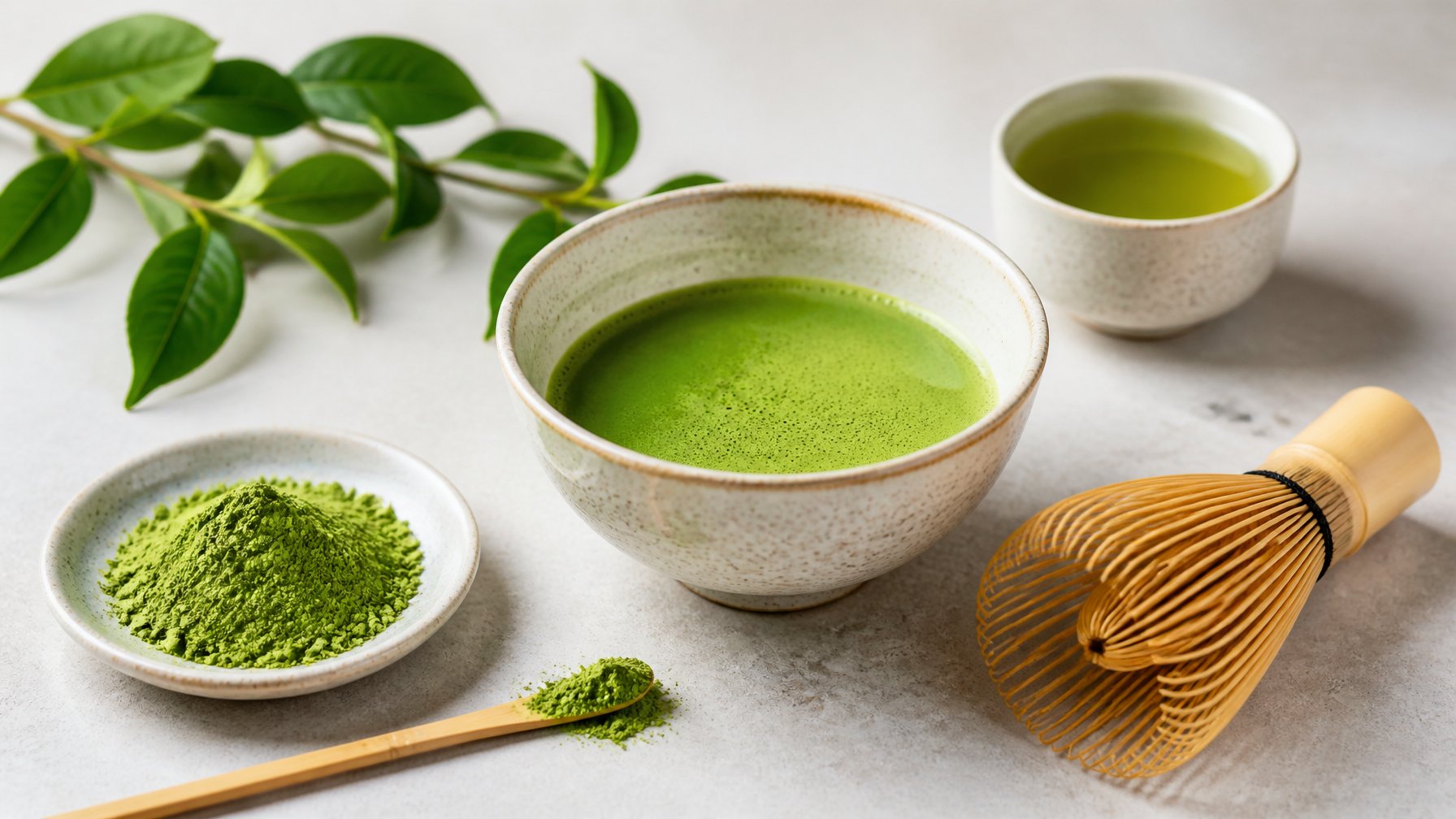
Matcha works differently. You whisk matcha green tea powder into the water and drink the ground leaf itself.
That single change is why the numbers jump:
Drink
Typical caffeine
Steeped green tea (8 oz)
About 30 mg
Matcha (2–4 g powder)
About 38–176 mg
Brewed coffee (8 oz)
About 100 mg
Matcha powder holds roughly 19 to 44 mg of caffeine per gram, so your scoop size matters a lot. A half teaspoon makes a mild cup, while a full teaspoon of ceremonial powder can rival coffee.
How Much Caffeine a Serving of Matcha Contains
The caffeine in matcha comes from the whole leaf, since you drink the powder instead of steeping and removing leaves. A standard cup lands somewhere between 40 and 176 mg, and the exact number depends on how much powder you scoop and how you prepare it.
Caffeine Per Gram and Typical Serving Sizes
Matcha powder holds roughly 19 to 44 mg of caffeine per gram. That range is wide because leaf age, harvest, and processing all change the caffeine content.
Most recipes call for 2 to 4 grams of powder, or about 1/2 to 1 teaspoon. Do the math and a single serving can fall anywhere from 38 mg to 176 mg.
Coffee beans, by comparison, carry about 10 to 12 mg of caffeine per gram. Matcha is stronger by weight, but you use far less of it per cup.
Here is how common scoop sizes compare:
Matcha powder
Approximate caffeine
1 g (1/4 tsp)
19–44 mg
2 g (1/2 tsp)
38–88 mg
4 g (1 tsp)
76–176 mg
Caffeine in a Traditional Bowl and Matcha Latte
A standard bowl made with 2 grams of powder and 6 to 8 ounces of water usually delivers around 60 to 70 mg of caffeine. That is more than a bagged green tea and a bit less than most drip coffee.
Usucha, the thin style, uses about 2 grams whisked with more water. Koicha, the thick style, uses double the powder with less water, so it can reach 120 mg or more in one small bowl.
A café matcha latte often uses 1 to 2 teaspoons of powder plus milk. The milk does not change the caffeine, but a two-scoop latte can easily reach 100 mg or higher.
Why Product Labels and Recipes Matter
Grade affects caffeine levels. Ceremonial matcha is made from young, shade-grown leaves, and those leaves tend to hold slightly more caffeine than culinary grades.
Freshness and water temperature also shift the final number, so two cups from the same tin can differ.
Check the label for grams per serving, not just milligrams per cup. Many brands list caffeine based on a 1-gram scoop, which is smaller than what most people actually use.
If you track your intake, weigh your powder. Most adults are advised to stay under 400 mg of caffeine per day, and that leaves room for several bowls of matcha.
Matcha Caffeine Compared With Coffee and Other Teas
A standard serving of matcha holds about 60 to 70 mg of caffeine, which sits below a typical mug of brewed coffee but above most cups of steeped green tea. The reason is simple: you drink the whole ground leaf instead of just the water it soaked in.
Matcha vs Coffee
An 8-ounce cup of brewed coffee usually contains 90 to 100 mg of caffeine. One teaspoon of matcha whisked into hot water gives you roughly 60 to 70 mg, so coffee usually has more caffeine per serving.
The gap gets smaller when you use two teaspoons of matcha, which is common in cafe-style lattes. That serving can reach 120 mg or more.
The bigger difference is how the caffeine feels. Matcha contains L-theanine, an amino acid linked to a more gradual release of energy than coffee.
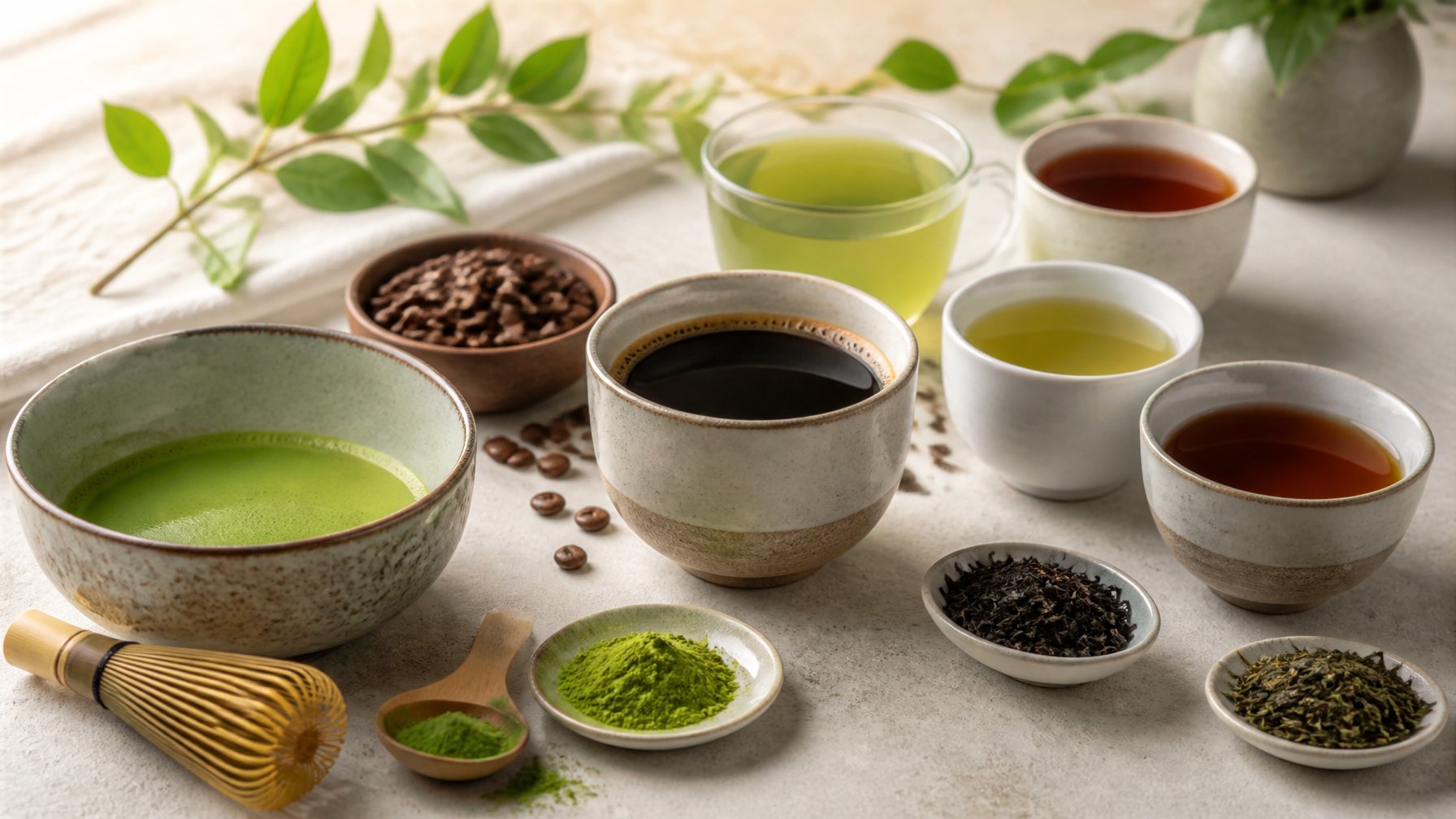
Here is a quick caffeine comparison:
Drink (8 oz)
Approximate caffeine
Brewed coffee
90–100 mg
Matcha (1 tsp)
60–70 mg
Black tea
40–70 mg
Brewed green tea
20–45 mg
Matcha vs Regular Green Tea
Both come from the same plant, Camellia sinensis, but the preparation changes everything.
With brewed green tea, you steep the leaves and throw them away. Only part of the caffeine moves into your cup, so green tea caffeine usually lands between 20 and 45 mg per 8 ounces.
With matcha, the leaves are ground into powder and suspended in the water. You swallow all of it, which is why matcha typically delivers two to three times the caffeine of a steeped cup.
Shade-growing also plays a role. Tea plants covered before harvest produce more caffeine and more L-theanine, and matcha is also higher in antioxidants than other green teas.
How Matcha Compares With Espresso and Black Tea
A single shot of espresso holds about 63 mg of caffeine, which is close to one teaspoon of matcha. The difference is volume: you drink an espresso in seconds, while a bowl of matcha takes several minutes.
Doubles change the math. A two-shot latte puts you near 125 mg, roughly the same as a two-teaspoon matcha latte.
Black tea sits lower, at about 40 to 70 mg per cup depending on steep time and leaf. See how black, green, oolong, and chai tea caffeine levels stack up if you are tracking daily caffeine intake.
Most healthy adults can handle up to 400 mg per day. That works out to roughly five or six servings of matcha.
What Makes Matcha’s Energy Feel Different
Matcha and coffee both deliver caffeine, but the experience often isn’t the same. The difference comes down to an amino acid called L-theanine, how quickly your body absorbs the caffeine, and your own personal sensitivity.
L-Theanine, Caffeine, and Calm Alertness
Matcha contains L-theanine, an amino acid found naturally in tea leaves. Shade-growing the tea plants before harvest raises the level of this compound.
L-theanine is studied for its connection to relaxed focus and steady alertness. It appears to soften the sharper edges of a caffeine boost.
When the two work together, many people describe the result as calm alertness rather than a nervous buzz. You may feel awake and settled at the same time.
This pairing is one reason L-theanine is credited with smoothing out caffeine’s jittery edge. Coffee contains caffeine without a meaningful amount of L-theanine, which helps explain the contrast.
Sustained Energy Versus a Caffeine Crash
With coffee, caffeine tends to hit fast. Energy levels climb quickly, peak, and then drop.
Matcha’s effect is often described as more gradual. Some people report more sustained energy and fewer side effects like jitters or anxiety after switching from coffee.
Here’s how the two experiences are commonly described:
Factor
Coffee
Matcha
Onset
Fast, within minutes
Slower, more gradual
Peak
Sharp
Gentler
Decline
Noticeable drop
Smoother tapering
L-theanine
Negligible
Present
Keep in mind that a caffeine crash is often tied to how much you drink and when. Even matcha can leave you tired later if you have several servings.
Why Individual Responses Differ
Not everyone feels matcha the same way. Your caffeine sensitivity plays a large role, and it’s shaped partly by genetics and partly by habit.
If you drink caffeine daily, your caffeine tolerance rises. A single bowl of matcha may barely register for a heavy coffee drinker.
The matcha itself also varies. Powder can contain between 19 and 44 milligrams of caffeine per gram, so your scoop size and the grade you buy both matter.
Other factors worth noting:
Food in your stomach slows absorption
Sleep quality affects how strong any energy boost feels
Time of day influences how caffeine interferes with later rest
Medications can change how quickly you process caffeine
The caffeine in your bowl of matcha isn’t a fixed number. It shifts based on how the tea plants were grown, which leaves were picked, the grade you bought, and how you whisk it.
Shade Growing and Leaf Selection
Matcha comes from Japanese green tea plants that farmers cover with mats or screens for about three to four weeks before harvest. This is called shading, and it changes the chemistry of the leaf.
Without full sun, the plant makes more chlorophyll and more amino acids like L-theanine. Shading also pushes the plant to produce more caffeine, since caffeine acts as a natural defense compound.
Leaf age matters just as much. The young, tender leaves from the first harvest usually carry more caffeine and L-theanine than leaves picked later in the season.
Where the leaf sits on the plant plays a role too. Leaves near the top of the bush tend to hold more caffeine than the tougher, older leaves lower down.
Ceremonial and Culinary Matcha Differences
Grade is mostly about which leaves went into the powder, and that affects caffeine.
Ceremonial grade matcha uses the youngest first-harvest leaves with stems and veins removed. It’s bright green, mild, and typically sits at the higher end of the caffeine range.
Culinary grade matcha comes from later harvests and older leaves. It has a stronger, more bitter flavor that stands up in lattes and baking, but the caffeine per gram is often a bit lower.
That said, the gap isn’t huge. Because culinary matcha is often used in larger scoops for lattes and smoothies, a culinary drink can end up with as much caffeine as a small bowl of premium matcha.
Catechins, the antioxidants matcha is known for, follow a different pattern. Shading actually lowers catechin levels somewhat, which is part of why ceremonial matcha tastes less astringent.
Powder Amount, Water Temperature, and Preparation
You control this part. Since you drink the whole leaf, the amount of powder is the biggest lever you have.
Anecdotal reports suggest a serving falls somewhere between 1 and 4 grams. At the strong end, 4 grams can deliver 75.6 to 177.6 mg of caffeine in a single cup.
Water temperature matters next. Hotter water pulls more caffeine into solution, so 175°F water yields a slightly gentler cup than near-boiling water, and it protects the flavor too.
A few practical notes:
Whisking: A bamboo matcha whisk suspends the powder evenly, so you actually drink what you scooped instead of leaving sediment behind.
Brewing time: Matcha isn’t steeped, so time has less effect than it does with loose-leaf tea.
Milk: Using milk instead of water won’t lower the caffeine in your drink.
If you’re unsure how caffeine affects you, start with half a teaspoon and adjust from there.
Using Matcha Within Your Daily Caffeine Limit
One teaspoon of matcha whisked into 240 ml of water gives you about 70 mg of caffeine, so most adults can fit two or three servings into a day without trouble. The details that matter are when you drink it, how many scoops you actually use, and what other caffeine you have on the side.
Timing Matcha for Sleep and Caffeine Sensitivity
Caffeine leaves your body slowly. The average half-life is about 5.7 hours, so roughly 34 mg of a 70 mg matcha still sits in your system six hours later.
That means a 4 p.m. bowl can still be working at 10 p.m. If you go to bed at 11 p.m., a cutoff around 2 or 3 p.m. is a safer plan.
Research by Drake and colleagues found that 400 mg taken six hours before bed cut sleep by more than an hour. Matcha doses are much smaller, but the timing lesson holds.
If you have high caffeine sensitivity, start with half a teaspoon (about 35 mg) and keep it to the morning. Jitters, a racing heart, and stomach upset are the usual signs you have had too much.
How to Track Caffeine From Lattes and Strong Servings
Caffeine in matcha scales with powder, not water. Adding more milk or water makes the drink weaker per sip, but the milligrams stay the same.
Use these numbers to add up your daily caffeine intake:
What you drink
Caffeine
Matcha, 1 tsp
70 mg
Matcha, 2 tsp
~140 mg
Single espresso shot
63 mg
Drip coffee, 240 ml
96 mg
Red Bull, 250 ml
80 mg
A “dirty” matcha latte with one espresso shot lands at 133 mg. Two of those plus a coffee puts you near 300 mg before lunch.
The FDA lists 400 milligrams of caffeine a day as safe for most healthy adults, which works out to roughly three to five cups of matcha if matcha is your only source. During pregnancy, EFSA suggests 200 mg, so two teaspoons (140 mg) stays under while three (210 mg) does not.
Measure your scoops instead of guessing. Café servings often use two teaspoons, so a shop-bought latte may hold double what you make at home.
Decaf Matcha and Lower-Caffeine Alternatives
Decaf matcha exists, but it is uncommon and the caffeine content varies by brand. Check the label for a stated milligram figure rather than trusting the word “decaf” alone.
Easier swaps for your second or third cup:
Hojicha – roasted green tea leaves and stems, with noticeably less caffeine than matcha.
Brewed green tea – about 28 mg per 240 ml cup, roughly 40% of a matcha serving.
Half-scoop matcha – ½ tsp gives you about 35 mg and keeps the flavor.
Herbal options like rooibos, chamomile, and peppermint contain no caffeine at all, which makes them a practical evening choice after a morning matcha.
A standard 2-gram bowl of matcha holds roughly 64 mg of caffeine, which sits below an 8-ounce coffee but above most brewed green tea. The answers below cover how that number compares to other drinks, why matcha contains no coffee at all, and how late in the day you can safely drink it.
How much caffeine is in a serving of matcha?
A typical bowl made with 2 grams of powder and about 60 to 70 mL of water contains about 64 mg of caffeine, based on the Japanese Standard Tables of Food Composition.
Other measurements put the range a little wider. Some sources report 60 to 70 mg per serving, while others cite a broader 35 to 70 mg per cup depending on how much powder you use.
The amount of powder is the biggest factor. A 1-gram bowl lands near half the caffeine of a 2-gram bowl, and a café latte made with 4 grams can double it.
Does matcha contain more caffeine than coffee?
Usually not. A standard 8-ounce cup of brewed coffee contains around 80 to 100 mg of caffeine, so a single bowl of matcha typically comes in lower.
That said, serving size changes everything. A large café matcha latte made with 3 or 4 grams of powder can easily pass a small coffee.
Two bowls in one morning will also put you in coffee territory. Matcha is a moderate caffeine drink, not a low one.
How does matcha caffeine compare with black tea?
The two overlap. Black tea generally delivers about 40 to 70 mg per cup, which places it in the same range as a standard matcha bowl.
The difference is in how each drink is made. Black tea is an infusion, so some caffeine stays behind in the leaves. With matcha, you drink the whole powdered leaf, so nothing is left in a strainer.
Cup size matters too. Black tea is often served in a larger mug than a small bowl of matcha, which can even out the totals.
Can drinking matcha keep you awake?
It can. Caffeine is caffeine, and 64 mg after dinner may interfere with your sleep even if the drink feels gentle.
Matcha’s reputation for smooth energy sometimes leads people to underestimate it. If you are sensitive, moving your bowl to the morning or early afternoon usually works better than cutting back on powder.
Everyone processes caffeine at a different pace. Pay attention to how you feel a few hours after drinking rather than following a fixed rule.
Does matcha contain coffee?
No. Matcha contains no coffee at all.
It is made from tencha, green tea leaves that are shaded for roughly 20 to 30 days before harvest, then stone-ground into a fine powder. The caffeine comes from the tea plant, Camellia sinensis, not from coffee beans.
Adding espresso to a matcha latte is a separate choice some cafés offer. Plain matcha, whisked with water or milk, is coffee-free.
Is matcha a better option than coffee for anxiety?
Matcha contains L-theanine, an amino acid that coffee does not have. Research suggests that L-theanine paired with caffeine can support attention while reducing some of the jittery feeling caffeine can cause on its own.
That does not make matcha anxiety-proof. If you are sensitive to stimulants, a 64 mg bowl on an empty stomach can still leave you feeling wired.
Smoother is not the same as weaker. If caffeine tends to worsen your anxiety, lowering your total daily intake matters more than switching which drink it comes from.
Black Tea Extract that is rich in natural theaflavins and polyphenols that help protect your body from free radicals, promoting overall immune health and well-being
Contains blended amounts of Fruits and Veggies. All natural, with whole foods, fruit and vegetable supplement.Perfect for everyone looking to live a healthier lifestyle.