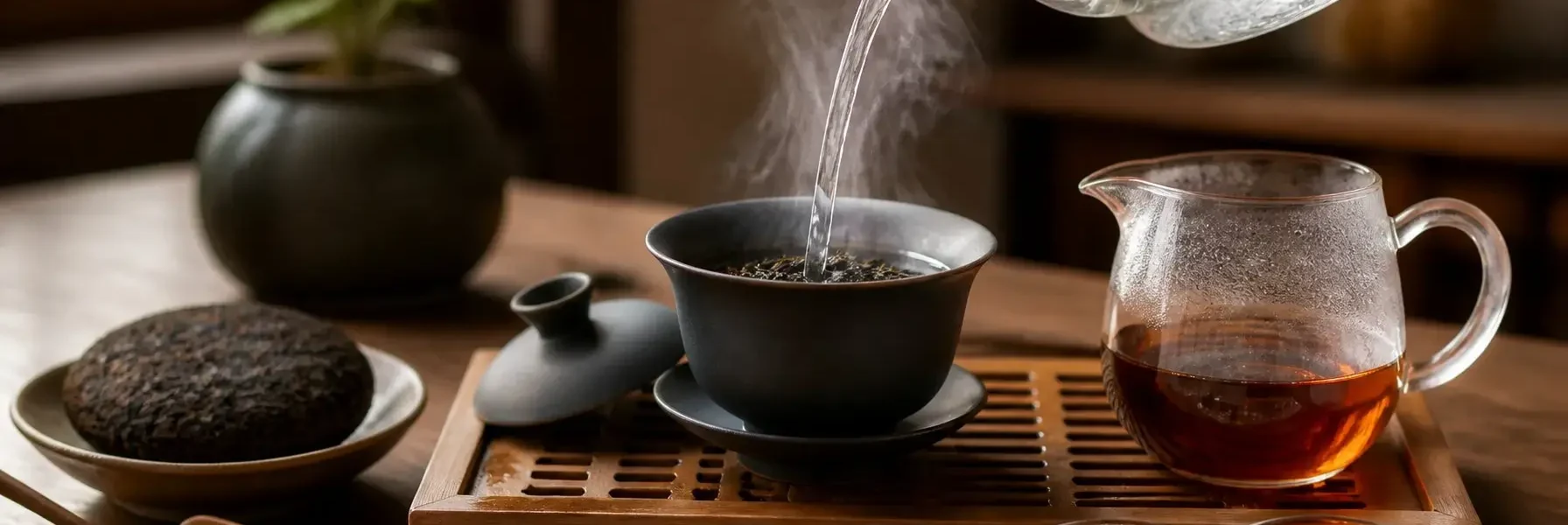
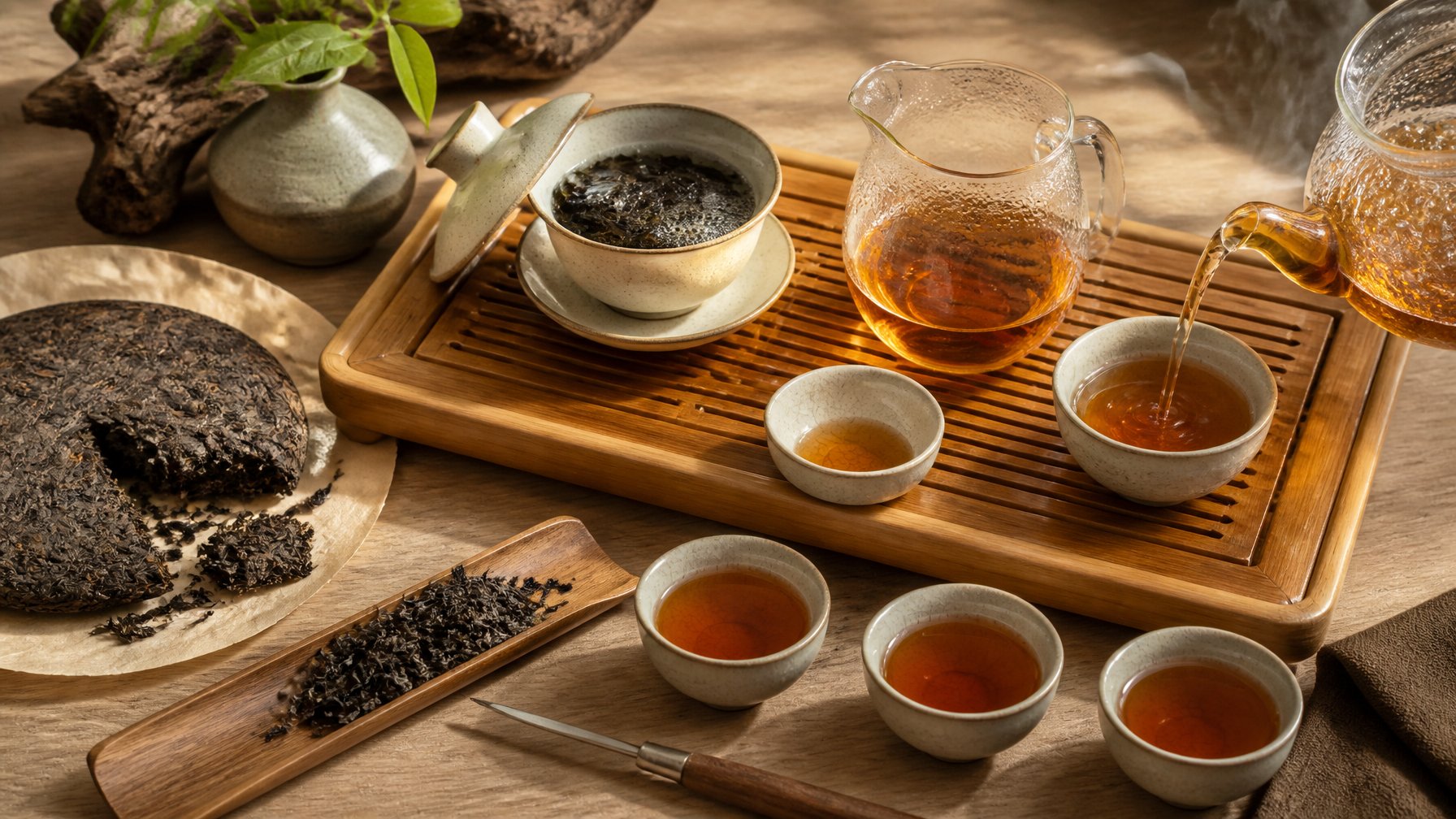
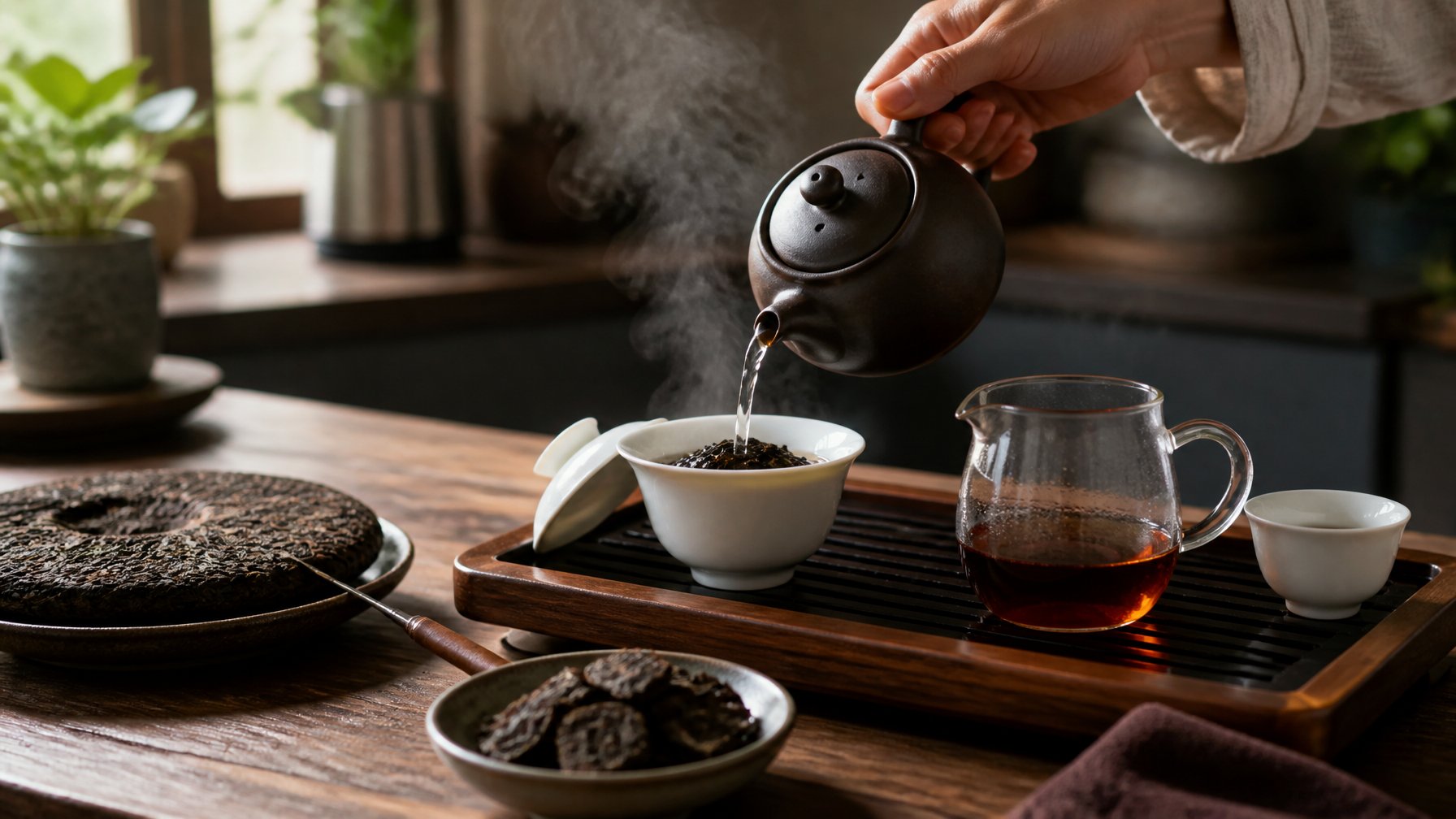
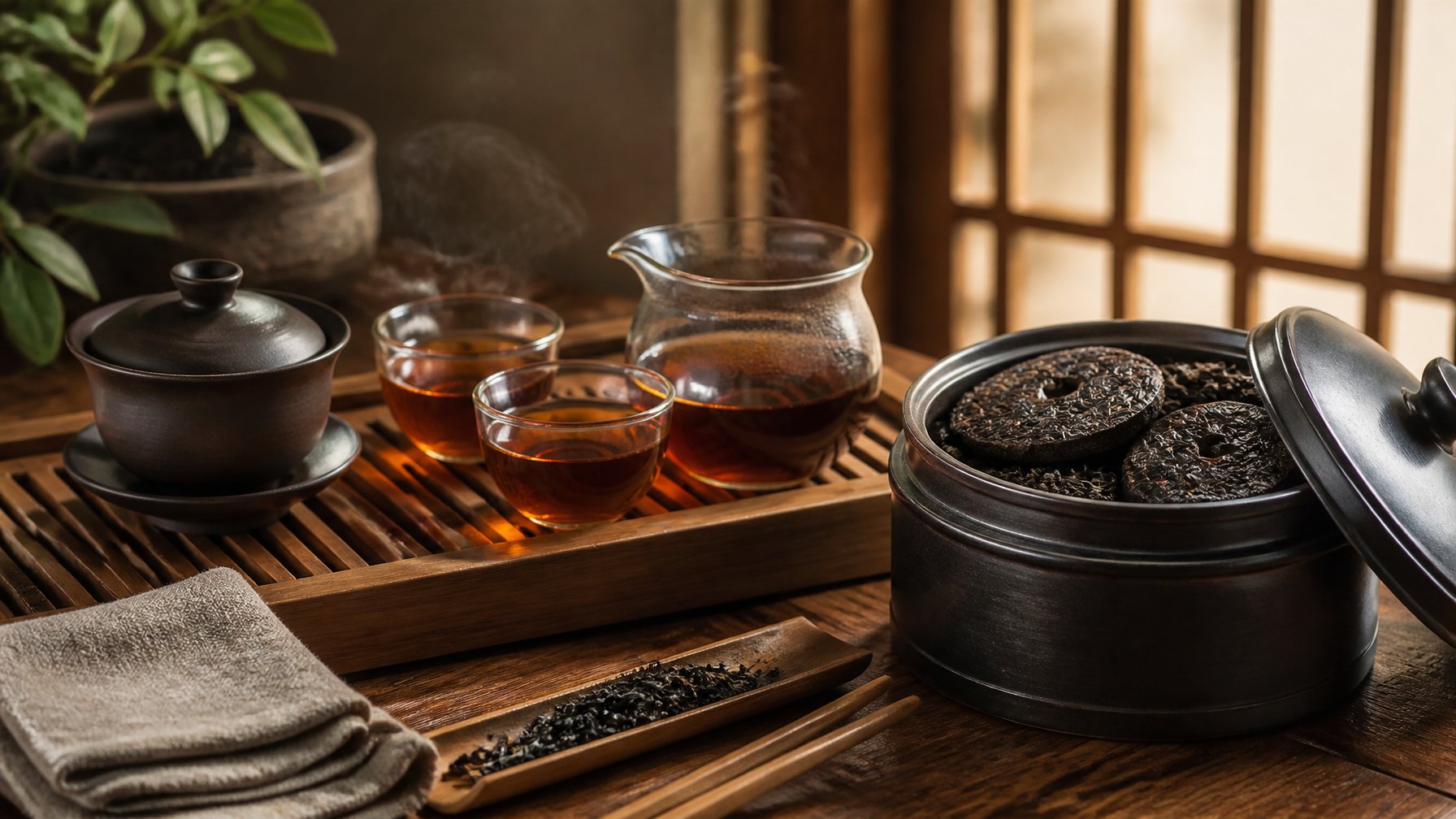
Pu-erh is a fermented tea from Yunnan Province in China, and it requires a different approach than green or black tea. The leaves are thick, often pressed into cakes, and they can handle heat that would ruin a delicate green tea. Learning how to brew pu erh tea correctly helps unlock its complex flavors and ensures every infusion reaches its full potential.
To brew pu-erh tea, break off 5 to 7 grams of leaf, rinse it with near-boiling water for a few seconds, discard that water, then steep in 95–100°C (203–212°F) water for 10 to 15 seconds, adding a few seconds to each following infusion. That short rinse wakes up the leaves and washes away dust from the compressed cake.
The reward for this small bit of care is a tea that keeps giving. A good pu-erh can produce 8 to 15 infusions in a gaiwan, with the flavor shifting from bright and aromatic to deep and smooth. Below, you’ll find the gear you need, how to handle a pressed cake, both traditional and simple brewing methods, and answers to common questions about raw and ripe pu-erh.
Key Takeaways
Use hot water near boiling, a quick rinse, and short steeps that grow longer with each round.
Gently pry chunks from pressed cakes instead of crumbling the leaves into small bits.
Pick gongfu style for many small cups or a larger teapot for an easy daily brew.
Start With the Right Tea and Equipment
Pu-erh is a fermented dark tea from Yunnan, China, and it comes in two styles, several shapes, and a few standard brewing vessels. The choices you make here shape the flavor in your cup before water ever touches the leaves.
Choose Between Raw and Ripe Pu-erh
Pu-erh splits into two main types: raw and ripe.
Raw pu-erh (sheng pu-erh) ages slowly and naturally. Young raw pu-erh tastes bright, floral, and sometimes a little sharp or bitter. Aged pu-erh that has rested for a decade or more turns smoother, with woody and dried fruit notes.
Ripe pu-erh (shou pu-erh) goes through a faster fermentation step called wet piling. The result is dark, earthy, and mellow, with very little bitterness.
If you are new to pu-erh, start with ripe. It forgives mistakes like water that is too hot or steeps that run long.
Pick raw if you want a tea that changes as it ages and rewards careful short steeps.
Select Loose Leaf or Compressed Tea
Loose leaf pu-erh is the easiest to work with. You can scoop out the exact amount you want, and the leaves open quickly since they were never pressed.
Compressed tea is the traditional format. Tea cakes (bing) usually weigh 357 grams, bricks are rectangular, and tuocha are small dome shapes. Some tuo cha come in single-serving nuggets of about 5 grams.
Compressed tea ages more evenly and stores well for years, which is why collectors favor cakes.
The trade-off is prep work. You need to pry pieces off with a tea pick or knife, and you should aim for whole flakes rather than crumbs.
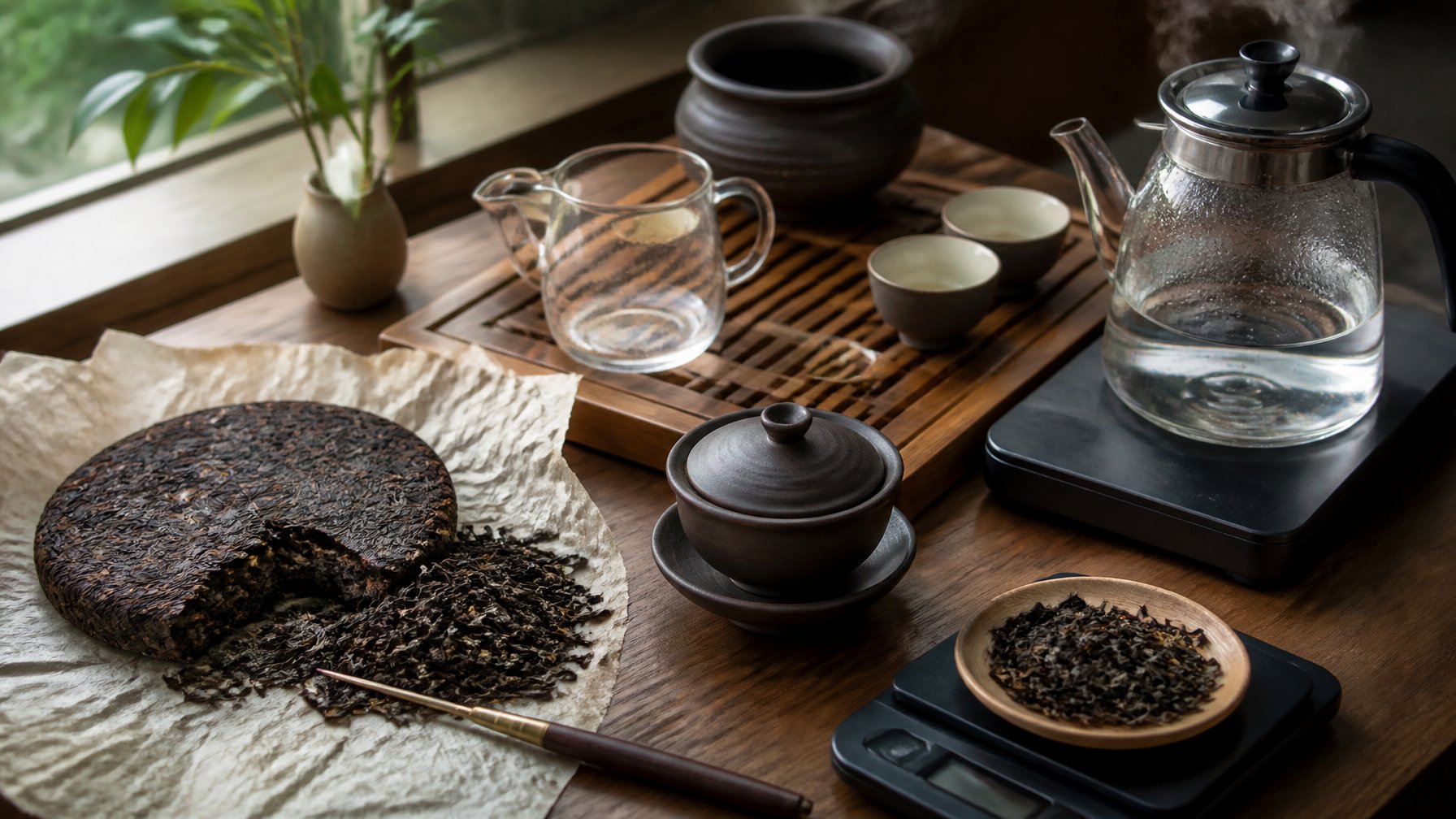
Set Up Essential Teaware
A gaiwan is the most flexible vessel. This lidded bowl usually holds 100 to 150 ml, and the lid lets you control the pour and smell the wet leaves.
A small teapot works just as well. Many drinkers use unglazed clay pots for ripe pu-erh because the material holds heat steadily, though a porcelain or glass pot keeps the flavor cleaner.
Round out your teaware with these pieces:
Item
Why you need it
Tea pitcher (fair cup)
Holds the finished brew so every cup tastes the same
Small tasting cups
30 to 50 ml servings you can drink while hot
Digital scale
Measure 4 to 7 grams accurately
Kettle with temperature control
Hit 195°F to 212°F on demand
Tea pick
Break apart cakes and tuocha safely
Tray or bowl
Catches rinse water and spills
You do not need all of it at once. A gaiwan, a pitcher, and one tea cup will get you through your first sessions.
Prepare Compressed Pu-erh Leaves
Pu-erh usually comes pressed into cakes, bricks, or small bowl-shaped tuocha, so you need to separate the leaves before any water touches them. Getting the leaf loose without crushing it, weighing the right amount, and heating your teapot or gaiwan all shape how the first cup tastes.
How to Break a Pu-erh Cake Safely
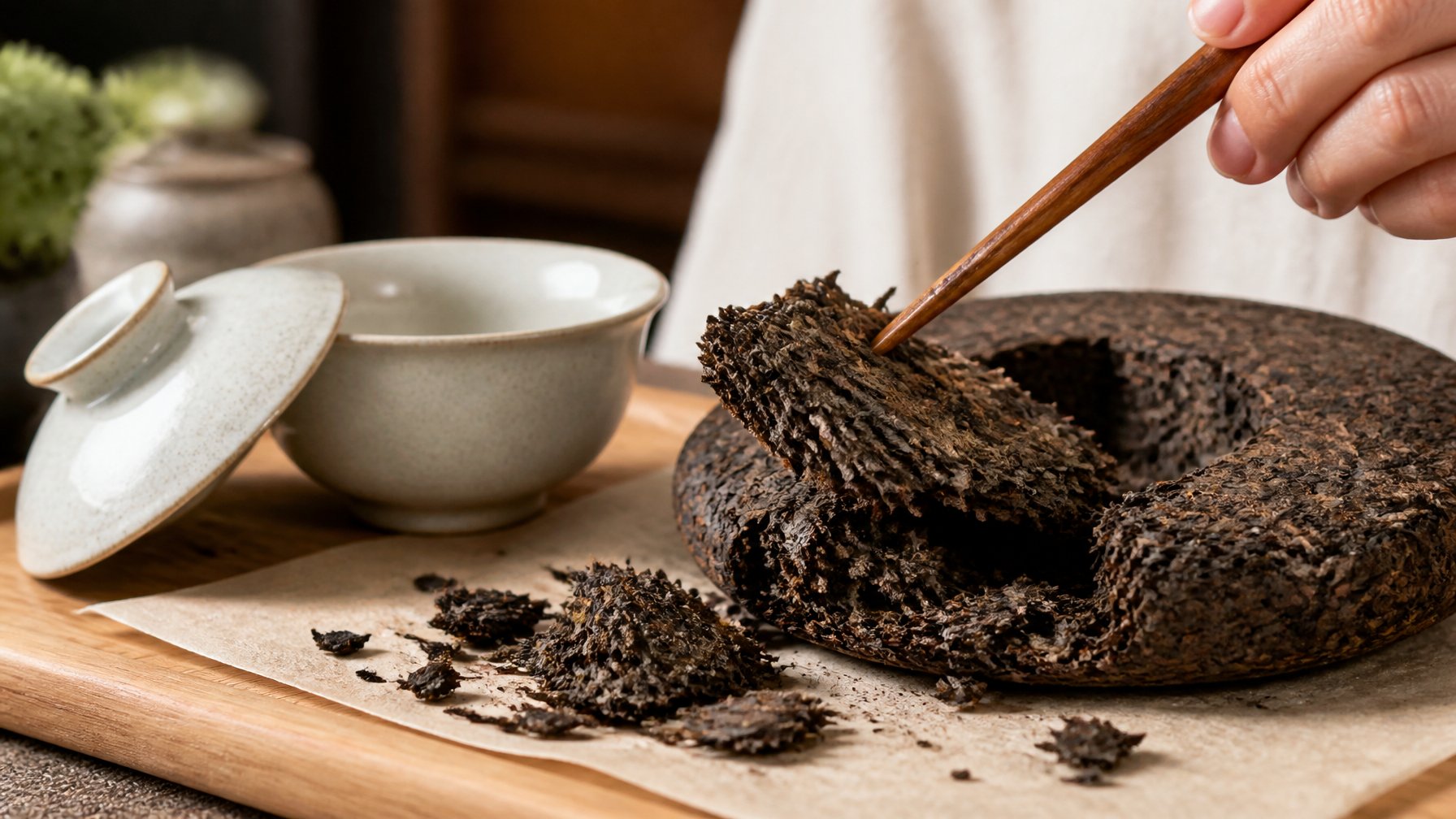
Use a pu-erh pick or a flat tea knife. A kitchen knife can slip on hard compressed tea and cut your hand.
Set the cake flat on a table. Slide the tool in at the outer edge, angled sideways along the layers instead of stabbing straight down into the face.
Rock the tool gently and lift. You want flakes and small chunks about the size of a fingernail, keeping the leaves intact so they brew evenly.
Broken bits and dust extract too fast and taste bitter. If you feel yourself grinding the tea instead of prying it apart, change your angle.
Tuo cha and bricks are often pressed even tighter than cakes, so work slowly. The center and the dimple on the back are the densest spots, and the first few pieces often come away ragged. That tea is still fine to drink.
Measure the Leaf-to-Water Ratio
How much leaf you need depends on your brewing method, which is why published numbers vary so much.
Method
Leaf
Water
Gongfu (gaiwan or small teapot)
5–7 g
100 ml
Western (mug or larger teapot)
3–4 g
250 ml
A common middle path is 3 to 5 grams per 150 ml of water.
Use a small digital scale at first. Compressed chunks are dense, so a piece that looks small can weigh more than you expect.
The gongfu ratio packs roughly four times more leaf per milliliter. That is on purpose, because short steeps with lots of leaf let you brew the same tea ten or more times.
Warm the Brewing Vessel
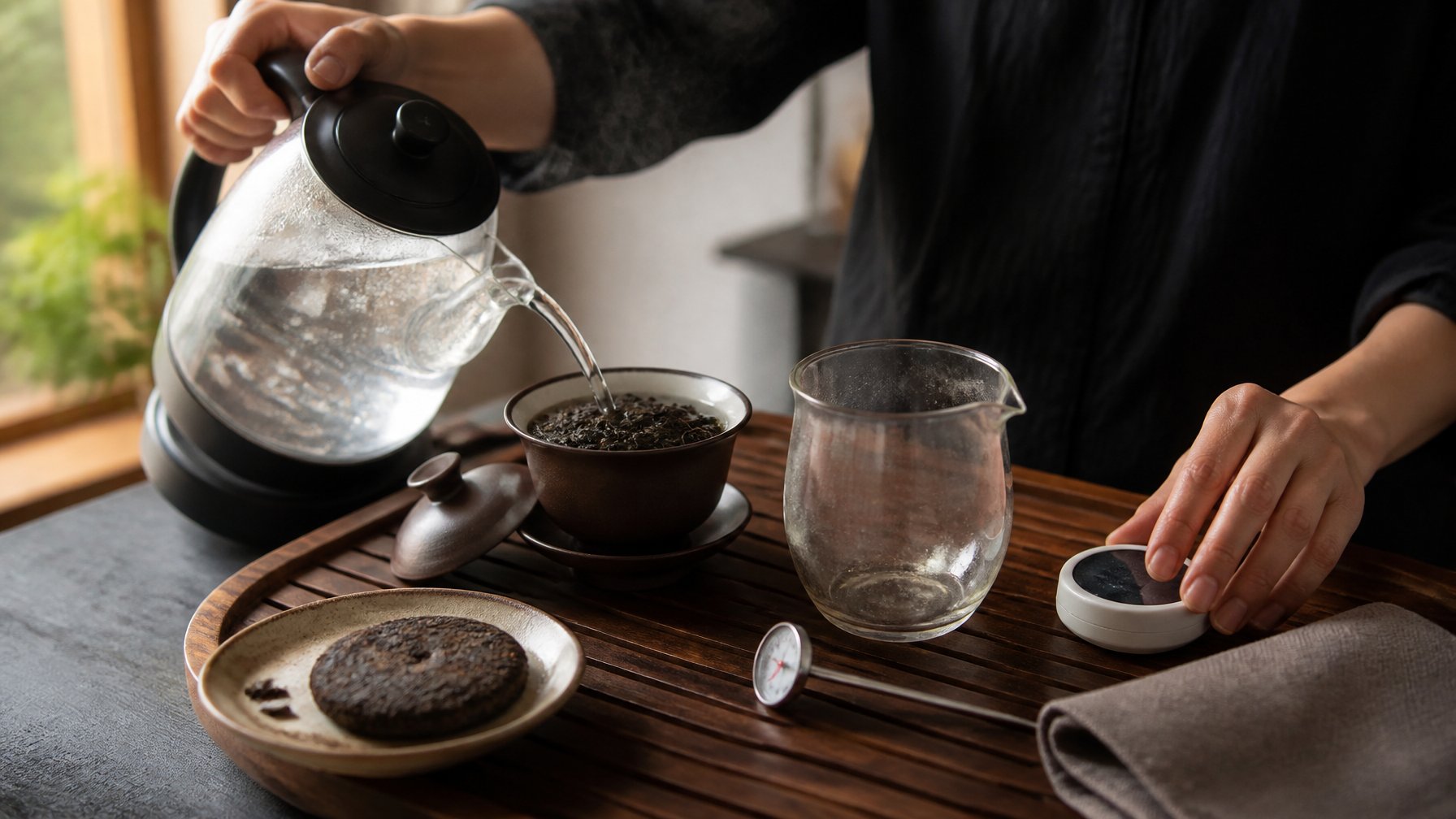
Pour hot water into your gaiwan or teapot, swirl it around, then tip it out. Cold porcelain or clay pulls heat from your first infusion and flattens the flavor.
Next, add the leaves and give them a quick rinse. Cover them with boiling water, wait about five to ten seconds, and pour the liquid off.
This step wakes up the compressed leaf and helps tight chunks start to open. It also rinses away dust from storage and pressing.
Use the rinse water to warm your cups instead of dumping it in the sink. Ripe pu-erh and older cakes can take a second rinse if the leaf is still tightly packed.
Water heat and clock time are the two settings that decide whether your cup tastes rich and sweet or harsh and thin. Ripe and aged leaves can take a full boil, young raw pu-erh needs a few degrees less, and short infusions keep every type in balance.
Use Hot Water for Ripe and Aged Teas
Ripe (shou) pu-erh is fermented before it is pressed, so it handles heat well. Brew it at a full rolling boil, 212°F (100°C), which pulls out the earthy, cocoa-like depth that this tea is known for.
Aged raw pu-erh works the same way. Once a sheng cake has rested five years or more, 205–212°F (96–100°C) brings out its woody sweetness without harshness.
Keep the kettle on during your session. Water that drops to 180°F leaves compressed leaves half-opened, and the cup turns flat and watery.
In a mug, use 5–7 grams per 8 ounces and steep ripe pu-erh 3 to 5 minutes, then pull the leaves out.
Adjust Heat for Young Raw Pu-erh
Young sheng pu-erh, under about five years old, is the one tea here that boiling water can damage. Too much heat scalds the leaves and pushes bitterness ahead of the floral and stone-fruit notes.
Drop the kettle to 195–205°F (90–96°C) instead. If you don’t own a variable kettle, boil the water and let it sit uncovered for two to three minutes.
Time matters just as much as heat with this style. In a gaiwan, keep the first two steeps around 5 to 10 seconds, then build to 10–20 seconds as the leaves relax.
Brewing young raw pu-erh Western style is risky. If you try it, start at 1 to 2 minutes and taste before you go longer.
Balance Strength With Short Infusions
Gongfu brewing uses more leaf and less time, which lets you steer the flavor cup by cup. A common ratio is 8 grams of tea to 150 ml of water, or roughly 1 gram per 15 ml.
Rinse first. Pour hot water over the leaves, wait 5–10 seconds, and discard it to wake up the compressed tea.
Then work through the steeps in stages:
Infusion
Ripe (Shou)
Raw (Sheng)
1–2
10–15 seconds
5–10 seconds
3–5
20–30 seconds
10–20 seconds
6+
Add 15–30 seconds each round
Add 5–10 seconds each round
Good pu-erh gives you 10 or more cups this way. If a steep tastes bitter, shorten the next one; if it tastes thin, add time rather than heat.
Use the Gongfu Brewing Method
Gongfu brewing, also called gong fu cha, uses a lot of leaf, a small vessel, and many short steeps instead of one long soak. You will need a gaiwan or small teapot, a tea pitcher, and a few tasting cups.
Rinse the Leaves and Awaken the Tea
Start by breaking off your leaves and adding them to your gaiwan or small teapot. A good leaf-to-water ratio is about 5 to 8 grams per 150 ml of water.
Pour hot water over the leaves, swirl the vessel gently, then pour the liquid out right away. Do not drink this rinse.
This step is called awakening the tea. It rinses off dust from storage and lets the compressed leaves start to open, which helps the next steeps taste fuller.
Water should be just off the boil at 95°C or hotter. Ripe (shou) pu-erh and aged raw pu-erh do best with boiling water. If your cake is more than 10 years old, rinse the leaves twice instead of once.
Make the First Drinking Infusion
Fill the vessel again and steep for only 10 to 15 seconds. This is your first real cup.
Pour all of the tea into your tea pitcher before serving. This stops the leaves from steeping any longer and keeps every tasting cup the same strength.
Then pour from the pitcher into each small tea cup. Sharing the tea this way is part of the traditional Chinese tea ceremony.
Taste before you decide anything. Young raw pu-erh under five years old can turn bitter fast, so use slightly cooler water near 90°C and keep the steep closer to 8 to 12 seconds.
Extend Later Steeps for Multiple Infusions
Add roughly 5 to 10 seconds to each new infusion. The leaves give up less flavor as you go, so longer contact time keeps the cups balanced.
Infusion
Suggested Time
1st
10–15 seconds
2nd–4th
15–30 seconds
5th–8th
30–60 seconds
9th and beyond
1–2 minutes
Quality pu-erh often gives 8 to 15 or more infusions. Ripe pu-erh is forgiving and rarely turns bitter, even when you oversteep it.
Pay attention as the flavor shifts. Early steeps are bold, middle steeps show more depth, and later steeps often finish sweet.
Stop when the liquid turns pale and thin. You can also try longer steeps on the last few rounds to pull out whatever flavor is left.
You don’t need a full tea tray to make good pu-erh. A basic teapot or even a single mug will give you a rich cup, and the same leaves will keep going for several rounds.
Brew Pu-erh With the Western Method
The Western brewing method is the simplest place to start. You use a larger pot, fewer leaves, and one longer steep.
Rinse the leaves first with a quick pour of hot water, then pour it off. This wakes up the leaves and rinses off any dust from a compressed cake.
Then add fresh water and steep. Taste at three minutes and pull the leaves if it’s already strong enough for you.
This style gives a full, steady cup with 2 to 4 infusions instead of many short ones.
Try the Casual Grandpa Method
The grandpa method skips the teapot completely. You put loose leaf pu-erh straight into a tea cup or glass and drink around the leaves.
Use about 3 grams for a 12-ounce mug. Pour in hot water, wait two or three minutes, and start sipping.
The leaves sink to the bottom, so you rarely get a mouthful. When the cup is about a third full, top it off with more hot water.
Ripe (shou) pu-erh works especially well here because it stays smooth and doesn’t turn harsh when the leaves sit in water. This is a practical choice at a desk, since one scoop of leaves can last a whole morning.
Serve and Re-Steep the Leaves
Pour the tea out fully each time. Leaves left sitting in hot water keep extracting and turn bitter, so decant into a second cup or a small pitcher if you’re not drinking right away.
Keep the wet leaves in the pot and reuse them the same day. Add 30 to 60 seconds to each following steep, since the leaves release flavor more slowly as they open up.
With short gongfu-style pours in a small pot or gaiwan, good pu-erh can give 8 to 15 infusions. The flavor shifts as you go, moving from bright and aromatic to softer and sweeter.
Stop when the liquor runs pale and thin. That’s the sign the leaves are finished.
Fine-Tune Flavor and Store Tea Properly
Small changes to water temperature, steeping time, and leaf amount can turn a harsh cup into a smooth one. How you store your tea cakes and loose leaves after brewing matters just as much, since pu-erh keeps changing in the wrapper.
Fix Bitter, Weak, or Overly Earthy Flavor
Bitterness usually means the water was too hot or the steep ran too long. Drop the temperature by 5–10°F and cut the steep in half, then taste again.
Weak, thin tea points the other way. Add a gram or two of leaf, or extend the steep by 10–15 seconds.
A heavy musty or overly earthy taste often comes from storage, not brewing. A second short rinse of 5 seconds clears much of it, and these troubleshooting adjustments to leaf ratio and timing handle the rest.
Watch the color of the liquor as you pour, since some teas release flavor faster than others. Many drinkers write their brewing notes on the wrapper so the next session starts closer to the target.
Adjust Brewing for Raw Versus Ripe Pu-erh
Raw pu-erh (sheng) and ripe pu-erh (shou) do not want the same treatment. Sheng has more astringency, so cooler water and shorter steeps protect its floral and fruity notes.
Shou is more forgiving and needs full heat to pull out its dark, earthy flavor.
Raw (Sheng)
Ripe (Shou)
Water temp
195–205°F for young; 205–212°F for aged
212°F, rolling boil
First steeps
5–10 seconds
10–15 seconds
Added time per steep
5–10 seconds
15–30 seconds
Rinse
5–8 seconds
8–10 seconds
Age changes the rules too. A sheng cake past five years handles near-boiling water well, while a two-year-old cake turns sharp at the same heat. These raw and ripe brewing differences also affect how many infusions you get.
Store Tea Cakes and Loose Leaves
Pu-erh needs a little air to keep aging, so a fully sealed jar is not the goal. Leave cakes in their original paper wrapper and set them in a cardboard box or unglazed clay jar.
Keep tea away from sunlight, strong smells, and kitchen humidity. Spices, coffee, and cleaning products will pass their odor into the leaves.
Aim for a stable spot around 60–75°F with moderate humidity. Avoid the refrigerator, since cold, damp air can ruin the leaves.
Broken chunks and loose leaf pu-erh dry out faster than a pressed cake. Store those pieces in a loosely closed tin or an airtight container you open now and then, and keep sheng and shou separate so their aromas do not mix.
Brewing pu-erh comes down to a few key numbers: near-boiling water at 95–100°C (203–212°F), short steeps of 10 to 15 seconds in a gaiwan, and about 5 to 7 grams of leaf per 100–150 ml of water. Below are answers to the questions that come up most often once you start brewing at home.
What temperature should I use for brewing pu-erh tea?
Use water that is just off the boil, between 95 and 100°C (203–212°F).
Pu-erh leaves are thick and fermented, so they can handle high heat without turning harsh. Water that is too cool gives you a thin, flat cup.
Both raw (sheng) and ripe (shou) pu-erh work well at this range. If a young raw pu-erh tastes sharp to you, drop the temperature to about 90°C and shorten the steep.
How long should pu-erh tea steep?
It depends on your method.
For gongfu brewing, start with a 10 to 15 second first infusion. Add roughly 5 seconds to each infusion after that as the leaves give up less flavor.
For Western brewing in a mug or larger teapot, steep for 3 to 4 minutes. Keeping steeps short and re-steeping is the easiest way to avoid bitterness.
How much pu-erh tea should I use per cup?
For gongfu style, measure 5 to 7 grams of leaf for every 100 to 150 ml of water. That is a strong ratio, but the steeps are very short.
For Western style, use 3 to 5 grams per 250 ml cup.
A kitchen scale helps more than a spoon here, since compressed chunks vary a lot in density. Once you know how your tea behaves, adjust up or down by a gram.
How do I prepare pu-erh tea from a tea cake?
Pu-erh is often sold pressed into cakes (bing cha), bricks (zhuan cha), or small bowls (tuo cha).
Slide a pu-erh knife or pick into the edge of the cake at a shallow angle, then lift gently to pry off a flake. Work along the seams rather than stabbing straight down.
Try to keep the leaf pieces whole. Crushed leaves release bitterness faster and can clog your strainer.
Then rinse before your first real steep. Pour hot water over the leaves, wait 5 to 10 seconds, and pour it off. This rinse washes away dust and helps the compressed leaves start to open.
Can pu-erh tea leaves be steeped multiple times?
Yes, and this is one of the main reasons people enjoy it.
Gongfu brewing typically yields 8 to 15 infusions from a single batch of leaf. Western brewing gives you fewer, usually 2 to 4, because the longer steeps pull out more at once.
The flavor shifts as you go. Early infusions tend to be lighter and more aromatic, while later steeps turn deeper and smoother.
Aged, high-quality cakes often last the longest. Stop when the liquor turns pale and the taste goes flat.
When is the best time of day to drink pu-erh tea?
Morning and early afternoon work best for most people, since pu-erh contains caffeine.
Ripe (shou) pu-erh is a common choice after a heavy meal because of its smooth, earthy body. Raw (sheng) pu-erh tends to be brighter and stronger, so many drinkers save it for earlier in the day.
Avoid drinking it on an empty stomach if you find strong tea uncomfortable. If caffeine affects your sleep, stop a few hours before bed and stick with shorter, lighter infusions in the evening.
Black Tea Extract that is rich in natural theaflavins and polyphenols that help protect your body from free radicals, promoting overall immune health and well-being
Contains blended amounts of Fruits and Veggies. All natural, with whole foods, fruit and vegetable supplement.Perfect for everyone looking to live a healthier lifestyle.